
Is CBD Good for You? (UK 2026 Guide)
In this guide, I will help you think clearly about CBD: what it is, what the research is actually exploring, what users often report, how to compare oils vs drinks vs gummies, and how to choose quality products in the UK.
If you want a starting point on the oil format specifically, read our CBD oil basics here: CBD oil basics.
What CBD is (and what it is not)
CBD is short for cannabidiol. It is a naturally occurring compound found in the hemp plant. Importantly, CBD is non-intoxicating. It does not produce the “high” associated with THC.
Now, when it comes to products, not all CBD is the same. You will usually see three broad types on labels:
- Full spectrum: CBD plus other naturally occurring plant compounds like minor cannabinoids, terpenes and flavonoids, with trace THC within legal limits.
- Broad spectrum: similar to full spectrum, but with THC removed (how well this is done varies by brand).
- CBD isolate: just CBD on its own.
Think of it this way. Full spectrum is like eating a whole orange. Isolate is like taking a vitamin C tablet. Both can have a place, but they are not the same experience.
At CBD One, our core oils and water soluble products use full spectrum extracts because we believe the plant works best when its natural compounds stay together, often called the Entourage Effect.
What “good for you” really means with CBD
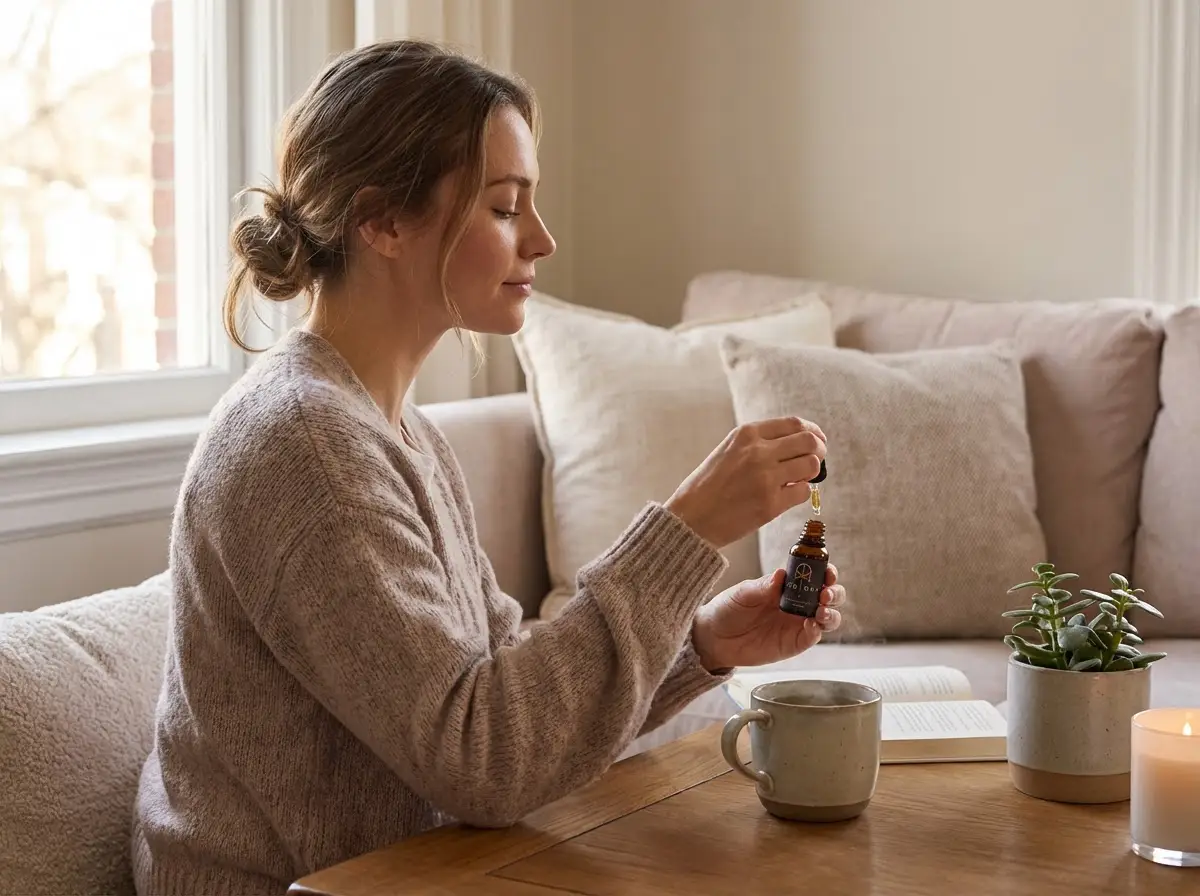
Most people asking “is CBD good for you” are really asking: “Is it worth adding to my routine, and is it safe enough to try?” That is a fair question.
1) “Good for you” does not mean “a cure”
The reality is that CBD sits in a wellness space, not a prescription space. In the UK, CBD products are not allowed to claim to treat, cure, or prevent disease. If a brand promises that, I would be cautious.
What many people overlook is that wellbeing tools can still be valuable even when they are not medicines. A good bedtime routine, breathwork, walking, hydration, and consistent sleep times are not “treatments” either, but they can genuinely support how you feel day to day.
2) What research is exploring vs what users report
Research into CBD is still developing. Some early research suggests CBD interacts with the body’s endocannabinoid system, a network involved in regulating balance across multiple functions. That is a long way from “CBD will do X for everyone”, but it helps explain why people explore it for general wellbeing.
Anecdotally, many users report that CBD helps them feel a bit more settled, supports their wind-down routine, or helps them feel more comfortable in their bodies after a stressful day. Individual responses vary a lot, which is why sensible dosing and product choice matter.
CBD oil vs drinks vs gummies: what to know
You will see lots of searches like “are CBD drinks good for you”, “is CBD oil good for you”, and “are CBD gummies good for you”. Often, people are really asking which format is most effective, and which is best value.
CBD oil: steady and flexible
CBD oil is usually taken under the tongue for a minute or two before swallowing. This gives you flexible control over your amount, and it becomes a simple ritual: a few drops, a pause, then you get on with your day.
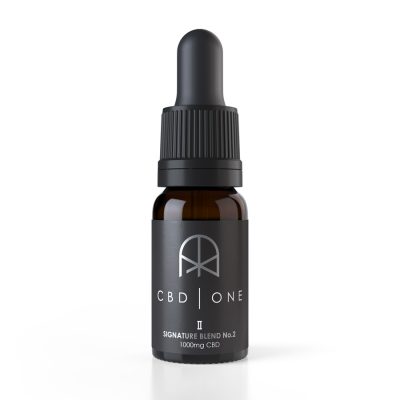
Many oils (including ours) use hempseed oil as a carrier, and full spectrum extracts. As an example, CBD One full spectrum oils list bioavailability around 12%, which is typical for oil-based formats.
CBD drinks: convenient, but check what you are actually getting
“Is CBD drink good for you?” depends on the drink. Some are properly formulated. Others are more marketing than substance, with small amounts of CBD and unclear ingredient quality.
From a practical standpoint, CBD in a drink is usually swallowed, so it has to go through digestion. Some brands use water soluble CBD (an emulsified format) designed to mix into drinks more evenly and potentially absorb differently than standard oil.
If you are curious about this topic, we have a fuller breakdown here: Do CBD Drinks Work?.
CBD gummies: popular, but not always transparent
People ask “are CBD gummies good for you” because they are easy and familiar. But gummies can be tricky: added sugars, flavourings, and sometimes vague labelling. You also have less flexibility because the amount is fixed per gummy.
Consider this. If you are using CBD to support a consistent routine, you want accuracy and clarity. With gummies, you may get that, but only if the brand provides strong third-party lab testing and clear per-serving content.
For transparency, CBD One does not focus on gummies. Not because gummies are “bad”, but because we prefer formats where we can be very clear about ingredients, dosing and lab verification.
What about “Trip CBD drink”?
You might have searched “is Trip CBD drink good for you”. I cannot comment on a specific brand’s product without reviewing its up-to-date lab reports, formulation and compliance. But you can use the same checklist in this article: check the CBD amount per serving, whether it is isolate or full spectrum, whether there is a certificate of analysis, and whether the drink is actually compliant for sale in the UK.
How to judge CBD quality in the UK
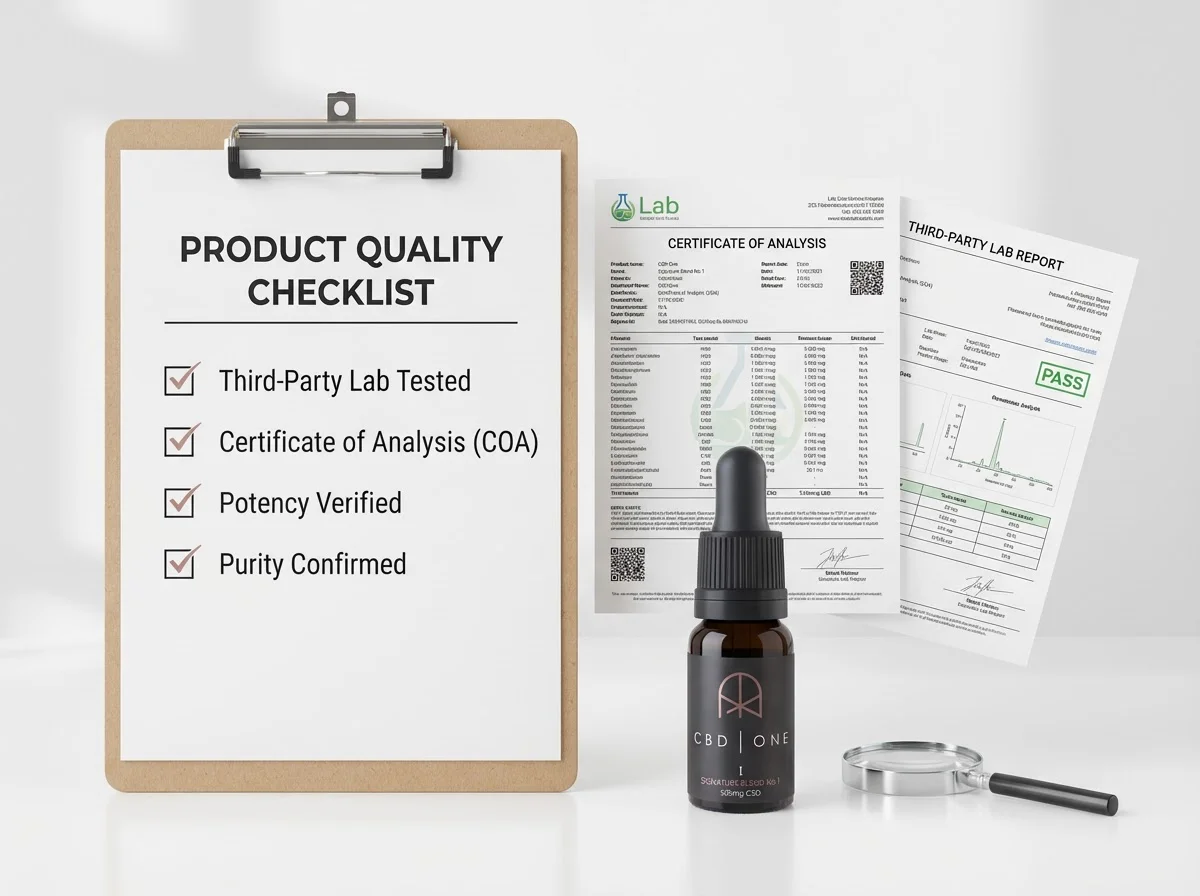
Quality is where “good for you” becomes real. A well-made CBD product is usually predictable and consistent. A poor one can be a waste of money, or at worst, bring avoidable risk.
What to look for on the label (and on the website)
- Clear CBD content per bottle and ideally per serving (mg).
- Spectrum type: full spectrum, broad spectrum, or isolate.
- Batch-specific third-party lab reports (often called a certificate of analysis).
- Ingredient list you actually understand.
- Realistic, compliant language (no medical promises).
Full spectrum and the Entourage Effect
Full spectrum products include more of the plant’s natural compounds, which may matter for how the experience feels. The idea is commonly called the Entourage Effect, where cannabinoids and terpenes may work together.
Some people strongly prefer full spectrum. Others need THC-free options for personal reasons, workplace testing, or elite sport. There is no moral “best”. It is about what fits your life.
Choose a format that matches your routine
In practice, this means asking: will you actually take it consistently?
If you like simple sublingual drops, explore the CBD Oils category. If you dislike the taste of oil or you want something that mixes into your morning drink, look at Water Soluble CBD options instead.
How to try CBD safely and sensibly
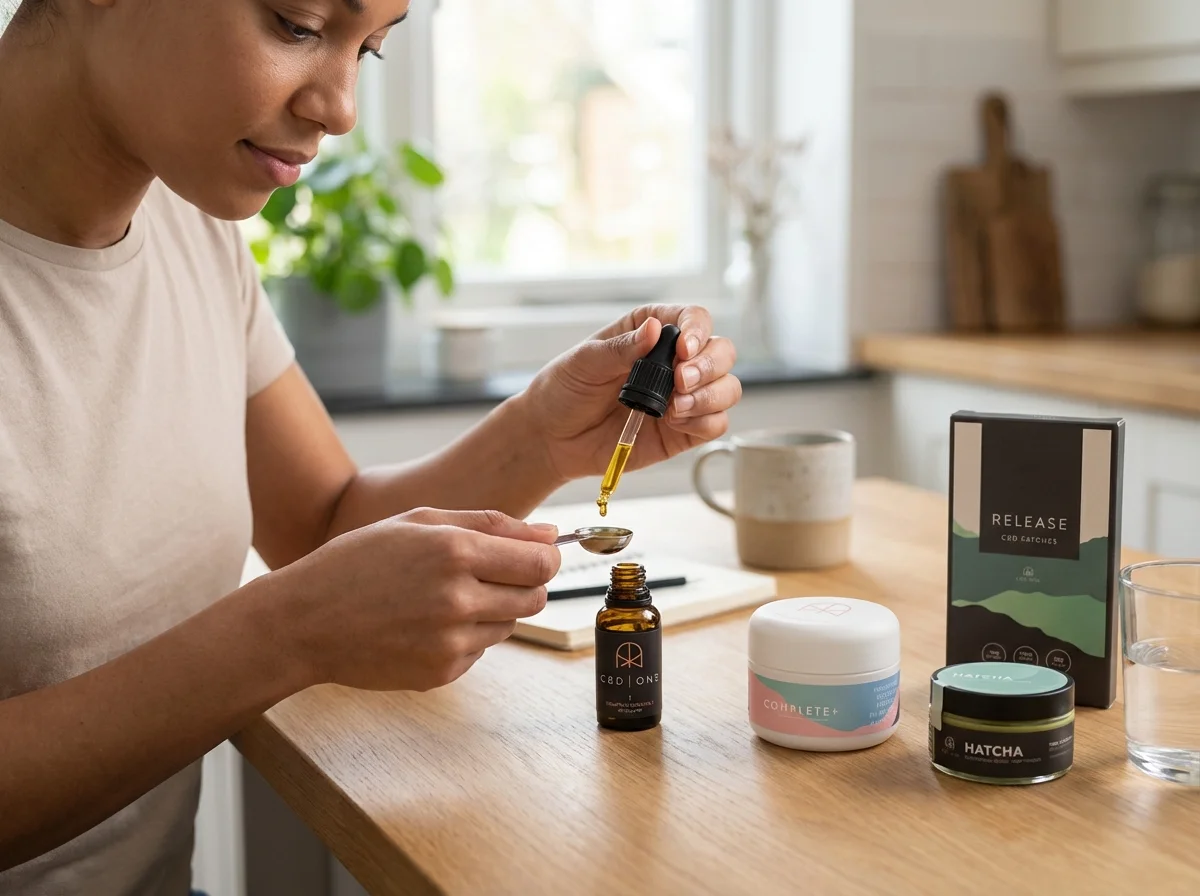
If you are new, the best approach is boring but effective: start low, go slow, and track how you feel.
Use the UK FSA guidance as your ceiling, not your target
The UK Food Standards Agency (FSA) advises healthy adults not to exceed 70 mg of CBD per day. That does not mean you need 70 mg. Many people use less than that, especially at the start.
A practical “first week” approach
- Pick one format (oil or drink-mix, for example) and stick with it for 7 to 14 days.
- Start with a small amount once per day, ideally at the same time daily.
- Increase gradually only if you feel you need to, and only one change at a time.
- Keep notes: sleep routine, stress levels, caffeine, alcohol, and overall day-to-day steadiness.
If you want help working out a sensible starting amount, our CBD dosage calculator can give you a simple framework. For a deeper explanation of dosing logic, see our CBD dosage article too.
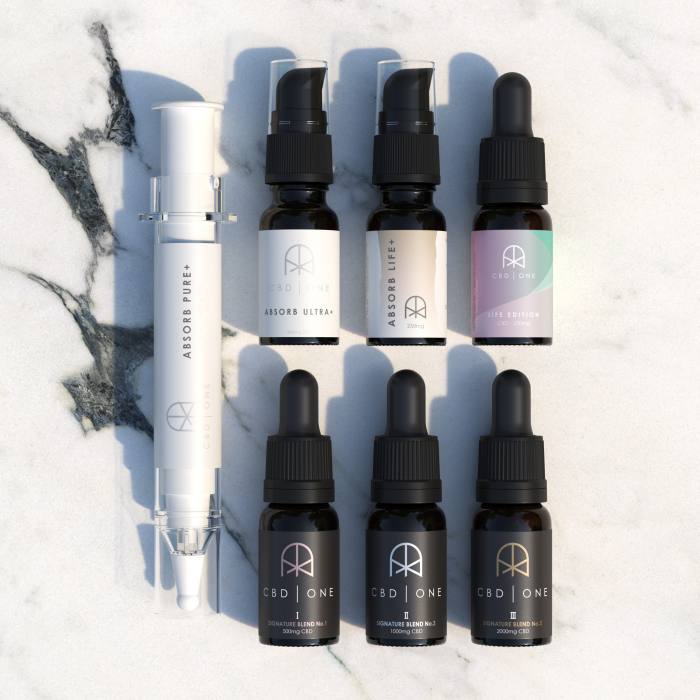
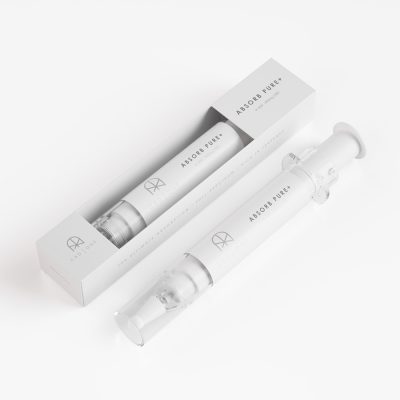
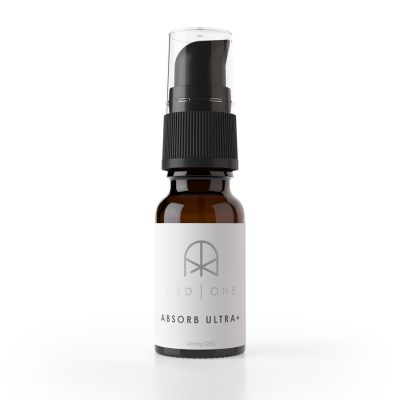
One example from our range is the Absorb Ultra+ water soluble format, which is designed to be added to a hot or cold drink with a measured pump. For some people, that sort of “one pump in the morning cuppa” routine is easier to stick to than drops.
Who should be cautious (and when to speak to your GP)

CBD is not suitable for everyone in every situation. The reality is that “natural” does not automatically mean “risk-free”.
Be extra careful if you:
- Take prescription medication (especially anything with a “grapefruit warning”).
- Have liver concerns or have been advised to monitor liver health.
- Are pregnant, breastfeeding, or trying to conceive.
- Are under 18.
If you are on medication, please read this first and speak to a clinician who knows your history: CBD and Medication.
Some people also need to avoid THC completely. Even legal full spectrum products can contain trace THC, so in those cases you would normally look for THC-free (often isolate-based) products and still check lab reports carefully.
How to decide if CBD is “good for you” personally
If you want a simple decision filter, try these questions.
1) What is your goal: a feeling, or a habit?
Most of the benefits people report from CBD come from consistent use as part of a wider routine. If you are expecting a dramatic one-off effect, you may be disappointed.
2) Can you commit to 2 weeks of consistency?
Consider this: if you cannot take it regularly, you will not learn much about whether it suits you. Choose a format that fits your day.
3) Are you choosing based on evidence, or hype?
Be wary of loud promises. Instead, compare products on transparency, lab testing, and clear CBD content.
If you want help evaluating options, our CBD buying guide and CBD product comparison pages are designed to make that decision less confusing.
CBD One was founded by brothers Nick and Alex Tofalos as a family wellness brand, and we keep things simple: plant-based formulas, clear lab verification, and practical advice if you get stuck.
What CBD might feel like (and what it should not feel like)
This is one of the most common unspoken questions behind “is CBD good for you”: what will I actually notice?
For many people, CBD is subtle. You might feel a little more even, a little less “wired”, or simply find it easier to keep your evening routine calm. Some people notice more comfortable recovery after a long day, or that they are less reactive to everyday stress. And some people feel very little at all.
Here’s what CBD should not feel like. It should not make you feel intoxicated, out of control, or like you have taken a sedative. If you feel dizzy, unwell, overly sleepy, or “not yourself”, it is usually a sign to lower the amount, change the timing, or stop and reassess.
Consider this: if you are only judging CBD by a dramatic sensation, you might miss the point. A lot of people use it more like a steady background support for a routine rather than a big moment of impact.
How long CBD takes to work, and how long it lasts
Timing matters, especially if you are trying to build a routine and you want to assess whether CBD suits you.
Onset depends on format
In general, sublingual oils are used because they may feel more predictable for many people than edible formats. Drinks and gummies are typically swallowed, so digestion and what you have eaten that day can change how quickly you notice anything.
Water soluble CBD is often used in drinks because it mixes more evenly than standard oil. Some people find it fits their routine better, particularly in the morning or mid-afternoon when they want something simple and measured.
Duration is personal
Some people prefer CBD earlier in the day, others like it as part of their wind-down. If you are testing it, keep the timing consistent for a week before you decide it is “not for you”. Changing the amount and timing every day makes it almost impossible to learn what is happening.
CBD side effects: what to watch for
Most healthy adults tolerate CBD well, but side effects can happen, especially if you take more than your body is comfortable with, or if you combine CBD with other supplements and medications.
Commonly reported side effects
Some users report things like dry mouth, feeling a bit tired, light-headedness, or digestive upset. These are not guaranteed, but they are worth being aware of.
Side effects are often a “signal”, not a disaster
From a practical standpoint, if something feels off, the simplest step is to stop for a couple of days and then restart with a smaller amount if you choose to try again. If you are using an edible format, you might also consider whether other ingredients are not agreeing with you, such as sweeteners, caffeine, or herbal blends.
Quality issues can look like side effects
One thing that gets overlooked is that inconsistent products can create inconsistent experiences. If the label is vague, there is no batch-specific lab report, or the product tastes and feels different from one bottle to the next, treat that as a quality red flag rather than “CBD does not work for me”.
Is CBD legal in the UK, and what “compliant” really means
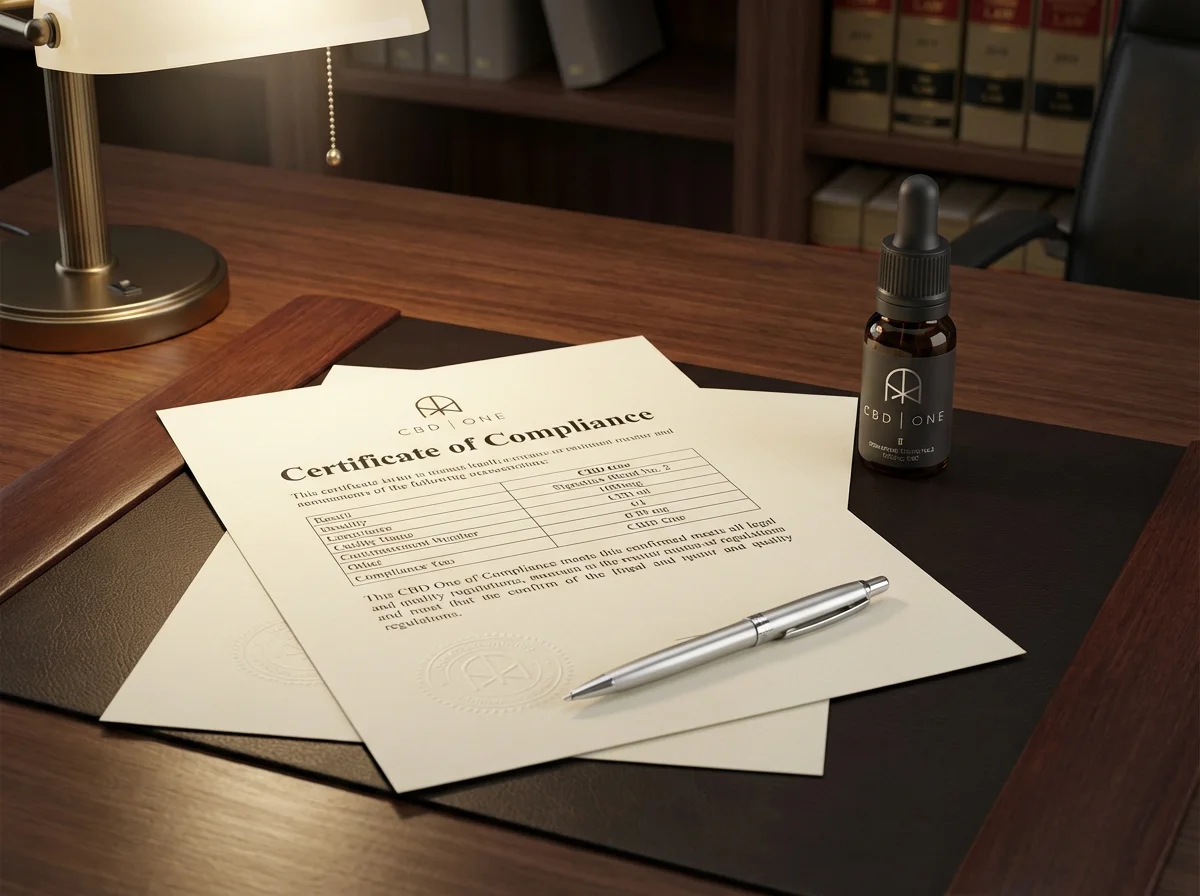
UK CBD rules can feel confusing because people mix up hemp supplements with medical cannabis. They are not the same category.
CBD is legal to buy in the UK, but products must meet certain rules
In plain English, CBD itself is not an illegal substance. The problems usually come from products that are not properly tested, not accurately labelled, or that contain more THC than they should.
What “compliant” looks like as a shopper
- Clear CBD content in mg, not just “hemp extract”.
- Batch-specific third-party lab reports that match what you are buying.
- Realistic claims and responsible positioning, because CBD is sold as a food supplement in the UK, not as a medicine.
- Trace THC only within legal limits for full spectrum products, and clarity if a product is intended to be THC-free.
The reality is that compliance and quality overlap. If a company is careless with one, it is often careless with the other.
Daily CBD use: is it OK to take CBD every day?
Many people do take CBD daily, usually because they are trying to support a steady routine rather than chasing a one-off effect. Daily use can also make it easier to judge whether CBD suits you, because you are not constantly re-starting the “experiment”.
That said, “daily” should still be sensible. Keep within the UK FSA guidance, keep your amount consistent, and pay attention to how you feel. If you find you are steadily increasing the amount because you are chasing a stronger and stronger feeling, it is worth pausing and asking what you are really looking for.
If you are taking medication, daily CBD use is exactly where it becomes most important to speak with your GP or pharmacist. Interactions are not about whether you take CBD once a month or daily, they are about your personal situation and what else you are taking.
Frequently Asked Questions
Is CBD good for you?
CBD can be a sensible addition to a wellbeing routine for some adults, but it depends on your goals, your health situation, and the product quality. In the UK, CBD is not a medicine and cannot legally be sold as one, so think of it as “support” rather than “treatment”. Many people use it to support calm, balance, and a consistent wind-down routine. If you take medication, are pregnant or breastfeeding, or have ongoing health concerns, speak to your GP before using CBD.
Is CBD oil good for you compared to other formats?
CBD oil is popular because it is flexible and easy to adjust. You can start with a small amount and increase gradually, which is useful when you are learning what works for your body. Oils are often taken under the tongue, which some people find more predictable than edible formats. The trade-off is taste, as full spectrum oils can be earthy. If you want help with technique, you might also find it useful to read CBD oil basics alongside this guide.
Are CBD drinks good for you?
CBD drinks can be fine, but quality varies a lot. Some contain a meaningful amount of CBD and provide clear lab reports. Others are more of a lifestyle product with tiny amounts of CBD and limited transparency. Also, CBD in a drink is usually swallowed, so digestion plays a role in how it is processed. If you are considering drinks, focus on the CBD amount per serving, ingredient quality, and third-party testing. This topic is covered in more detail here: Do CBD Drinks Work?.
Are CBD infused drinks good for you, or is it just marketing?
It can be either. “CBD infused” is a broad term, and it does not guarantee the CBD is well-formulated, stable, or present in a helpful amount. A practical step is to look for mg of CBD per serving (not just per bottle), plus a certificate of analysis that matches the batch. Also watch for added sugars and stimulants that might work against your goal, especially if you are using CBD as part of an evening routine. If the brand is vague, treat that as a red flag.
Are CBD gummies good for you?
Gummies are convenient and discreet, and some people like the fixed dose. The downside is that gummies often come with extra ingredients like sugars, flavourings, and colourings. You also lose flexibility because you cannot easily take “half a gummy” accurately unless it is designed for that. If you do choose gummies, look for clear CBD content per gummy, reputable lab reports, and compliant claims. If you want a format with cleaner ingredient control, oils or measured water soluble options can be easier to assess.
Is CBD drink good for you if you take medication?
If you take medication, be cautious with any CBD format, including drinks. CBD can interact with certain medicines, and the risk is not about the drink itself but about CBD as an active compound. This is especially relevant if your medication has a “grapefruit warning”, although you should not rely on that as your only guide. Speak to your GP or pharmacist and use a reputable, lab-tested product. For a sensible overview, read CBD and Medication.
How much CBD should I take if I am new?
Most people do best starting low and increasing slowly. The UK FSA advises healthy adults not to exceed 70 mg of CBD per day, but your ideal amount may be far lower than that. Choose one product format, take a small amount once daily for a week, and track how you feel before making changes. If you want a simple starting framework, use our CBD dosage calculator. For a deeper explanation, see CBD dosage.
How can I tell if a CBD product is good quality in the UK?
Start with transparency. A good CBD brand should provide clear mg content, an ingredient list you understand, and batch-specific third-party lab reports. It should also avoid medical claims, because those are not permitted for over-the-counter CBD in the UK. Next, look at the spectrum type (full spectrum, broad spectrum, or isolate) and decide what suits your needs, especially if you need THC-free. If you want help comparing, our CBD product comparison and CBD buying guide are good next reads.
Can CBD be “good for you” if you only use it occasionally?
Some people enjoy CBD occasionally, but most of the positive feedback I hear is from those who use it consistently as part of a routine. Think of it like stretching, hydration, or a wind-down ritual. Doing it once in a while might feel nice, but it is harder to judge what it is doing for you. If you are testing CBD, give yourself 2 weeks of consistency with one format and one daily timing. That will tell you far more than random use.
What is the safest way to start CBD?
Choose a reputable, lab-tested product. Start with a low amount once daily, and only increase gradually. Avoid mixing lots of new supplements at the same time, because it becomes hard to tell what is helping and what is not. Stick to the UK FSA guidance of no more than 70 mg per day for healthy adults. If you take medication, are pregnant, breastfeeding, or have medical concerns, speak to a clinician first. Safety is not about fear, it is about clarity and good decisions.
Does CBD make you high?
No, CBD is non-intoxicating and does not create the “high” people associate with THC. That said, full spectrum products can contain trace THC within legal limits, which is one reason lab reports matter. If you need to avoid THC completely for personal or professional reasons, choose a THC-free product and still check batch testing.
Is CBD addictive?
CBD is not considered intoxicating in the way substances of dependence are, and many people use it without feeling any “pull” to keep taking more. But it is still a substance you take regularly, so it is sensible to keep your use intentional: use a consistent amount, keep your expectations realistic, and make sure it supports your routine rather than replacing the basics like sleep, movement, and stress management.
What happens if you take CBD for the first time?
For some people, not much happens at all, and that can be normal. Others report feeling a little calmer, more settled, or a bit more ready for sleep if they take it in the evening. If you feel uncomfortable, overly sleepy, or light-headed, take that as feedback and reduce the amount or stop and reassess. Starting with a low amount and keeping everything else consistent for a week gives you the clearest read on how you respond.
Is it OK to take CBD every day?
Many adults choose to use CBD daily as part of a routine, and daily use can make it easier to judge whether it suits you. The key is to keep it sensible: stay within the UK FSA guidance, prioritise product quality, and pay attention to your own response. If you take medication or have health concerns, speak to a clinician before making CBD a daily habit.
Is CBD legal in the UK?
CBD products are widely sold in the UK, but legality is tied to compliance. Look for clear labelling, batch-specific third-party testing, and responsible claims. If anything feels vague, especially around THC content or lab reports, it is worth choosing a more transparent product.
Key Takeaways
- “Is CBD good for you?” is really about safety, suitability, and product quality, not miracle outcomes.
- CBD is non-intoxicating and is sold as a wellness supplement in the UK, not a medicine.
- CBD oil, drinks, and gummies can all work as formats, but they differ in transparency, flexibility, and consistency.
- Use the UK FSA guidance (max 70 mg/day for healthy adults) as a ceiling, and start low and slow.
- Always prioritise third-party lab reports and speak to your GP if you take medication.
Conclusion
CBD can be “good for you” in the same way many wellbeing tools can be good for you: it may support your day-to-day balance when you use it consistently, choose a quality product, and keep expectations realistic. It is not a magic fix, and it should never replace medical advice. But for many people, it becomes a simple ritual that fits alongside better sleep habits, movement, hydration, and stress management.
If you are deciding between formats, focus on what you will actually stick with. Oils offer flexibility, drinks offer convenience (especially water soluble formats), and gummies offer simplicity, but only if the labelling is clear and the brand is transparent. If you want help choosing, the safest approach is always the same: start low, go slow, and keep notes.
If you are unsure where to start, explore our guides or speak to Nick for free, practical advice.