
Does CBD Oil Help You Sleep? (2026 UK Guide)
In this guide, I will talk you through what CBD is, why it might feel relaxing for some people, why others feel nothing at all, and how to approach it safely in the UK. I will also cover sensible dosing, timing, and what to look for on labels, so you can make a calm, informed choice rather than a hopeful one.
Does CBD actually make you sleepy, or just more relaxed?

Most of the time, when someone tells me “CBD made me sleepy”, what they are describing is a shift from feeling stressed and alert to feeling calmer and more settled. That calm can make it easier to fall asleep, but it is not quite the same as CBD being a sedative.
Consider this. If your sleep is being disrupted by a busy mind, tension in your body, or that restless “wired but tired” feeling, anything that helps you downshift can feel like it is making you drowsy. For other people, CBD does not feel sleepy at all. It can feel neutral, or simply like a subtle easing.
Why experiences vary so much
The reality is that sleep is personal. Your caffeine intake, stress levels, alcohol, hormones, medication, pain, bedtime routine, and even light exposure in the evening all shape the result. CBD may support your overall wind-down, but it cannot override a poor sleep setup on its own.
If you want a broader foundation first, it helps to understand CBD oil generally. This is where the pillar piece on CBD oil basics can give you the bigger picture.
How CBD may fit into better sleep, without overpromising
When people search “does cbd oil help you sleep better” they are usually looking for one of two things: help falling asleep, or help staying asleep. CBD is being researched in a number of wellness areas, including sleep, but we are still learning a lot. So I always frame CBD as something that may support a sleep routine, rather than something that “fixes” sleep.
Think of CBD as a wind-down signal
From a practical standpoint, CBD can act like a marker in your routine. You take it, you dim the lights, you put your phone away, you read a few pages, you breathe a bit slower. That sequence matters. CBD might be one piece of that chain, not the whole answer.
Full spectrum vs isolate: why it comes up in sleep conversations
Many users prefer full spectrum CBD in the evening because it contains a wider range of plant compounds (minor cannabinoids and terpenes) alongside CBD. This is often discussed as the “Entourage Effect”, meaning the compounds may work better together than in isolation. It is not a guarantee, but it is one reason full spectrum products are popular for night-time rituals.
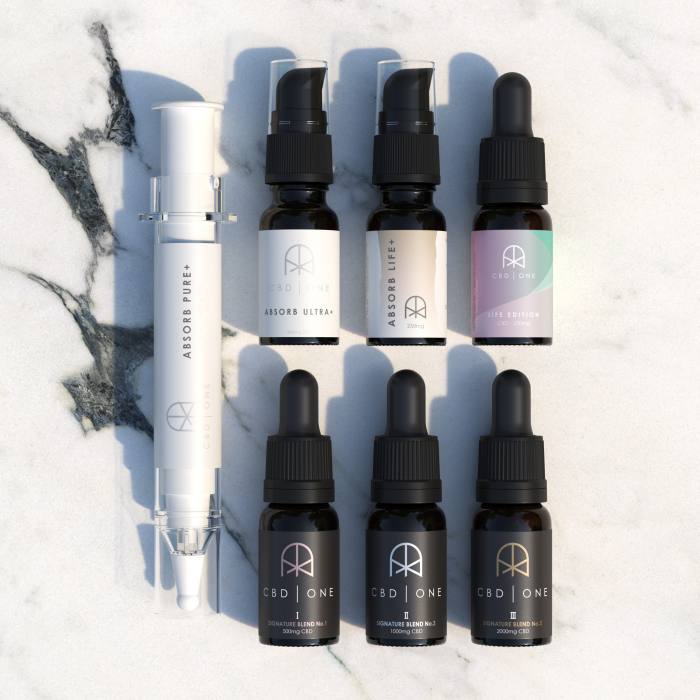
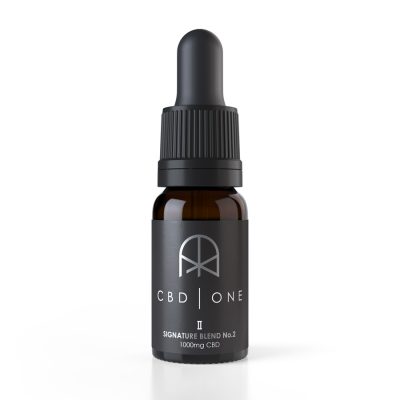
At CBD One, our core oils are full spectrum because we like the whole-plant approach and the way it mirrors how hemp naturally comes. If you want to browse formats, the CBD Oils category shows the different strengths available.
Timing, routines, and what many people overlook
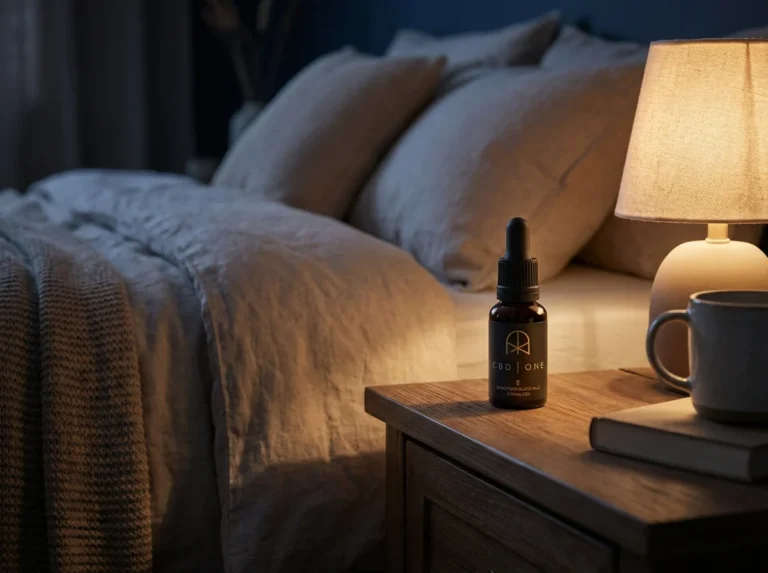
Now, when it comes to “will cbd oil help you sleep”, timing is often the difference between “I felt nothing” and “that really helped me unwind”. Not because CBD is magical, but because your body runs on patterns.
When do people usually take CBD for sleep?
Many people take CBD 30 to 90 minutes before bed, then keep the rest of the evening calm. If you are using an oil under the tongue, you might feel it sooner than if you swallow it straight away.
If you are unsure how to use oil properly, read how to take CBD oil. That small detail (especially holding it under the tongue) can change the experience.
Build a “sleep runway”, not a last-minute rescue
What many people overlook is that sleep starts long before you get into bed. Try pairing CBD with simple habits: consistent bedtime, lower lights after dinner, a short stretch, and reducing late caffeine. In practice, this means you give your nervous system a chance to settle gradually, rather than expecting an instant off switch.
If you are the kind of person who wants clear expectations, it is worth reading How Long Does CBD Take To Work? so you are not judging it too quickly.
CBD formats for evenings: oils vs drinks vs patches
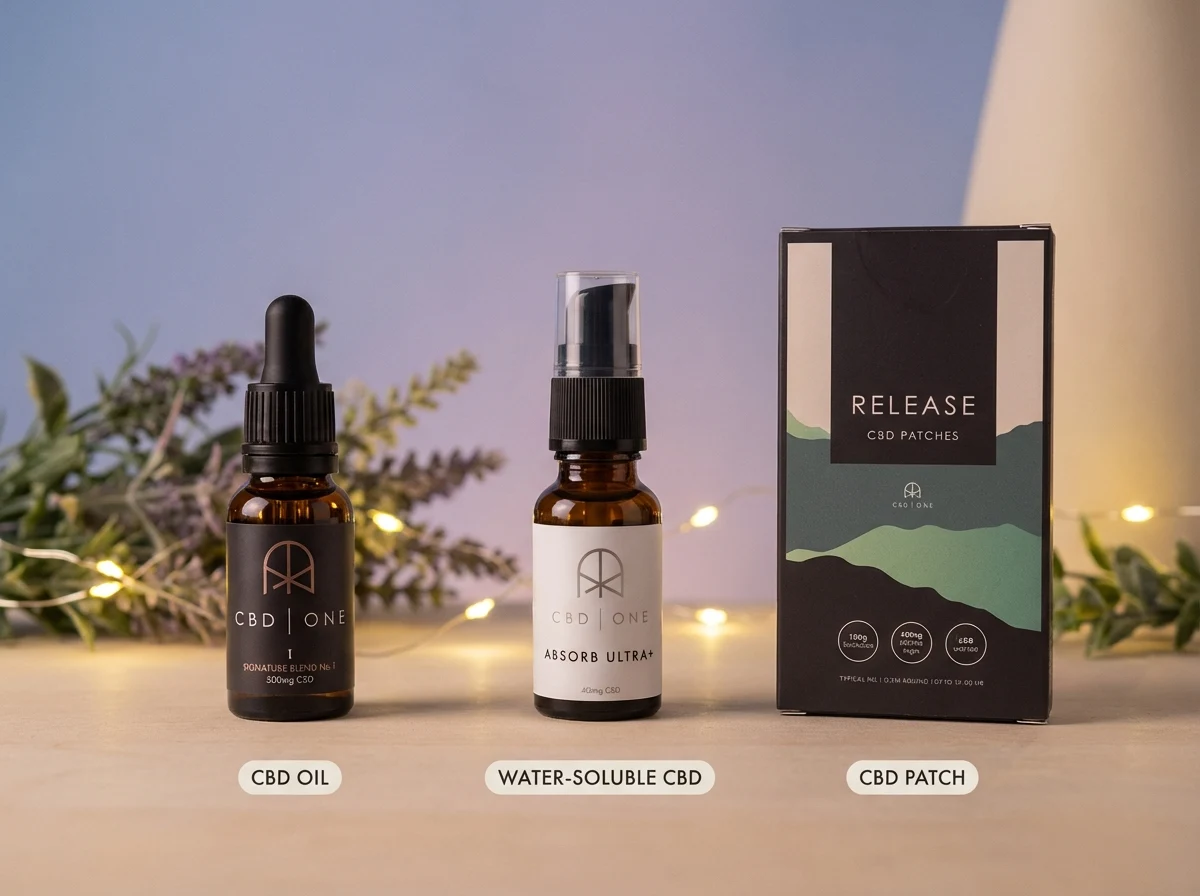
“Does CBD help you sleep” is also a format question. Different products can suit different people, mainly because of convenience, taste, and how steadily you want CBD delivered.
CBD oil drops (sublingual)
Oils are a classic choice for night-time because they fit a simple bedside routine. CBD One oils list a bioavailability of around 0.12 (12%), which is fairly typical for many oil-based products. The key is consistency and getting your technique right.
Water soluble CBD (mixed into a drink)
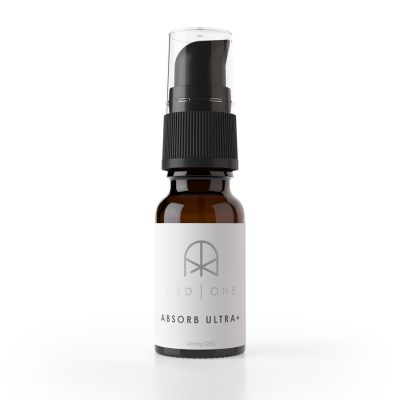
If you do not enjoy the taste of oils, water soluble CBD can be easier to stick with. You can mix it into a warm (not boiling) drink as part of your evening ritual. One example from our range is Absorb Ultra+, which is designed to be added to hot or cold drinks and taken once daily. You can explore this format via the Water Soluble CBD category.
CBD patches (slow release)
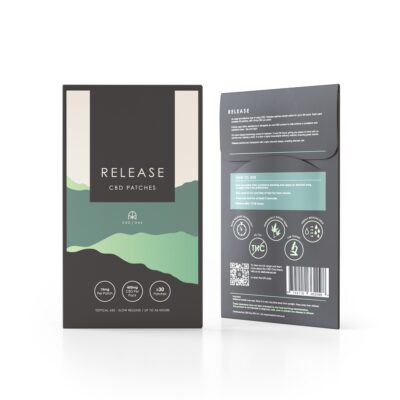
Patches are a different approach. They are typically used for steady delivery over many hours, which some people prefer if they dislike taking oils at night. CBD One patches are THC-free (CBD isolate) and the standard CBD Patches [30 x 15mg] | Release list “40%+” bioavailability via transdermal delivery. Sleep-wise, they are more about consistent background support than an obvious “bedtime feeling”.
What about CBD drinks like TRIP?
People often ask “does trip CBD drink help you sleep”. The honest answer is: it depends on the exact product, the CBD dose, other ingredients (like botanicals), and your expectations. Many canned CBD drinks contain relatively small amounts of CBD, which may feel subtle. If you enjoy the ritual of a relaxing drink, it can still be a helpful habit, but do not assume it will feel the same as a higher-dose oil or a more concentrated water soluble product.
UK safety, dosing basics, and when to speak to your GP
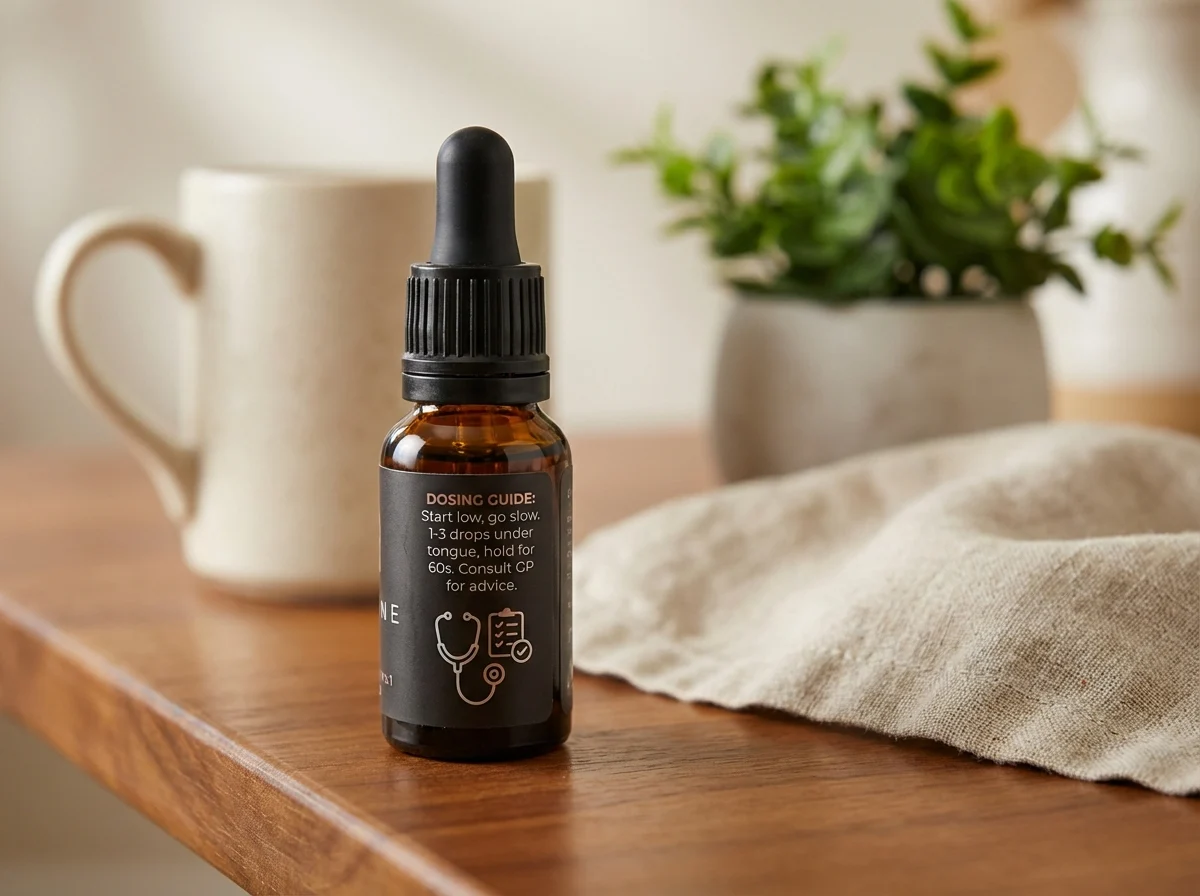
In the UK, the Food Standards Agency (FSA) advises healthy adults not to exceed 70mg CBD per day. That is not a target to hit, it is a sensible upper guideline.
Start low, go slow (especially for sleep)
If you are exploring CBD for evenings, start with a low amount for a few nights and see how you feel. Some people find that too much CBD makes them feel a bit heavy or groggy the next morning, while others feel nothing at all. The goal is to find your “just enough” zone, not to chase sedation.
If you want a more structured approach, use CBD oil dosage guide alongside the CBD oil strength guide. They help you match your product strength to your intended daily amount, so you are not guessing.
Be cautious with medication
If you take prescription medication, speak to a pharmacist or GP before using CBD. CBD can interact with some medicines (particularly those with grapefruit warnings). For a clear, sensible overview, read CBD and Medication.
This is especially important if sleep issues are persistent, severe, or linked with anxiety, low mood, breathing issues at night, or chronic pain. CBD can be part of a wellness routine, but it should not delay proper medical support.
Quality checklist: how to choose a CBD product you can trust
When someone says “does cbd oil help with sleep UK”, what they often really mean is: “Can I find a product that is consistent and safe?” Because if your CBD varies bottle to bottle, your results will too.
Here is what I recommend checking before you buy anything:
- Clear CBD content: total mg per bottle and (ideally) an idea of mg per serving.
- Spectrum: full spectrum, broad spectrum, or isolate. Full spectrum contains trace THC within legal limits, isolate is THC-free.
- Independent lab testing: look for a Certificate of Analysis you can actually read.
- Simple ingredients: especially if you are taking it at night and want predictability.
- Realistic claims: avoid brands promising cures or guaranteed sleep.
If you are comparing options, you might find best CBD oil UK useful as a general buying guide, even if you are still in research mode.
One practical note from our side: CBD One does not sell gummies. For sleep-focused users, we have found that measured formats like oils, water soluble CBD, or patches make dosing and consistency clearer, which matters when you are trying to dial in your routine.
Night-time side effects and next-day grogginess: what to watch for
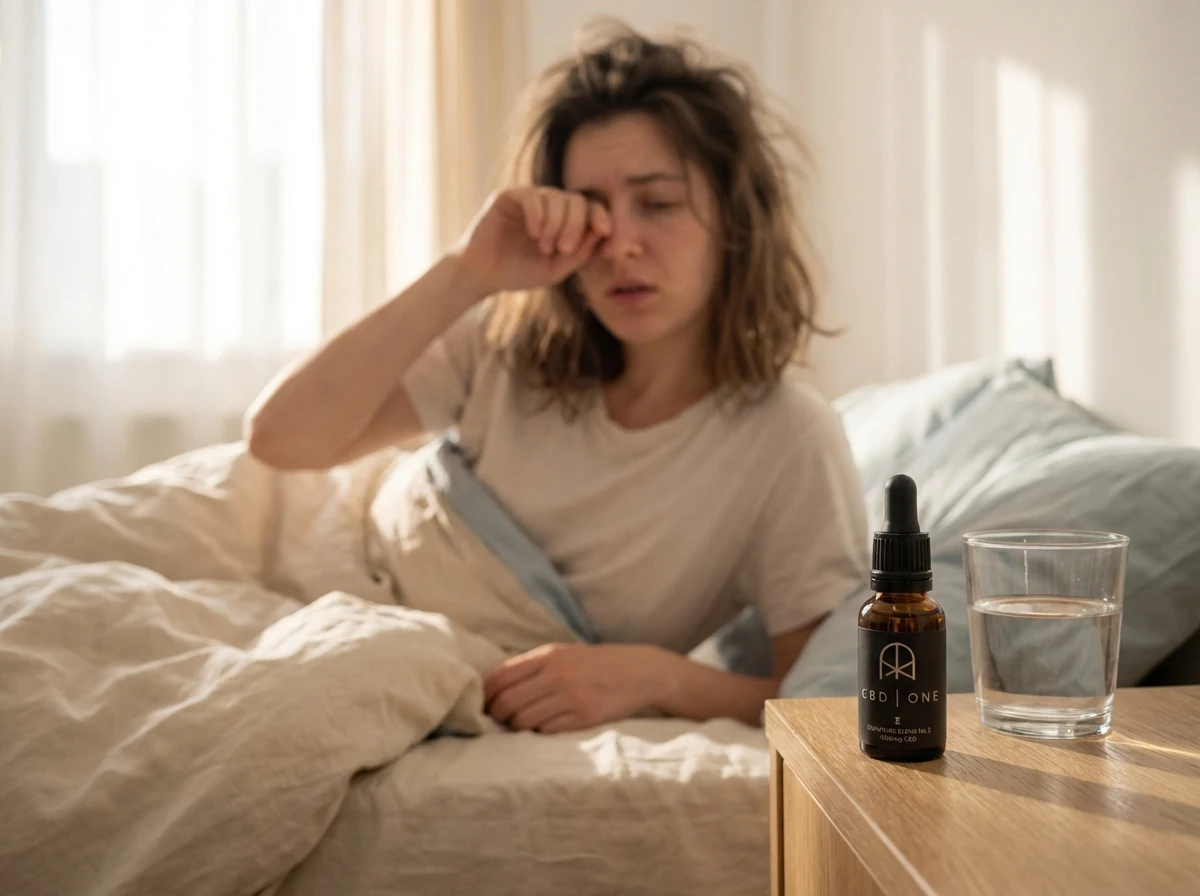
If you are trialling CBD for sleep, it helps to know what “not quite right” feels like. Most people tolerate CBD well, but the evening is when you are most likely to notice unwanted effects, mainly because you are trying to feel calm and clear, not foggy.
Common things people notice at night
Some users report a dry mouth, a slightly “heavy” feeling, vivid dreams, or feeling a bit too relaxed at the wrong moment. None of that automatically means CBD is not for you. Often it is a sign the timing, amount, or format needs adjusting.
What next-day grogginess usually comes from
If you wake up feeling groggy, it is often one of these: taking too much, taking it too late, mixing CBD with alcohol, or combining it with other supplements or products that make you drowsy. Consider this as well: if CBD helps you unwind, you might simply sleep more deeply than you are used to, and that can feel unusual for a few mornings.
From a practical standpoint, if you are getting that heavy morning feeling, try taking a smaller amount, move it earlier in the evening, and keep the rest of your routine steady for a few nights before judging it.
Is it OK to take CBD every night for sleep?
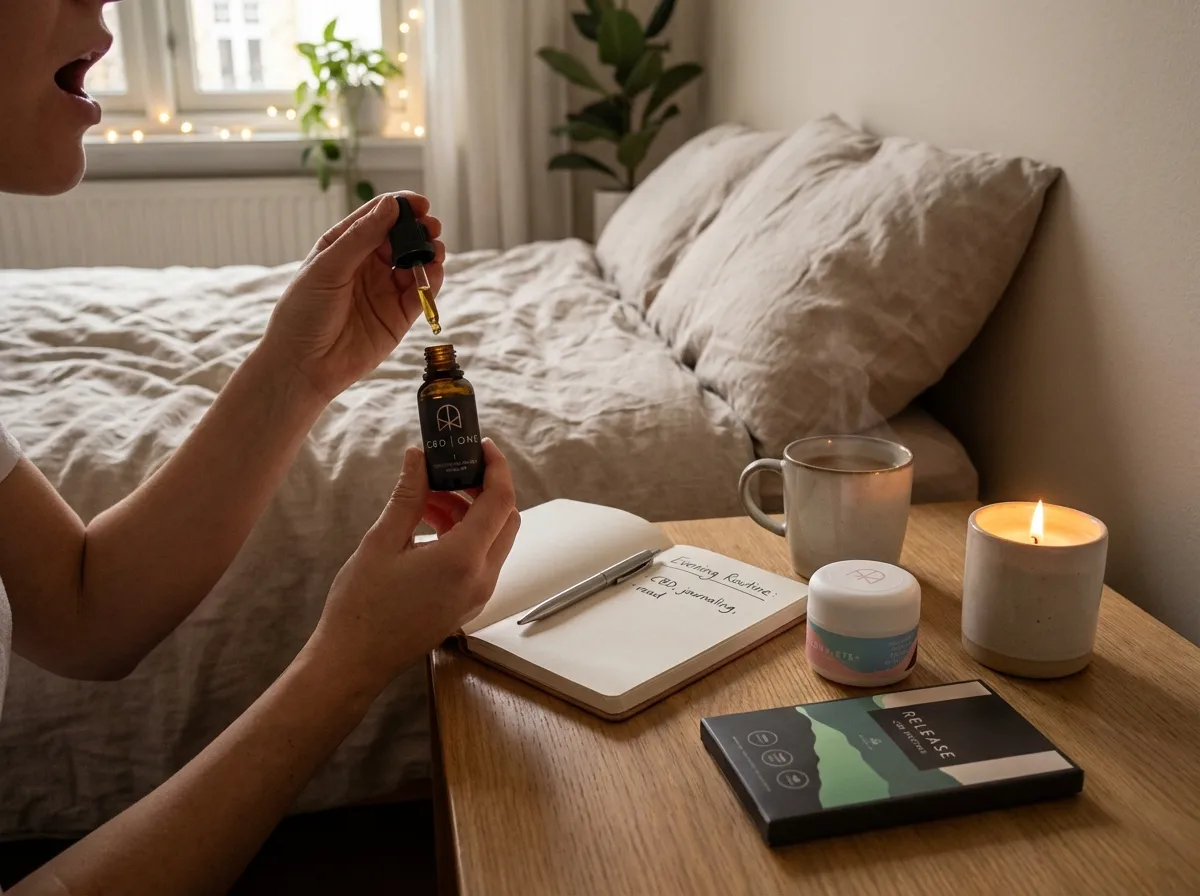
This is one of the most common questions behind “does cbd oil help you sleep”, because people want to know if CBD is something you can use as part of normal life, not just as a one-off experiment.
Many people choose to take CBD daily, including in the evening, because routine is often where the value is. The key is to keep it sensible: stay within the FSA guidance for healthy adults, pay attention to how you feel, and do not use CBD to ignore a bigger sleep issue that needs proper support.
Daily use: a simple way to keep it grounded
If you are taking CBD most nights, it helps to do a quick check-in once a week. Are you sleeping better because your evenings are calmer, or are you creeping your amount up because you are chasing a stronger effect? If it is the second one, pause and simplify. CBD tends to work best when it is part of a stable routine, not a moving target.
When to take a break and reassess
If you notice persistent morning grogginess, headaches, stomach upset, or you just do not like how you feel, it is reasonable to stop and reassess. And if your sleep is consistently poor for weeks, or you suspect something is going on that is more than stress and routine, speak to your GP. You deserve real answers, not just another supplement.
Frequently Asked Questions
Does CBD oil help you sleep?
CBD oil may support sleep for some people, mainly by helping them feel calmer in the evening. It is not a sleeping pill, and it does not “knock you out”. If your sleep is being disrupted by stress, a busy mind, or difficulty settling, CBD may be a useful part of a wind-down routine. If your sleep problems have an underlying medical cause, CBD may not be enough on its own. If symptoms persist, it is worth speaking with your GP to rule out anything more serious.
Does CBD make you sleepy the next day?
Some people report feeling a little groggy the next morning, especially if they take a higher amount than they need, take it very late, or combine it with alcohol or other sedating substances. Often, it is not “hangover sleepiness” so much as feeling heavy or slower to get going. Starting with a low dose, taking it earlier in the evening, and being consistent for a few nights can help you find the right level for you.
Does CBD oil help you sleep better or just fall asleep faster?
It can be either, depending on what is affecting your sleep. Some users report that CBD helps them relax and drift off more easily. Others say the bigger benefit is staying asleep because they feel less “on edge” during the night. That said, sleep quality is influenced by many factors, including light exposure, temperature, caffeine, alcohol, and stress. CBD may support the routine, but it is rarely the only lever worth pulling.
Can CBD oil help with sleep in the UK, and is it legal?
CBD products are widely sold in the UK, but they must meet specific rules. CBD is not a medicine and cannot be marketed as one. Reputable brands should provide lab reports and clear cannabinoid content, and products should comply with UK regulations (including Novel Food requirements where relevant). If you are unsure whether what you are buying is legitimate, look for transparent testing and realistic, non-medical claims. When in doubt, choose a brand that can show you exactly what is in the bottle.
How much CBD should I take at night for sleep?
There is no single dose that works for everyone. A sensible approach is to start low and slowly adjust based on how you feel over several nights. In the UK, the FSA advises healthy adults not to exceed 70mg CBD per day. If you want to be systematic, use a dosage guide and match it to your oil strength so you know roughly how many mg you are taking, rather than counting drops blindly. If you take medication, check with your GP or pharmacist first.
When should I take CBD oil before bed?
Many people take CBD 30 to 90 minutes before bed, then keep the rest of the evening calm and consistent. If you use CBD oil under the tongue, holding it there for a short period may help it take effect sooner than swallowing immediately. If you are using a water soluble format in a drink, you might build it into your evening routine earlier, like after dinner. Timing is personal, so give it a few nights before deciding.
Are CBD drinks good for sleep?
CBD drinks can be a nice ritual, but the effect depends on the CBD amount and the rest of the ingredients. Many ready-to-drink products contain small CBD doses, which can feel subtle. If you enjoy a warm drink before bed, a measured CBD format mixed into your drink may give you more consistent dosing. If you are using a canned drink, check the label carefully and keep your expectations realistic. If sleep is a major issue, focus on routine and sleep hygiene as well.
Is full spectrum CBD better for sleep than CBD isolate?
Some people prefer full spectrum CBD in the evening because it includes a broader range of cannabinoids and terpenes that may contribute to the overall effect (often discussed as the Entourage Effect). CBD isolate is THC-free and can suit people who want to avoid THC completely, such as tested athletes. There is no universal “best”. What matters is how you respond, whether the product is well made, and whether you can take it consistently as part of a wind-down routine.
Can I take CBD with melatonin or sleeping tablets?
This is a good one to take seriously. CBD may interact with some medicines, and combining CBD with sedating products could make you feel overly drowsy. If you are using prescription sleeping tablets, antidepressants, anti-anxiety medication, or anything with a grapefruit warning, speak with your GP or pharmacist first. If you want a clear overview of interaction risk, read a dedicated guide on CBD and medications and use that as a starting point for a proper conversation with a healthcare professional.
What if CBD does not help my sleep at all?
That can happen, and it does not mean you have done anything wrong. CBD affects everyone differently, and sleep is influenced by a long list of factors. If you have tried a low, consistent dose for a week or two with good technique and still feel nothing, it may be the wrong tool for your situation, or you may need to change something else in your routine first. If insomnia is persistent, or you feel unwell, speak to your GP to explore underlying causes and support.
Is it OK to take CBD oil every night?
Many people choose to take CBD daily, including every evening, because consistency often helps you understand what it does for you. If you are a healthy adult, keep your daily intake within the FSA guidance of 70mg CBD per day, and pay attention to how you feel over time. If you take medication, are pregnant or breastfeeding, or you have ongoing sleep problems, it is worth speaking to a GP or pharmacist before making CBD a nightly habit.
What are the side effects of CBD oil at night?
Side effects vary, and many people do not notice any at all. Some users report dry mouth, feeling a bit too relaxed, changes in appetite, or next-day grogginess if they take more than they need or take it very late. If you notice unwanted effects, simplify your approach: reduce the amount, take it earlier, avoid alcohol, and keep your routine steady for a few nights. If side effects persist or you feel unwell, stop using CBD and speak to a healthcare professional.
Key Takeaways
- CBD is not a sedative, but some people find it helps them unwind, which can support sleep routines.
- Timing and consistency matter. Many people take CBD 30 to 90 minutes before bed as part of a wind-down ritual.
- Start low, go slow, and stay under the FSA guidance of 70mg CBD per day for healthy adults.
- Choose transparent products with independent lab tests and clear labelling, especially if you are experimenting for sleep.
- If you take medication or have persistent sleep problems, speak to your GP or pharmacist before using CBD.
Conclusion
So, does CBD oil help you sleep? For some people, yes, in the sense that it may help them feel calmer and more settled in the evening. For others, it is neutral, or too subtle to notice. That is why I always encourage you to treat CBD as a support for your routine, not a replacement for the basics like light exposure, caffeine timing, alcohol awareness, and a consistent bedtime.
If you do decide to try it, keep it simple. Pick a well-tested product, start with a low amount, and stick with it for a week or two while you track how you feel. And if you are on medication, or sleep is becoming a real struggle, speak to your GP and get proper guidance.
If you want help choosing a format, you can always explore and speak to Nick for free, no-pressure advice.