
CBD patches for anxiety UK: best prices (2026)
CBD patches for anxiety: a practical overview
CBD (cannabidiol) is a non-intoxicating compound from hemp. People use it for many wellbeing goals, including feeling calmer or more settled, but it is important to be clear: CBD is not a medicine in the UK and it cannot be marketed as treating anxiety. Individual results vary, and if anxiety is persistent, severe, or worsening, it is worth speaking to your GP or a qualified clinician.
CBD patches are topical, adhesive patches designed to deliver CBD through the skin (transdermal delivery) over a long period, often all day and into the night depending on the patch. The appeal is consistency: rather than peaks and dips from an oral dose, patches aim for a steadier release.
In the UK, you will most commonly see patches made with CBD isolate (THC-free) rather than full spectrum. That can be useful if you want to avoid trace THC entirely, for example due to workplace testing. You can browse CBD One’s CBD patches and topical range here, then compare strength, pack size, and cost per patch.
Key features: what to look for in the best CBD patches for anxiety
Most “best CBD patches for anxiety UK” searches boil down to the same buying questions: will it stay on, will the dose feel consistent, and is the brand transparent? Here are the features I would prioritise when comparing products.
1) CBD per patch (and what that means in real use)
Patches are usually priced per pack, but you should think in “mg per patch” and “how often you will use them”. A 15mg patch used daily is a different commitment to a 30mg patch used a few times per week. Higher mg does not automatically mean “better” for everyone. Many people do well by starting lower and adjusting gradually.
2) Release time (how long it is designed to last)
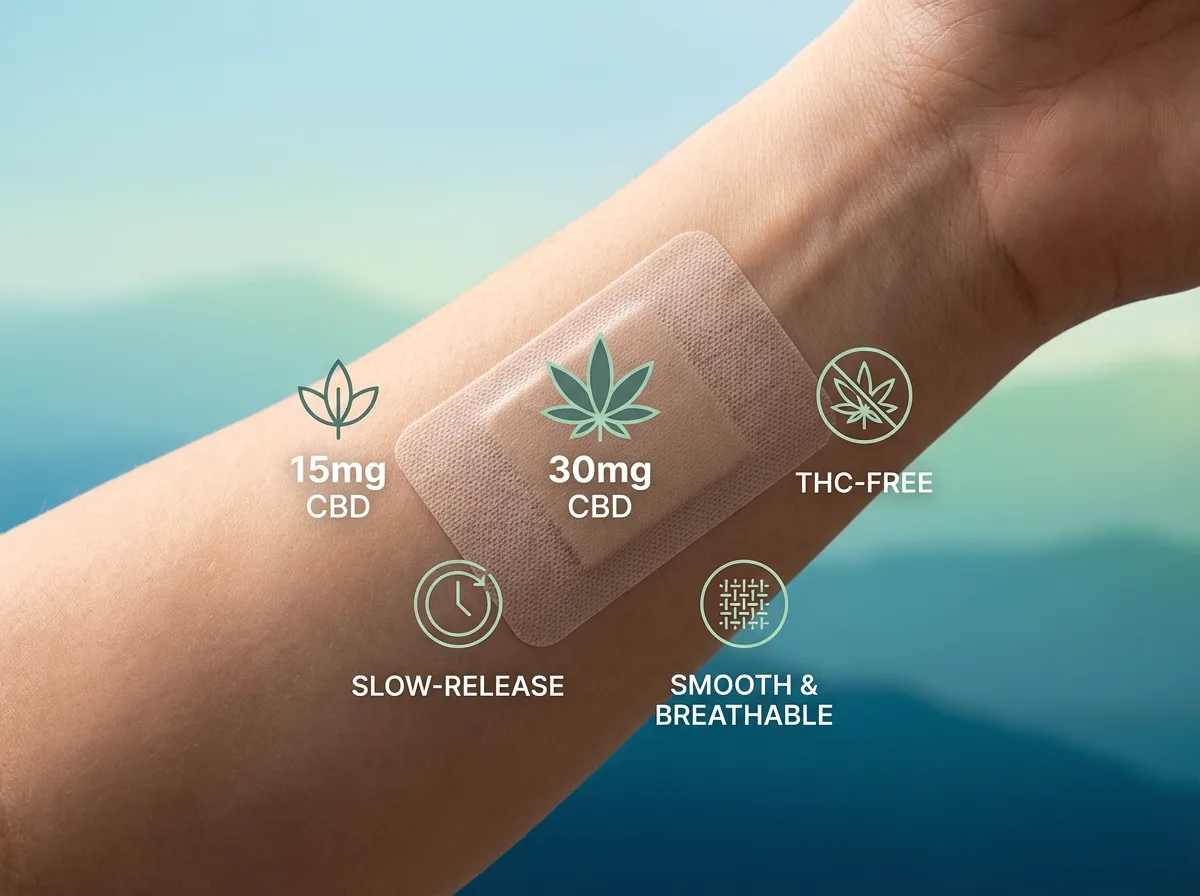
Look for a stated wear time window. CBD One’s Release patches are designed with slow-release technology for up to 36 hours, which can be helpful if you want an option you can apply and forget. In practice, how long you wear it can depend on skin type, activity level, showering, and personal comfort.
3) Spectrum: isolate vs full spectrum
- CBD isolate is pure CBD and is typically THC-free.
- Full spectrum includes CBD plus minor cannabinoids and terpenes, with only trace THC within legal limits.
For patches specifically, isolate is common. If you are aiming for the “entourage effect”, that is more often discussed with full spectrum oils and extracts.
4) Lab verification and batch documentation
For any ingestible or topical CBD, I look for clear signals of testing and traceability. CBD One patches are listed as lab verified. If you are taking any medications, I would also read this before you buy: CBD and medication.
5) Skin friendliness and usability
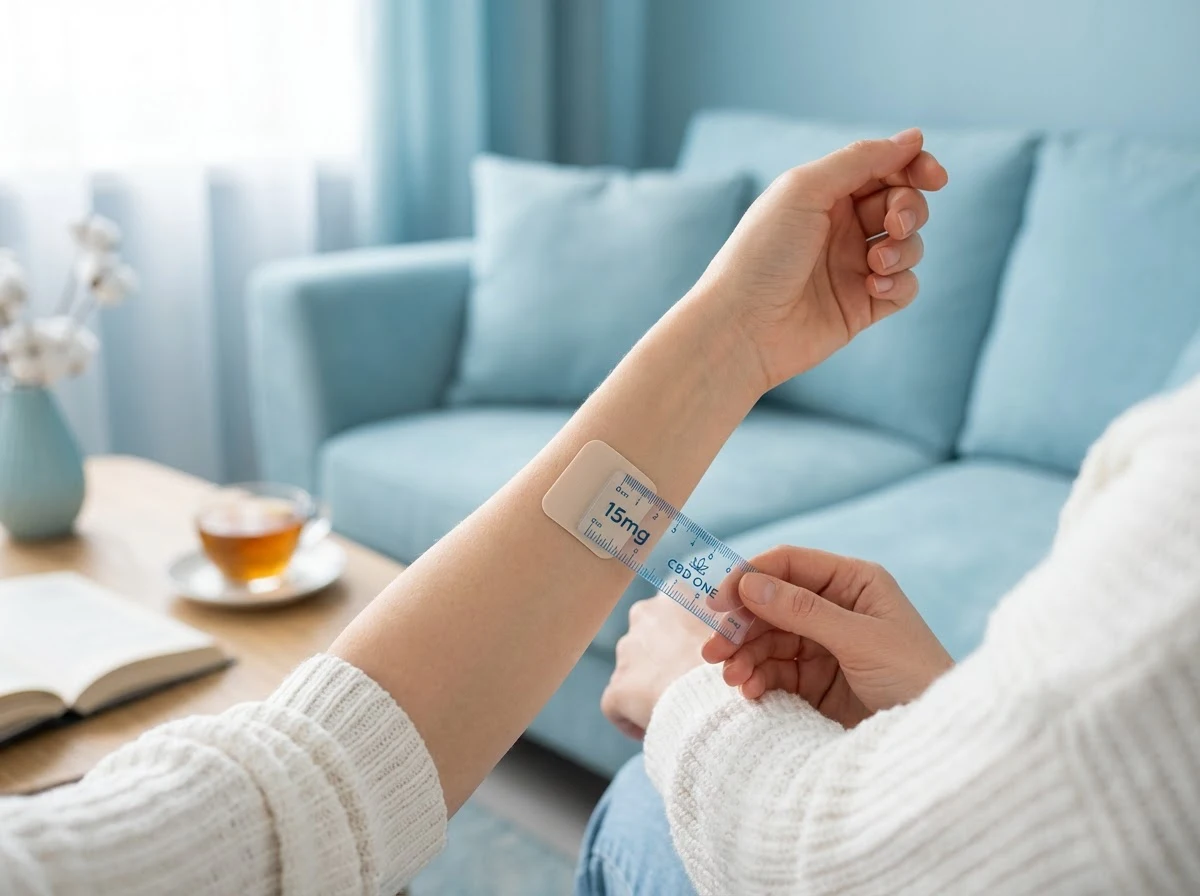
It sounds basic, but adhesion and irritation matter. A patch is only useful if it stays on and feels comfortable. Favour patches that are easy to apply, use measured dosing, and give clear guidance like “apply to dry, hair-free skin”. If you have sensitive skin, patch testing (on a small area first) is sensible.
Pros and Cons
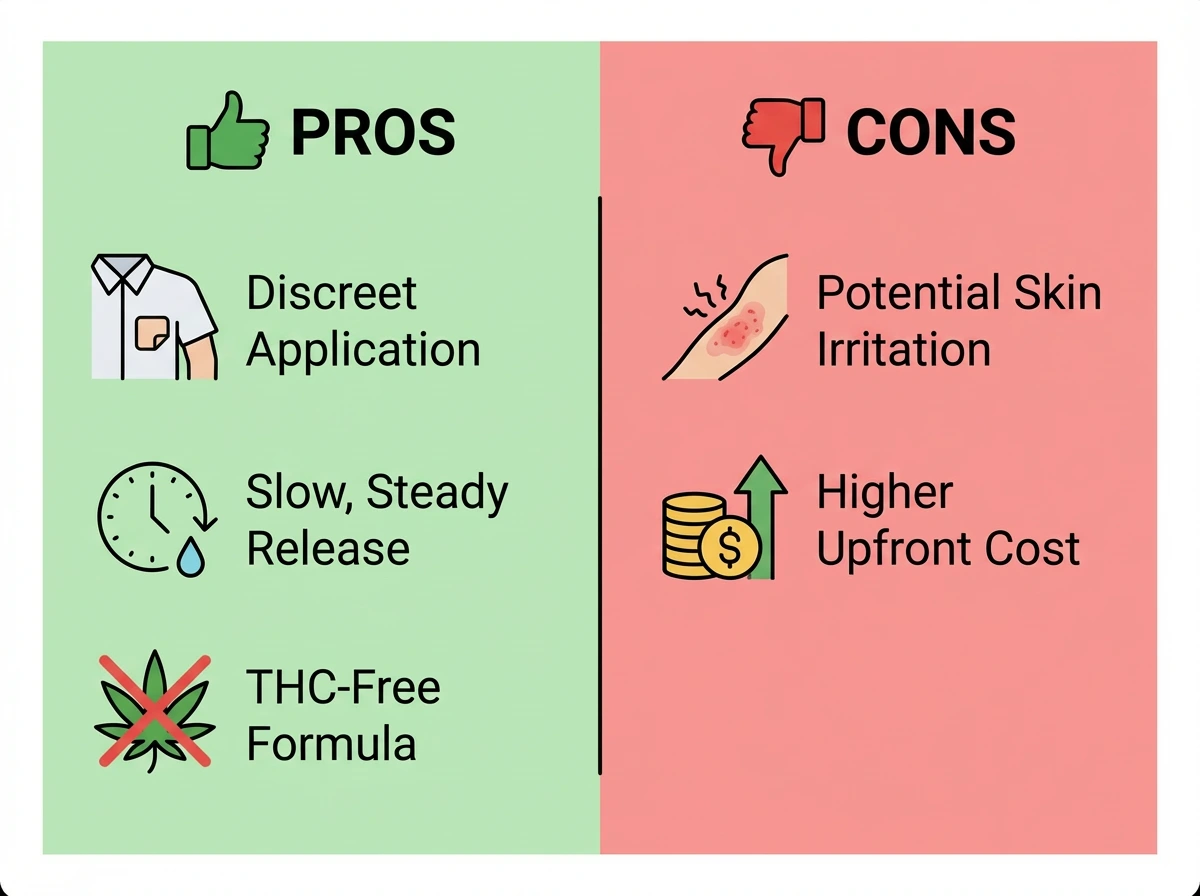
Strengths
- Discreet, low-effort format that suits busy routines and travel.
- Slow-release design may feel more consistent than “dose and wait” oral products for some users.
- Measured CBD amount per patch makes it easier to track daily intake.
- THC-free isolate patches are available, which may appeal to athletes and anyone avoiding trace THC.
- No taste, no mixing, and no need to carry bottles or droppers.
Considerations
- Patches can irritate skin or fail to stick well (sweat, hair, lotions, showering).
- They can be less flexible than oils for micro-adjusting dose (you cannot easily take “half a patch” accurately).
- Upfront cost can feel higher compared with entry-level oils, especially if used daily.
- Effects are individual, and patches are not a guaranteed fix for anxiety symptoms.
- Not all brands explain testing and ingredients clearly, so you may need to do extra homework.
Who CBD patches may be for (and who should avoid them)
CBD patches for anxiety UK searches are usually coming from people who want calm support without fuss. Patches may suit you if you want a steady, all-day format, prefer THC-free options, or dislike the taste of CBD oil.
You might want to skip patches (or at least be cautious) if you have very sensitive skin, you need very fine dose control, or you are dealing with significant anxiety that needs clinical support. If you are pregnant, breastfeeding, or taking medications, speak to a healthcare professional before using CBD.
CBD One patches (UK delivery) and best prices in one place
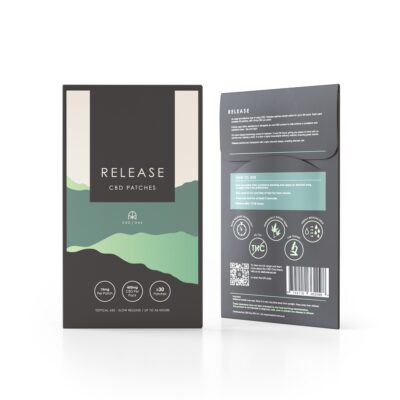
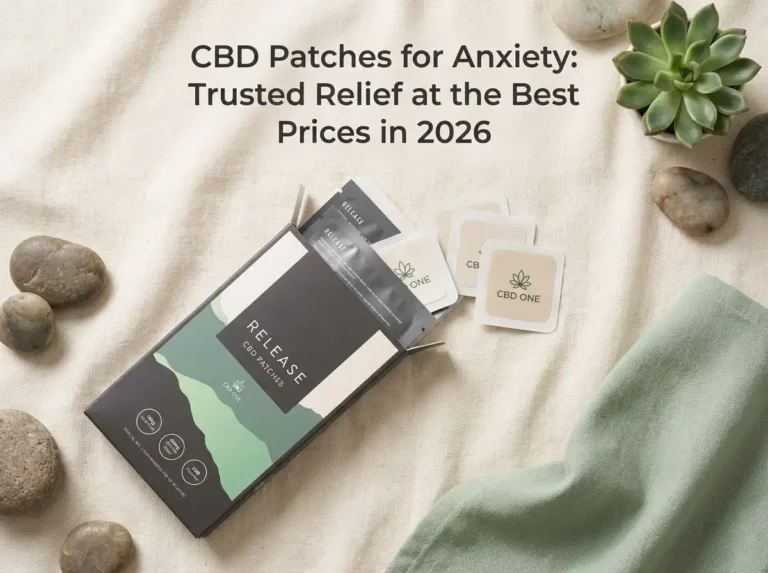
If you are close to buying and want a straightforward, UK-based option, CBD One’s Release patch range keeps things simple: measured dosing per patch, slow-release tech, THC-free isolate, and lab verification.
Two options to compare:
- CBD Patches [30 x 15mg] | Release at £29.99. A sensible starting point if you want to test the format and see how your body responds.
- 30mg High Strength CBD Patches [30 x 30mg] | Release+ at £44.99. Better suited to experienced users who already know they prefer a higher-strength patch.
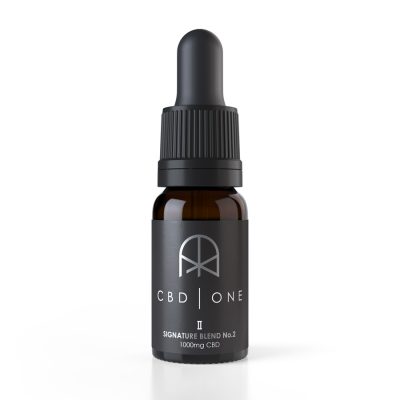
Limitation to be upfront about: CBD One’s patch range is focused and premium. If you want flavours, gummies, or a huge range of patch “types”, you will not find that here. If you would rather take CBD orally as part of a wind-down routine, a full spectrum oil like 10% CBD Oil [1000mg CBD] (£58.99) can be a more flexible dosing tool.
Buying guide: choosing the best CBD patches for anxiety (without overpaying)
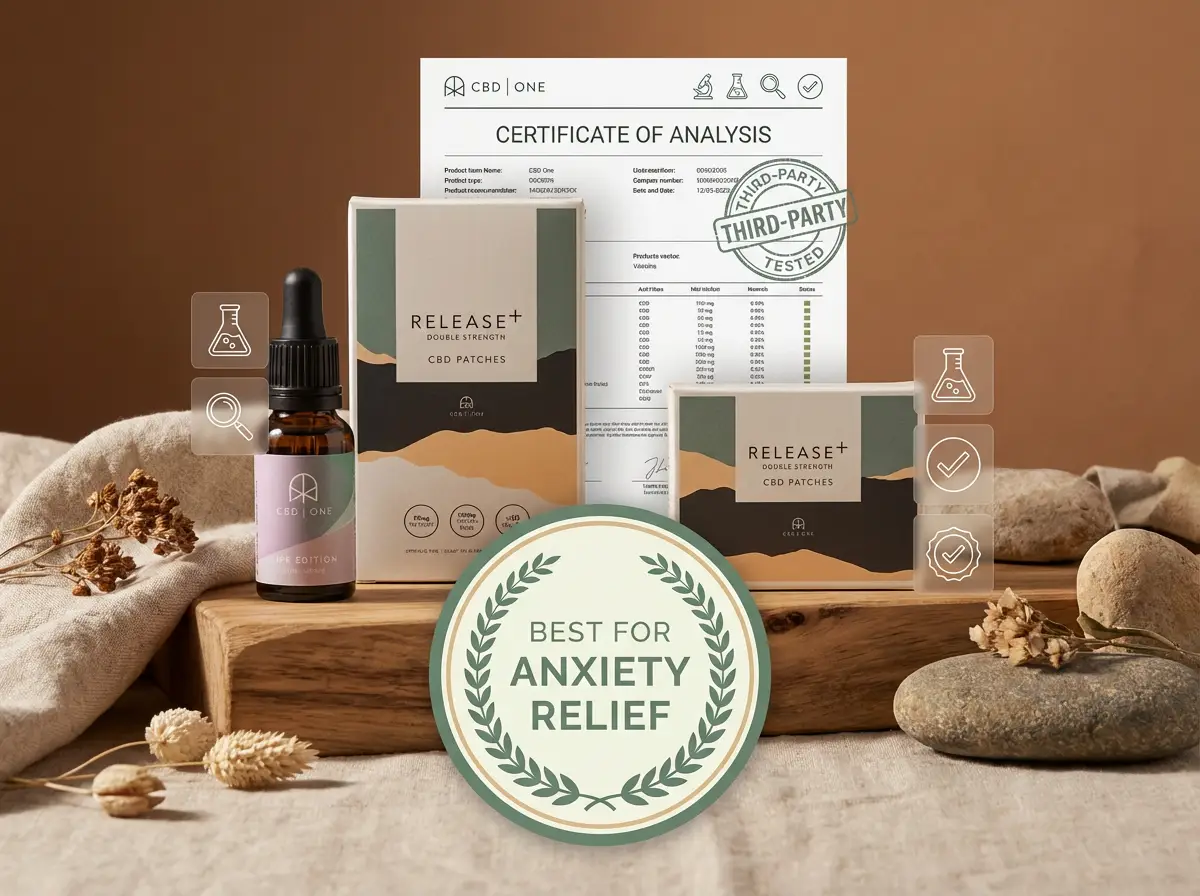
Here is the framework I would use if you are comparing CBD patches for anxiety reviews, prices, and UK delivery options. It is not about chasing the strongest patch, it is about matching the product to your goals and routine.
1) Choose a realistic strength (start low, then adjust)
If you are new to CBD, a lower-strength patch is often the easiest way to judge tolerance. Give yourself several days with a consistent routine before changing strength. If you feel nothing at all, or you are confident you need more, move up gradually. Avoid stacking multiple products on day one, because you will not know what is doing what.
2) Check wear time vs your lifestyle
“Set and forget” is only true if the patch stays on and feels comfortable. If you shower twice a day, train hard, or have a job where adhesives are awkward, you might prefer CBD oil or water-soluble CBD instead. Patches can still work, but you may need to experiment with placement (upper arm is a common spot) and timing.
3) Decide if THC-free is a must-have
For many people, THC-free is mainly peace of mind. For others (competitive sport, workplace testing), it is non-negotiable. Isolate patches are typically the cleanest fit here. If you are not concerned about trace THC and you are interested in a broader hemp profile, you might explore full spectrum options in other formats.
4) Make lab testing and ingredient clarity non-negotiable
At minimum, you want a brand that clearly states CBD amount per patch, pack totals, and confirms lab verification. If you take prescription medications, do not guess. Read up on interactions and speak to a clinician if unsure. This matters more than chasing “best” claims on a product page.
5) Do the value maths (cost per patch and cost per mg)
Best price is not always lowest pack price. Compare:
- Cost per patch (pack price divided by number of patches)
- Cost per mg CBD (pack price divided by total mg CBD in the pack)
- How often you will realistically use them (daily vs occasional)
Also factor in the “convenience value”: some people are happy paying more to avoid daily droppers, taste, or carrying bottles.
Safety note: the UK Food Standards Agency suggests healthy adults should not exceed 70mg CBD per day. Your total includes all CBD sources (patches plus oils, drinks, capsules, etc.).
How transdermal CBD patches work (and why they feel different to oils)
Here’s the thing: a patch is not just “CBD you wear”. It is a different delivery route, and that changes the experience.
With oral CBD (like oils), you swallow, digest, and metabolise it. Many people like oils because they can adjust their routine in small steps, but you can also get more of a “peak then fade” pattern depending on what you eat and how consistently you take it.
With transdermal patches, the idea is steady release through the skin across many hours. That is why people often describe patches as subtle. You are not necessarily looking for a noticeable moment when it “kicks in”, you are looking for how your baseline feels across the day.
From a practical standpoint, this is also why placement and skin prep matter so much. If a patch lifts at the edges, sits on oily skin, or gets soaked in the shower, it can change the consistency of wear and how you feel using it.
Patch ingredients and build quality: what many people overlook
When people compare CBD patches for anxiety UK, they usually focus on the headline mg, but the build of the patch is what decides whether you actually enjoy using it.
Adhesive, backing, and “breathability”
A patch has to do two jobs at once: stay on comfortably, and allow a controlled release. If the adhesive is too aggressive, it can be irritating. If it is too weak, you lose the whole point of “set and forget”. If you are someone who sweats a lot, or you have very dry skin, it is worth paying attention to comfort and real-world wear.
Added ingredients (terpenes, essential oils, perfumes)
Some patches include extra ingredients for scent or “enhanced” experience. That is not automatically a bad thing, but it can be a deal-breaker if you are sensitive. If your skin reacts easily, simpler ingredient lists are often the safer bet, and patch testing becomes even more important.
THC-free wording and what it can mean
THC-free usually means the product is made from CBD isolate, with non-detectable THC on the lab report for that batch. That is helpful if you are avoiding trace THC, but it still relies on honest testing and clear documentation. If a brand is vague about lab verification, that is a signal to slow down and look closer.
How to get better adhesion (and avoid common patch mistakes)
Consider this: a lot of “patch didn’t work” feedback is actually “patch didn’t stick properly” or “patch was put somewhere awkward”. If you want to give patches a fair trial, a few small habits can make the experience smoother.
Do this before you apply
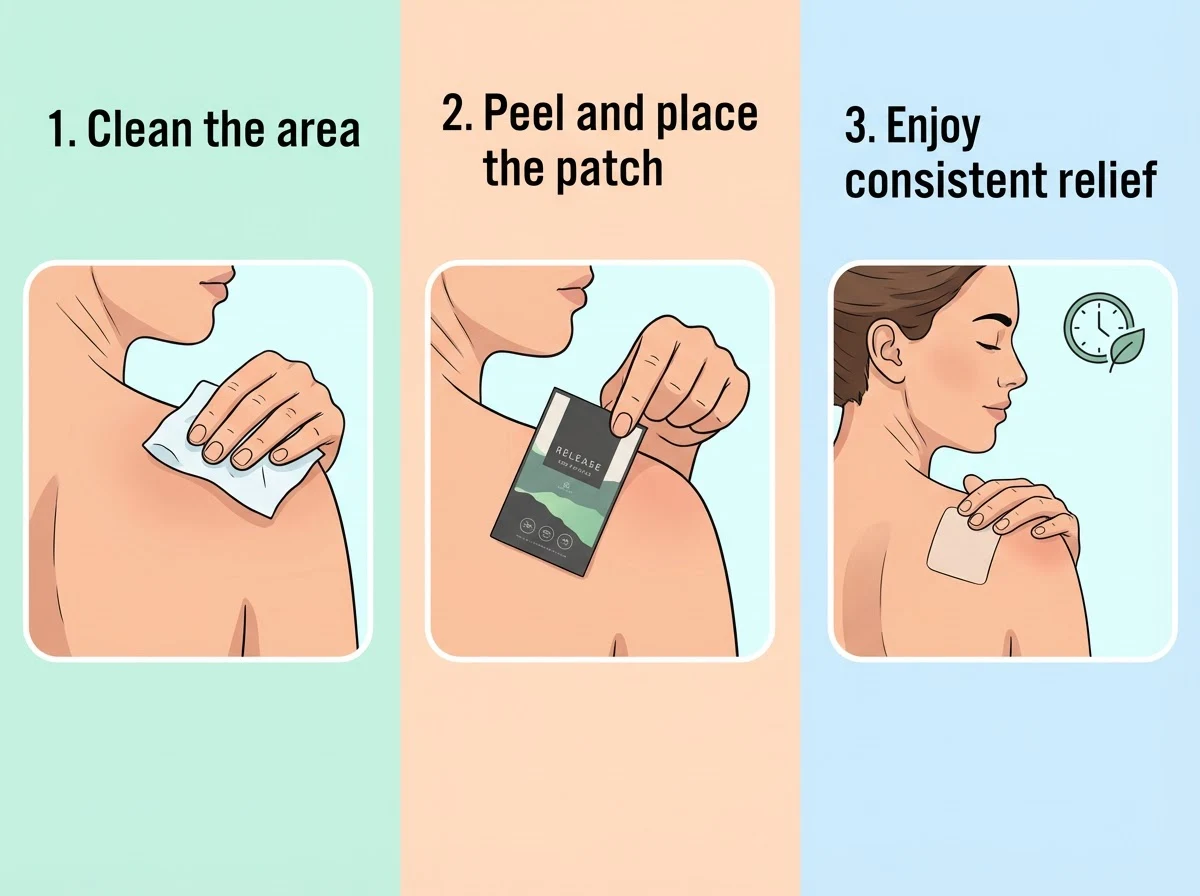
- Clean the area and make sure it is fully dry, including after a shower.
- Avoid moisturiser, body oils, sunscreen, or massage balm where the patch will go.
- If you are placing on a hairier area, choose a different spot rather than sticking it over hair.
Placement tips that help in real life
Many people choose the upper arm or shoulder because it is discreet and does not crease constantly. Areas that bend a lot, like elbows or knees, can lift more easily. Waistbands and bra straps can also rub a patch and shorten wear time.
When to remove a patch early
If you notice itching, redness, burning, or discomfort that builds, remove the patch and wash the area gently. If you get repeated irritation, patches may not be your format, or you might need to speak to a pharmacist or clinician, especially if you have a history of adhesive sensitivity.
Reading CBD patch reviews: how to separate signal from noise
It is normal to check CBD patches for anxiety reviews before you buy. Just keep in mind that patch feedback is especially “context dependent”, because the same patch can feel great for one person and do very little for another.
Look for reviews that mention routines, not just results
The most useful reviews usually include details like: where the person placed the patch, whether it stayed on through showering or training, and whether they used it consistently for several days. One-off reviews are not useless, but they can be misleading for slow-release products.
Be cautious with extreme claims (good or bad)
If a review reads like a miracle story, or like the product “did absolutely nothing” after a single wear, treat it as a data point, not a verdict. CBD response varies, and patches are designed to be gradual.
Use reviews to judge quality control
What many people overlook is that reviews are brilliant for spotting practical issues: patches arriving dried out, poor adhesion, inconsistent patch-to-patch performance, or skin irritation. Those are the problems that can turn a good idea into a frustrating purchase.
Frequently Asked Questions
Are CBD patches good for anxiety?
Some users report that CBD helps them feel calmer or more settled, and patches can be a convenient way to take CBD consistently. However, CBD is not a medicine and it is not approved to treat anxiety in the UK. Response varies by person, and anxiety can have many causes. If symptoms are persistent or severe, it is best to speak with your GP.
Do CBD patches get you high?
No. CBD is non-intoxicating. Many patches use CBD isolate, which is typically THC-free. That means there is no “high” effect expected. If you are avoiding THC entirely (for sport or workplace testing), check that the patch is labelled THC-free and that the brand provides clear lab verification for confidence.
How long do CBD patches take to work?
Timing can vary. Patches are designed for gradual release rather than a fast onset, so you may not feel an immediate effect the way some people report with sublingual CBD oil. Many users judge patches by “how they feel over the day” rather than a single moment. If you want more on timing across formats, see general guidance in our patch education resources.
How long do CBD patches last?
This depends on the patch design and how long you wear it. CBD One’s Release patches are described as using slow-release technology for 12 to 36 hours. Real-world wear time can be affected by sweating, showering, skin oils, and placement. Always follow the product directions and remove the patch if you get irritation.
Where should I place a CBD patch?
Apply to clean, dry, hair-free skin so it adheres properly. Many people use the upper arm, shoulder, or another discreet area that is not constantly bending or rubbing against clothing. Avoid broken or irritated skin. Press and hold for several seconds to secure it, and try not to apply lotions or oils underneath.
What strength CBD patch should I buy first?
If you are new, starting with a lower-strength option is usually a safer way to assess tolerance and preference. For example, a 15mg patch is a more conservative starting point than a 30mg patch. Give it a few days of consistent use before changing strength, and keep an eye on your total daily CBD intake from all sources.
Can I use CBD patches with CBD oil?
Some people do combine formats, but you should be careful with total daily intake. The UK FSA advises healthy adults not to exceed 70mg CBD per day. If you use a patch and also take oil, track the mg and start low. If you take medications, it is sensible to speak to a healthcare professional first.
Are CBD patches legal in the UK?
CBD products are legal in the UK when they comply with relevant regulations and contain only trace THC within legal limits (or are THC-free). Reputable brands should be clear on CBD content and provide lab verification. If you are unsure about a product’s compliance or testing, that is a reason to choose a more transparent option.
Do CBD patches show up on a drug test?
CBD itself is not usually the target of standard drug tests, but THC is. If your patch is made with CBD isolate and labelled THC-free, that reduces the risk, but no brand can honestly guarantee a negative result in every testing scenario. If testing is a serious concern, choose THC-free products and keep documentation where possible.
What is the best way to use CBD for anxiety in the UK?
There is no single “best” way, because goals and bodies differ. Patches suit people who want steady, discreet dosing. Oils can be better if you want flexible dosing adjustments. Water-soluble products can be convenient in drinks. Whatever you choose, start low, be consistent for a week or two, and speak to a clinician if anxiety is impacting daily life.
Can you cut a CBD patch in half to lower the dose?
Some people try it, but it is not ideal. With many patches, the CBD is designed to release in a controlled way across the full surface area. If you cut a patch, you might change how it releases, and you also lose the simplicity of measured dosing. If you want a lower intake, it is usually better to choose a lower mg patch or wear a patch for a shorter period, following the brand’s guidance.
Is it normal to feel nothing from a CBD patch?
Yes, it can be. Patches are meant to be gradual, and many people describe them as subtle. It is also possible the patch is not sticking well, the placement is not ideal, or the strength is not a good match for you. If you are unsure, give it a fair trial with a consistent routine for several days, and avoid changing multiple variables at once.
Can CBD patches cause side effects?
Some people report mild side effects with CBD in general, and with patches specifically the most common issue is skin irritation from the adhesive or ingredients. If you notice irritation, remove the patch. If you have allergies, sensitive skin, or you are taking medications, it is worth checking with a healthcare professional before using CBD.
Can you sleep with a CBD patch on?
Many people do, especially with patches designed for longer wear times. The practical consideration is comfort and skin sensitivity. If the patch rubs, irritates, or wakes you up, it is not worth pushing through. Follow the product directions on maximum wear time, and if you are unsure, start with daytime wear first so you can see how your skin reacts.
Key Takeaways
- CBD patches offer discreet, measured, slow-release dosing, but they are not a treatment for anxiety.
- Compare patches by mg per patch, wear time, THC-free status, and lab verification, not just pack price.
- If you are new, consider starting with a lower-strength patch and adjusting gradually.
- Watch your total daily CBD intake (the UK FSA advises healthy adults not to exceed 70mg/day).
- If you take medications or have significant anxiety symptoms, speak to a healthcare professional before using CBD.
Conclusion
CBD patches can be a smart, no-fuss way to try CBD if your priority is consistency, discretion, and an easy routine. The “best CBD patches for anxiety” are usually the ones that match your lifestyle: a sensible strength you will actually use, a wear time that fits your day, and a brand that is clear about dosing and lab verification. If you want a UK-based option with straightforward pricing, start with CBD Patches [30 x 15mg] | Release (£29.99) or go higher with 30mg High Strength CBD Patches | Release+ (£44.99). If you decide patches are not your thing, a flexible alternative is a full spectrum oil like 10% CBD Oil [1000mg CBD].