
CBD Effects on Brain: Complete UK Guide (2026)
What CBD does in the brain (in plain English)
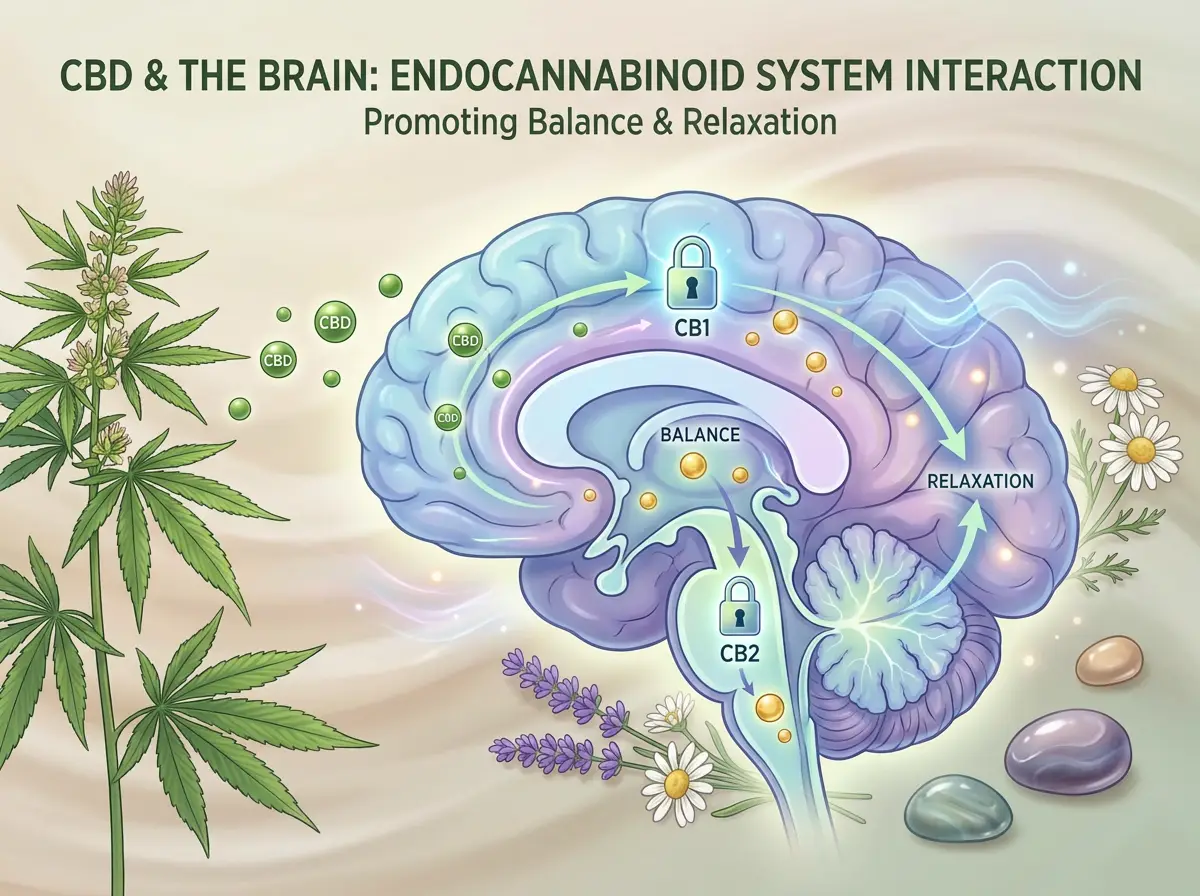
CBD is a compound found in hemp. It is best known for how it interacts with your endocannabinoid system (ECS), which is like a built-in balancing network that helps your body respond to day-to-day stressors.
Now, when it comes to the brain, the ECS is involved in processes like stress response, sleep-wake rhythm, appetite signalling, and how “revved up” your nervous system feels. CBD does not act like THC. THC strongly stimulates certain cannabinoid receptors, which is one reason it can be intoxicating. CBD behaves more like a modulator: it can influence how receptors and signalling chemicals behave, rather than simply switching them on full blast.
Think of it this way: CBD is more “volume control” than “on switch”
Many people expect CBD to feel like a sedative or a painkiller. That is not a great comparison. From a practical standpoint, CBD is often described as gentle and background. You might notice you feel more settled in situations that usually wind you up, or you may find it easier to stick to your evening wind-down routine.
The reality is that your brain is not isolated from your body. Hydration, caffeine, stress, sleep debt, hormones, and even what you ate that day can change how CBD feels.
How CBD can feel: calm, focus, sleepiness and “nothing happening”
When people search “cbd effects on brain”, they usually want to know what it feels like. That is fair. Most of the day-to-day reports I hear fall into a few predictable buckets.
1) A calmer, quieter mind
Some users report a sense of calm, especially in the shoulders, jaw, and chest. It can feel like your nervous system is less reactive. Importantly, this is not the same as being “spaced out”. For many, it is simply less mental noise.
2) Clearer focus (or the ability to stay with a task)
Consider this. If your baseline state is tense or distracted, feeling calmer can look like “better focus”. That does not mean CBD is a stimulant. It is more that you may find it easier to stay steady, particularly when paired with a supportive routine like a short walk, a protein-based breakfast, and less doom scrolling.
3) Sleepiness, especially at the wrong time
CBD can make some people drowsy, particularly at higher servings, when taken with alcohol, or when you are already sleep-deprived. If you take CBD at lunchtime and you are fighting to keep your eyes open by 3 pm, that is useful feedback. In practice, this means you may do better taking it later in the day, or simply reducing your amount.
4) Feeling nothing at all
What many people overlook is that “nothing happening” is common, especially early on. There are a few reasons: the serving might be too low, the format might not suit you, the product quality might be poor, or your expectations might be set to “feel something dramatic”. CBD is often more about subtle shifts you notice over days, not minutes.
CBD effects on brain and body: the connected picture
It is hard to talk about “brain effects” without acknowledging the body. Your nervous system runs through both. So when people search “cbd effects on brain and body”, they are usually describing one experience with multiple knock-on effects.
For example, if you feel less tense physically, your mind often follows. If you sleep a bit better, your mood and focus can improve the next day. None of this is a medical promise, but it is a realistic way to interpret why CBD can feel “mental” even when you are taking it for general wellbeing.
Why your context matters more than you think
If you have had a double espresso, skipped lunch, and you are running on five hours sleep, CBD may feel different compared to a calm weekend morning. Same product, same person, different nervous system inputs.
This is also why journalling can help. Not a big spreadsheet, just a note in your phone: time taken, how much, format, and how you felt over the next few hours.
Why format matters: oils vs drinks vs patches
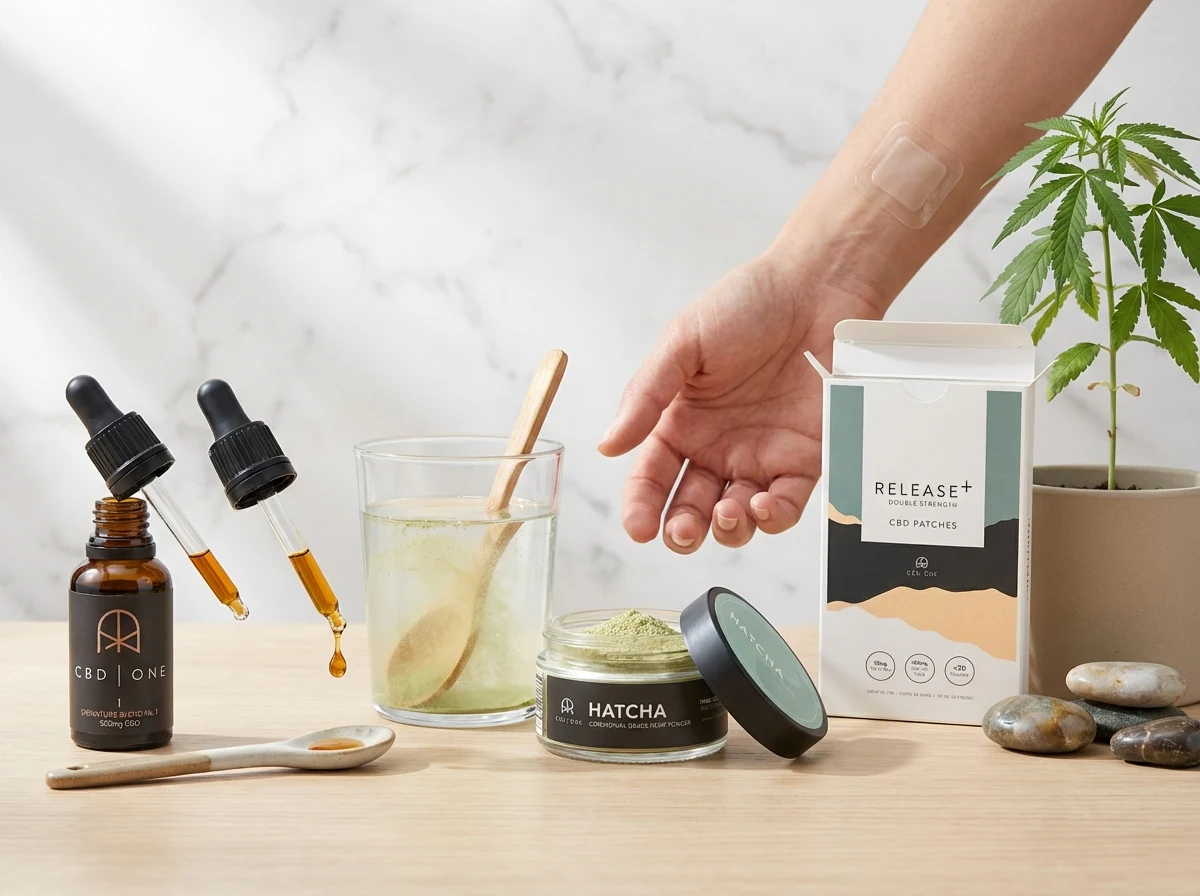
One of the biggest reasons people get inconsistent results is that they switch formats and expect the same experience. Absorption changes everything.
CBD oil under the tongue (sublingual)
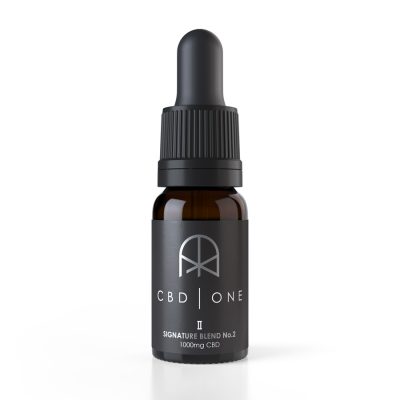
CBD oil is commonly taken under the tongue for a minute or two before swallowing. Some of it is absorbed through tissues in the mouth, then the rest is swallowed and processed through digestion. CBD One oils list bioavailability at around 12%, which reflects the reality that oral and sublingual use can be less efficient than some other delivery methods.
If you want help with technique, CBD Product Comparison can be a useful read when you are weighing up formats.
From a practical standpoint, there are a couple of small tweaks that can make sublingual oils feel more consistent. Try to take it at roughly the same time each day, avoid immediately washing it down with a big drink, and give it the same “hold under the tongue” time each use. Consistency matters more than people think.
CBD drinks effects: why they can feel different
CBD in a drink is still usually taken orally, but the formulation matters. Some products are water soluble (emulsified), which may change how quickly and consistently CBD is absorbed. This is why two “10 mg CBD drinks” can feel totally different in real life.
If you are curious about format, you can browse the Water Soluble CBD category to understand what water soluble actually means in practice, without getting lost in marketing.
One more practical point with drinks: what else is in the can or bottle can change the experience. Caffeine can make you feel more alert even if CBD is gently relaxing in the background. Sugar can give a short lift and then a dip later. And alcohol is the big one, it can amplify drowsiness for some people. If you are trying to “feel” what a drink does, test it on a calm day, without stacking it on top of other variables.
Patches: slow and steady
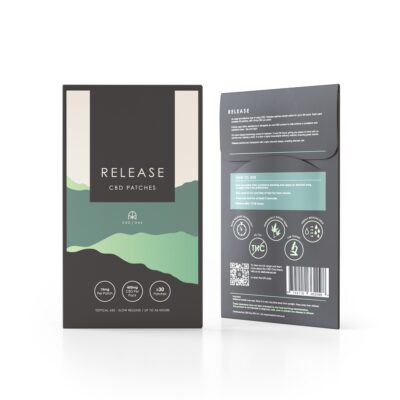
Patches deliver CBD through the skin over a longer window. CBD One patches are CBD isolate and designed for slow release (often quoted as 12–36 hours depending on the patch). People who like patches usually want consistent, measured dosing without thinking about drops or taste.
If you want a deeper education piece on that format, there is also an existing guide on the site: CBD Patches: Everything You Need To Know.
A quick word on “trip CBD effects”
CBD should not cause a psychedelic trip. If someone feels “high”, panicky, or dissociated after a CBD product, it is usually down to one of these: hidden THC, mislabelled products, taking far more than intended, combining with alcohol or other substances, or the person was already anxious and hyper-focused on bodily sensations.
For the THC question specifically, Does CBD Oil Get You High? clears up the key differences.
What affects your CBD brain experience most (sleep, caffeine, food, alcohol, stress)
If you want the most honest explanation for why CBD feels calming one day and “pointless” the next, it is usually not the CBD. It is the context you took it in.
Sleep debt can make CBD feel stronger (or just make you sleepy)
When you are running on fumes, anything that encourages your nervous system to downshift can feel like a wave of drowsiness. That is not automatically a bad thing, but it is a clue. If you keep getting sleepy after CBD, you might be better taking it later, or using less.
Caffeine can mask calm, or tip you into feeling wired
Some people expect CBD to “cancel out” coffee. In real life, it is not that neat. If you have had a couple of strong coffees, CBD might simply take the edge off the jitters. Or you might still feel wired because caffeine is doing what caffeine does. If you are trying to assess CBD’s brain effects, test it on a lower-caffeine day.
Food changes absorption, especially with oils
Taking CBD on an empty stomach can feel different to taking it with a meal. Some people find taking it with food feels steadier and less likely to cause nausea. Others prefer the simplicity of taking it the same way every day. The key is to pick one approach and stick to it for a week so you are not guessing.
Alcohol is where people get caught out
Alcohol and CBD can be a messy combination, not because CBD is “dangerous”, but because you can end up more tired, more uncoordinated, or just more detached than you expected. If you are new to CBD and you care about understanding brain effects, keep alcohol out of the experiment at first.
Stress levels change what “calm” feels like
On a high-stress day, feeling calmer can feel like relief. On a low-stress day, the same shift can feel like you did not notice much at all. That is one reason people get better results when CBD is paired with simple basics: regular meals, daylight in the morning, movement, and a consistent bedtime.
How quickly CBD can feel noticeable (and why onset varies)
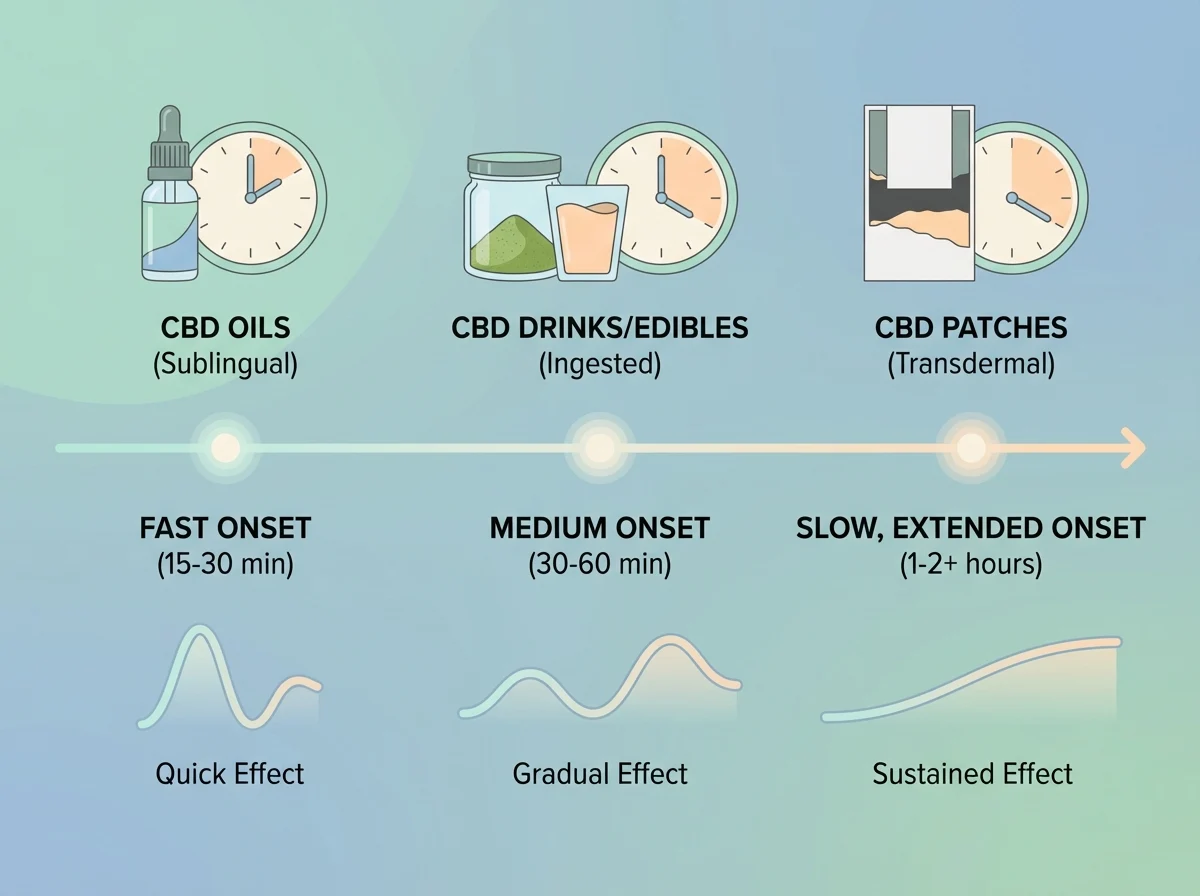
People often ask how long CBD takes to “kick in”, but there is no single clock that applies to everyone. The format, your metabolism, what you ate, and even how stressed you are can all change the timeline.
Oils: often the most “trackable”
Sublingual oils are popular because you can take the same amount, the same way, and create a repeatable pattern. Some people notice a shift within an hour, others only notice it later, or they only notice it after a few days of consistent use.
Drinks: can feel gradual, and the ingredients matter
With drinks, the onset can feel more subtle. If the drink includes caffeine, botanicals, or lots of sugar, it can be harder to separate “CBD effects” from “everything else in the drink”. That is not a criticism, it is just the reality of mixed formulations.
Patches: not for quick onset, more for steady delivery
Patches are built for consistency. If you want something you feel quickly, patches may not match that expectation. If you want something steady that you do not have to think about, they can make a lot of sense.
Think of it this way: if you want to understand CBD’s brain effects, choose a format you can repeat, then observe patterns over time rather than judging everything on the first dose.
Drug testing, THC limits, and “will CBD show up?” (UK reality)
This is one of the most overlooked parts of the “CBD effects on brain” conversation. Not because it changes how you feel day to day, but because it changes how comfortable you feel taking CBD in the first place.
CBD is not what most tests are looking for
Workplace and roadside drug tests typically screen for THC, not CBD. CBD is non-intoxicating, and it is not the compound that is usually targeted in common testing panels.
Full spectrum products can contain trace THC
Full spectrum CBD products can contain trace THC within legal limits. That trace amount is not there to get you “high”, but it does mean a zero-risk promise on drug testing is not realistic. If drug testing is a serious concern for your job or sport, it is worth speaking to your employer or governing body, and being very cautious about product choice.
Lab reports matter here more than almost anywhere
If you are worried about THC, independent lab reports are not just a nice-to-have, they are basic due diligence. You want clarity on cannabinoid content and reassurance that the numbers match what the label implies. If a brand cannot show you that, you are taking an unnecessary gamble.
CBD oil side effects, interactions, and sensible safety steps
Most healthy adults tolerate CBD well, but “natural” does not mean “risk-free”. If you are going to use CBD confidently, it is worth knowing the realistic downsides.
Commonly reported CBD side effects
Some people report:
- sleepiness or fatigue
- dry mouth
- light-headedness
- digestive upset (more common with oils for some people)
- changes in appetite
These effects are often dose-related. In practice, this means reducing your amount, changing the time of day, or switching format can make a big difference.
Less talked about: headaches, “foggy” feeling, or feeling a bit flat
Some people describe a mild headache or a “foggy” head when they take more CBD than they need, especially if they are dehydrated or have not eaten well that day. Others simply feel a bit emotionally flat. The simplest troubleshooting steps are boring but effective: drink water, reduce your amount, and try it at a different time of day. If the effect keeps happening, stop and reassess.
Medication interactions: do not ignore this
CBD can interact with some medications. This is not about scaremongering, it is about being sensible. If you take prescription meds, especially anything that already comes with a “do not take with grapefruit” warning, speak to your pharmacist or GP before you start CBD.
We have a dedicated guide here: CBD and Medication.
UK dosing reality check (FSA guidance)
The UK Food Standards Agency (FSA) advises healthy adults not to exceed 70 mg of CBD per day. That is a general safety guideline, not a target to hit. Many people use less than this. If you are new, the best approach is still “start low, go slow”.
If you want a more guided approach, you can use the CBD dosage guide style calculator page as a starting point, then adjust based on your own response.
Quality, labels and what to look for as a UK consumer
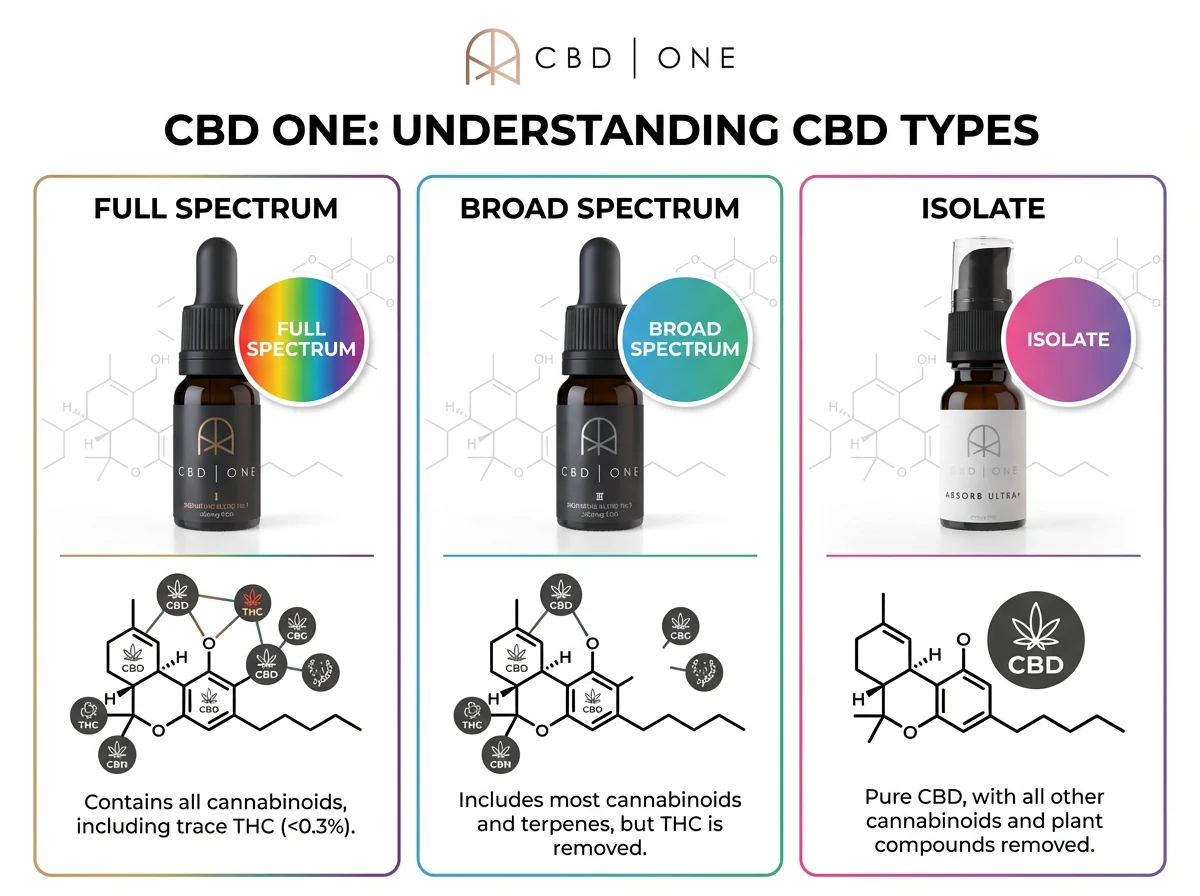
If you have ever taken CBD and felt odd, or felt nothing, the product itself may be the issue. The CBD space has improved a lot, but quality still varies.
Full spectrum, broad spectrum, isolate: why it matters for brain effects
Full spectrum means CBD plus other naturally occurring compounds from the hemp plant, including minor cannabinoids and terpenes, with trace THC within legal limits. Many people choose full spectrum because of the Entourage Effect, which describes how plant compounds may work better together than in isolation.
CBD One focuses heavily on full spectrum across the core range, as one example of that “whole plant” philosophy. If you are trying to understand why a full spectrum oil can feel different to an isolate, it often comes down to the broader chemical profile, not just the milligrams of CBD on the front label.
Third-party lab reports are your best friend
A trustworthy brand should be able to show independent lab testing (often called a Certificate of Analysis). You want to see cannabinoid content and reassurance around THC levels and contaminants. If a company avoids the topic, that is usually your cue to move on.
Be wary of “negative side effects of CBD gummies” content
You will see a lot of scare stories online. Sometimes the issue is not CBD itself, but the gummy ingredients, sweeteners, added stimulants, or simply poor manufacturing. It is also common for gummies to encourage casual overuse because they taste like sweets.
From a practical standpoint, I prefer formats where you can measure your intake more consciously, like drops, pumps, or patches, especially when you are learning what works for you.
If you want help judging brands and labels, CBD Buying Guide is a good next step before you spend money.
A practical “start low, go slow” routine (without overthinking it)
Most people do best when they stop chasing a dramatic feeling and instead build a simple routine they can repeat.
Step 1: pick one format and stick with it for a week
Oils are a solid starting point for many people because you can fine-tune the serving drop by drop. If you hate the taste, a water soluble option can be easier to commit to daily because it mixes into your morning drink.
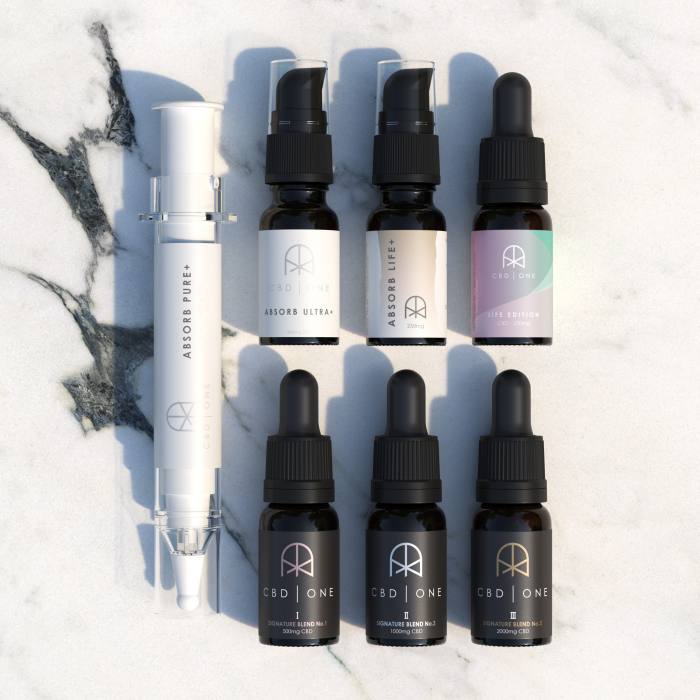
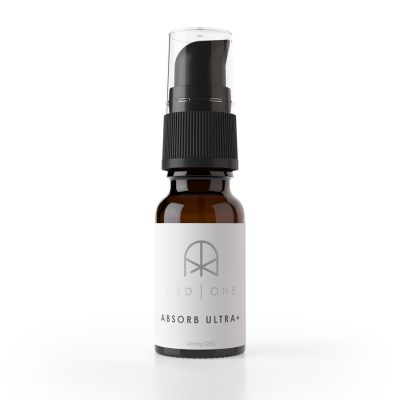
For example, CBD One offers water soluble formats like Absorb Life+ and Absorb Ultra+ that are designed to be added to hot or cold drinks. That is not “better”, it is just different, and often more convenient for people who already have a morning drink ritual.
Step 2: use the minimum that feels useful
Start with a low amount once a day, and keep everything else the same for a few days. If you feel nothing, increase gradually. If you feel groggy or “flat”, reduce or switch timing. You are looking for “enough to notice, not so much you feel impaired”.
Step 3: match timing to the effect you want
If CBD makes you relaxed and slightly sleepy, evening use might suit you best. If it helps you feel calmer without drowsiness, morning or midday might fit. There is no universal rule.
If you are unsure which format suits your lifestyle, CBD Product Comparison can help you think it through logically.
Step 4: keep it safe and boring
Avoid mixing CBD with alcohol while you are learning your response. Avoid driving if you feel sleepy. And always stay within sensible daily limits, including the FSA’s 70 mg per day guidance for healthy adults.
If you want to explore options later, the CBD Oils category is a simple place to compare strengths without getting overwhelmed.
Frequently Asked Questions
What are the main CBD effects on the brain?
Most people describe CBD’s brain effects as subtle rather than dramatic. Some report feeling calmer, less mentally “racy”, or more settled in their body, which then affects mood and focus. Others feel mildly sleepy, especially at higher amounts or if they are already tired. And plenty of people feel very little at first. Your experience depends on dose, format, your stress level, sleep, caffeine, and overall sensitivity. It is also worth remembering CBD is non-intoxicating, so it should not create a “high” feeling.
Can CBD change your mood or emotions?
Some users report that CBD helps them feel more even, especially during stressful periods. Think of it as feeling less reactive rather than feeling artificially “happy”. That said, CBD can also make some people feel flat, drowsy, or a bit foggy if they take more than they need. If you notice mood changes you do not like, reduce your amount, change the timing, or stop and reassess. If you have a mental health condition or take related medication, check with your GP or pharmacist before starting CBD.
Does CBD affect memory or concentration?
CBD is not generally associated with the short-term memory impairment people link with THC. In real life, some people actually feel their concentration improves because they feel calmer and less distracted. Others feel sleepy, which can obviously reduce concentration. If you are using CBD and you feel “slower” mentally, it is usually a sign to lower your dose or move it to the evening. If your job involves driving or operating machinery, be cautious until you know how you personally respond.
How long do CBD effects last in the brain?
This varies a lot by format and individual metabolism. A sublingual oil may feel noticeable within an hour for some people, with effects that taper over several hours. Edible or drink formats can take longer to come on and can feel more gradual. Patches tend to be slower and steadier because they are designed for extended release. The simplest approach is to track your timing: note when you take CBD and how you feel at 1, 3, and 6 hours afterwards. That gives you a personalised “map”.
Why do CBD drinks effects feel different to CBD oil?
CBD drinks can differ hugely depending on whether the CBD is oil-based, water soluble (emulsified), and what else is in the drink (caffeine, sugar, botanicals). Even when the CBD amount looks the same on paper, absorption can change. That is why one drink might feel like “nothing”, while another feels more noticeable. If you are experimenting, keep it simple: try one product at a time, avoid alcohol, and do not stack multiple CBD products in the same day until you understand your baseline response.
Can CBD make you feel high or cause “trip” effects?
CBD itself is non-intoxicating and should not cause psychedelic “trip” effects. If someone feels high, anxious, panicky, or detached after a “CBD” product, it is often due to THC content, mislabelling, taking too much, or mixing substances. Sensitive individuals can also misinterpret normal body changes (like relaxation or a drop in tension) as something scary. If you are concerned about intoxication, read Does CBD Oil Get You High? and choose brands that provide third-party lab reports.
What are the most common CBD oil side effects?
The most commonly reported CBD side effects include sleepiness, dry mouth, light-headedness, and digestive upset. These are often dose-related, so lowering your amount is the first sensible move. Taking CBD with food can help some people, although it may also change absorption. If you feel unusually drowsy, avoid driving and do not combine CBD with alcohol. If you get persistent side effects, stop and speak with a healthcare professional, especially if you have underlying health conditions.
Can CBD interact with medications?
Yes, CBD can interact with some medications. This is one of the most important safety points to take seriously. Interactions are more likely with certain prescription drugs, and it is wise to get professional advice if you are taking regular medication, especially medicines with a “do not take with grapefruit” warning. If you want a calm, practical overview, read CBD and Medication. When in doubt, your pharmacist is a great first port of call.
Is it safe to take CBD every day for brain wellbeing?
Many healthy adults use CBD daily as part of a wellbeing routine, but “safe for everyone” is not something anyone can promise. Safety depends on dose, product quality, and your individual health situation. In the UK, the FSA advises healthy adults not to exceed 70 mg CBD per day. If you want daily use, aim for the lowest amount that feels helpful, and keep it consistent for a week before making changes. If you are pregnant, breastfeeding, or taking medication, speak to a GP first.
How do I choose the right CBD product if I’m worried about brain effects?
Start by choosing a reputable brand with clear lab reports, transparent ingredients, and sensible dosing guidance. Next, choose a format you can measure and repeat. Oils are flexible for fine-tuning; water soluble CBD can be easier if you dislike oil taste; patches can suit people who want steady delivery. If you want a structured way to compare, use CBD Product Comparison, and if you want to avoid being sold to, CBD Buying Guide focuses on what to look for on labels.
How does CBD oil make you feel the first time?
Many first-time users describe CBD as subtle. You might feel a little calmer, a bit less tense physically, or slightly sleepier. You might also feel nothing at all, which is very common when the amount is low or your expectations are set to “feel something obvious”. The best first-time approach is to keep variables low: choose one format, avoid alcohol, do not combine with other CBD products, and take notes on how you feel over the next few hours.
Does CBD make you sleepy or just relaxed?
It can be either, depending on the person, the amount, and the timing. Some people feel relaxed but clear-headed. Others feel drowsy, especially at higher servings or when taken on top of a sleep-deprived day. If you consistently feel sleepy, try reducing the amount or moving it to the evening. If you need to drive or stay sharp, be cautious until you know your response.
Are CBD drinks legal in the UK?
In the UK, CBD products are widely sold, but legality is tied to compliant manufacturing and THC limits, plus food rules if the CBD is ingested. The sensible consumer approach is to buy from reputable brands that can show third-party lab reports and are transparent about ingredients and cannabinoid content. If in doubt, speak to a pharmacist, especially if you take medication.
Do CBD drinks show on a drug test?
Drug tests usually look for THC, not CBD. However, some CBD products, especially full spectrum products, can contain trace THC within legal limits. Because testing thresholds and product quality vary, a zero-risk guarantee is not realistic. If drug testing is a serious concern for you, be cautious, check lab reports, and consider getting professional advice relevant to your situation.
Key Takeaways
- CBD is non-intoxicating and often feels subtle: calmer, steadier, sometimes sleepier, sometimes nothing at first.
- CBD effects on brain and body are linked. Stress, sleep, caffeine, food and timing can all change your experience.
- Side effects are usually dose-related. Start low, increase slowly, and avoid mixing with alcohol while you learn your response.
- CBD can interact with medications, so check with a GP or pharmacist if you take prescriptions.
- Choose quality products with third-party lab reports, and pick a format you can measure consistently for at least a week.
Conclusion
If you are trying to understand CBD effects on the brain, the most helpful mindset is “gentle support, not a dramatic switch”. CBD is not meant to intoxicate you. For many people, it is more like taking the edge off a busy nervous system, which can then influence focus, mood, and sleep habits. For others, the first noticeable effect is simply sleepiness, and that is your cue to adjust the amount or timing.
Pay attention to format, too. Oils, water soluble products, and patches can all feel different because absorption and release time differ. Keep your approach simple: one product, one routine, small changes, and honest notes on what you notice. If you want to go deeper on choosing well, CBD Buying Guide is a solid next read.
If you want a second opinion on where to start, speak to Nick for free guidance and keep it sensible.