
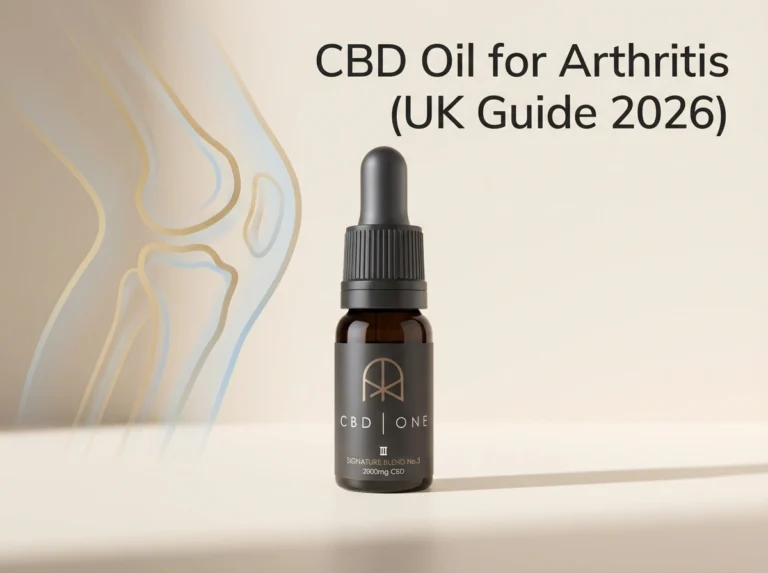
CBD Oil for Arthritis (UK Guide 2026)
In this guide, I will walk you through what CBD is, how it might fit into an arthritis-friendly routine, how to choose a quality oil in the UK, and how to use it safely. I will also touch on the NHS angle, plus common questions about osteoarthritis, rheumatoid arthritis, and even CBD oil for dogs, because people ask.
What arthritis is (and why that matters for CBD)
“Arthritis” is not one single problem. It is a label that covers different joint conditions, each with its own drivers and day-to-day patterns.
Osteoarthritis vs rheumatoid arthritis
Osteoarthritis is often described as a wear-and-tear process, but in practice it is more nuanced than that. It can involve joint cartilage changes, bone changes, and a local inflammatory response. Symptoms often fluctuate with activity, sleep, stress, and general health.
Rheumatoid arthritis is an autoimmune condition. The immune system plays a central role, which means management usually involves a medical plan and regular follow-up. If you are exploring cbd oil for rheumatoid arthritis, it is particularly important to speak to your GP or specialist, because medications and interactions matter.
Think of it this way: because arthritis is not one-size-fits-all, any CBD conversation has to stay grounded. Some people report that CBD supports comfort, sleep, or stress levels, which can change how a flare feels day to day. But CBD is not a replacement for diagnosis, monitoring, or prescribed treatment.
If you are new to CBD generally, it may help to read our broader guide on CBD oil first, then come back here with clearer context.
What CBD oil is and what “full spectrum” means
CBD (cannabidiol) is a non-intoxicating compound from the hemp plant. “Non-intoxicating” simply means it does not produce the “high” associated with THC.
CBD oil basics: what is in the bottle?
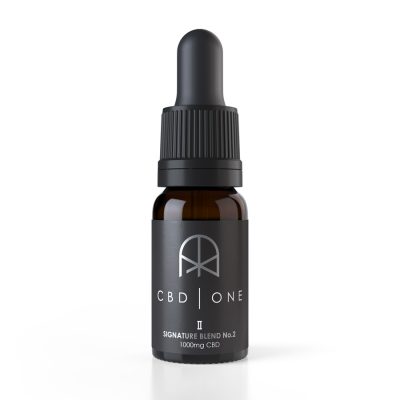
A CBD oil product is usually a hemp extract blended into a carrier oil (often hempseed oil). The label might show a percentage (like 5% or 10%) and/or a total amount of CBD in the bottle (like 500mg per 10ml). Both matter, and choosing strength is one of the easiest places to get confused, so do keep our CBD oil strength guide handy.
Full spectrum vs isolate
Full spectrum CBD typically contains CBD plus other naturally occurring hemp compounds such as minor cannabinoids and terpenes, alongside trace THC within legal limits. Some people prefer full spectrum because of the “team effect” of plant compounds working together.
If you want a simple explanation of that idea, read The Entourage Effect. It is a useful lens when you are comparing products, especially if you are trying to understand why two oils that “both have CBD” can feel different to different people.
At CBD One, our core oils are full spectrum because we believe the Entourage Effect is how nature intended CBD to be experienced, not isolated in a lab.
How CBD may support arthritis wellness (without overpromising)
People usually search “cbd oil for arthritis” for one reason: they want to feel more comfortable in their body, more consistently.
The reality is that CBD is still being researched, and we should be careful with bold claims. What we can say is that CBD interacts with the body’s endocannabinoid system, a network involved in maintaining balance across functions like sleep, stress response, and inflammation signalling. That does not mean CBD “treats” arthritis. It means CBD has plausible pathways that researchers are exploring, and some users report benefits that matter to day-to-day quality of life.
Where people most often notice a difference
From a practical standpoint, the most common “wins” people report are not dramatic overnight changes in a joint. Instead, they often describe subtle shifts like sleeping a little better, feeling less tense, or finding it easier to stick with gentle movement routines.
Consider this: if your sleep is poor, your sensitivity to discomfort often increases. If you are stressed, muscles brace and joints can feel worse. So even if CBD is only supporting those background factors, it may still be meaningful in the bigger arthritis picture.
CBD oil vs topical CBD
Many people combine an oral routine with a topical product as a personal ritual. Oral CBD is systemic, meaning it is taken into your body. Topicals are applied to the skin and are often used as a massage step, which in itself can feel soothing.
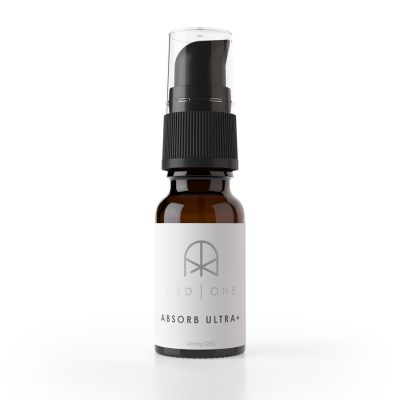
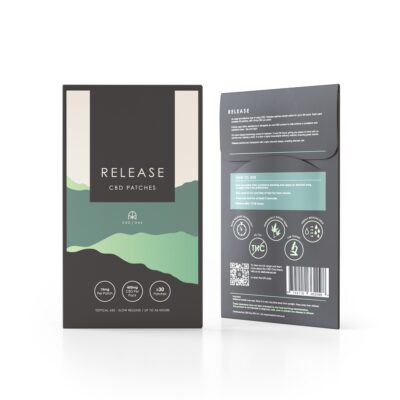
If you are curious about skin-applied options, you can browse the Topical CBD category as an educational starting point for formats and ingredients.
How CBD oil “fits” alongside your arthritis basics
What many people overlook is that arthritis management is rarely about one “magic” thing. It is usually about stacking small, sensible habits until your bad days become a bit less frequent, or a bit less intense.
If you decide to try CBD, it helps to think of it as a background support, not the centrepiece. For a lot of people, the most valuable place it fits is around routine: winding down at night, feeling more settled, and being more consistent with the daily things that genuinely protect joints.
A simple routine that tends to make sense
You do not need a complicated plan. Many people find it useful to pick one daily anchor, like taking CBD at the same time as brushing your teeth in the evening, or after breakfast. The goal is to make it easy to stick with, so you can judge it fairly.
Now, if you are dealing with morning stiffness, consider pairing your routine with gentle mobility and warmth. A warm shower, a short walk, a few minutes of range-of-motion work, and steady breathing can all change how your body feels before you even think about supplements.
When CBD is not the priority
If your joint symptoms are changing quickly, you have new swelling, heat, redness, unexplained fatigue, or you suspect an inflammatory flare, that is a moment to prioritise medical input. CBD can still be a personal wellness choice, but it should sit alongside proper assessment and monitoring, not instead of it.
CBD oil vs other CBD formats: what people overlook
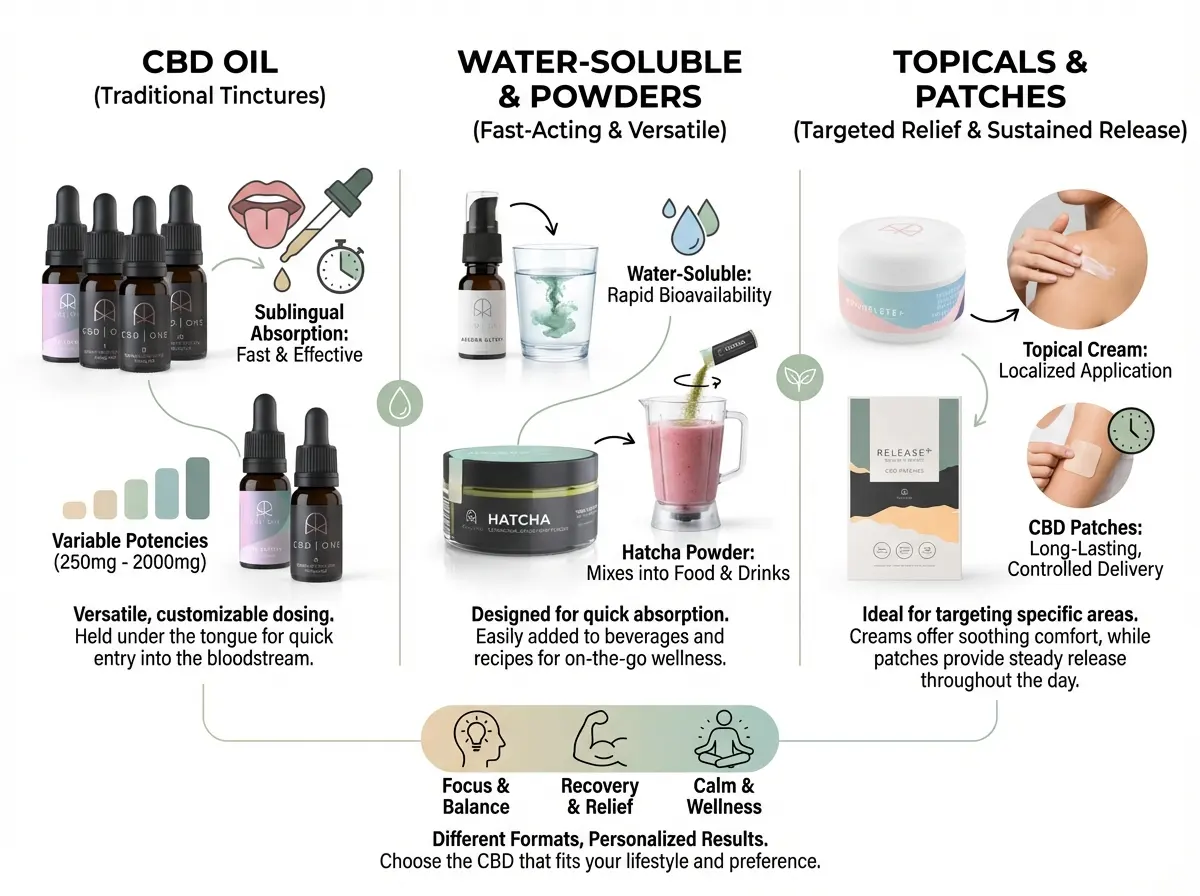
Competitor articles often list lots of CBD formats as if they are interchangeable. In real life, the format changes the experience: how quickly you notice anything, how easy it is to be consistent, and how you build a routine around it.
CBD oil (sublingual): steady and simple
Oil drops are popular because they are straightforward, and you can adjust in small steps. If you can tolerate the taste, it is one of the easiest ways to build a consistent habit.
Water soluble CBD: convenience for people who dislike oils
Some people simply do not get on with the taste or texture of oils. In that case, water soluble CBD can feel more natural because it mixes into a drink. The key point is not that one is “better”, it is that the best format is the one you will actually use most days.
Topicals: think ritual and massage, not “targeted treatment”
Topicals are often used around areas that feel tight, overworked, or stiff. Here’s the thing: the act of applying a topical product, especially with a few minutes of massage, can be soothing in its own right. If you enjoy that ritual, it can be a nice add-on to an oral routine, but it is still a wellness approach, not a medical one.
How to choose a CBD oil in the UK
Choosing a CBD oil is less about hunting for “the strongest” and more about knowing exactly what you are taking and why.
Quality checks I would personally look for
- Clear cannabinoid spectrum: full spectrum vs isolate should be stated plainly.
- Third-party lab testing: you should be able to see a Certificate of Analysis (COA) for cannabinoids and contaminants.
- Transparent CBD content: total CBD in mg and bottle size, so you can work out mg per drop.
- Sensible guidance: no miracle claims, no “treats arthritis” language.
- Ingredients you recognise: carrier oil, hemp extract, and minimal extras.
Now, when it comes to shopping, avoid getting pulled in by marketing buzzwords. If you want to compare options, our guide to Best CBD oil UK focuses on what to look for rather than hype.
Strength: start where you are
Many people do well starting with a moderate strength and adjusting slowly. A higher percentage is not “better” by default. It can simply be a more concentrated dose per drop.
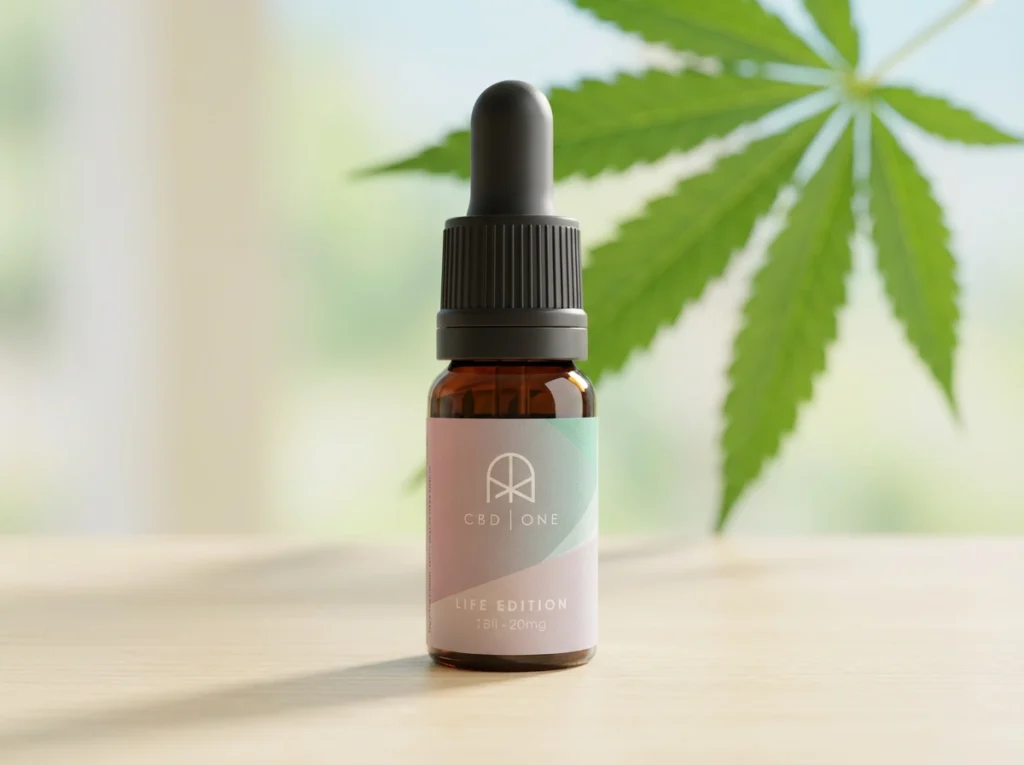
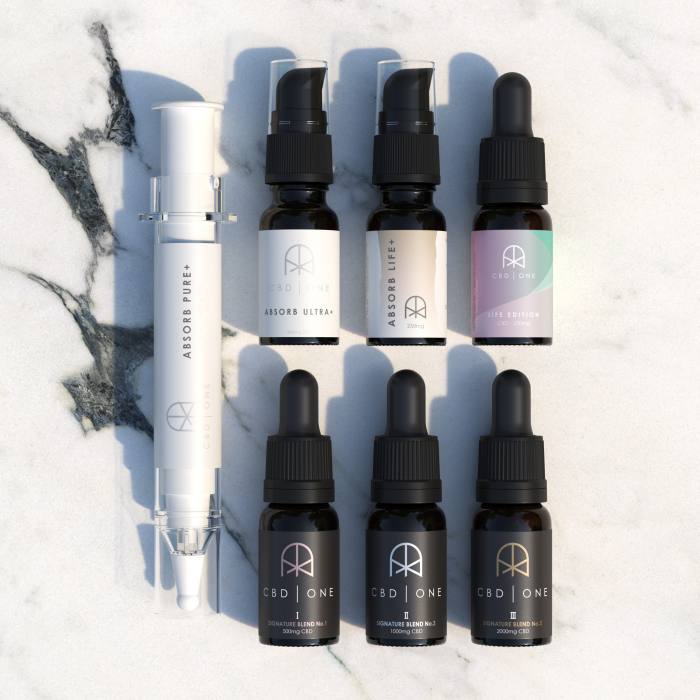
If you want to explore typical formats and strengths, the CBD Oils category is a useful reference point. For example, CBD One oils range from a gentle 2.5% (250mg per 10ml) through to higher strength options like 20% (2000mg per 10ml), all using full spectrum extracts with a stated bioavailability of around 12% for standard oil drops.
Practical buying checklist: COAs, THC, and UK legality in plain English
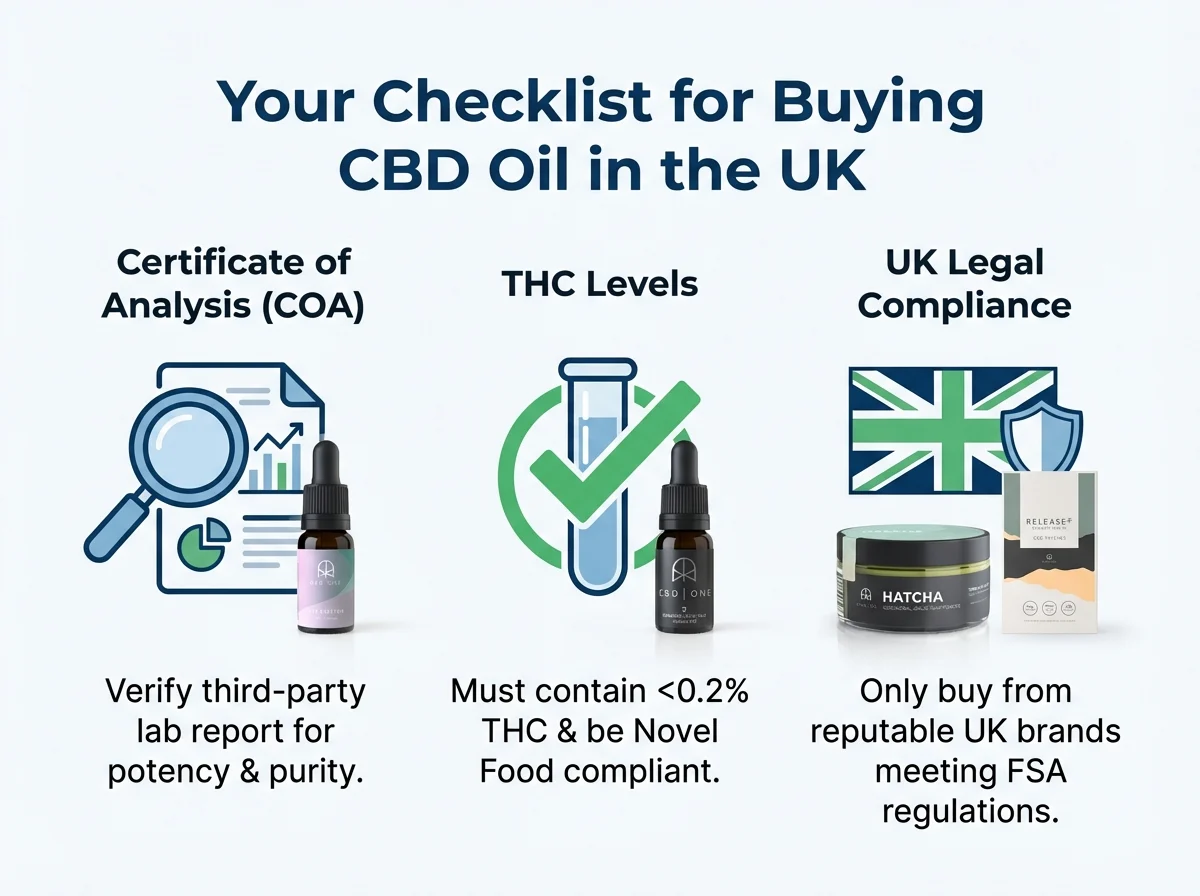
There is a lot of confusion in the UK CBD space, partly because “CBD oil” can mean anything from a properly tested hemp extract to a random bottle with vague claims.
COA: what you are actually looking for
A Certificate of Analysis (COA) is simply an independent lab report. From a practical standpoint, you want two things: confirmation of the cannabinoid content, and basic safety screening for contaminants.
If a brand makes it hard to find lab reports, or the report does not match the product batch, that is a red flag. A trustworthy CBD company should not act like testing is a secret.
THC and “will it make me high?”
CBD itself is non-intoxicating. Full spectrum oils can contain trace THC within legal limits, which is one reason some people prefer isolate. For most adults, trace THC at legal levels is not experienced as a “high”, but personal sensitivity varies, and workplace testing is a separate issue.
If drug testing matters for your job or sport, it is worth choosing a product approach that matches your risk tolerance, and speaking to a professional if you are unsure. Do not rely on assumptions.
Be careful with marketplace CBD
Some people buy CBD through online marketplaces because it feels convenient. The concern is not convenience, it is consistency. Products can be poorly labelled, testing can be unclear, and you may not know what you are actually taking. If you are using CBD as a daily wellness routine, that lack of clarity makes it hard to be safe and sensible.
How to use CBD oil in real life: routine, dose, and patience

This is the part most people skip. They buy a bottle, take a random amount for a couple of days, then decide it “did nothing”. With CBD, consistency tends to matter.
How to take CBD oil
The most common method is sublingual use: drops under the tongue, hold briefly, then swallow. It is simple, and it gives the CBD a chance to absorb through the tissues in your mouth.
If you want a clear step-by-step, read How to take CBD oil.
Dosage: start low, go slow
In the UK, the Food Standards Agency suggests healthy adults should not exceed 70mg of CBD per day. That is a sensible safety ceiling, not a target.
In practice, this means you start with a small amount once per day for a week, then adjust gradually. Track how you sleep, how you feel in the morning, and whether you notice any side effects like drowsiness.
For a practical framework, use our CBD Oil Dosage Guide. It helps you match your starting dose to your product strength, which is where most confusion happens.
One example from CBD One’s range: our 10% CBD Oil [1000mg CBD] is a popular “all-round” strength for people who want a balanced daily routine without jumping straight to high strength. If you prefer not to taste oil, water soluble CBD can be easier to stick with, as it mixes into a drink, but the routine and consistency principles stay the same.
How to track whether CBD is helping (without guessing)
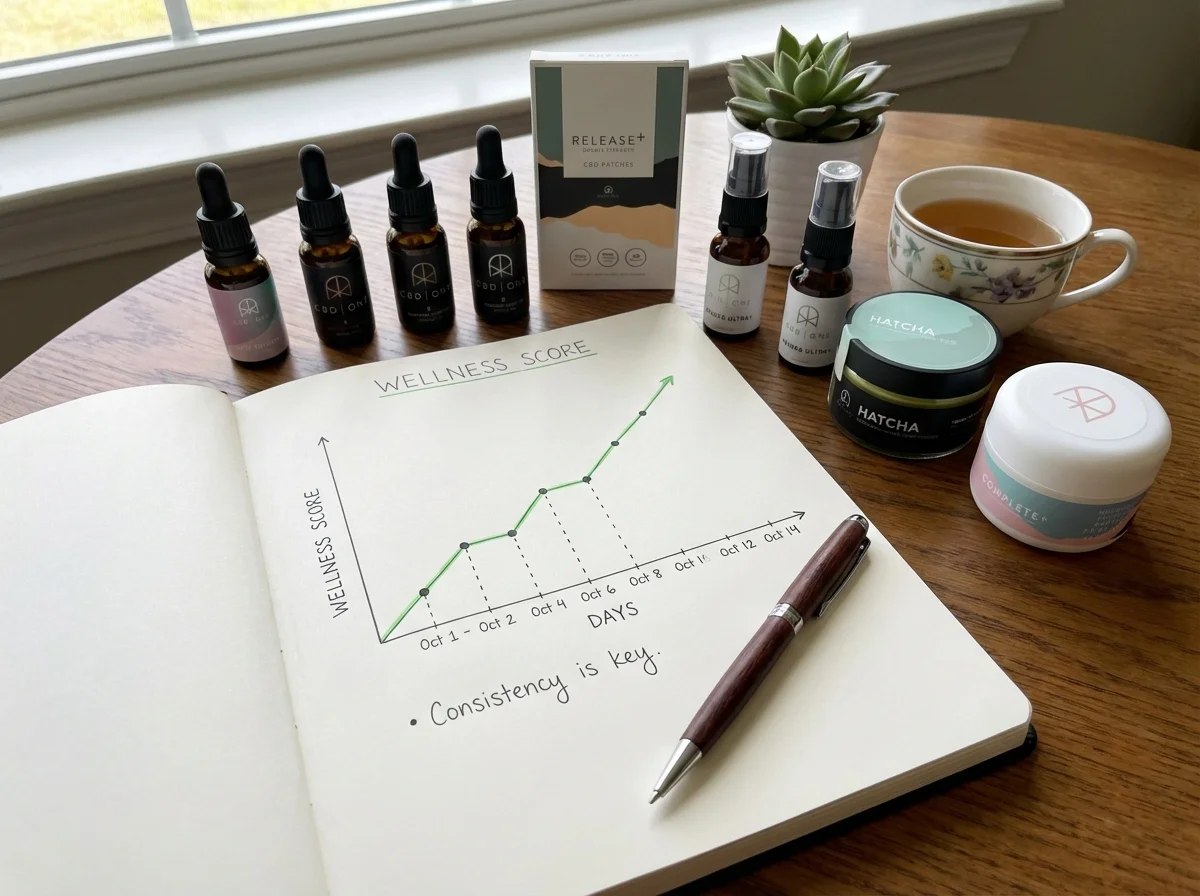
If you want to be fair with CBD, you need a way to measure your experience that is not just, “Did my knee hurt today?” Arthritis symptoms naturally fluctuate, which makes it easy to give CBD credit for a good week, or blame it for a bad one.
Pick 2 to 3 markers and keep it boring
Many people find it helpful to track things like sleep quality, morning stiffness perception, how often they wake in the night, and how “wired” or tense they feel at the end of the day. These are not perfect measures, but they are more consistent than trying to rate pain every hour.
Give it a reasonable trial window
Some people notice calming effects fairly quickly. For joint-related wellbeing, many people only notice patterns after consistent use for a couple of weeks. That does not mean CBD is “working on arthritis”, it means your routine might be supporting the background factors that shape how you feel day to day.
Change one thing at a time
If you start CBD, change your training plan, buy a new mattress, and stop caffeine all in the same week, you will have no idea what helped. Introduce CBD, keep the rest steady, then adjust gradually if needed. That approach tends to lead to fewer false conclusions.
Safety, side effects, and medication interactions
CBD is generally well tolerated by many adults, but “natural” does not mean “risk-free”. If you have arthritis and you are taking medication, this section is important.
Side effects people sometimes report
Some users report mild side effects like dry mouth, changes in appetite, drowsiness, or digestive upset. These often relate to dose, timing, or simply not suiting a particular product.
Medication interactions: be cautious
Do not treat CBD like a harmless supplement if you take prescription medicines. CBD can affect how the body metabolises certain medications. If you take blood thinners, anti-epileptics, antidepressants, or anything with a “grapefruit warning”, speak to a pharmacist or GP before you start.
I recommend reading CBD and Medication before you take your first drop. It will give you a sensible checklist for that GP conversation.
What about “CBD oil for arthritis NHS”?
People often search “cbd oil for arthritis nhs” hoping for an official recommendation. At the moment, over-the-counter CBD wellness products are not prescribed by the NHS for arthritis, and brands cannot legally market CBD as a treatment.
That does not mean you cannot use CBD as a personal wellness choice. It means you should keep expectations realistic, keep your healthcare team in the loop, and choose products that are transparent and responsibly labelled.
CBD for dogs and horses with arthritis: what to know in the UK
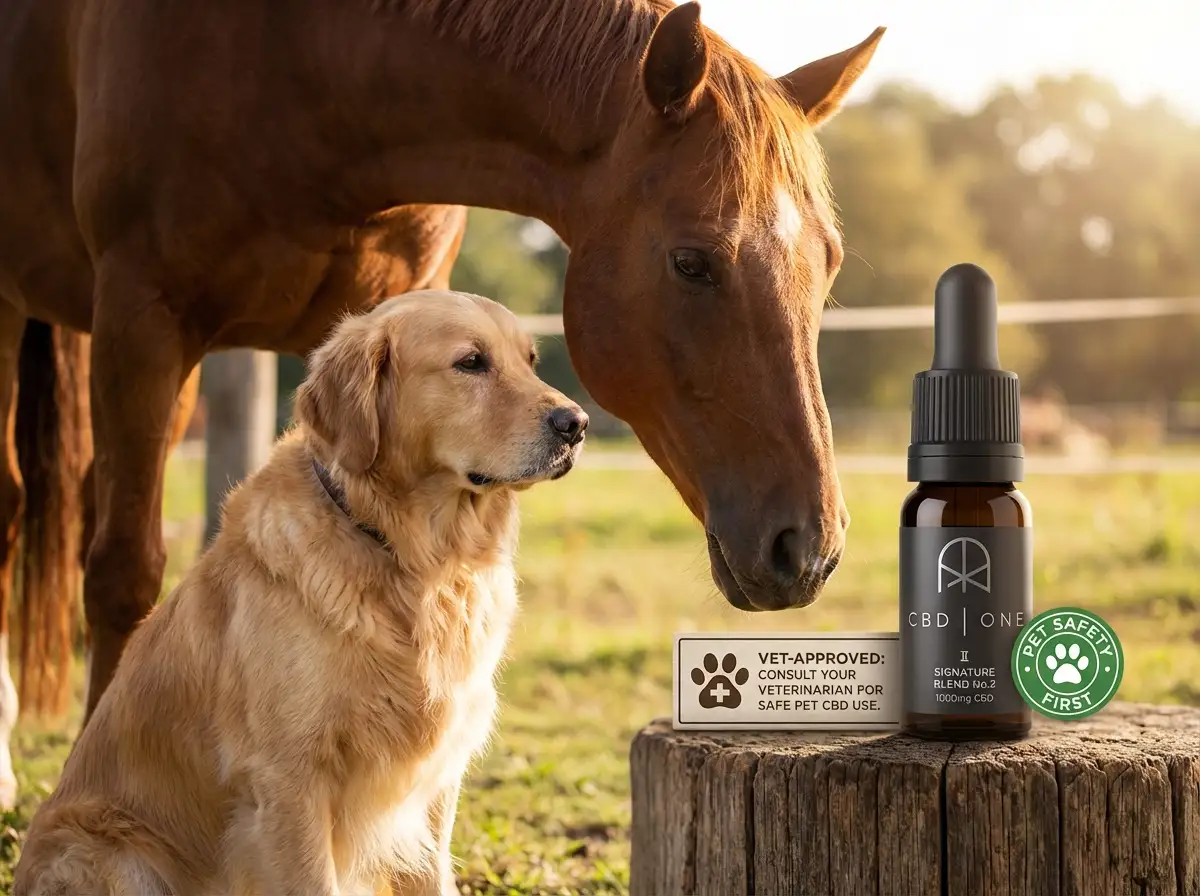
I get asked about pets a lot, especially “best cbd oil for dogs for arthritis uk” and “cbd oil for horses with arthritis uk”. It usually comes from a good place: you want your animal to feel comfortable.
Here’s the thing: animals are not small humans. Dosing is different, safety data is more limited, and product suitability matters. In the UK, you should speak to a vet before giving CBD to a dog or horse, particularly if they are older or on medication.
Be careful with human products
Many human CBD oils include ingredients and concentrations that may not be appropriate for animals. You also need to avoid products with unclear THC content. Even trace amounts that are legally fine for adult humans could be problematic for some pets.
If you are reading “cbd oil for dogs arthritis reviews”, treat them as anecdotes, not proof. Use them to generate questions for your vet, not to replace veterinary advice.
Frequently Asked Questions
Is CBD oil good for arthritis?
Some people with arthritis choose CBD oil as part of a broader wellness routine and report it helps them feel more comfortable, sleep better, or feel less tense. That said, CBD is not a medicine in the UK and it cannot be marketed as a treatment for arthritis. The research is still developing, and results vary a lot person to person. If you decide to try CBD, focus on quality, start with a low dose, track how you feel for a couple of weeks, and speak to your GP if you take any medication.
What is the difference between CBD oil for osteoarthritis and rheumatoid arthritis?
The CBD oil itself is not different, but the context is. Osteoarthritis is often managed with movement, strength work, weight management, and pain-relief strategies. Rheumatoid arthritis is autoimmune and typically involves disease-modifying medication and specialist monitoring. If you are considering cbd oil for rheumatoid arthritis, it is especially important to check for medication interactions and to keep your clinician informed. CBD may be used by some people as a wellness support, but it should never replace your medical plan.
How quickly does CBD oil work for arthritis symptoms?
Timing varies. Some people notice an effect within an hour or two, often in terms of feeling calmer or more ready for sleep. Others only notice subtle changes after consistent daily use for a couple of weeks. For arthritis-related wellbeing, many people are really tracking secondary factors such as sleep quality, morning stiffness perception, or how well they cope with flare days. If you want a structured approach, set a routine, take notes, and adjust slowly rather than changing dose every day.
How much CBD should I take per day if I have arthritis?
There is no single best dose for everyone. A sensible approach is “start low and go slow” and stay within the UK FSA guidance of no more than 70mg CBD per day for healthy adults. Your ideal amount depends on your body size, sensitivity, the strength of the oil, and what you are hoping to support (sleep, stress, general comfort). Our CBD Oil Dosage Guide can help you calculate a sensible starting point and build gradually.
Should I choose full spectrum or isolate for arthritis?
Some users prefer full spectrum products because they contain minor cannabinoids and terpenes alongside CBD, which may contribute to the Entourage Effect. Others prefer isolate because it is THC-free, which can matter for workplace testing or personal preference. Neither option is “right” for everyone. What matters most is transparency and consistency. Check lab reports, verify the spectrum on the label, and choose a product you will actually use daily. You can learn the basics in The Entourage Effect.
Can I use CBD oil alongside topical CBD for arthritis?
Many people do. Oral CBD oil is often used as a daily foundation, while topical CBD is used as part of a local massage routine around areas that feel tight or overworked. The massage and warmth of applying a cream can be soothing in its own right, regardless of CBD content. If you try both, introduce one at a time so you can tell what is helping and what is not. Also keep your expectations realistic: these are wellness products, not medical treatments.
What does the NHS say about CBD oil for arthritis?
When people search “cbd oil for arthritis nhs”, they are often looking for an official recommendation. Over-the-counter CBD wellness products are not prescribed by the NHS for arthritis, and CBD brands cannot claim to treat arthritis. If you are under NHS care for arthritis, you can still ask your GP or pharmacist about CBD from a safety perspective, especially if you take regular medication. The most important thing is keeping your medical team informed and avoiding any change to prescribed treatment without advice.
Is CBD oil safe with arthritis medications?
It depends on the medication. CBD can influence how your liver metabolises certain medicines, which can change drug levels in the body. This is especially relevant for medicines with a narrow therapeutic range, and those carrying a grapefruit warning. If you take any regular prescription medication, speak to a GP or pharmacist before using CBD. I also recommend reading CBD and Medication for a practical overview of interactions and a checklist of questions to ask.
What is the best CBD oil for dogs for arthritis in the UK?
I cannot recommend a “best” option for dogs because pets need veterinary guidance, and the evidence base is still emerging. If you are searching “best cbd oil for dogs for arthritis uk”, start by speaking with a vet who is comfortable discussing CBD. Ask about appropriate dosing, product type, and how to monitor your dog for side effects like drowsiness or digestive upset. Avoid using random human oils, especially high-strength products or anything without clear lab testing and THC information.
Can I give CBD oil to horses with arthritis in the UK?
Only do this with veterinary input. Horses are large, sensitive animals with specific medication rules, competition considerations, and complex digestive systems. If you are looking up “cbd oil for horses with arthritis uk”, use that research to prepare questions for your vet, not to self-prescribe. Product quality and contaminant testing matter even more at that scale. Your vet can also help you decide whether CBD is appropriate alongside other management strategies like turnout routines, farriery, and conditioning work.
Will CBD oil make me feel high?
CBD is non-intoxicating, so it does not create the “high” associated with THC. Full spectrum oils can contain trace THC within legal limits, which most people do not experience as intoxicating. If you are very sensitive, or you have to consider workplace drug testing, it is worth choosing your product type carefully and speaking to a professional if you are unsure.
What should I look for on a CBD oil lab report?
At minimum, you want a COA that matches your product batch and confirms the cannabinoid content. Many people also look for basic contaminant screening, such as heavy metals and residual solvents. If a company cannot provide a clear COA, it is hard to know what you are taking, which makes safe, consistent use much more difficult.
Can I take CBD oil and use a CBD cream at the same time?
Some people do, and often it is more about the routine than anything else. Oral CBD is commonly used as a daily foundation, while topical CBD is used as part of a massage ritual around areas that feel tight. Introduce one change at a time, keep notes, and if you take medication, keep your GP or pharmacist in the loop.
Key Takeaways
- Arthritis is a broad term. Osteoarthritis and rheumatoid arthritis are different, so your CBD expectations should be different too.
- CBD is not a medicine in the UK. Some people report it supports sleep, stress, and day-to-day comfort, but results vary.
- Choose products with clear lab testing, transparent CBD content, and an honest cannabinoid spectrum (full spectrum vs isolate).
- Start low, go slow, and stay within the FSA guidance of up to 70mg CBD per day for healthy adults.
- If you take medication, speak to a GP or pharmacist before trying CBD, and read up on interactions first.
Conclusion
If you are exploring CBD oil for arthritis, the best mindset is “support”, not “cure”. CBD may be a helpful addition to your routine, particularly if it supports sleep, helps you feel calmer, or makes it easier to stick to gentle movement and recovery habits. But it is not a replacement for proper assessment, joint-friendly exercise, or the medical care that keeps inflammatory conditions like rheumatoid arthritis under control.
Keep it simple: choose a transparent, lab-tested oil, pick a sensible strength, and use it consistently for a couple of weeks while you track what changes. If you are unsure about strength or how to take it, our guides on CBD oil strength and how to take CBD oil will save you a lot of trial and error.
If you would like a second pair of eyes on your routine, explore options calmly and speak to Nick for free guidance.