
CBD and Anxiety: Complete UK Guide 2026
In this guide, I’ll walk you through what CBD is, how it may interact with the body’s own balancing systems, what “full spectrum” really means, and how to approach dosing sensibly. You’ll also learn what to look for on labels so you can buy with confidence, not hype.
What CBD can (and cannot) do for anxiety
If you take one thing from this article, let it be this: CBD is best viewed as a wellness supplement that may support calm for some people, not a quick fix for anxiety.
Some users report that CBD helps them feel a little more “settled” in the body. Others say it takes the edge off a busy mind, or helps them build a more consistent wind-down routine in the evening. And some people feel very little at all.
The reality is that anxiety has many drivers: stress load, sleep debt, stimulants like caffeine, alcohol, hormone shifts, trauma history, health worries, and even how you breathe. If you are looking for a broader foundation first, it’s worth reading our pillar on CBD benefits so you understand the bigger picture around CBD and the body.
When to speak to your GP
If anxiety is affecting your day-to-day life, if you are having panic attacks, or if you are currently taking medication (especially anything for mood, sleep, pain, or blood pressure), speak to your GP or pharmacist before trying CBD. CBD is not a replacement for professional support, and it is always safer when your healthcare team knows what you are taking.
Why anxiety can feel so physical
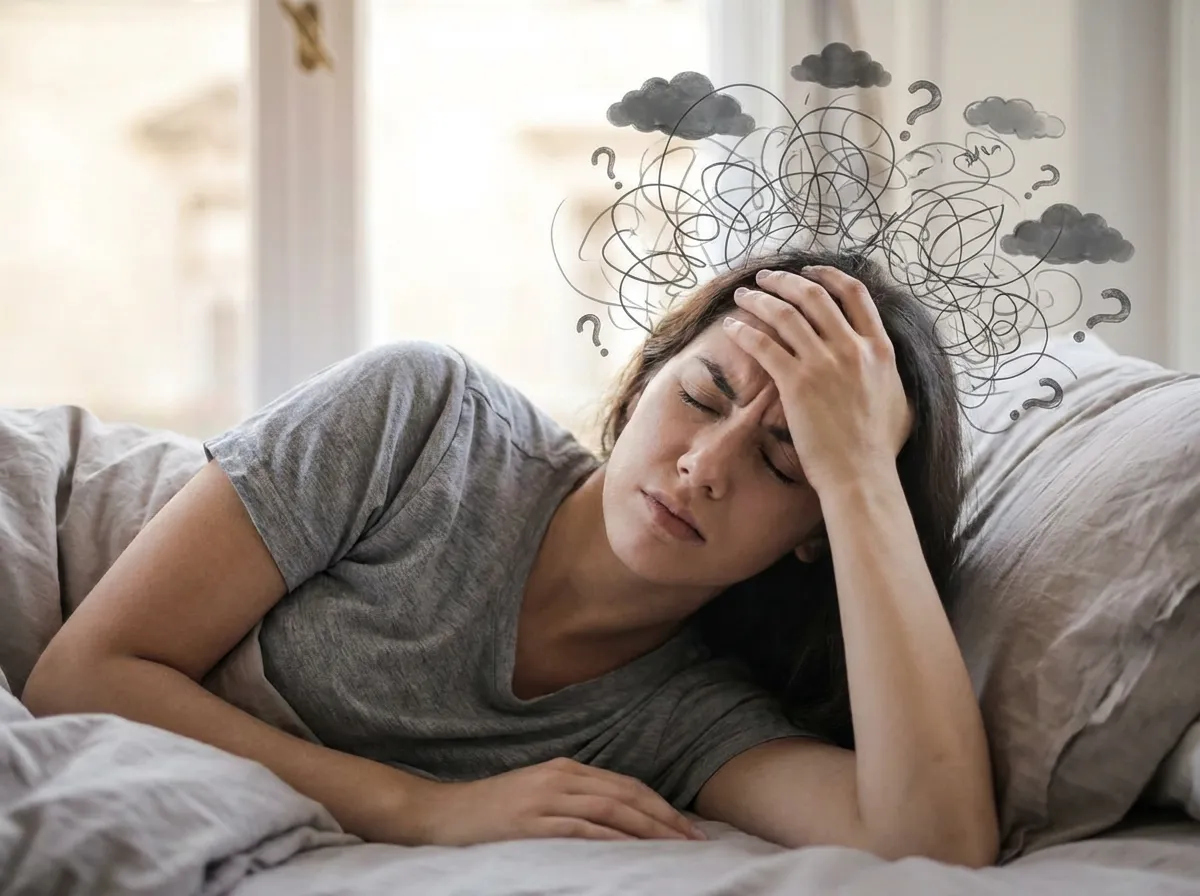
Anxiety is not “just in your head”. In practice, it shows up in the body: tight chest, shallow breathing, tense jaw, gut churn, restless legs, or that sudden rush of adrenaline when nothing obvious is happening.
Think of it this way: your nervous system has a threat dial. When that dial is turned up, your body becomes brilliant at scanning for danger, but not very good at rest, digestion, and sleep. That is why anxious spells often come with fatigue, cravings, and poor recovery.
Stress, sleep, and the spiral
What many people overlook is how quickly a few poor nights can amplify anxious feelings. Less sleep often means more caffeine, more irritability, less patience, and a body that feels “on edge” all day. That is why so many searches include things like “cbd dose for sleep and anxiety” and “cbd oil for anxiety and stress”. The real goal is often to support a calmer baseline, especially in the evenings.
How CBD may support calm (without making claims)
CBD (cannabidiol) is a non-intoxicating compound from hemp. It does not make you “high”. Instead, research is exploring how CBD interacts with the body’s endocannabinoid system, which plays a role in balance across mood, sleep, appetite, immune signalling, and stress response.
Now, when it comes to full spectrum CBD, you are also getting other naturally occurring plant compounds alongside CBD, including minor cannabinoids and terpenes (with only trace THC within legal limits). Many people prefer full spectrum because of what’s known as the Entourage Effect, where the plant compounds may work better together than in isolation.
From a practical standpoint, this means your experience can depend on the type of extract, your dose, your consistency, and your personal sensitivity to cannabinoids.
CBD and “feeling calmer” vs feeling sleepy
CBD is not a sedative. Some people find it supports a calmer state without making them drowsy, which is ideal for daytime. Others feel more relaxed and a little heavier, especially at higher doses or when taken later in the day. Your timing matters, and so does your routine around it.
If you want to understand timing in more detail, see How Long Does CBD Take To Work?.
Choosing a product format: oils vs water soluble vs patches
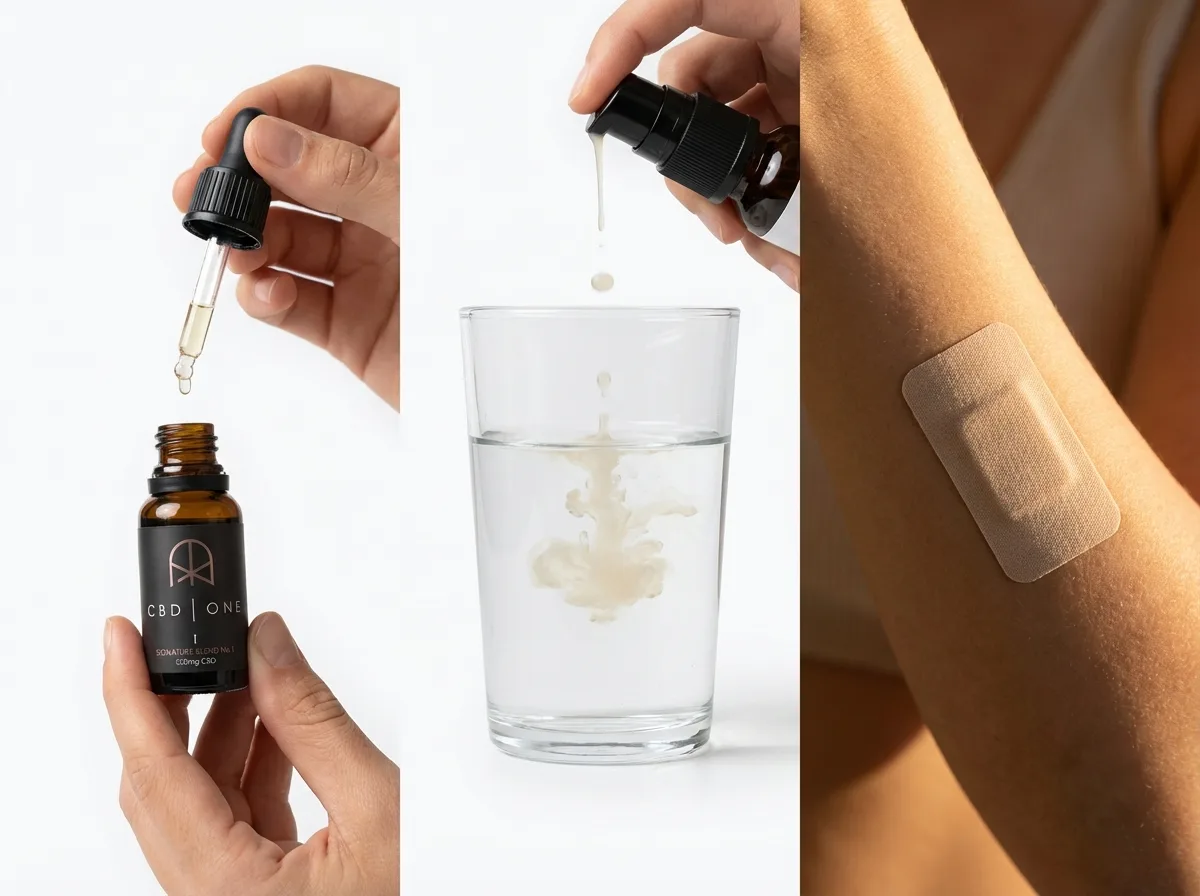
One reason CBD feels confusing is that “CBD is CBD” is only partly true. The format changes how you take it, how consistent it feels, and how easy it is to build into your day.
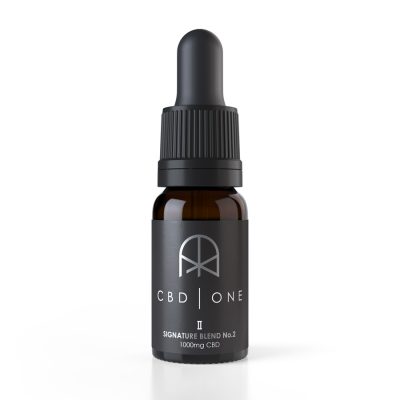
CBD oil drops (classic, flexible)
CBD oil is taken under the tongue, held for a minute or two, then swallowed. It is popular because it is simple and adjustable. On our product data, CBD oils are listed with a bioavailability of around 0.12 (12%), which gives you a rough idea of why some people need a little experimentation to find their sweet spot.
If you want to browse this format, the most relevant category is CBD Oils.
Water soluble CBD (easy to add to a drink)
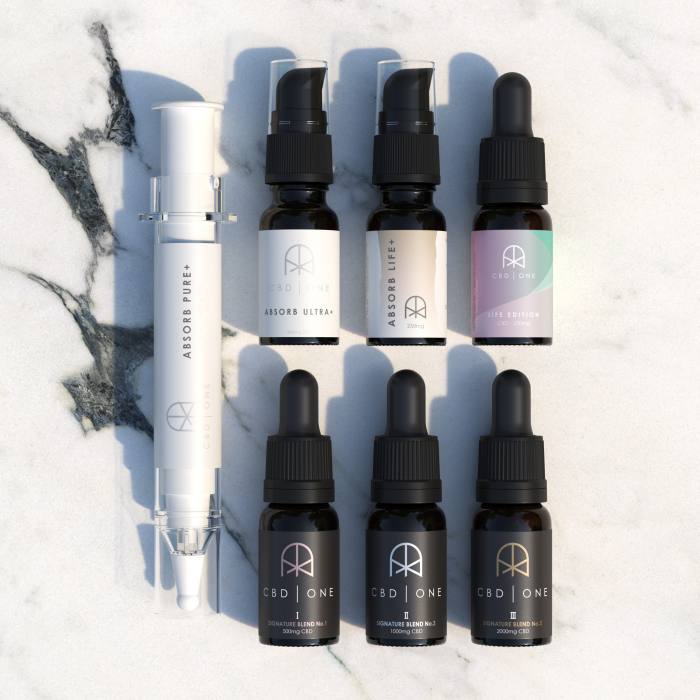
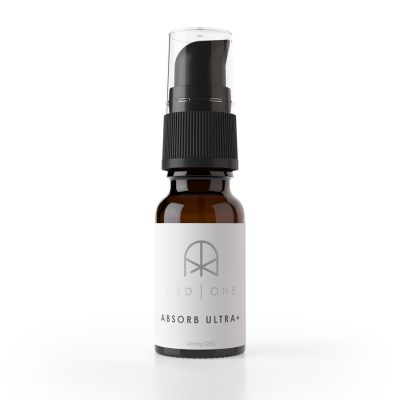
Water soluble CBD is designed to mix into hot or cold drinks. Many people like this for daytime use because it fits naturally into a morning coffee or an evening herbal tea ritual. One example from CBD One is Absorb Ultra+, a full spectrum, lab verified water soluble product that you take via a pump and add to a drink. That “measured pump” style can help if you like consistency without counting drops.
You can explore that whole format here: Water Soluble CBD.
CBD patches (set-and-forget dosing)
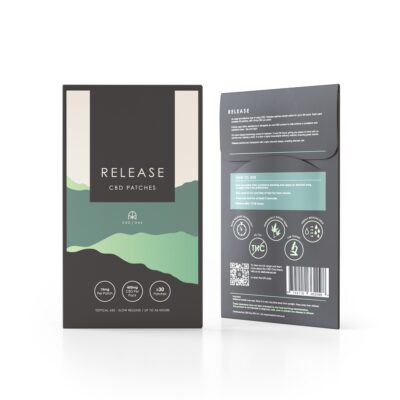
Patches are a different approach: you apply one to clean, dry skin and it releases CBD slowly over time. Some people prefer this if they dislike the taste of oils, or if they want a steady background level through a long day. CBD One’s patch range includes isolate options, which are THC-free, and they are described as high bioavailability via transdermal delivery (for the 15mg patches, listed as 40%+).
Consider this: if your anxiety tends to spike at predictable times (commute, meetings, late afternoon slump), a format that supports steadier dosing may suit your routine better than something you take “as and when”.
Dosing for anxiety and sleep: a sensible UK approach
People often ask me for the “best CBD dose for anxiety and depression” or the “best CBD oil for anxiety and stress UK”. I get it. You want certainty. But dosing is personal, and it is influenced by body size, stress load, sensitivity, and the product format.
In the UK, the Food Standards Agency (FSA) recommends healthy adults should not exceed 70mg of CBD per day. That is a useful safety ceiling when you are planning your routine.
Start low, go slow, and stay consistent
A practical approach is to start with a low dose once daily for several days, then adjust gradually. Anxiety is rarely “one dose and done”. Many people get better feedback when they take CBD consistently for a couple of weeks and pair it with calming basics like a regular bedtime, less late caffeine, and a short wind-down routine.
“CBD dose for sleep and anxiety ml” (making sense of ml, mg, drops, and pumps)
This is the label confusion that trips most people up. ml tells you volume, not strength. mg tells you how much CBD you are actually taking.
- mg = the amount of CBD (what you want to track)
- ml = the liquid volume
- drops or pumps = your measuring method
If you want help converting your product strength into a daily amount, use our CBD dosage guide to sense-check your numbers and stay within sensible limits.
Daytime vs evening dosing
Some people like a smaller amount in the morning to take the edge off stress, then a second amount in the evening to support a calmer bedtime routine. Others do best with one consistent daily dose. If you are trialling CBD for anxiety, I usually suggest you avoid changing three things at once. Keep the format and timing stable, then only adjust the dose.
How to tell if CBD is helping your anxiety (without overthinking it)
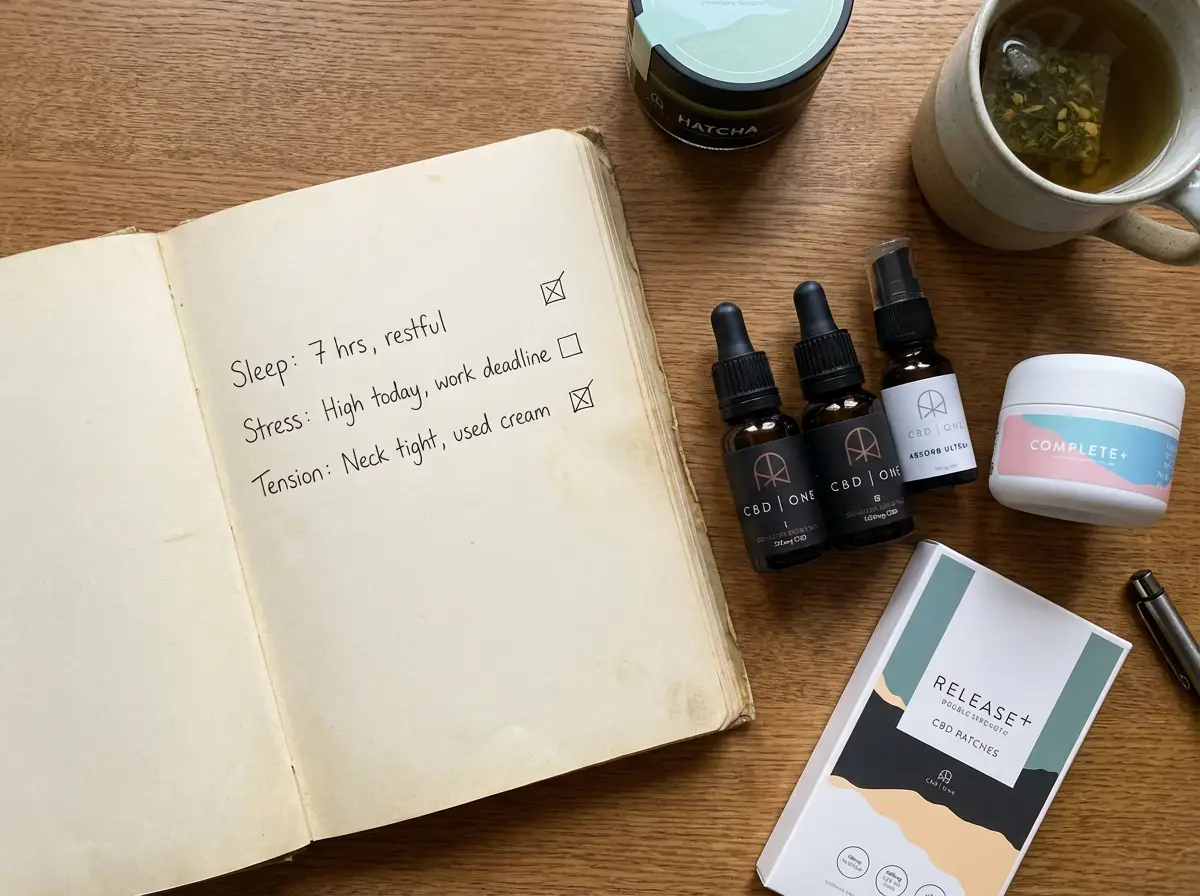
One of the biggest frustrations with anxiety is that it makes you monitor yourself. You take something, then immediately scan for changes: “Do I feel calmer yet?” That checking can actually keep your nervous system switched on.
From a practical standpoint, it helps to measure the right things, in a low-drama way, for about 10 to 14 days. Not “am I anxiety-free?” but small markers that show your system is settling.
Small signs people often notice first
- You drop off to sleep a little more easily, or you wake less wired
- Your shoulders and jaw feel less tense without you forcing them to relax
- You feel a bit more steady between stressors, even if life is still busy
- Your usual triggers feel slightly less sticky, even if they still show up
Consider this: if you only judge CBD by what happens in the first hour, you can miss the more useful signal, which is how you cope across a whole day or week.
A simple way to track your trial
Pick one format, keep your timing consistent, and write down three quick notes each day: sleep quality, daytime tension, and overall stress load. Keep it simple, because consistency is what gives you a fair read.
Full spectrum vs broad spectrum vs isolate for anxiety: how to choose
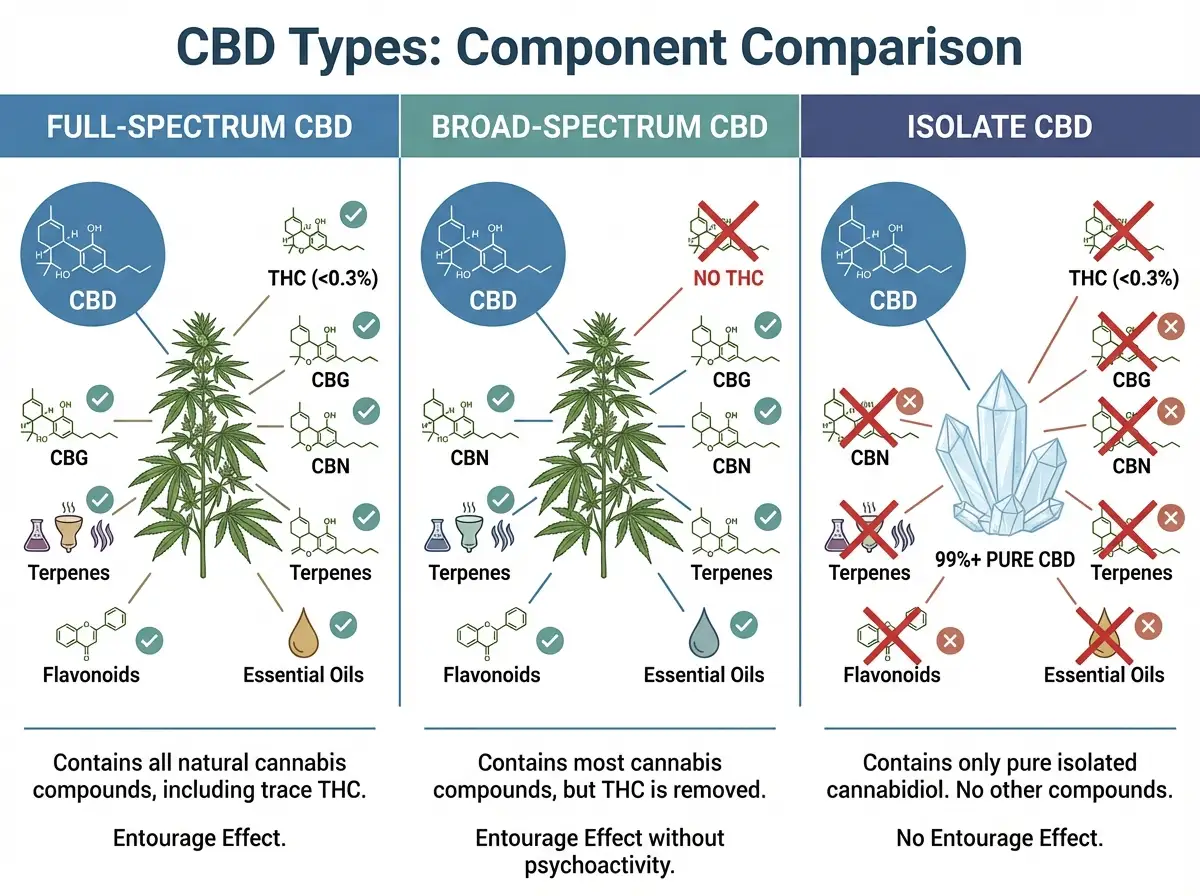
You will see these three terms everywhere, and they matter because they change what is actually in the bottle or patch.
Full spectrum
Full spectrum means CBD alongside a range of other naturally occurring hemp compounds, including minor cannabinoids and terpenes, with trace THC within legal limits. Many people choose this when they want the “whole plant” style approach and are comfortable with trace THC.
Broad spectrum
Broad spectrum usually means a wider mix of hemp compounds, but with THC removed to non-detectable levels. Some people prefer this if they are sensitive to THC, or if their work and lifestyle means they want to avoid even trace amounts.
Isolate
Isolate is CBD on its own. It is often chosen by people who want a simpler ingredient profile or who want to avoid THC entirely. You will see isolate mentioned in certain patch formats, for example.
The reality is that your best choice is the one you will tolerate well and use consistently. If you are unsure, start with a conservative approach and build from there, rather than going straight to high strength.
What strength CBD oil should I choose for anxiety? (UK label reading)
People ask “what strength CBD oil for anxiety?” because the numbers on bottles feel like they should give you the answer. The tricky part is that bottle strength is not the same as dose. A high-strength bottle just means you get more mg of CBD per ml, and usually more mg per drop.
Here’s the thing: strength is mainly about convenience. If you want to take a small mg amount, a lower strength oil can be easier to fine-tune. If you want the same mg amount but with fewer drops, a higher strength oil can feel simpler.
What to look for on the label
- Total CBD in the bottle (for example, mg per 10ml or 30ml)
- CBD per ml, or CBD per drop, so you can track what you are actually taking
- The spectrum type (full spectrum, broad spectrum, or isolate)
- A batch-linked lab report so you can verify content and feel confident
If a label only shouts “high strength” but does not clearly tell you mg per drop or mg per ml, that is a red flag. You deserve to know what you are taking.
CBD for situational anxiety: meetings, travel, and high-stress days

Not all anxiety is the same. Some people feel a constant hum of stress. Others feel fine until a specific situation lights them up: presentations, busy public spaces, travel days, social events, or a hard conversation you have been avoiding.
What many people overlook is that situational anxiety is often a routine problem, not just a product problem. You are trying to get through a predictable demand without your nervous system going into overdrive.
Building a “steady baseline” routine
If you are prone to spikes, it can help to focus on steadiness, not rescue dosing. For many people, that means choosing a format they can use consistently and timing it in a way that supports the parts of the day that usually feel hardest.
Oils can suit people who like flexibility. Water soluble options can be easier if you already have a daily drink ritual. Patches can suit people who want a slower, steadier release without thinking about it.
Don’t ignore the basics that change the outcome
Hydration, food timing, and stimulants make a bigger difference than most people want to admit. If you take CBD on an empty stomach after two coffees and four hours of poor sleep, it is not a fair test. You do not need perfection, just a sensible baseline that gives CBD a chance to be judged properly.
Quality and UK shopping checklist
If you are exploring “cbd oil for anxiety and stress”, product quality matters because it directly affects your confidence in what you are taking.
Here’s what I recommend you look for when comparing options:
- Clear lab reports (Certificate of Analysis) so you can verify CBD content and check for contaminants
- A transparent cannabinoid spectrum (full spectrum, broad spectrum, or isolate)
- Ingredients you recognise, with no unnecessary fillers
- Practical dosing information in mg per drop, mg per pump, or mg per patch
- Realistic, compliant language: no claims to treat anxiety or depression
If you want a structured way to compare brands and formats, our CBD buying guide and CBD product comparison will help you avoid common traps.
A note on full spectrum at CBD One (as one example)
At CBD One, we focus heavily on full spectrum extracts across core ingestible formats because we like the “whole plant” philosophy behind the Entourage Effect. All products are vegan and plant-based, and the range is described as lab verified on the product listings. That said, full spectrum is not automatically “better” for everyone, especially if you need a THC-free option.
Safety, side effects, and medication interactions
Most healthy adults tolerate CBD well, but that does not mean “risk free”. Some people report mild side effects such as tiredness, digestive upset, or changes in appetite, especially when starting or increasing the dose quickly.
NEVER take CBD without medical guidance if you are on prescription medication and you are unsure about interactions. This is especially important for medicines with “grapefruit warnings” and drugs that rely on liver enzyme metabolism.
Please read CBD and Medication before you begin, and speak to your GP or pharmacist if you take any regular meds.
Anxiety, alcohol, and stimulants
In practice, I see people blame CBD for “not working” when the real issue is lifestyle friction: high caffeine, irregular meals, late-night scrolling, and alcohol used to switch off. CBD may support your routine, but it cannot outpace a nervous system that never gets a chance to downshift.
Frequently Asked Questions
Can CBD cure anxiety?
No. CBD is not a medicine in the UK and it cannot be presented as a cure or treatment for anxiety. Some people choose CBD as part of a broader wellbeing routine and report that it helps them feel calmer or more settled, but responses vary a lot. If anxiety is persistent, worsening, or affecting work, relationships, or sleep, you deserve proper support. Speak to your GP, and consider CBD only as a complementary option, not a replacement for professional care.
Does CBD oil help with anxiety and stress?
Some users report that CBD oil supports a calmer baseline during stressful periods, but it is not guaranteed and the research is still developing. What matters most is product quality, consistent dosing, and having realistic expectations. Many people also find CBD works best when paired with basics like reducing late caffeine, improving sleep timing, and building a short daily wind-down routine. If you are curious about choosing sensibly, see our CBD buying guide.
What’s the best CBD for anxiety and depression?
It’s understandable to search for “the best”, but it is not that simple. Depression is a medical condition that needs proper assessment and support, and CBD should not be used as a substitute for that. From a CBD perspective, people typically choose between full spectrum, broad spectrum, and isolate depending on sensitivity and personal preferences. If you take medication for mood, sleep, or anxiety, check interactions with a clinician first and read CBD and Medication.
How much CBD should I take for anxiety in the UK?
There is no single dose that suits everyone. A sensible approach is “start low, go slow”, and give your body time to respond before increasing. In the UK, the FSA recommends healthy adults do not exceed 70mg CBD per day, which is a helpful ceiling while you experiment. Track your dose in mg (not ml), keep timing consistent, and note changes in sleep, stress levels, and how you feel day to day. For help with calculations, use our CBD dosage guide.
What does “cbd dose for sleep and anxiety ml” actually mean?
This phrase usually means you are trying to convert a liquid amount (ml) into an active CBD amount (mg). ml tells you how much liquid you took, but mg tells you the actual CBD dose. Two oils can both be 1ml, but one might contain far more CBD than the other depending on strength. Look for “mg per 10ml” on the bottle, then work out mg per drop (or use a calculator). Tracking mg helps you stay consistent and stay under the FSA’s 70mg daily recommendation.
How long does CBD take to work for anxiety?
It depends on the format, your metabolism, and whether you have taken CBD before. Some people notice effects within an hour, while others only get useful feedback after steady use for a couple of weeks. Oils taken under the tongue are often used for relatively quicker feedback than capsules, while patches are designed for slow release over many hours. For a practical breakdown of timing, read How Long Does CBD Take To Work?.
Is full spectrum CBD better for anxiety?
Some people prefer full spectrum because it includes minor cannabinoids and terpenes alongside CBD, which may contribute to the Entourage Effect. Others prefer isolate or THC-free formats for personal or professional reasons. “Better” depends on your goals, your sensitivity, and how you feel when you take it. If you are new, the most important factors are quality, sensible dosing, and consistency. You can also use our CBD product comparison to weigh up options.
Can I take CBD with anxiety medication?
You should only do this with guidance from your prescriber or pharmacist. CBD can interact with certain medicines by affecting how they are metabolised, and that can change medication levels in the body. This is not something to guess. If you take antidepressants, benzodiazepines, sleeping tablets, or any long-term prescription medicine, speak to a clinician first. Then read CBD and Medication for a sensible overview of why interactions matter.
Will CBD make me feel spaced out or high?
CBD itself is non-intoxicating, so it should not make you feel “high” in the way THC can. That said, some people feel unusually relaxed, sleepy, or a bit “floaty” when they take too much, especially when starting out. If that happens, it is usually a sign to reduce your dose, change timing, or choose a different format. If you need a THC-free option, isolate-based products (like certain patches) are designed without THC, but always verify with lab reports.
What product format is best for daytime anxiety?
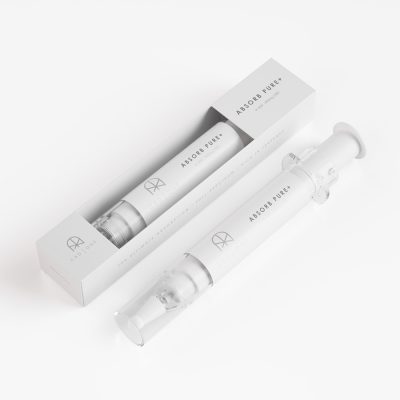
Daytime use is usually about steadiness and convenience. Some people like a small amount of oil in the morning and early afternoon. Others prefer water soluble CBD mixed into a drink because it feels like part of a normal routine. Patches can suit people who want “set-and-forget” dosing across a busy day. One example at CBD One is Absorb Pure+ or Absorb Life+ style water soluble products with measured pumps, which can be easier to keep consistent than guessing with droppers. Your ideal choice depends on taste preferences and your schedule.
What strength CBD oil is good for anxiety?
“Good” depends on how you want to measure your dose. If you are new, a strength that makes it easy to take a small, repeatable mg amount is often the simplest place to start. Higher strength oils can be convenient if you already know your preferred mg amount and you want fewer drops, but they can also make it easier to overshoot when you are guessing. Look for clear mg per drop or mg per ml on the label, and keep your approach steady for a couple of weeks so you can judge it fairly.
Can CBD help with panic attacks?
If you are having panic attacks, it is a sign your nervous system needs proper support, and speaking to your GP is the safest first move. Some people choose CBD as part of a wider routine to support calm, but it should not be relied on as an emergency fix. If you notice panic symptoms, focus on immediate grounding basics first: slower breathing, a quieter environment, water, and getting help if you feel unsafe. If you decide to trial CBD, think in terms of consistency and prevention support, not rescue dosing.
Is CBD legal in the UK if I’m buying it for anxiety?
CBD products sold in the UK should be derived from approved industrial hemp strains and must meet legal THC limits. The key point is that legality and marketing claims are different things: even if a CBD product is legal to sell, it still cannot be marketed as a treatment for anxiety. If you are shopping, focus on transparent lab reports, clear ingredient lists, and realistic language, rather than bold promises.
Should I take CBD every day for anxiety?
Many people who use CBD for stress support choose a consistent daily routine, because it makes it easier to judge how they respond. Others prefer to use it only during high-stress periods. There is no single rule, but consistency matters if you are trying to learn what works for you. If you choose daily use, stay within the FSA guidance for healthy adults, keep your dose in mg, and review how you feel after a couple of weeks rather than changing everything after two days.
Key Takeaways
- CBD is not a medicine in the UK and cannot be marketed as a treatment for anxiety, but some people use it as part of a calming routine.
- Choose your format based on lifestyle: oils for flexibility, water soluble for easy rituals, patches for steady release.
- Track your dose in mg, not ml, and follow the FSA guidance of no more than 70mg CBD per day for healthy adults.
- Quality matters: look for lab reports, clear ingredients, and transparent dosing information.
- If you take medication or anxiety is impacting daily life, speak to your GP or pharmacist before trying CBD.
Conclusion
If you are exploring CBD and anxiety, I’d keep it simple. Start with a clear goal, such as “I want a calmer evening routine” or “I want to feel less on edge during the workday”, then choose a format that you will actually stick with. Use a low dose, build consistency, and track changes in sleep, tension, and stress levels over time.
Also, stay grounded: CBD may support calm for some people, but it is not a cure, and it is not a substitute for proper medical care. If anxiety is persistent, if you are taking medication, or if you are unsure about interactions, speak to a clinician first and prioritise safety.
If you want help choosing a sensible starting point, explore our guides and speak to Nick for free advice.