
Indian Hemp: Complete UK Guide (2026)
In the UK, those distinctions matter. They affect what you are buying, what is (and is not) in the product, and what is legal to sell. This guide will help you separate the history and the language from the reality of today’s hemp and CBD products, so you can read labels with confidence and avoid the hype.
If you want a wider grounding on CBD itself, it is worth reading our guide to premium CBD oil after this.
What “Indian hemp” means (and why it confuses people)
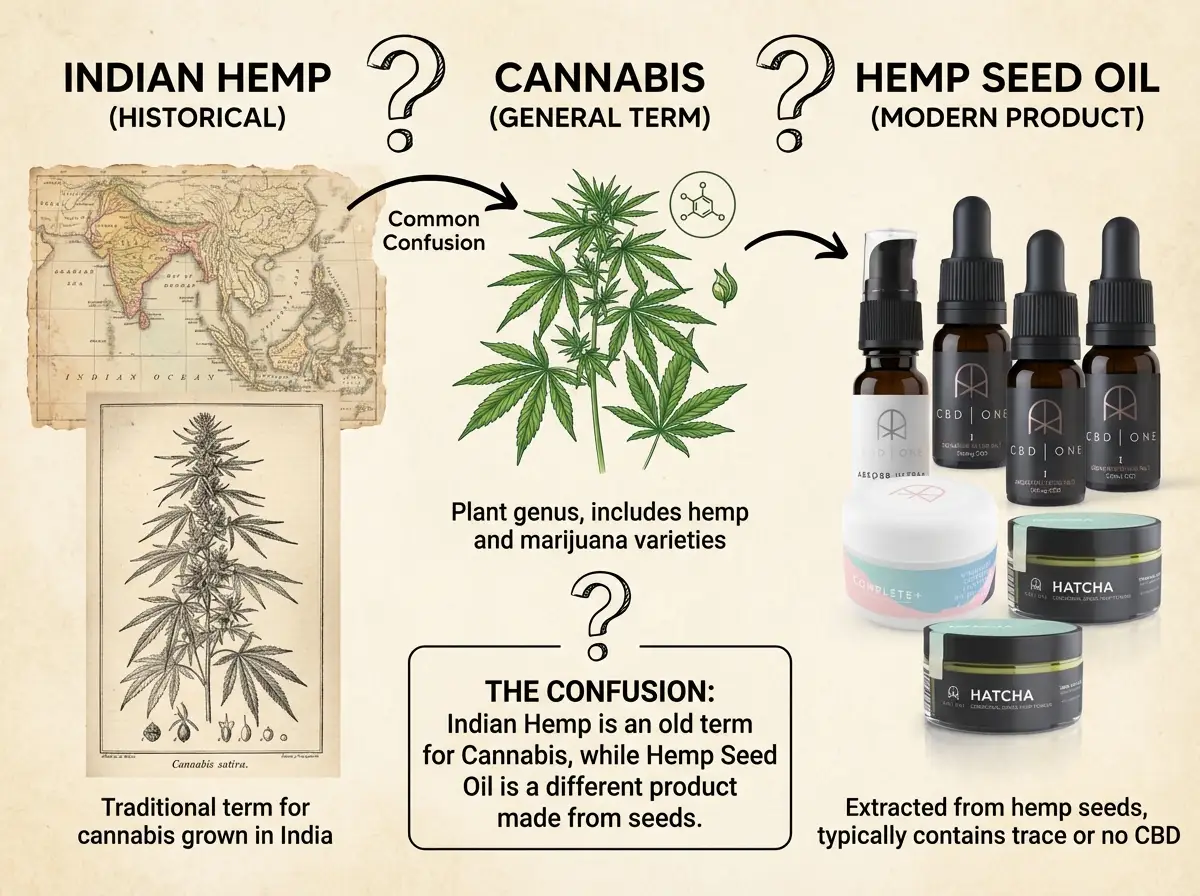
“Indian hemp” is not a precise wellness term. Historically, it has been used to refer to cannabis varieties associated with India and surrounding regions. In older texts it is often linked with what people now call “marijuana” (higher THC varieties), not the low-THC hemp used for foods and CBD.
Now, when it comes to modern UK products, you will sometimes see “Cannabis Sativa” or “Cannabis Sativa Seed Oil” on ingredient lists. Some brands and marketplaces loosely label this as “Indian hemp” even when the ingredient is simply hemp seed oil used for moisturising skin.
Consider this: two products could both be described online as “Indian hemp”, but one is just seed oil (no meaningful cannabinoids), while another contains a hemp extract that may include CBD. Same phrase, totally different contents.
Indian hemp vs hemp vs cannabis: the practical differences
Hemp and cannabis are the same plant family, but not the same use case
Botanically, hemp and cannabis sit under the same broad umbrella. The everyday difference is how the plant is grown and selected.
Industrial hemp is typically grown for fibre, seeds, and extracts that are compliant with strict THC limits. Higher-THC cannabis varieties are grown for intoxicating effects. That is the distinction most people care about in real life.
Why the word choice matters for UK shoppers
The reality is that UK consumers often use “hemp”, “CBD”, and “cannabis” interchangeably, but labels do not. A product might contain hemp seed oil (nutritional, great fatty acid profile) and still contain no CBD at all. Another might be a CBD product made from hemp flowers and leaves, containing cannabinoids and terpenes.
So when you see “Indian hemp”, treat it as a prompt to slow down and check the ingredient list, the CBD content (in mg), and the lab report.
What many people overlook: “hemp” is also a fibre and food crop
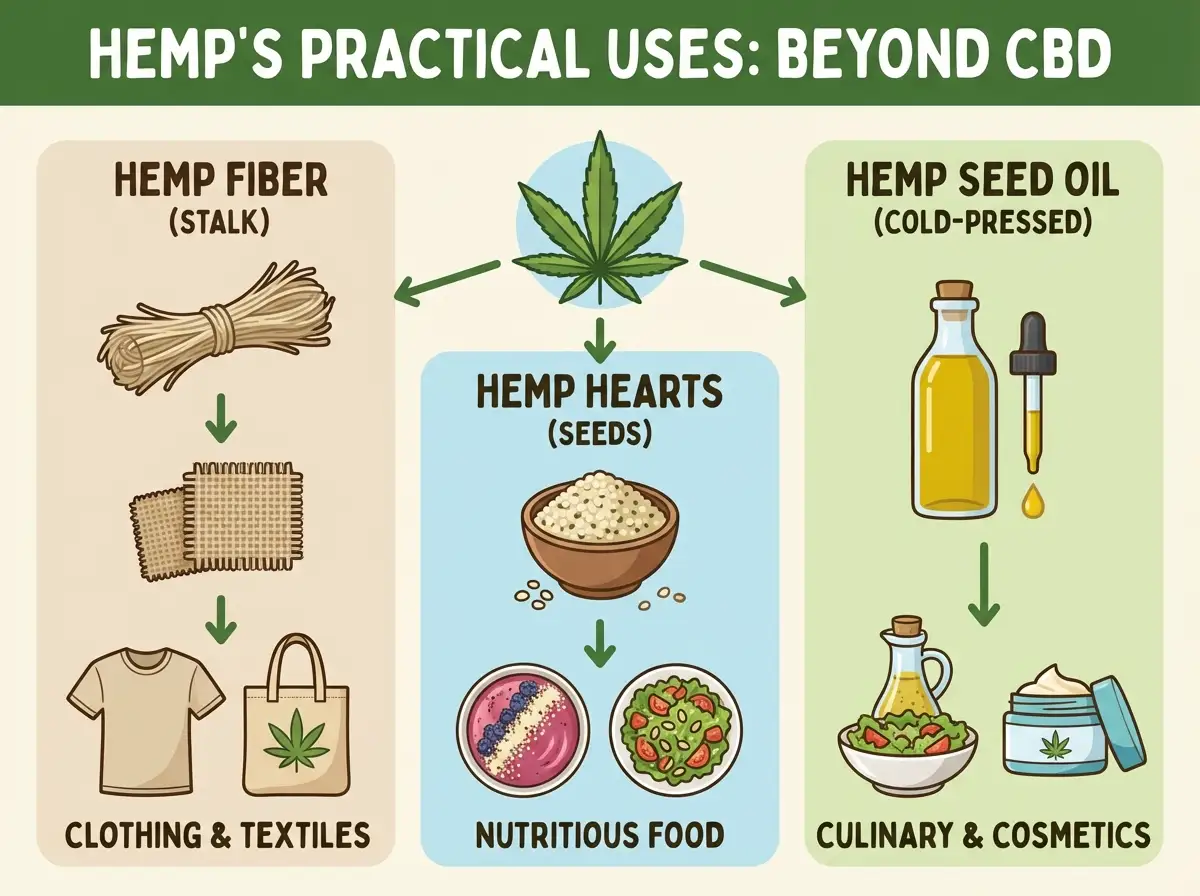
When people say “Indian hemp”, they often mean something resinous or cannabinoid-based. But hemp has another identity that is easy to miss: it is also a traditional crop used for fibre and food.
From a practical standpoint, that matters because it explains why you will see hemp in places that have nothing to do with CBD. Think clothing, ropes, paper, building materials, and nutritional foods like hemp hearts (shelled seeds) and hemp seed oil.
So if you come across “hemp” on a label, your first question should be: which part of the plant is this?
- Seeds: typically used for food and skincare oils
- Stalk: typically used for fibre and industrial materials
- Flowers and leaves: where cannabinoids and terpenes are concentrated, and where CBD extracts usually come from
That one check, plant part, will prevent most “Indian hemp” confusion before it starts.
Is hemp a drug, and can it get you high?
This is a fair question, and it is one of the reasons the phrase “Indian hemp” causes so much uncertainty.
Hemp seed oil is not intoxicating
Hemp seed oil is a seed-derived ingredient. It is not intended to make you feel high, and it does not contain meaningful cannabinoids in the way a flower extract does.
CBD is non-intoxicating, THC is the compound linked with “high”
CBD (cannabidiol) is non-intoxicating. The “high” associated with cannabis comes from THC. In the UK, compliant CBD products are designed to keep THC within legal limits, and any presence is there in trace amounts rather than for effect.
Why people still worry
Two things drive most concern: vague labelling and misunderstanding. If something is sold as “hemp” but does not clearly state CBD content in mg, or if it looks like traditional cannabis resin, it puts you in a grey area. That is why transparency and testing matter so much, especially with “hemp hash” style products.
Hemp oil, CBD oil, and hemp extract: how to spot what you are getting
This is the biggest source of confusion I see, and it is completely understandable.
Hemp seed oil (often called “hemp oil”)
Hemp seed oil is pressed from hemp seeds. It is a food-style oil used in supplements and skincare. It contains beneficial fats, but it does not naturally contain meaningful amounts of CBD because cannabinoids are found mainly in the flower and resin, not in the seeds.
If you want a simple comparison, this article on Hemp Oil vs CBD Oil is a useful read.
CBD oil
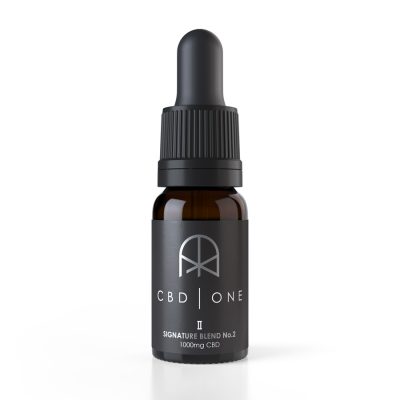
CBD oil is typically a hemp extract (from flowers and aerial parts) blended into a carrier oil such as hempseed oil. What matters is the declared CBD content in milligrams, not just the word “hemp”.
At CBD One, all our core oils are full spectrum because we believe the natural mix of compounds is part of what makes hemp so interesting in practice.
Hemp extract (the phrase to look for)
“Hemp extract” can mean a lot of things, so you want detail. A trustworthy label usually states:
- CBD content in mg per bottle and ideally per serving
- Whether it is full spectrum, broad spectrum, or isolate
- A link to a batch lab report (often called a Certificate of Analysis)
Extraction basics: why CO2, ethanol, and “cold pressed” are not the same thing
What many people overlook is that “hemp extract” is not a single ingredient, it is a process outcome. Two extracts can come from the same plant, but behave differently depending on how they were made and what was kept in, or taken out.
Cold pressed: usually about seeds, not CBD-rich flower extract
If you see “cold pressed hemp oil”, that is most often hemp seed oil. Cold pressing is a common way to make a nutritious seed oil, and it fits perfectly in skincare and food. It is not, by itself, a sign you are getting a CBD product.
CO2 and ethanol: common ways to extract cannabinoids
CBD-rich extracts are usually made by taking cannabinoids and aromatic compounds from the aerial parts of the plant. Two methods you will hear about are CO2 extraction and ethanol extraction. Both can produce high quality extracts when done properly, and both can be cleaned and refined. The key point for you as a shopper is not the buzzword, it is the proof: a batch lab report showing cannabinoid content and confirming the product is within limits.
Full spectrum, broad spectrum, isolate: what the extraction choice can influence
Extraction and refinement also tie into spectrum. Full spectrum tends to keep a wider mix of naturally occurring plant compounds. Broad spectrum is usually refined to remove THC while keeping other compounds. Isolate is CBD on its own. None of these labels are a guarantee of quality, but they should match what is in the lab report.
UK law basics: what is legal, what is risky, and what to avoid
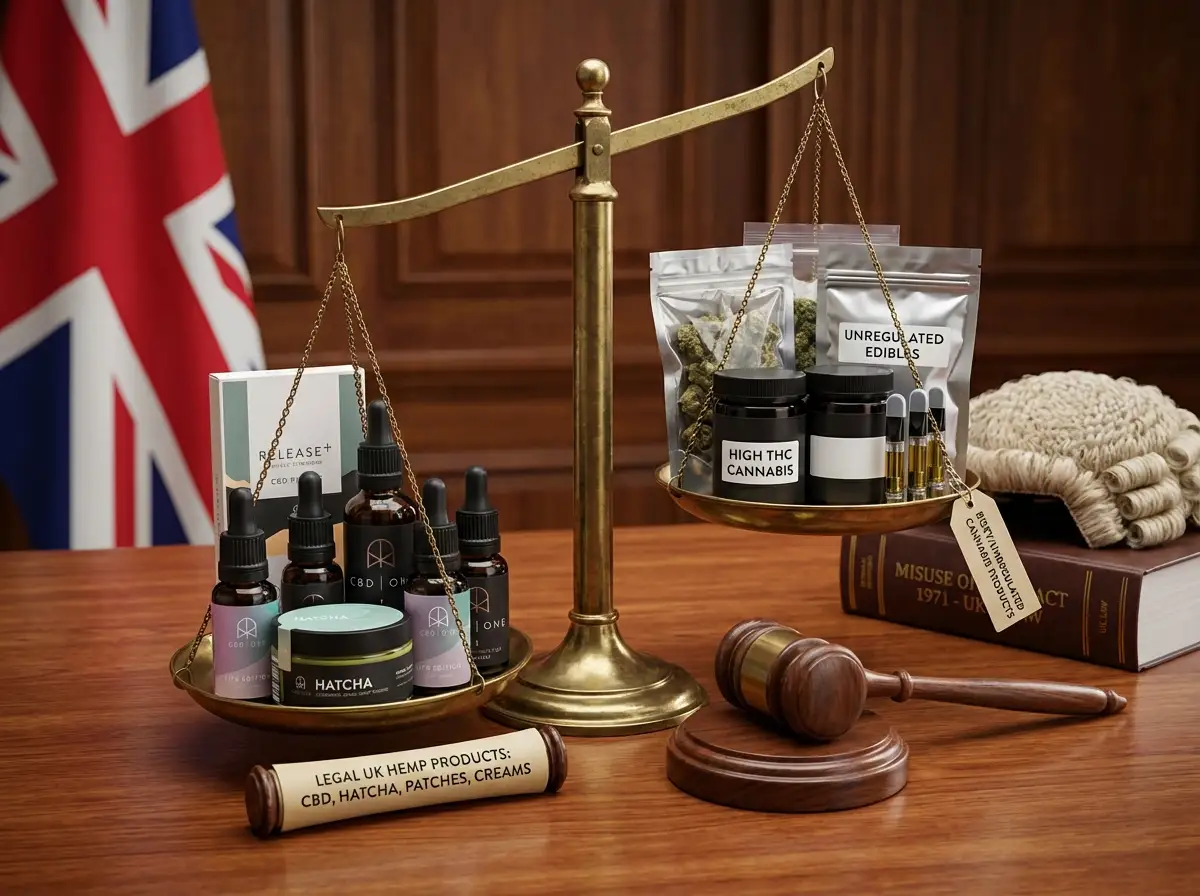
UK legality is about THC, marketing claims, and compliance.
CBD is not a medicine in the UK
CBD products are sold as food supplements or cosmetics, not medicines. That means brands cannot legally claim they treat, cure, or prevent medical conditions. If you see bold medical promises, treat that as a red flag.
THC limits and why lab reports matter
Full spectrum CBD products can contain trace THC within legal limits, but they must still be compliant and properly tested. If you are sensitive to THC, or you are drug tested for work or sport, you will want to think carefully and speak to a professional.
For a deeper look at the rules, read Is CBD Oil Legal in the UK?.
Novel Food and “too good to be true” products
Edible CBD in the UK falls under Novel Food rules. From a practical standpoint, that means you should be cautious of imported “hemp” edibles with unclear CBD content, no UK-facing documentation, or no lab testing.
Drug testing and “trace THC”: what to consider
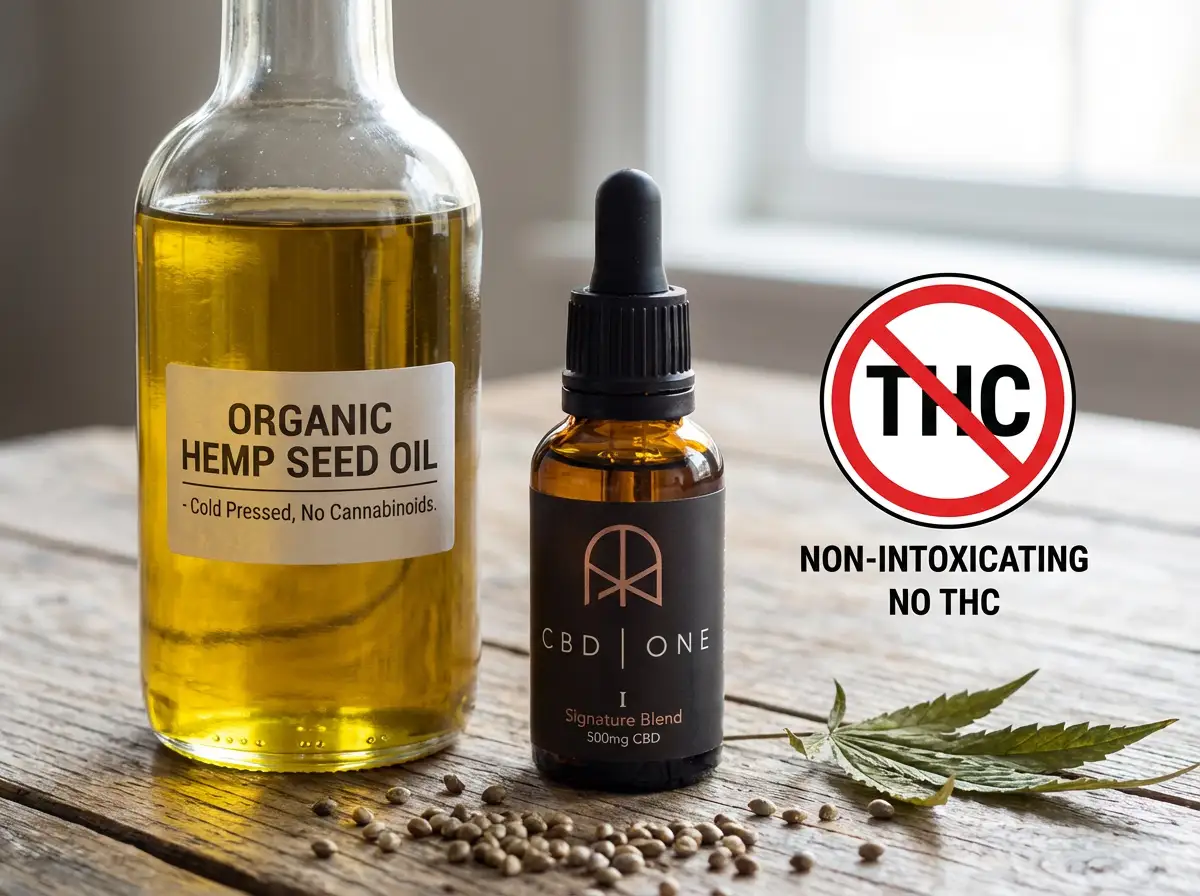
This topic gets glossed over online, but it matters for real people in real jobs.
Full spectrum can include trace THC
Full spectrum CBD can include tiny amounts of THC within legal limits. It is not intended to intoxicate, but in certain circumstances it may still be relevant if you have workplace drug testing, you compete in sport, or you are particularly sensitive.
Lab reports help, but they are not a “pass any test” promise
A Certificate of Analysis can show the cannabinoid profile of a batch, including THC. That is a good sign of transparency. But no supplement brand can responsibly guarantee a negative drug test, because testing thresholds, metabolism, and usage patterns vary.
If you need to avoid THC completely
If your situation requires strict avoidance of THC, you may prefer THC-free formats. Whatever you choose, check the lab report and speak with a healthcare professional if you want personalised advice.
Common products and terms: hemp cream, hemp gummies, hemp hash and “hemphash”
Let’s clear up a few phrases that cause the most mix-ups online.
Hemp cream and hemp skincare
Many “hemp creams” are mainly hemp seed oil based. That can still be a lovely skincare ingredient, but it is not automatically a CBD topical. If the product contains CBD, it should state the CBD amount (in mg) and provide testing.
One example format is a full spectrum topical cream, which some people like as part of a post-shower routine for dry skin support. If you are browsing options, you can see the general category here: Topical CBD.
Hemp gummies
“Hemp gummies” can mean three different things: a sweet made with hemp seed oil, a CBD gummy, or a product marketed loosely with unclear cannabinoid content. Always look for “CBD” plus a clear mg amount per gummy.
What many people overlook is that gummies and other edibles also change how CBD is absorbed and how long it may take to feel anything. You are not doing it wrong, it is just a different route through the body.
Hemp hash, hemp hashish, “hemphash”
In UK conversation, “hemp hash” often refers to resin-like CBD products made from legal hemp with very low THC. Online, the slang spelling “hemphash” can blur lines with illegal cannabis resin.
If a product is intended to be smoked or vaped, be especially cautious. Smoking anything has health risks, and legality and quality can be murky. In general, focus on reputable, tested products intended for oral or topical use.
Hemp seed oil in skincare: how to use it well (and when CBD is different)
If you have ever bought an “Indian hemp” cream and loved the feel, you are not imagining it. Hemp seed oil can be a really pleasant base ingredient, especially for dry or easily irritated feeling skin, because it is rich in fatty acids.
How hemp seed oil products usually fit into a routine
Most hemp seed oil creams and lotions are simply moisturisers. You might use them after washing hands, after a shower, or whenever skin feels tight and dry. If you have sensitive skin, patch testing is a sensible step, especially with fragranced products.
When CBD changes the conversation
A CBD topical is different from a hemp seed oil moisturiser, because it contains cannabinoids from hemp extract. If a jar is genuinely CBD, it should declare the CBD content in mg and ideally have testing available. If it only lists “Cannabis Sativa Seed Oil” and nothing else, it is usually a seed oil product rather than a cannabinoid product.
Think of it this way: hemp seed oil is about nourishment and texture. CBD topicals are about adding cannabinoids into that same kind of routine. Different ingredients, different label signals.
How to choose quality CBD and hemp products in the UK
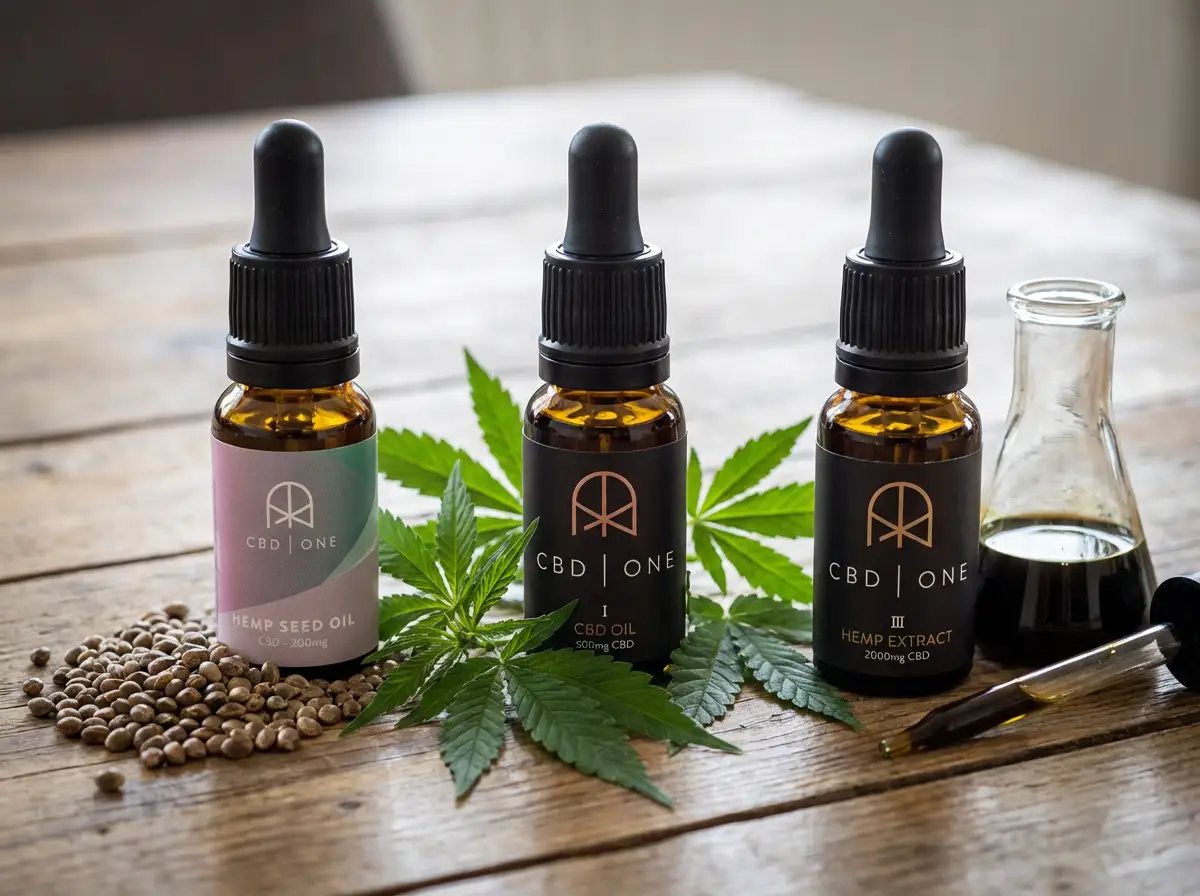
Think of this like buying olive oil. The bottle can look premium, but the real value is in traceability and testing.
Quality checks that actually help
- Certificate of Analysis (lab report) that matches your batch
- Clear CBD content in mg, not vague “hemp strength” language
- Stated spectrum: full spectrum, broad spectrum, or isolate
- Realistic, compliant marketing (no miracle claims)
Now, when it comes to formats, you can broadly choose between oils, capsules, topicals, patches, and water soluble CBD. Water soluble products are popular with people who dislike the taste of oil, because they can be mixed into a morning drink. If you want to explore that format, the category page is here: Water Soluble CBD.
If you are comparing options, keep this handy: CBD Product Comparison.
Building a simple, sensible routine (without overdoing it)
Most people I speak to are not looking for something dramatic. They want a steady routine that feels supportive alongside good sleep habits, movement, and a bit of stress management.
Start low, go slow, and stay consistent
In practice, this means you pick a low starting amount, keep it steady for a few days, and only adjust if you need to. The UK Food Standards Agency suggests healthy adults should not exceed 70 mg of CBD per day.
If you want help working out a sensible starting point, you can use our CBD Dosage Calculator. For a broader approach, read our CBD Buying Guide as well.
A practical example day
Think of it this way: you might use a CBD oil under the tongue as part of an evening wind-down, or add a measured water soluble serving to your morning coffee. Some people prefer topicals after a shower. None of this is medical treatment, it is simply a wellness routine people choose to try.
If you are taking any medication, check with your GP or pharmacist before using CBD. It is a sensible step, not an overreaction.
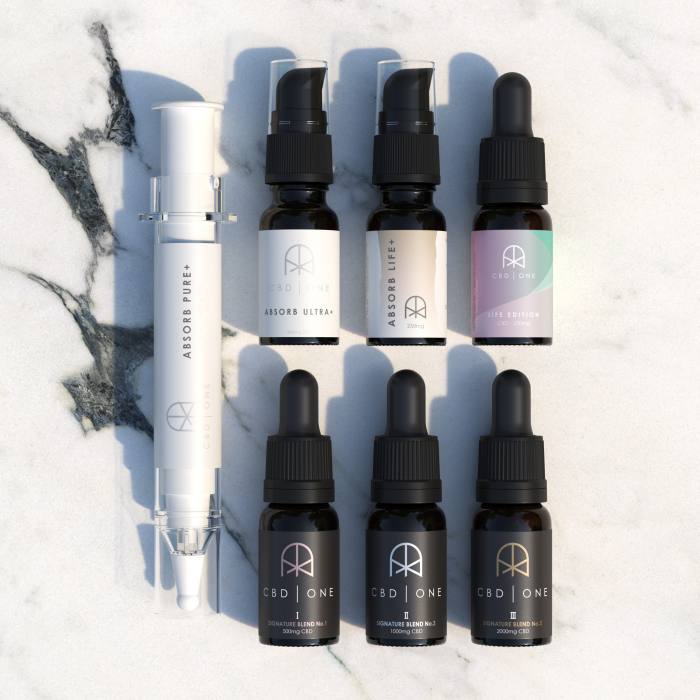
At CBD One, we keep things simple: full spectrum CBD oils and water soluble formats, with lab verification and straightforward “how to use” instructions, so you know what you are taking and why.
Frequently Asked Questions
Is Indian hemp the same as CBD?
Not necessarily. “Indian hemp” is a loose, older term that might refer to cannabis generally, or it might be used informally for hemp ingredients in cosmetics. CBD is a specific cannabinoid (cannabidiol) that can be extracted from legally grown hemp. If a product truly contains CBD, it should state the CBD amount in mg and ideally provide a batch lab report. If it only lists “hemp seed oil” or “Cannabis Sativa Seed Oil”, it is usually a skincare or nutritional oil, not a CBD product.
Is Indian hemp legal in the UK?
Legality depends on what the product actually is. Hemp seed oil products are widely sold. CBD products are also legal to sell in the UK when they meet the relevant rules, including THC limits and appropriate compliance for ingestible products. Products that contain illegal levels of THC, or are marketed with medical claims, can be problematic. If you are unsure, stick to reputable UK brands that publish lab testing and are clear about cannabinoid content, rather than vague “hemp” wording.
What is the difference between hemp oil and CBD oil?
Hemp oil (hemp seed oil) is pressed from seeds and is valued for its fatty acids. CBD oil is made by taking a hemp extract (from flowers and aerial parts where cannabinoids are found) and blending it into a carrier oil. That is why CBD oils should list CBD in milligrams. If you want to go deeper, read Hemp Oil vs CBD Oil, which explains what to look for on labels and why the names are easy to mix up.
Does hemp cream contain CBD?
Sometimes, but often it does not. Many “hemp creams” mainly use hemp seed oil for its moisturising feel, and that can be perfectly fine. A true CBD topical should state the CBD amount in mg and provide testing information. The ingredient list can also help: “hemp seed oil” suggests no meaningful cannabinoids, while “hemp extract” or “Cannabis Sativa L extract” may indicate cannabinoids, but you still need the mg amount to be sure. If you have sensitive skin, patch test first.
Are hemp gummies the same as CBD gummies?
No. “Hemp gummies” might contain hemp seed oil only, or they might contain CBD, or they might be marketed vaguely. CBD gummies should tell you exactly how many mg of CBD are in each gummy and usually per pack. Also remember that edibles have a different timing profile to oils. Many people find they take longer to notice compared with sublingual (under-tongue) oils. If you are new, start with a low amount and keep within the FSA’s 70 mg per day guidance for healthy adults.
What is hemp hash, and is it legal?
“Hemp hash” is a confusing phrase because people use it for different things. Some products are made from legal hemp material with very low THC, but the space is messy and not always well regulated. If something looks like traditional cannabis resin and is sold with unclear testing, you are taking a legal and quality risk. From a health standpoint, inhaling products is also a separate conversation, because smoking anything carries harm. If you want to use cannabinoids as a supplement, oral or topical formats are typically the safer, clearer route.
How do I know if an “Indian hemp” product is high quality?
Start with transparency. Look for a batch-specific lab report (often called a Certificate of Analysis) and a clear CBD content in mg if it is a CBD product. Check whether it is full spectrum, broad spectrum, or isolate. Avoid brands that lean on big promises or hide behind vague terms like “high strength hemp”. Consider the company’s compliance approach too. A trustworthy seller will be clear that CBD is not a medicine and will encourage you to speak to a healthcare professional if you take medications.
Can I take CBD every day?
Many people choose to use CBD daily as part of a wellness routine, but it is personal and depends on your health, your goals, and any medications you take. If you decide to try it, consistency tends to be more useful than constantly changing your dose. Start low, go slow, and stay within the UK Food Standards Agency guidance of no more than 70 mg CBD per day for healthy adults. If you are pregnant, breastfeeding, or on medication, speak with your GP or pharmacist first.
Will Indian hemp products make me feel “high”?
Hemp seed oil will not make you feel high. CBD is non-intoxicating, so it should not create a “high” either. The only compound in cannabis that creates intoxicating effects is THC. Some full spectrum CBD products may contain trace THC within legal limits, which is not intended to intoxicate but could matter if you are very sensitive or subject to drug testing. If you need to avoid THC completely, you may prefer THC-free formats, and you should always check the lab report.
Is hemp the same as marijuana?
They come from the same broad plant family, but the everyday difference is how the plant is grown and what it is selected for. “Hemp” usually refers to varieties grown to be compliant with low THC requirements, often used for fibre, seeds, and legal extracts. “Marijuana” is a non-scientific term that commonly refers to higher-THC cannabis. Because the words are used loosely online, your safest move is to ignore the slang and look at the product’s cannabinoid content, testing, and intended use.
What is hemp used for (if it is not CBD)?
Hemp is used for far more than supplements. The stalk is used for fibre-based products like textiles and industrial materials. The seeds are used in foods, supplements, and skincare oils. CBD products are typically made from extracts of the aerial parts of the plant. This is why “hemp” on its own is not enough information, you need to know the plant part and the declared contents.
How can I tell if “hemp oil” is just seed oil or actually CBD?
Look for numbers. A CBD product should clearly state CBD content in mg (per bottle and ideally per serving). Seed oil products usually focus on “cold pressed”, “omega fats”, or “hemp seed oil” without listing CBD in milligrams. If the label avoids mg amounts and leans on vague phrases like “hemp strength”, that is usually a sign you are not looking at a properly labelled CBD oil.
Can hemp or CBD make you fail a drug test?
Hemp seed oil on its own is unlikely to be relevant to drug testing in most cases, because it is not intended to contain cannabinoids. Full spectrum CBD products can contain trace THC within legal limits, and that trace THC may be relevant for some people depending on the type of test, your sensitivity, and how you use the product. If drug testing is part of your life, it is worth speaking to a professional before using any cannabinoid product, and choosing only products with clear, batch-specific lab reports.
Key Takeaways
- “Indian hemp” is a vague term. Always check what the product actually contains.
- Hemp seed oil is not the same as CBD oil. Look for CBD content in mg and a lab report.
- UK rules focus on THC limits, compliant marketing, and Novel Food requirements for ingestibles.
- Start low, go slow, and stay within the FSA’s 70 mg per day guidance for healthy adults.
- If you take medication, speak to your GP or pharmacist before using CBD.
Conclusion
If there’s one message I want you to take away, it’s this: the phrase “Indian hemp” tells you almost nothing on its own. What matters is whether you are looking at hemp seed oil, a hemp extract, or a clearly labelled CBD product, and whether the brand can prove what is in it through testing.
When you keep it simple, buying gets easier. Look for mg amounts, a stated spectrum, and a batch lab report. Be cautious of “hemp hash” style products with unclear origins. And treat CBD like any other supplement: build a steady routine, keep your expectations realistic, and speak to a clinician if you are on medication or managing a health condition.
If you want to explore reputable options, you can browse CBD Oils and compare formats at your own pace.
If you are unsure where to start, speak to Nick for free advice and we will help you choose sensibly.