
cbd oil for back pain (2026 UK Guide)
It makes sense that lots of UK adults are asking whether cbd oil for back pain is worth considering. Here’s the thing: CBD is not a medicine in the UK, and it cannot be marketed as a treatment for back pain. But many people do use it as part of a wider wellness routine to support comfort, relaxation, and recovery habits.
In this guide, I will walk you through what CBD is, how it may fit into a sensible back care plan, what to look for when buying in the UK, and how to use it safely. No hype. Just practical education so you can make a confident decision.
Why low back pain is so common
Low back pain usually is not about one single “bad” movement. More often, it is the result of lots of small things adding up: long hours sitting, not enough movement variety, stress, poor sleep, and doing too much too soon at the gym or in the garden.
Consider this: your lower back is designed for movement and load, but it likes those loads to be gradual and well shared with your hips, core, and upper back. When one area starts doing more than its fair share, you can end up with stiffness, protective tension, and irritation.
When to get checked first
Most back pain settles with time and good habits, but some situations need proper medical assessment. If you have severe pain after a fall, numbness that is spreading, weakness, changes to bladder or bowel function, unexplained weight loss, fever, or pain that wakes you consistently at night, speak to a clinician urgently.
CBD can be part of wellness. It should never be used to “push through” red-flag symptoms.
What CBD can and cannot do for back pain
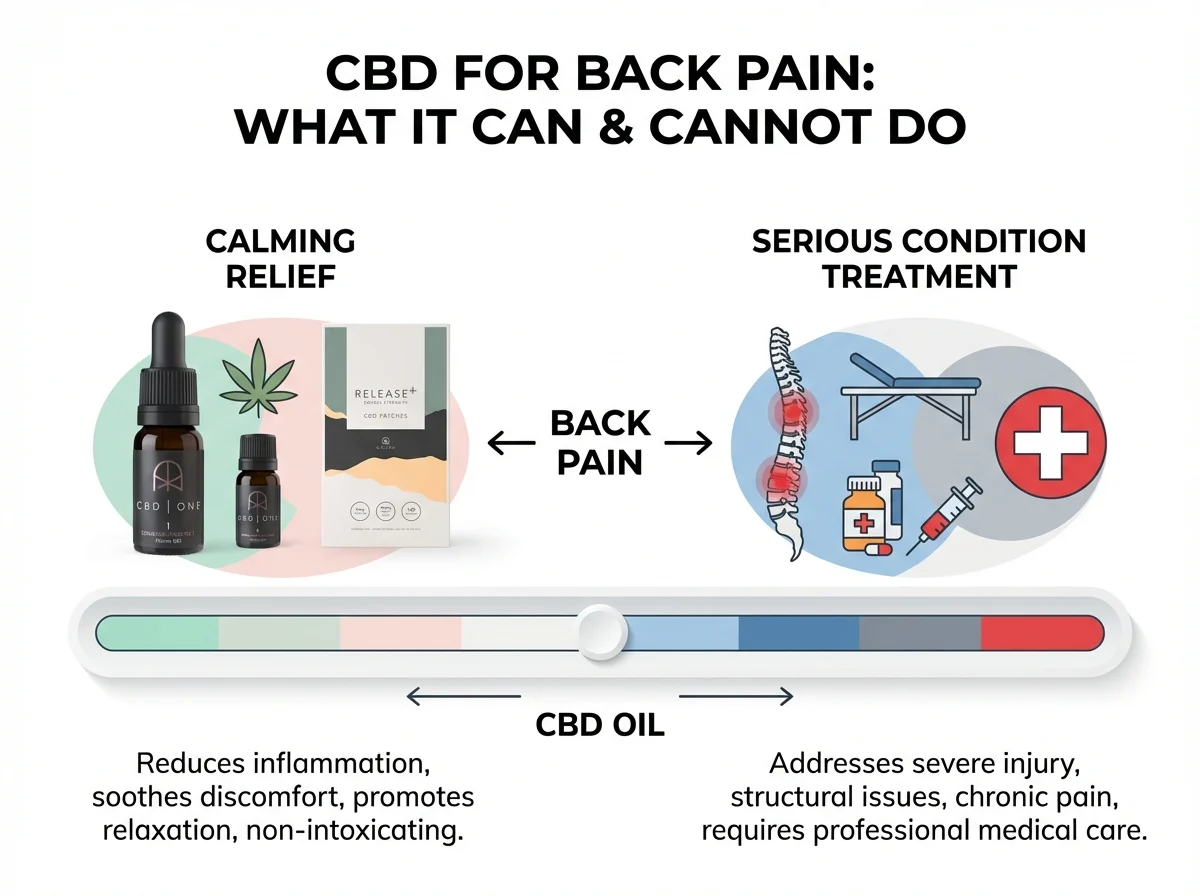
The reality is that people talk about CBD in two very different ways. One is realistic: “It helps me feel more settled and comfortable.” The other is unrealistic: “It will fix my back.”
CBD is a non-intoxicating cannabinoid from the hemp plant. In the UK, over-the-counter CBD products are sold as food supplements or cosmetics, not medicines. That means we have to be careful with language and expectations.
What many people are trying to achieve with CBD
When someone searches “is cbd oil good for back pain”, they often want support in one of these areas: winding down after a tense day, feeling less bothered by everyday aches, staying consistent with gentle movement, or sleeping a bit easier when their back is playing up.
Some users report that CBD helps them feel calmer or less “wired”, which can matter because stress and poor sleep often amplify pain sensitivity. Research is still exploring these pathways, and responses vary a lot from person to person.
What CBD cannot replace
CBD is not a substitute for diagnosis, rehab, strength work, hands-on care, or medical treatment where needed. If you want lasting change, think bigger: movement, loading, stress regulation, and recovery habits. CBD may be one supportive piece, not the whole plan.
If you want a wider overview, have a read of our article on CBD for pain relief, which covers expectations and product types in more depth.
How CBD works in the body (simple version)

Think of your body as having its own internal “balancing network” that helps regulate things like mood, sleep, immune signalling, and how you respond to stress. This is often referred to as the endocannabinoid system (ECS).
Now, when it comes to CBD, it does not work like a painkiller that “switches off pain”. Instead, CBD appears to influence several systems in the body, including how your own endocannabinoids are broken down, and how certain receptors involved in stress and inflammation signalling behave. That is why experiences can feel subtle and “whole body”, rather than one sharp effect.
Full spectrum vs isolate (why labels matter)
CBD products come in different spectrums. Full spectrum typically contains CBD plus other naturally occurring hemp compounds like minor cannabinoids and terpenes, with trace THC within legal limits. Isolate is CBD on its own, with no other cannabinoids.
Many people choose full spectrum because of the “entourage effect” idea, where plant compounds may work better together than alone. If you want to compare products confidently, it helps to understand how strength is labelled too. Our CBD oil strength guide breaks down percentages, mg per bottle, and what those numbers mean in practice.
Choosing a CBD product for back pain: oil, topical, patches, drinks
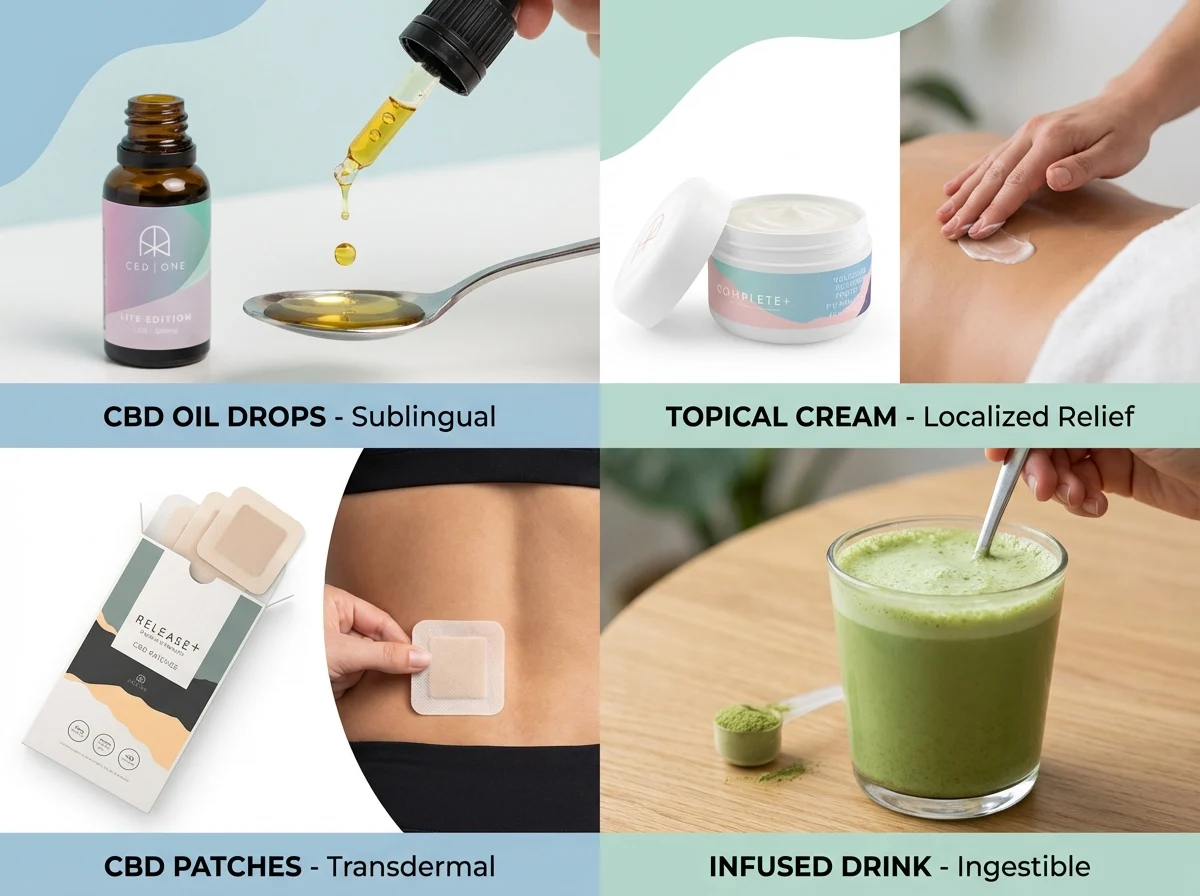
If you are searching for cbd oil for back pain uk, the hardest part is not finding CBD. It is choosing a format that suits your routine and your preferences.
From a practical standpoint, most people do best when they pick one format they can stick to for a few weeks, rather than changing products every three days.
CBD oil drops (sublingual)
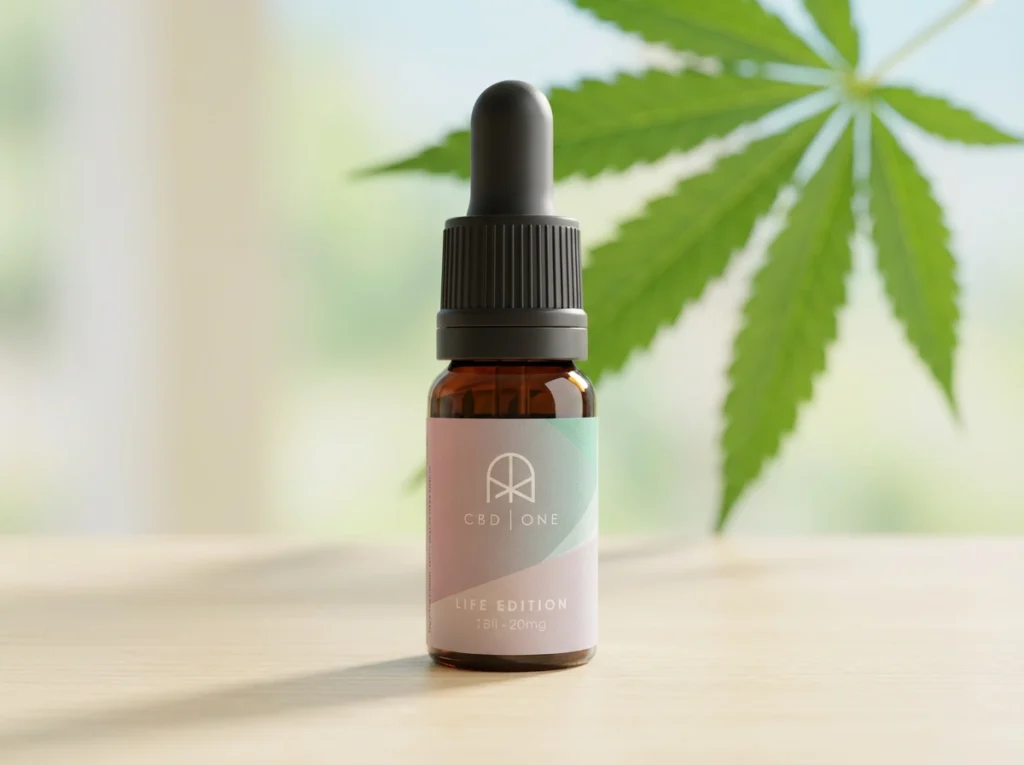
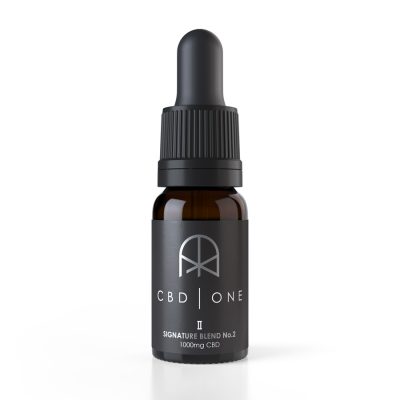
CBD oil drops are taken under the tongue and held for a short period before swallowing. This route is popular because it is simple and easy to adjust drop by drop. CBD One’s oils, for example, are full spectrum and designed for sublingual use, with a listed bioavailability of around 12% for traditional oil drops, which is typical for this format.
If you are new to oils, the technique matters more than people think. See How to take CBD oil for a straightforward walkthrough.
Topical CBD (creams and balms)
Topicals are applied to the skin, which makes them a popular choice for people who want a targeted ritual, like after a shower or post-walk. The goal here is not “CBD entering your whole body”. It is more about local skin application and the massage routine that comes with it.
If you want to explore formats, you can see our Topical CBD range as one example of how topical products are presented and labelled in the UK.
CBD patches (transdermal)
Patches are a very different approach: you apply one patch to clean, dry skin and leave it on for hours. Some people like patches because they are discreet and remove the “did I remember my drops?” problem.
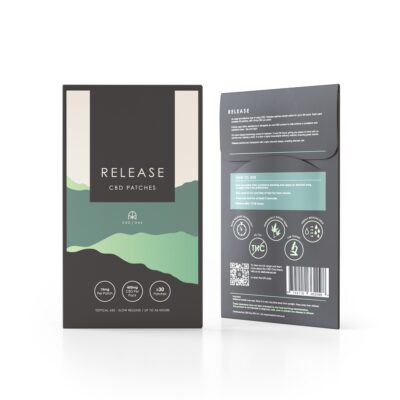
CBD One’s CBD Patches [30 x 15mg] | Release are THC-free (CBD isolate) and list “40%+” bioavailability for transdermal delivery, with slow-release use up to 36 hours. That makes patches interesting for people who want consistent dosing without taste or measuring.
Water-soluble CBD (added to drinks)
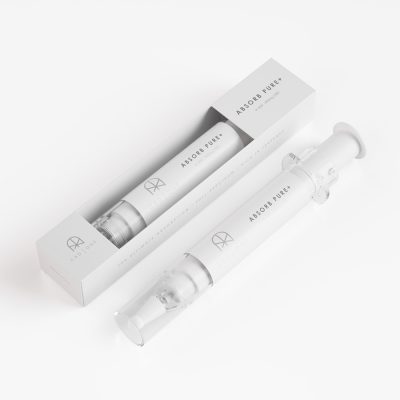
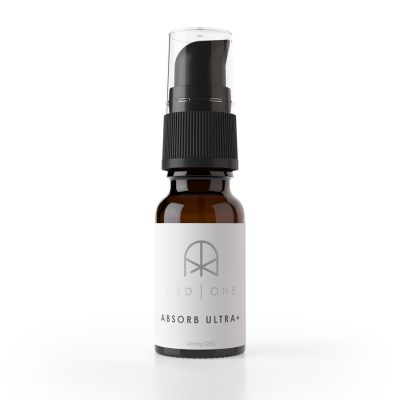
Water-soluble CBD is designed to mix into a hot or cold drink, which suits people who already have a morning coffee routine or an evening herbal tea habit. CBD One’s Absorb water-soluble products are described as “bioavailable” and designed for easy drink mixing.
If you want to understand this format properly, our How Long Does CBD Take To Work? article explains onset times and what can change them, including format and whether you have eaten.
How to avoid “best cbd oil for back pain” traps
Whenever you see “best CBD oil for back pain” claims, take a breath. There is no one best product for everyone. A better question is: “What is the best option for my routine, my sensitivity, and my comfort with trace THC?”
If you want a broader buying checklist for quality and transparency, our best CBD oil UK guide can help you compare brands without getting lost in marketing.
You can also browse the CBD Oils category to see how strengths and formats are typically laid out on a UK site.
Dosing: a simple “start low, go slow” approach
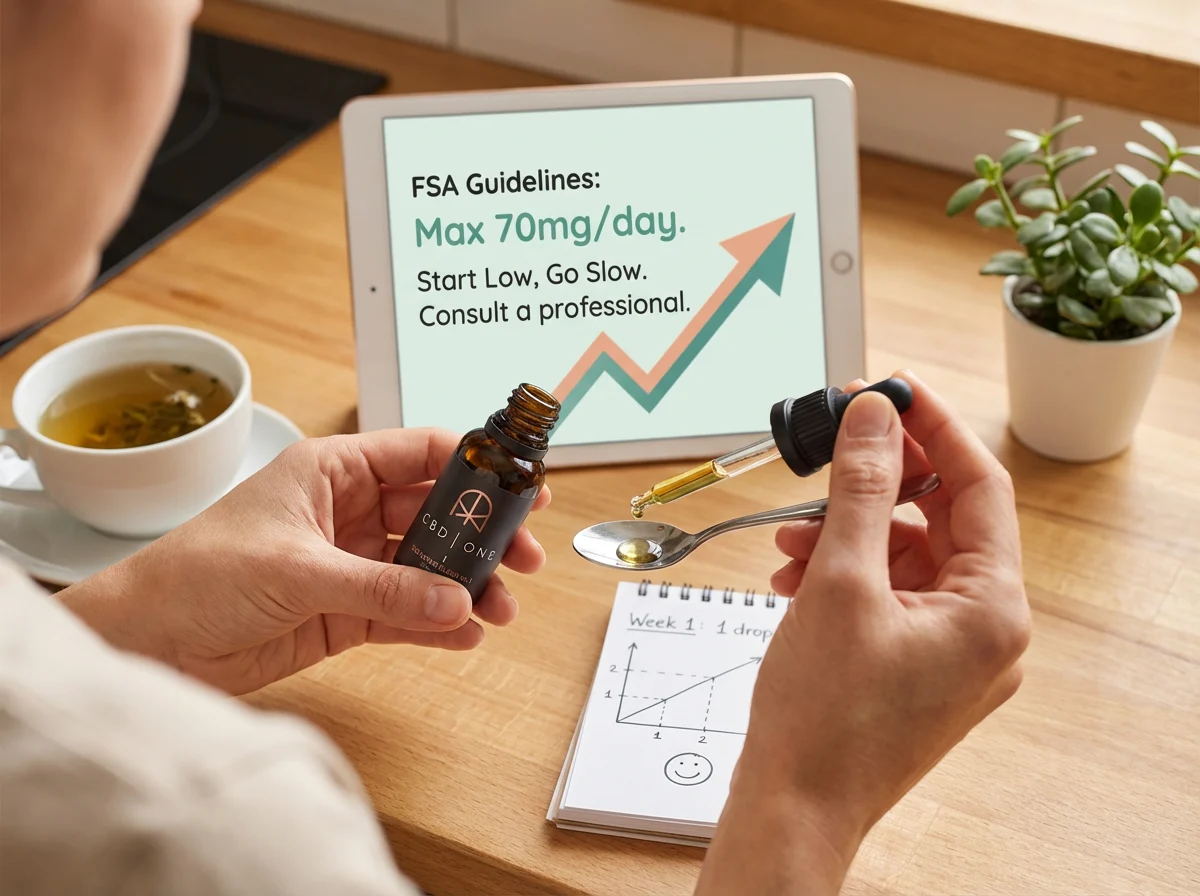
Dosing is where most people either overthink it or rush it. If you are using CBD to support a back pain routine, the aim is usually consistency, not a huge single hit.
In the UK, the Food Standards Agency (FSA) recommends healthy adults do not exceed 70mg CBD per day. That is a useful safety reference point, not a target.
A sensible starting framework
In practice, this means you might start with a low amount once per day for several days, then increase slowly based on how you feel. Give it time. Many people decide too quickly after one or two tries, especially with oils and capsules where the effect can feel subtle.
- Start low: choose a small daily amount that feels conservative.
- Go slow: hold each dose steady for 3 to 7 days before adjusting.
- Track basics: sleep quality, tension levels, and how your back feels the next morning.
- Stay under guidance: keep the FSA 70mg per day guideline in mind unless a clinician advises otherwise.
For a more detailed walkthrough (including how to calculate mg per drop), use the CBD oil dosage guide. It is the easiest way to avoid accidental overdoing.
Safety, interactions, and UK guidelines
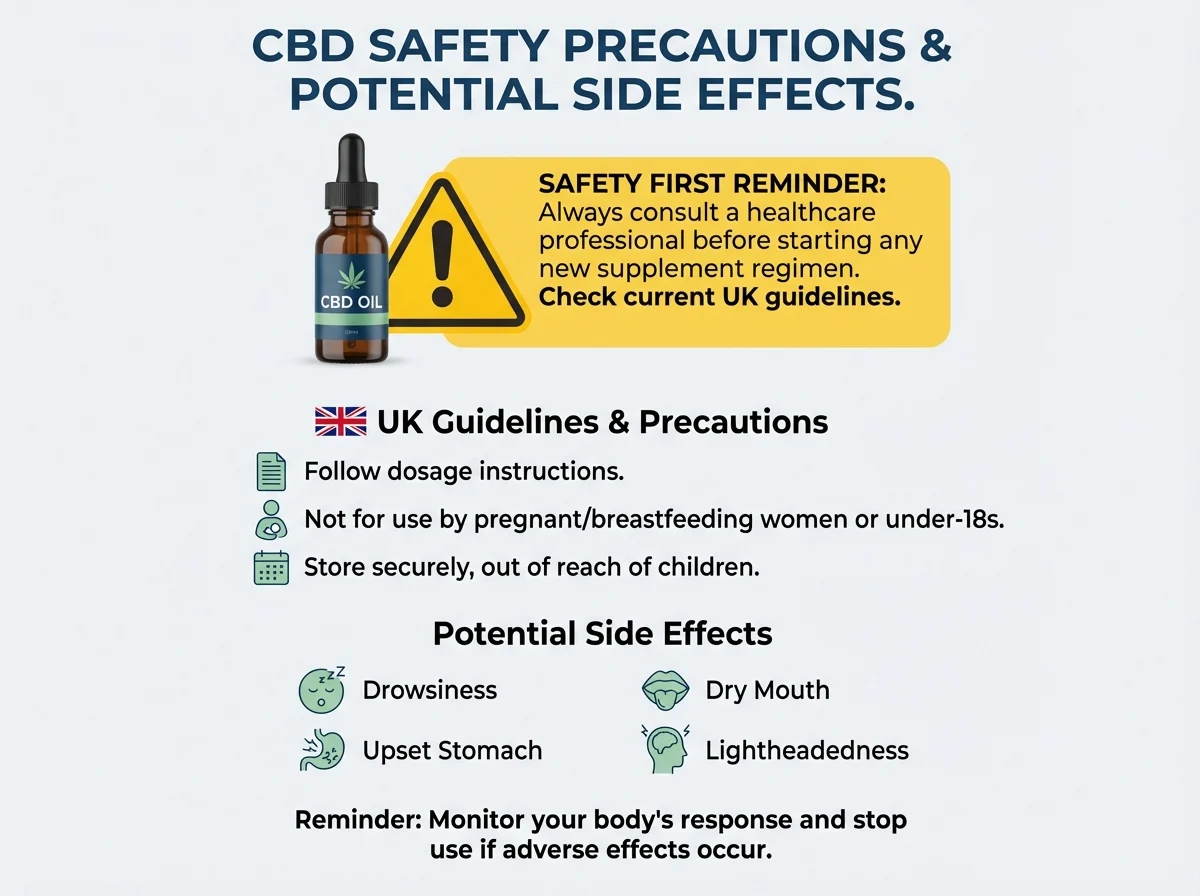
CBD is generally well tolerated by many adults, but “natural” does not automatically mean “risk free”. Side effects some people report include drowsiness, digestive upset, or feeling lightheaded, especially if they take too much too quickly.
Medication interactions: worth taking seriously
What many people overlook is interaction risk. CBD can affect how the body processes certain medicines. If you take prescription medication, especially anything with a grapefruit warning, speak to your GP or pharmacist before using CBD. If you want to understand why, read CBD and Medication.
Driving and work
Some people find CBD relaxing. If it makes you drowsy, do not drive and do not operate machinery. Also consider product type. Full spectrum products contain trace THC within legal limits, but if you are in a job with testing or strict policies, you may prefer THC-free options and clear lab reports.
Quality checks before you buy
To keep yourself safe, look for third-party lab testing, clear cannabinoid content in mg, and transparent ingredient lists. Avoid products that promise to “cure” back pain or replace medication. That is not responsible CBD education.
Building a back-friendly routine with CBD
If you want CBD to be useful, pair it with a routine that makes sense for backs. Think of CBD as the companion to the habits, not the hero.
A simple day plan you can actually stick to
Morning: a short walk, a few hip and thoracic spine mobility moves, then your chosen CBD format if it suits you. Some people like water-soluble CBD in a drink because it fits into a normal morning ritual.
Midday: break up sitting with two minutes of movement every hour. Consider this your “anti-stiffness insurance policy”.
Evening: gentle strengthening (glutes, hips, trunk), heat, then a wind-down routine. If you use CBD oil, keep the method consistent so you can judge it fairly over time.
Where CBD One fits as an example (not a requirement)
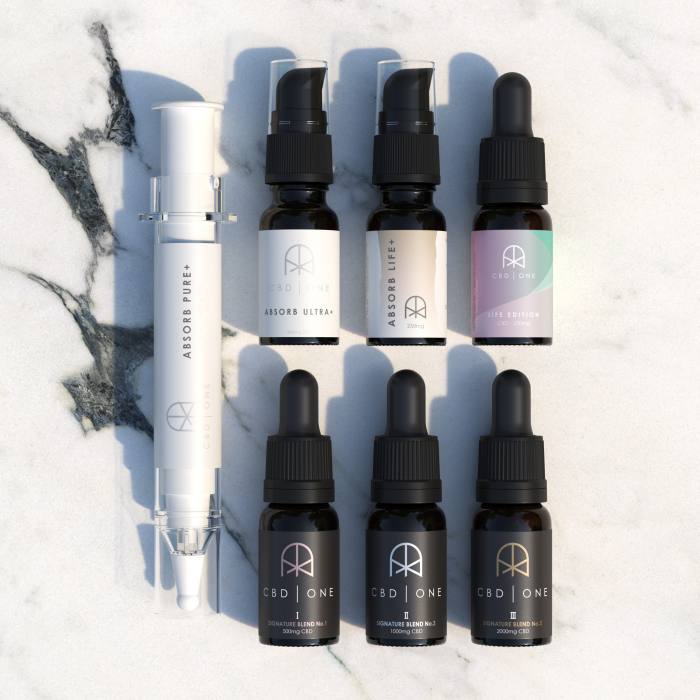
At CBD One, we focus heavily on full spectrum extracts in our core oil and water-soluble ranges because we value the entourage effect philosophy. If you are the type who likes routine, oils and water-soluble formats can be easier to use consistently than “as needed” approaches.
If you are unsure what format makes sense for your lifestyle, that is normal. Some people prefer the traditional sublingual approach. Others want a THC-free patch option for measured dosing and convenience. The right choice is the one you will actually use calmly and consistently.
And if you want a second pair of eyes on your plan, I always suggest you speak to a clinician you trust. Back pain is personal, and so is your risk profile.
Frequently Asked Questions
Is CBD oil good for back pain?
Some people report that CBD oil helps them feel more comfortable, less tense, or better able to wind down, which can be relevant when your back is playing up. That said, CBD is not a medicine in the UK and it cannot be presented as a treatment for back pain. The most realistic way to think about it is as a wellness tool that may support relaxation and recovery habits. If your back pain is severe, persistent, or linked to red-flag symptoms, speak to a clinician first.
What is the difference between CBD oil for lower back pain and general CBD oil?
There is no special “lower back” CBD oil. It is usually the same type of product, just marketed differently. What matters is the strength (mg of CBD), the spectrum (full spectrum vs isolate), and how you use it in your day. Many people with lower back pain also use topicals as part of a massage routine, or patches for consistent dosing. If you are comparing strengths, the CBD oil strength guide is a useful reference.
How long does CBD oil take to work for back pain routines?
It varies. With sublingual CBD oil, some people notice effects within an hour, while others feel more subtle changes over several days of consistent use. Food, dose, and your individual sensitivity all play a part. Also, you might notice CBD more in your sleep quality or general tension levels than as a direct “pain switch-off”. For a practical breakdown of timings across formats, see How Long Does CBD Take To Work?.
What strength CBD oil should I choose for back pain?
Most people do better choosing a strength that allows small, flexible dosing, then building slowly. If you go too strong too fast, you can overshoot and feel drowsy or off. If you go too weak, you might not feel anything and give up early. This is why learning mg per drop matters more than the percentage on the front of the bottle. Use the CBD oil dosage guide to choose a sensible starting point and increase gradually.
Is full spectrum CBD better for back pain than isolate?
Some people prefer full spectrum because it contains CBD plus other hemp compounds, which may contribute to the entourage effect. Others prefer isolate because it is THC-free, which can matter for personal preference or workplace policies. There is no universal answer. A good approach is to decide what “better” means for you: taste, trace THC, the type of experience you want, and how confident you feel about lab reports and transparency. Consistency is often more important than chasing the “perfect” type.
Can I use topical CBD for back pain as well as CBD oil?
Many people combine an internal format (like oil or water-soluble CBD) with a topical as part of a wider routine. Topicals are often used after a shower, after exercise, or before bed, partly because the massage action itself can feel soothing. Just remember: topical CBD is not a medical treatment, and results vary. If you want to explore how topical products are generally presented, you can view Topical CBD as an example.
What should I look for when buying CBD oil for back pain in the UK?
Look for clear CBD content in mg, third-party lab testing (a Certificate of Analysis), and honest labelling about spectrum and ingredients. Be wary of brands that make bold medical promises or hide behind vague phrases like “super strong”. Also check whether the product suits your preferences: oils have a natural hemp taste, water-soluble products mix into drinks, and patches offer measured dosing. If you want a wider UK buying checklist, see best CBD oil UK.
Can CBD interact with painkillers or other medication?
Yes, CBD can interact with some medicines by affecting how they are metabolised. That does not mean an interaction will definitely happen, but it is important to be cautious. If you take regular medication, especially medicines with a grapefruit warning, speak to your GP or pharmacist before using CBD. If you are taking pain medication, do not change your dose without medical guidance. This is a key safety topic, and we cover it in more detail in CBD and Medication.
How much CBD can I take per day in the UK?
The UK Food Standards Agency recommends that healthy adults do not take more than 70mg CBD per day. That guideline is about safety, not about what you “need” for a specific outcome. Many people use less than that, especially when starting. If you are older, sensitive to supplements, or taking medication, you should be even more cautious and speak to a healthcare professional. If you want help working out mg per drop and building slowly, use our CBD oil dosage guide.
Should I choose CBD patches instead of CBD oil for back pain?
It depends on your lifestyle. Oils are flexible and can be adjusted drop by drop, but they require a bit of routine and comfort with taste. Patches are discreet and measured, and some people like the “set and forget” aspect. CBD One’s patch ranges are THC-free (isolate), which can be helpful if you want to avoid trace THC. The best choice is the one you can use consistently for a few weeks while you also work on movement, sleep, and stress habits.
Do I need to take CBD every day for back pain relief?
Some people use CBD daily because they find consistency supports their overall routine, especially around sleep and recovery. Others use it only during flare-ups. There is no single rule. My advice is to pick one approach and track it calmly for two to four weeks. If you feel nothing at all, you may need to adjust dose, format, or expectations. If your back pain is worsening, do not keep experimenting. Get assessed so you know what you are dealing with.
Key Takeaways
- CBD is not a medicine in the UK, but some people use it to support relaxation, sleep, and comfort as part of a wider back care routine.
- Choose a format you will actually stick to: oils, topicals, patches, or water-soluble CBD can all suit different lifestyles.
- Start low and go slow, and keep the UK FSA guideline of no more than 70mg CBD per day for healthy adults in mind.
- Quality matters: look for third-party lab testing, clear mg labelling, and honest spectrum information.
- If you take medication, check interactions with a pharmacist or GP before using CBD.
Conclusion
Back pain can be frustrating because it often affects everything at once: movement, mood, sleep, and confidence. If you are considering cbd oil for back pain, the most helpful mindset is “support”, not “solution”. CBD may be one part of a sensible plan that includes gentle movement, gradual strengthening, better sleep habits, and stress management.
Keep it simple: choose one product format, use it consistently, and track what changes for you over a few weeks. Learn the basics of dosing, stay within UK guidance, and treat interactions seriously if you take medication. If anything feels unusual, or if your symptoms are severe or not improving, speak to your GP or an appropriate clinician.
If you want help choosing a starting point, explore our guides or speak to Nick for free, sensible advice.