
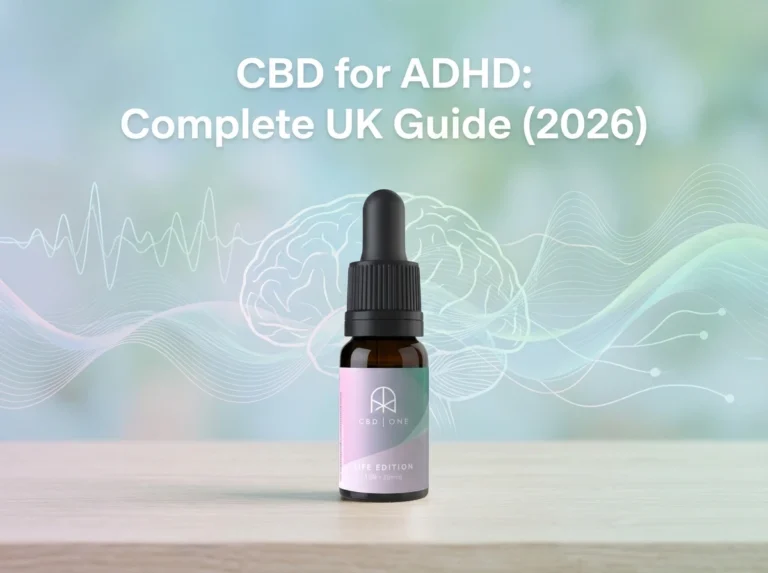
CBD for ADHD: Complete UK Guide (2026)
This guide is here to help you think clearly. We will cover what CBD is, what we do and do not know about ADHD specifically, safety and interactions, and how to choose a quality UK product without getting pulled in by hype.
What CBD is (and what it is not)
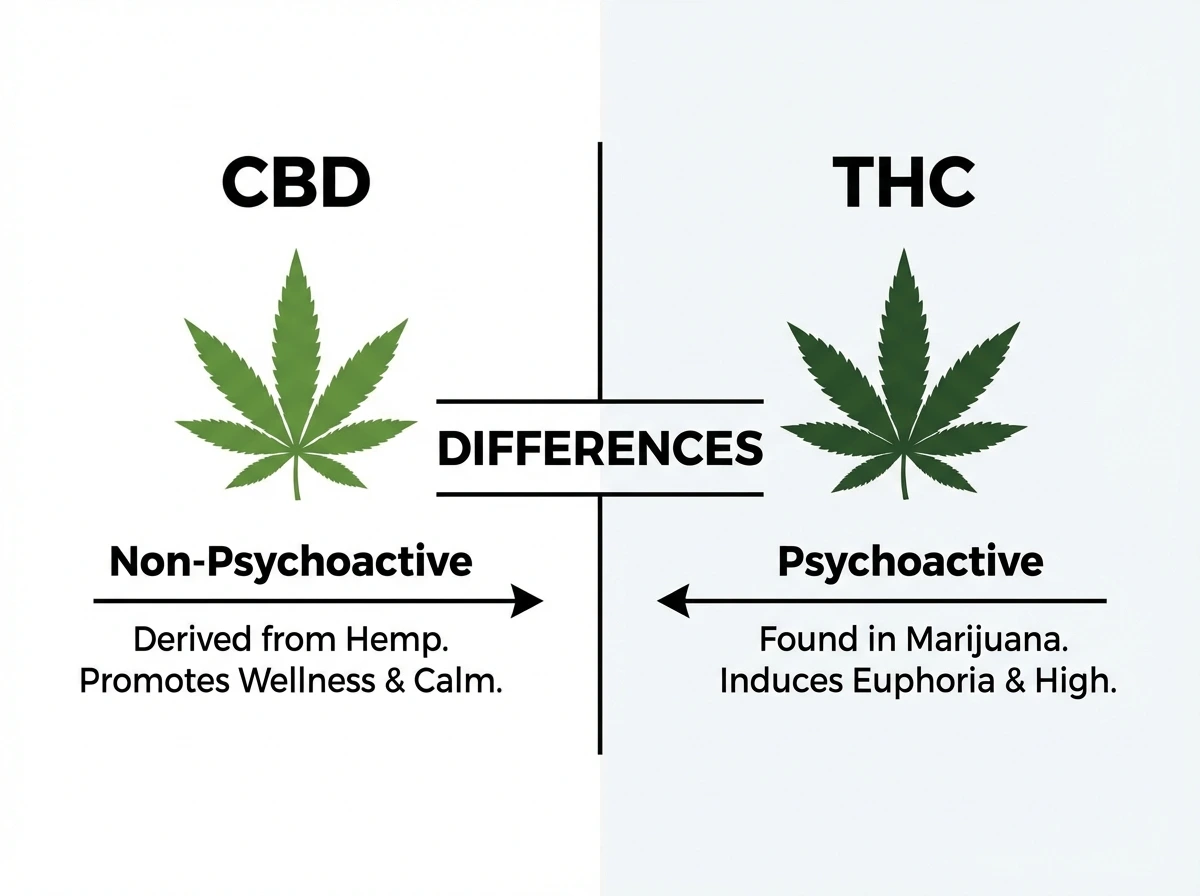
CBD, short for cannabidiol, is a non-intoxicating compound from the hemp plant. Non-intoxicating is important. It does not create a “high” the way THC does, and most people describe it as subtle, if they notice it at all. If you are new to CBD, it is worth reading what is CBD first, because it clears up a lot of confusion.
Now, when it comes to online claims about CBD for ADHD, be cautious. In the UK, CBD products are classed as food supplements, not medicines. That means they should not be marketed as a treatment for ADHD, anxiety, sleep disorders, or anything else.
Full spectrum, broad spectrum, isolate: why it matters
You will see different “spectrums” on labels. Full spectrum CBD contains CBD plus other naturally occurring plant compounds, including minor cannabinoids and terpenes, and trace THC within legal limits. Some people choose full spectrum because of the Entourage Effect, which is the idea that plant compounds work better together than alone. Isolate is just CBD with everything else removed, and it is typically used by people who want THC-free options.
If you are worried about feeling “stoned”, have a look at Does CBD Oil Get You High?. It is one of the most common fears I hear, and it is usually based on misunderstanding rather than reality.
ADHD, the nervous system, and why people try CBD
ADHD is more than “trouble concentrating”. In adults, it can show up as racing thoughts, restlessness, emotional intensity, impulsive decisions, time blindness, and sleep that never quite feels anchored. Many people are managing jobs, parenting, relationships, and a brain that feels permanently switched on.
Consider this: a lot of the day-to-day struggle with ADHD is not just attention, it is regulation. Regulation of stress, regulation of energy, regulation of sleep and routine. That is why CBD often comes up in conversation, because many people use it as part of a general calm-and-recover ritual, rather than a “focus pill”.
Where CBD might fit, realistically
From a practical standpoint, the most realistic reason someone with ADHD explores CBD is to support the foundations. Think sleep routine, downshifting in the evening, taking the edge off a busy day, or helping your body feel less “on alert”. That is still not guaranteed, and it is not the same as saying CBD “treats ADHD”. It is simply how people often frame their goals when they experiment.
What research says (and the gaps)
The reality is that CBD research is promising in some areas, but ADHD-specific evidence is limited. You will find studies looking at cannabinoids and anxiety, sleep, and stress responses, but that does not automatically translate to ADHD outcomes, especially when we are talking about different CBD products, different doses, and different people.
What many people overlook is that “CBD” is not one uniform thing. A full spectrum oil, a capsule, a drink additive, and a patch can all behave differently in the body. The dose you take, your metabolism, what you ate that day, and whether you are sensitive to supplements all change the experience.
A helpful way to think about the evidence
Rather than asking “is CBD good for ADHD?”, I encourage you to ask a more practical question: what are you trying to support? For example, “I want help winding down at 10pm” or “I want to feel less physically tense during busy workdays”. Those outcomes are easier to observe and track, even when the science is still catching up.
How CBD might work in the body (in plain English)
It helps to understand why CBD can feel calming for one person, and like nothing at all for another. CBD interacts with the body’s endocannabinoid system, a network involved in keeping things in balance. That balance can include how you respond to stress, how you settle, and how your body cycles between alert and rest.
Here’s the thing: ADHD is complex, and CBD is not a single switch you flip. Most of the talk around CBD and attention is indirect. If someone feels less physically tense, sleeps more consistently, or feels less “wired”, they might find it easier to do the basics that support focus, like sticking to routines, eating regularly, and actually getting to bed on time.
Another practical point is that CBD can affect people differently depending on the format. Oils absorb through the mouth and gut. Water soluble formats are designed to mix with drinks and can feel easier to take consistently. Patches are used for steady, low-maintenance routines. None of these is “the right one”, but it explains why your friend’s experience might not map neatly onto yours.
Safety, side effects, and medication interactions
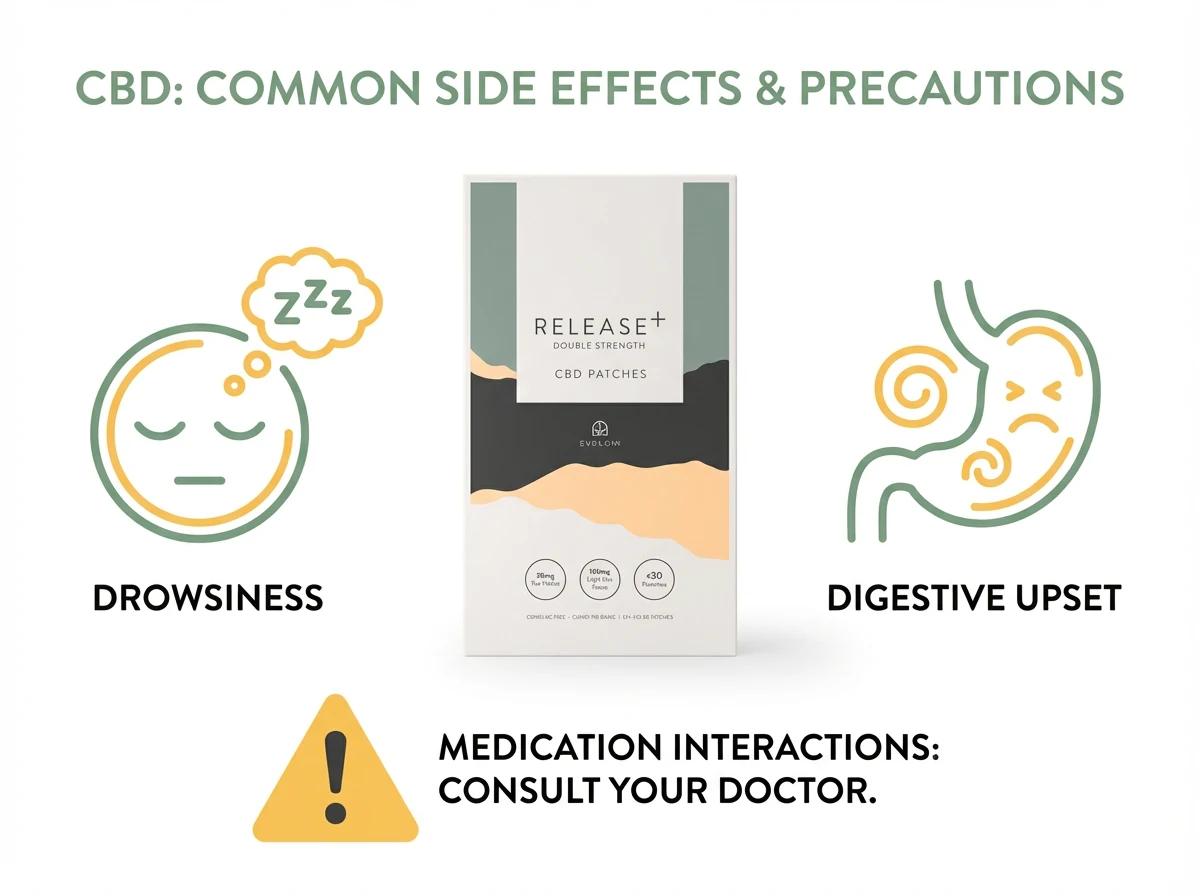
If you have ADHD, you might be taking prescription medication. That changes the conversation, because CBD can interact with some medicines. It does not mean “never use CBD”, but it does mean you should take advice seriously.
If you take prescription medication, speak to your GP or pharmacist before using CBD. A good starting point is our article CBD and Medication, which explains interactions in plain English.
Commonly reported side effects
Most people tolerate CBD well, but some users report side effects such as drowsiness, digestive upset, appetite changes, or feeling “a bit spaced out”. If your aim is daytime focus, that last one obviously matters. In practice, this means you should trial CBD at a time when you do not need to drive, make big decisions, or perform at your peak.
UK guidance on daily intake
In the UK, the Food Standards Agency (FSA) advises healthy adults not to exceed 70mg of CBD per day. That is not a “target”, it is a cautious upper guideline. Most people who get on with CBD well often use less than that, especially at the start.
Extra caution points that matter for ADHD
If you are someone who is sensitive to caffeine, supplements, or changes in routine, it is worth being a bit more cautious with CBD too. Some people find CBD makes them sleepier, others find certain products feel a little stimulating, and some find it does not suit them at all.
If your ADHD comes with periods of poor sleep, high stress, or inconsistent eating, those variables can change how CBD feels day to day. That is another reason I push the “one product, one routine, one outcome” approach, rather than jumping between strengths and formats.
Choosing a CBD product in the UK: oils, patches, water soluble, and gummies
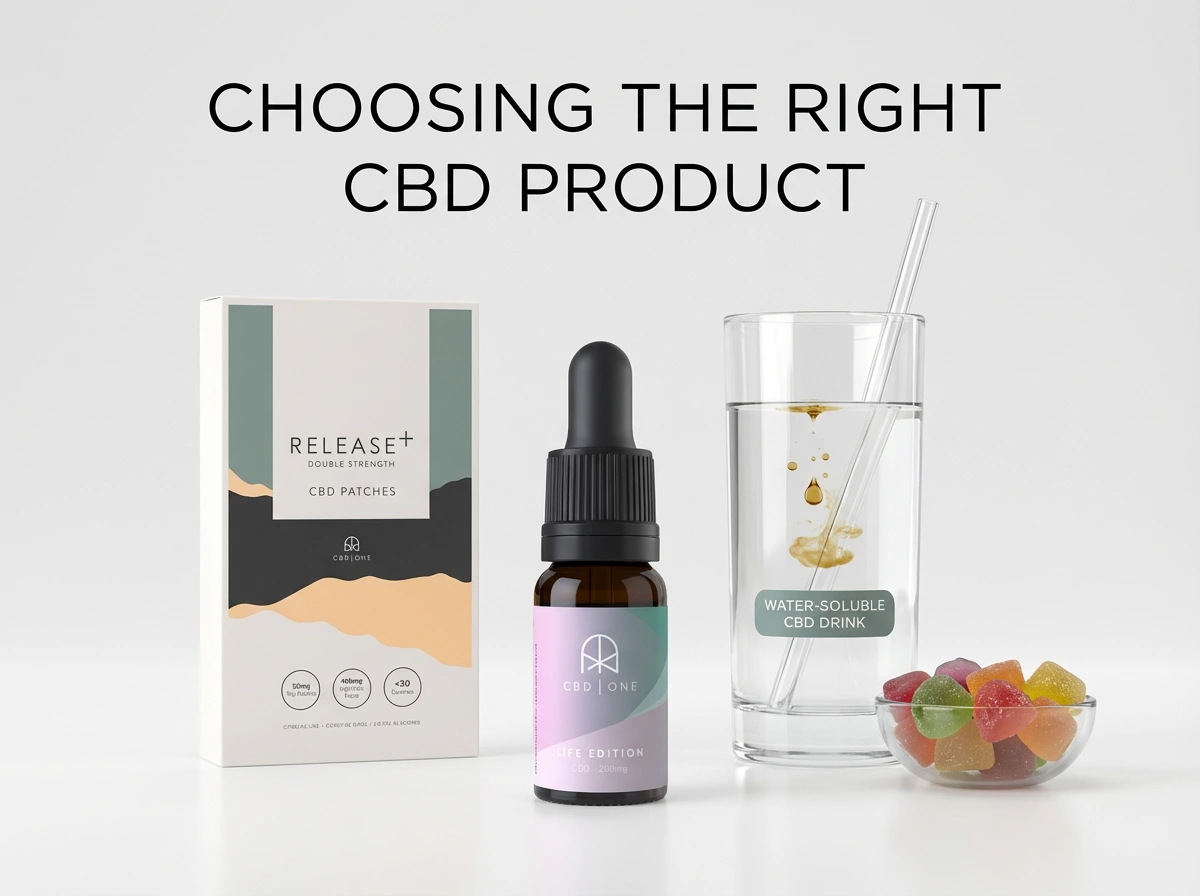
Walk into the CBD world and it can feel like a sweet shop. Oils, drinks, gummies, vapes, patches, capsules. If you have ADHD, too many choices can lead to the classic outcome: you buy something impulsively, then never take it consistently enough to learn anything.
So let’s simplify it by matching formats to real-life routines.
CBD oil: flexible dosing, classic routine
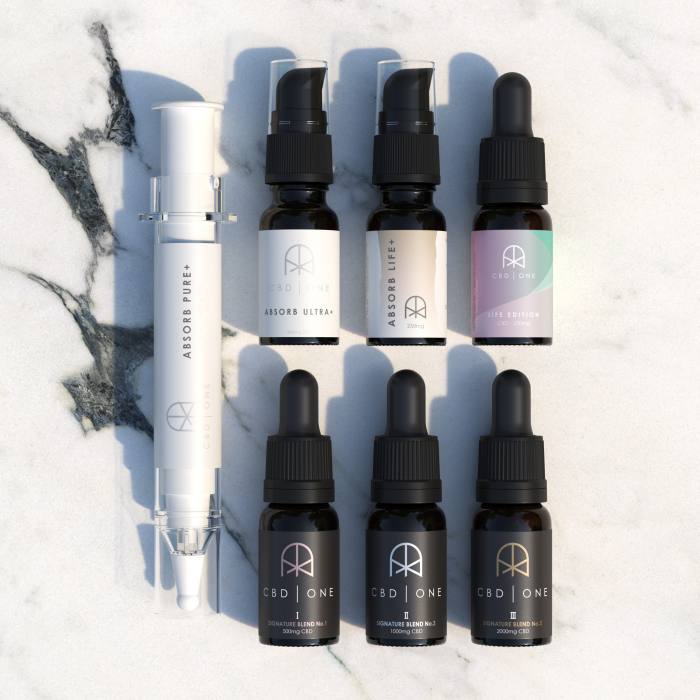
CBD oil is still the most common starting point because you can adjust drop by drop. It is also easy to build into an evening wind-down ritual. If you want to browse oils, start with the CBD Oils category and focus on the basics: spectrum, CBD content, and third-party lab testing.
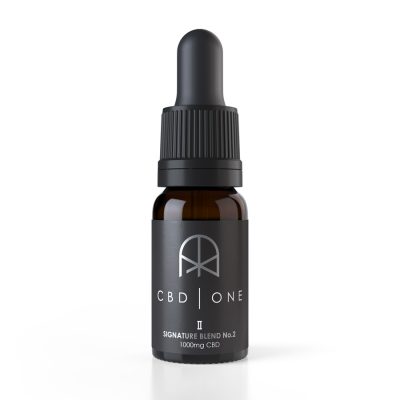
One example from our own range at CBD One is the 10% CBD Oil [1000mg CBD], which is a full spectrum oil with a natural earthy taste. I mention it only as a reference point, because a straightforward oil format makes it easier to learn what your body does with CBD.
Water soluble CBD: for people who hate the taste of oils
If you struggle with the taste of oils or you simply want something that fits into a morning drink, water soluble CBD is a popular option. You add a measured amount to tea, coffee, or a smoothie, which can be more “ADHD-friendly” because it pairs with an existing habit.
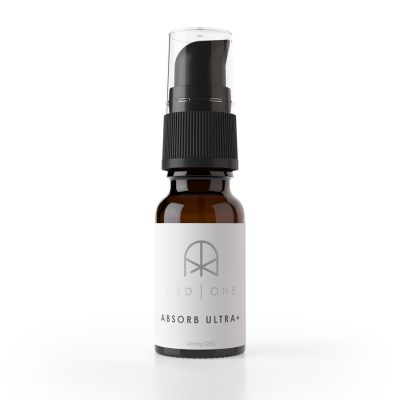
Our water soluble range is in the Water Soluble CBD category. For example, Absorb Ultra+ is a full spectrum, pump-based format designed to mix into hot or cold drinks.
CBD patches: steady, measured dosing without thinking about it
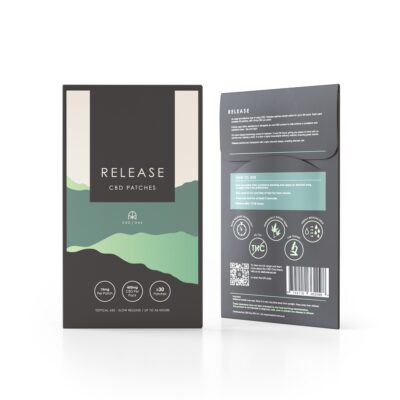
Patches are interesting for ADHD because they remove the “I forgot” problem. You apply a patch and leave it on for a set period. CBD One’s Release patches are made with CBD isolate (THC-free), and the label dose is clear, for example 15mg or 30mg per patch.
If you want the deeper read on how patches work, timing, and practical tips, see CBD Patches: Everything You Need To Know.
CBD gummies for ADHD UK: what to know before you buy
A lot of people search “CBD gummies for ADHD” because gummies feel easy and familiar. Here’s the catch: gummies can make it harder to fine-tune your dose, and some products are packed with sweeteners or unclear cannabinoid information. Also, if you need a higher dose, gummies can get expensive quickly compared to oils or other formats.
At CBD One, we have chosen not to sell gummies. That is partly because I prefer formats where you can be more precise and transparent about what you are taking, especially for people trying to build a consistent wellness routine.
How to start: a simple, sensible routine
Think of CBD like any supplement experiment. You want as few moving parts as possible. One product, one goal, one routine.
Step 1: pick one outcome to track
Choose something observable, such as “time it takes me to fall asleep”, “how often I wake”, “evening restlessness”, or “how tense my shoulders feel after work”. If you try to track everything, you will track nothing.
Step 2: start low and go slow
Start with a low amount and keep it consistent for several days before changing anything. If you want help with the maths, use the CBD dosage guide to work out roughly what you are taking per serving based on bottle strength.
Step 3: be mindful with timing
For “cbd for sleep adhd” searches, many adults prefer evening use, around 30 to 90 minutes before bed, as part of a downshift routine. If your aim is daytime calm, trial it on a day where you can observe the effects without pressure. Keep notes, even if it is just three lines in your phone.
How long CBD takes to work, and how long it lasts
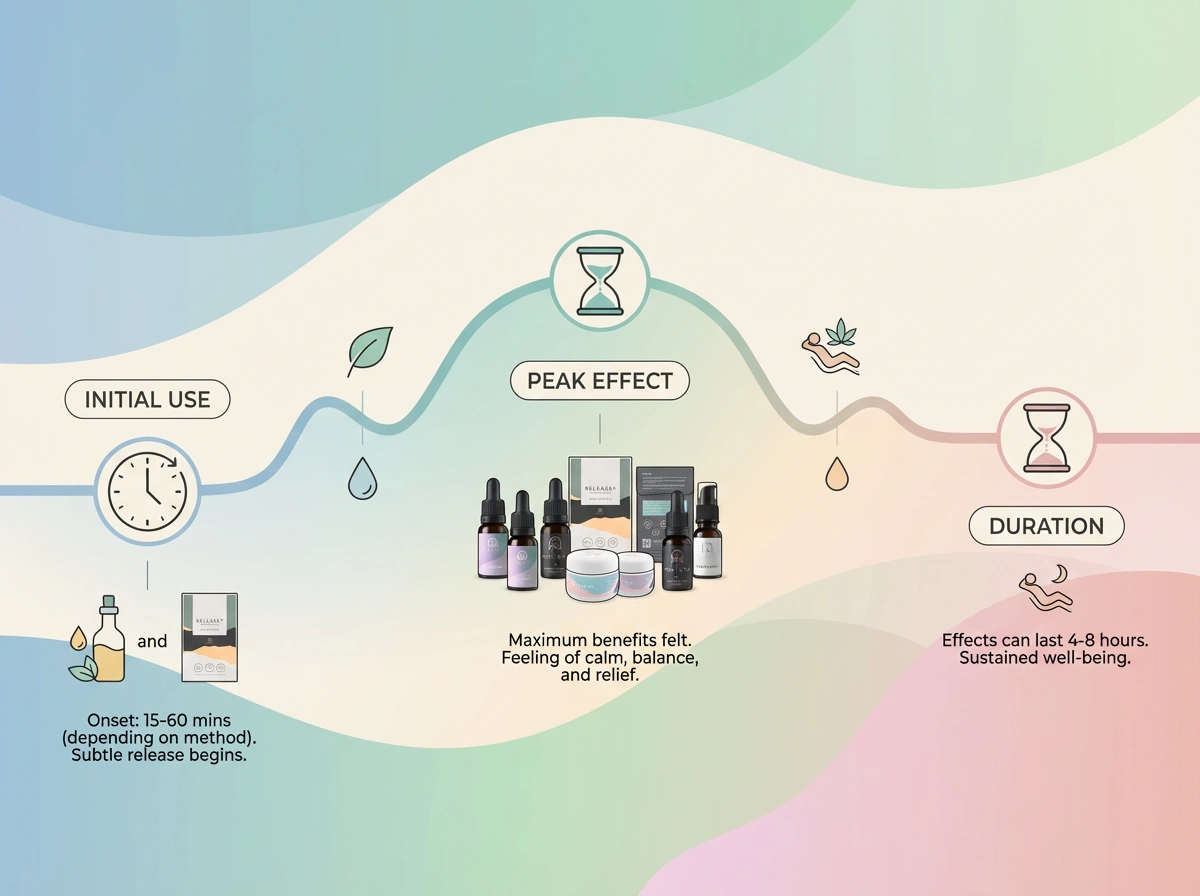
This is one of the biggest “ADHD problems” with supplements: if you do not feel something quickly, you assume it is pointless, and you stop. Or you take more, too soon, and then you do not know what caused the effects.
Timing depends on format, dose, and you. As a general rule, oils and water soluble formats are often used when people want something that fits into a daily rhythm, such as morning or evening routines. Patches are usually chosen when someone wants a steadier background approach and does not want to think about re-dosing.
From a practical standpoint, the best move is to keep your timing consistent for a week before you judge it. If you keep switching between morning and evening, or you only remember it twice a week, you are not really testing CBD. You are testing inconsistency.
What to expect, and how to track your response
Some people feel CBD on day one. Others only notice it after a week of consistent use, and some never notice much at all. That is normal.
In practice, this means your first job is not to “find the perfect product”. It is to learn your response. If you change product type, strength, and timing all at once, you will not know what helped or what caused side effects.
A simple tracking method that works with ADHD brains
- Keep it tiny: rate sleep or stress from 1 to 10 once per day
- Write one sentence: “Felt calmer after dinner” or “Too sleepy at 3pm”
- Review after 7 days: decide if you keep, adjust, or stop
If you are comparing products or deciding between formats, our CBD Product Comparison can help you line up options without getting overwhelmed.
CBD and ADHD: legality in the UK, workplace policies, and driving
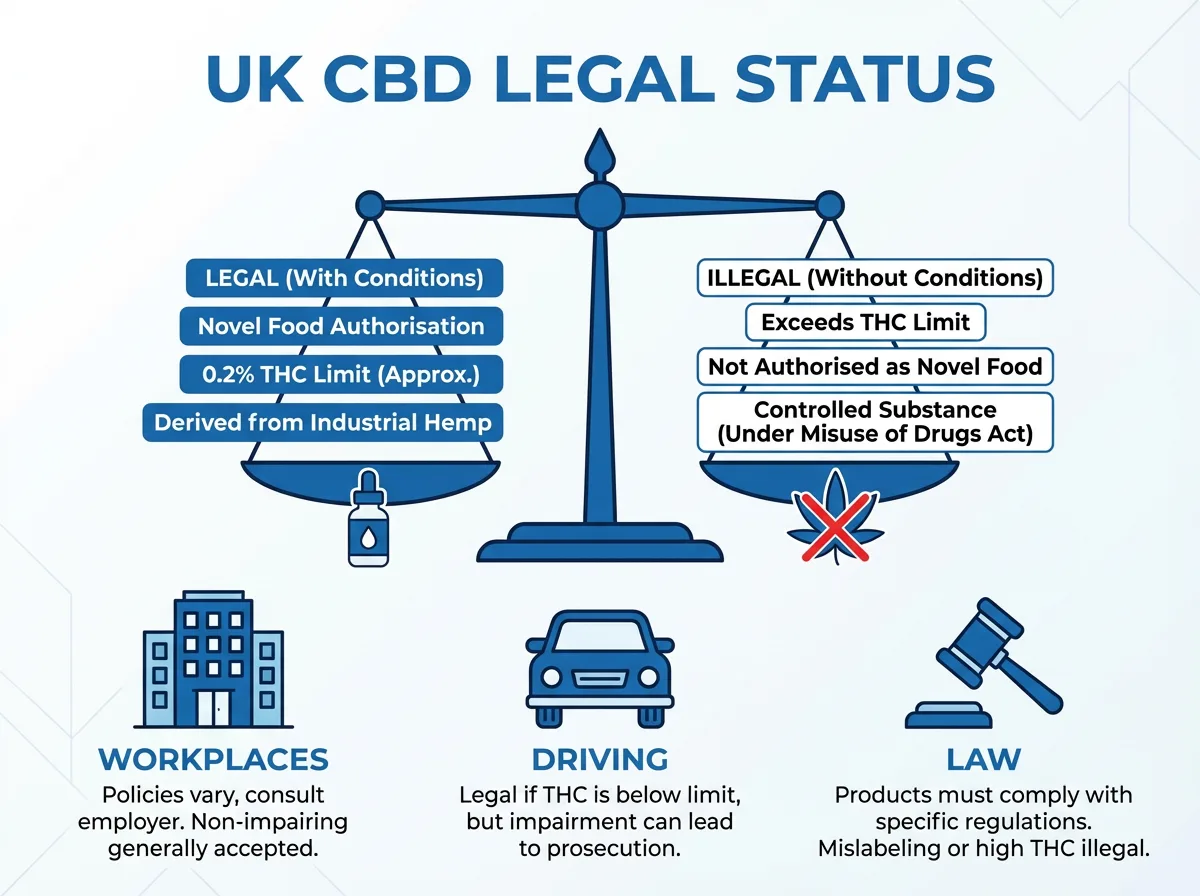
People often ask whether CBD is legal in the UK, and the answer is usually yes, as long as the product is compliant and sold as a supplement. That said, “legal” is not the same as “problem-free in real life”, especially if you have ADHD and you are juggling work rules, driving, and the occasional surprise drug test.
Workplace drug testing
Standard workplace drug tests are typically looking for THC, not CBD. However, full spectrum products can contain trace THC within legal limits. For most people that is not an issue, but with sensitive tests, high daily intakes, or long-term consistent use, the risk is not zero.
If testing is part of your job, it is worth being cautious and choosing a THC-free option, and keeping your routine steady rather than taking large, irregular amounts.
Driving and feeling impaired
CBD itself is not intoxicating, but you still need to be sensible. If CBD makes you drowsy, foggy, or slower to react, do not drive. This matters even more if you are trialling a new product, changing strength, or combining CBD with other things that can make you sleepy.
Buying “ADHD CBD” online
Be wary of any product marketed as CBD “for ADHD” with strong promises. In the UK, supplements should not be sold with medical claims. From a practical point of view, if a brand is willing to be loose with the rules in their marketing, it raises questions about how careful they are with quality and testing too.
Is CBD addictive?
People ask this a lot, and it is a fair question, especially if you have an all-or-nothing brain and you do not want to swap one crutch for another.
CBD is not considered intoxicating, and it does not create the classic “high” people associate with dependency-forming substances. That said, anything can become a psychological habit if it becomes your only tool for coping. So my view is simple: use CBD as one support among many, not the whole plan.
If you notice you are escalating your amount quickly, using it to avoid dealing with stress, or feeling uneasy without it, pause and reassess. That is a good moment to talk things through with a healthcare professional, and to bring your focus back to the basics that genuinely support ADHD, like sleep, food, movement, structure, and support from people who understand how your brain works.
Frequently Asked Questions
Is CBD good for ADHD?
Some adults with ADHD report that CBD may help them feel calmer, less tense, or better able to wind down in the evening. But that is not the same as proof that CBD “works for ADHD”, and it is not a replacement for diagnosis or treatment. The research specifically on CBD for ADHD is still limited, and responses vary a lot from person to person. If you try CBD, treat it as a personal experiment with clear goals, consistent dosing, and a plan to stop if it does not suit you.
Is CBD oil good for ADHD in adults?
CBD oil is popular with adults because it is flexible. You can adjust the amount gradually and build it into a routine, which matters if you are trying to support sleep or evening relaxation. That said, CBD oil can taste earthy, and some people dislike that. Also, adults with ADHD are sometimes on prescription medication, so it is essential to check interactions with a GP or pharmacist first. If you do try it, start low, keep the timing consistent, and track one or two outcomes for a week.
Can CBD help with ADHD sleep issues?
Many people searching “cbd for adhd sleep” are really describing a nervous system that struggles to switch off. Some users say CBD helps them settle into a bedtime routine or feel less physically restless at night. Research into CBD and sleep is still emerging, and results are mixed. If sleep is your goal, keep the basics strong as well: consistent wake time, lower caffeine after lunch, dimmer lights in the evening, and a predictable wind-down. CBD may be an add-on, not the foundation.
Will CBD affect focus or concentration?
It can go either way, depending on the person, the dose, and the timing. A small amount might feel neutral or gently settling for some people, which can indirectly help them focus because they feel less “revved up”. A larger amount might make someone feel drowsy or a bit foggy, which is obviously not ideal for concentration. This is why I suggest trialling CBD on a low-stakes day and avoiding big dose jumps. If focus is your main target, be especially cautious with daytime use.
Is it safe to take CBD with ADHD medication?
This is a “get proper advice” moment. CBD can interact with some medicines, and ADHD medications can vary. Your GP or pharmacist can advise based on your specific prescription and health history. If you want to understand the issue before you speak to them, read CBD and Medication. If you do get the all-clear to try CBD, start low and monitor how you feel, particularly around appetite, sleep, and alertness.
Are CBD gummies a good option for ADHD in the UK?
Gummies are convenient, but convenience is not the same as control. With gummies, you are usually locked into a set amount per piece, which can make it harder to find your personal “sweet spot”. Some gummies also contain lots of sweeteners, and the quality between brands varies widely. If you like gummies because you forget doses, consider alternatives that support consistency, like patches with a clear labelled amount, or a water soluble pump you add to a drink you already have daily.
How much CBD should I take for ADHD?
There is no official CBD dose for ADHD, and any website claiming a precise “ADHD dose” is guessing. Start low and build slowly, keeping the same routine for several days before changing the amount. The UK FSA advises healthy adults not to exceed 70mg CBD per day. Use a calculator to understand how many mg you are taking per drop or pump, because “a dropper” is not a measurement. The CBD dosage guide can help you work it out.
How do I choose a quality CBD product in the UK?
Focus on transparency. Look for clear CBD content in mg, the spectrum type (full spectrum or isolate), and accessible third-party lab reports. Avoid products that make medical claims or feel vague about what is inside. Consider your lifestyle too: oils suit flexible dosing, water soluble formats suit people who want to add CBD to drinks, and patches suit people who want a steady routine without remembering multiple doses. If you want a broader framework, the CBD Buying Guide walks you through what to check.
Can CBD make ADHD symptoms worse?
CBD does not agree with everyone. Some people report feeling more tired, less motivated, or slightly “flat”, especially if they take too much or take it at the wrong time of day. Others might feel digestive upset. If you notice any unwanted effects, stop and reassess rather than pushing through. Also consider other variables like alcohol, cannabis use, sleep debt, and stress. If you have complex mental health needs, or you are adjusting prescribed medication, it is always best to do this with clinical support.
Will CBD show up on a drug test?
Standard drug tests look for THC, not CBD. Full spectrum products can contain trace THC within legal limits, so there is a small risk with very sensitive testing or heavy, consistent use. If drug testing is a concern for your job or sport, you may prefer THC-free options such as CBD isolate products. Patches made with isolate are one example. If you choose full spectrum, pick brands that provide lab reports and keep your daily intake sensible and consistent.
How long does CBD take to work?
It depends on the format and on you. Many people notice faster effects with formats they take consistently at the same time each day, because it becomes easier to spot patterns. If you are using CBD to support evening wind-down, it is worth keeping the timing the same for a week and looking at the trend, rather than judging it after one night.
Can I take CBD every day if I have ADHD?
Some adults do use CBD daily as part of a routine, and others prefer occasional use. The sensible approach is to keep your daily intake within UK guidance, start low, and check in with how you feel. If you take prescription medication, speak to your GP or pharmacist first, because “daily” is where interaction risk matters most.
Is CBD legal in the UK for adults with ADHD?
CBD supplements are widely sold in the UK, and CBD itself is not a controlled substance. The key is to choose products sold compliantly, with transparent lab reports and clear labelling, and to avoid products making medical claims. If you are worried about THC exposure for work or driving, consider THC-free options and keep your routine consistent.
Key Takeaways
- CBD is not a medicine and cannot be marketed as a treatment for ADHD in the UK.
- Some adults with ADHD try CBD to support calm evenings and sleep routines, but results vary widely.
- Check safety first, especially if you take prescription medication. Speak to your GP or pharmacist.
- Choose formats that match your habits: oils for flexibility, water soluble for drinks, patches for consistency.
- Start low, go slow, and track one outcome for 7 days before changing anything.
Conclusion
If you are considering CBD for ADHD, I would keep your expectations grounded and your process simple. CBD is not a cure, and it is not a substitute for proper ADHD care. But some people do find it fits nicely into a wider wellbeing routine, particularly around downshifting stress and protecting sleep.
Think of it this way: the win is not “finding the strongest product”. The win is finding a routine you will actually stick with, long enough to learn whether CBD suits you. Choose a reputable UK product, start with a low amount, keep your timing consistent, and track a small set of signals like sleep quality or evening restlessness. If you take medication, get medical advice first, every time.
If you want help choosing a format, explore the guides above or speak to Nick for free, practical advice.