
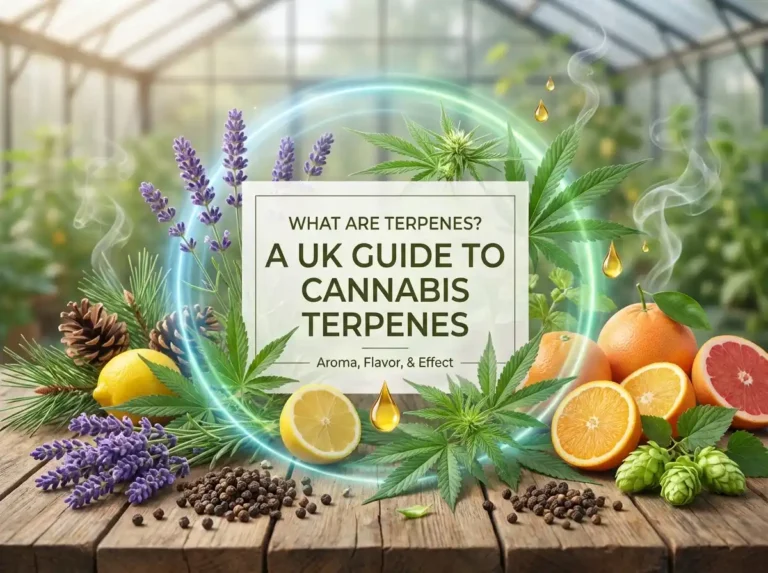
What Are Terpenes? A UK Guide to Cannabis Terpenes
In this guide, I will explain what terpenes are, what they do in nature, why they matter in full spectrum CBD, and how to use terpene knowledge to read labels with more confidence. If you are brand new to CBD, it can help to start with the basics too, so I will point you to our main CBD oil guide along the way.
What are terpenes, in plain English?
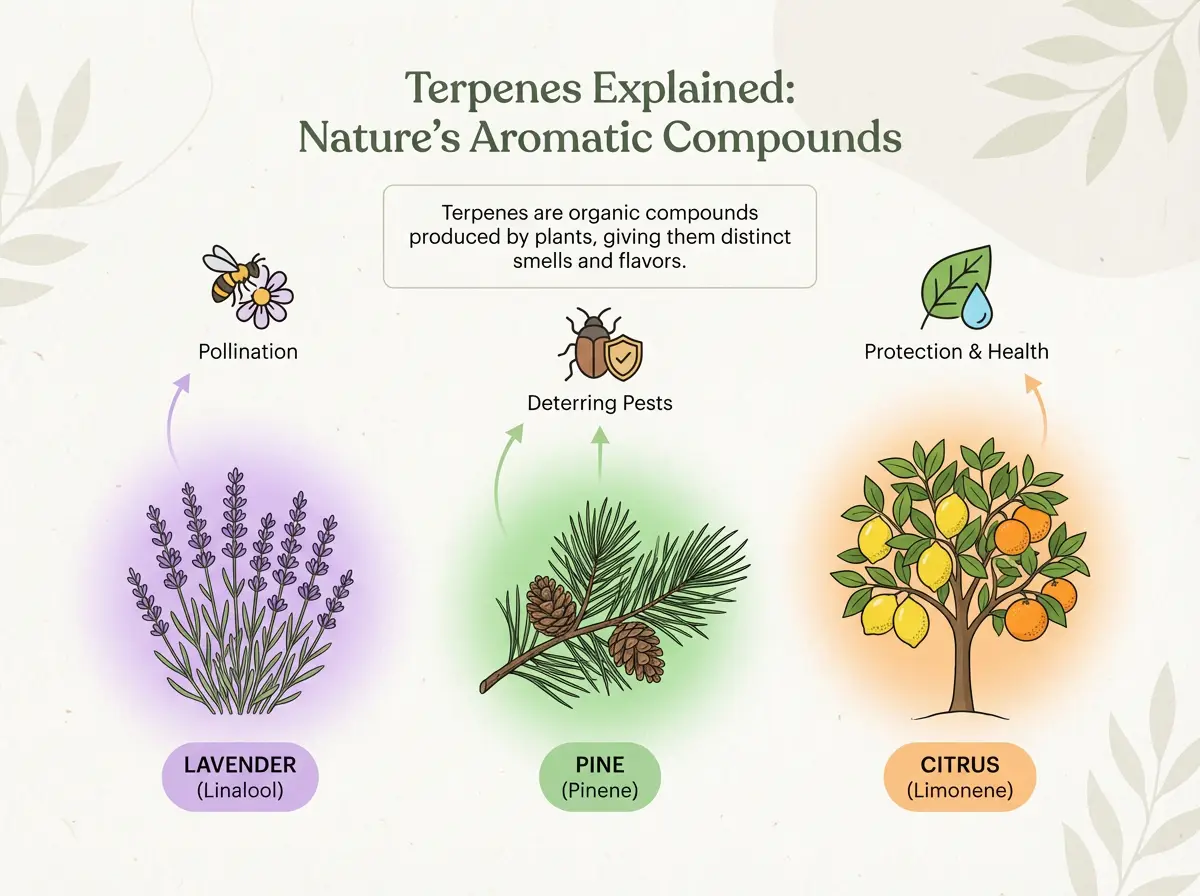
Terpenes are aromatic compounds made by plants (and some insects). They are one of the main reasons plants smell and taste the way they do. Lavender’s floral scent, pine’s sharp freshness, and black pepper’s spicy kick are all terpene-driven.
Think of terpenes as a plant’s “essential oils” toolkit. Not essential oils in the marketing sense, but in the biological sense of “these compounds help the plant function and survive”. Plants use terpenes to attract pollinators, deter pests, respond to stress, and communicate with the world around them.
Are terpenes the same as cannabinoids?
No. Cannabinoids (like CBD) are a different family of compounds. Terpenes are not cannabinoids, and cannabinoids are not terpenes. They can exist together in the same plant, and in hemp they often do.
What many people overlook is that when you take a hemp extract, you are not just dealing with “CBD vs not CBD”. You are dealing with a whole profile of plant compounds that can influence how the product smells, tastes, and feels to use.
What are terpenes in CBD, and where do they come from?
When people ask “what are terpenes in CBD?”, they usually mean: are these terpenes naturally in the hemp plant, or are they added in later?
The answer can be either, depending on the product and the brand’s approach.
Naturally occurring terpenes in hemp
Hemp naturally produces terpenes in its flowers and resin. When a CBD extract is made in a way that preserves more of the original plant profile, you tend to keep more of those terpenes. That is one reason full spectrum CBD oils often have a stronger, more “plant-like” flavour.
Added terpenes (and why brands do it)
Some manufacturers add terpenes after extraction. This might be done to recreate a consistent flavour profile, or to replace terpenes lost during processing. Added terpenes can be cannabis-derived or taken from other plants (for example, citrus terpenes from orange peel).
From a practical standpoint, added terpenes are not automatically “bad”. The key is transparency. You should be able to see what is in the product, and ideally confirm it via third-party lab testing.
Why terpenes matter: flavour, aroma, and the Entourage Effect
For most people, terpenes first show up as taste and smell. If you have ever wondered why one CBD oil tastes mild and another tastes much stronger, terpenes are a big part of that story.
Terpenes and your experience of a product
Consider this: if you are trying to build a daily CBD ritual, enjoyment matters. A product you dislike the taste of is harder to stick with. Terpenes can be the difference between “I forget to take it” and “this fits my routine”.
That is why some people prefer water soluble CBD formats that mix into drinks and mask more of the hemp taste. Others actually like the earthy notes because it feels more natural and closer to the plant.
Terpenes and the Entourage Effect (what we can say honestly)
You will often hear terpenes mentioned alongside the “Entourage Effect”. This is the idea that cannabinoids, terpenes, and other plant compounds may work together in a complementary way.
Now, when it comes to research, the Entourage Effect is still being explored. We cannot say it guarantees a specific outcome for everyone. But many people prefer full spectrum products because they feel a broader plant profile is, at the very least, a more faithful representation of hemp.
If you want to understand this concept in more depth, read The Entourage Effect.
One example of this philosophy is how CBD One focuses on full spectrum extracts across our core oil and water soluble ranges, because we value the natural mix of cannabinoids and terpenes found in the hemp plant.
Full spectrum vs isolate: what happens to terpenes?
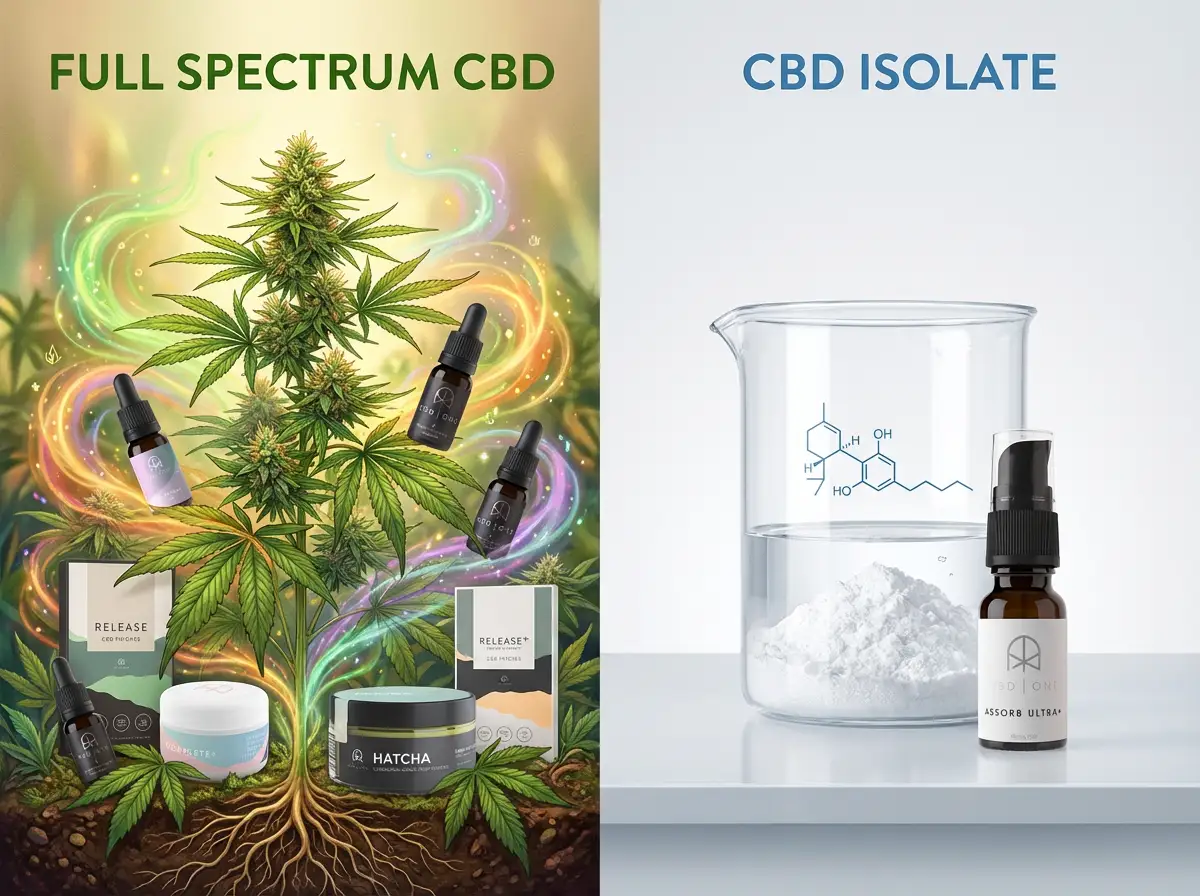
This is where terpene education becomes genuinely useful. The spectrum label on your bottle often hints at how much of the plant profile you are getting.
Full spectrum products
Full spectrum CBD typically contains CBD plus other naturally occurring hemp compounds such as minor cannabinoids, terpenes, and flavonoids, with trace THC within legal limits.
Because terpenes contribute to taste and aroma, full spectrum oils often taste more “hempy”. That is not a sign of poor quality. It is often the opposite, provided the brand can back it up with good sourcing and lab reports.
CBD isolate products
Isolate is essentially purified CBD. It is usually THC-free and tends to be flavourless or much milder. But you generally lose the wider terpene profile too.
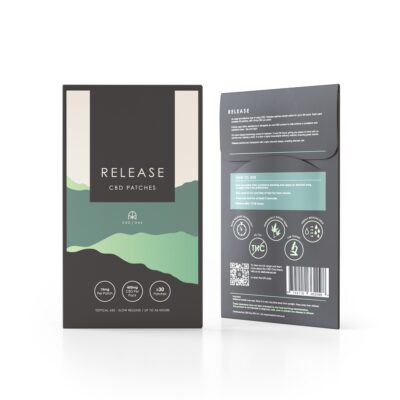
CBD patches are a good real-world example here. At CBD One, our Release patch range uses CBD isolate and is THC-free. That suits people who want a measured, discreet format without hemp flavour.
Why this matters for beginners
In practice, this means you can use spectrum as a “first filter” when shopping. If you are curious about a fuller plant profile, look at full spectrum. If you want something more neutral and simple, isolate-based products can feel more straightforward.
How to choose quality CBD when terpenes are involved
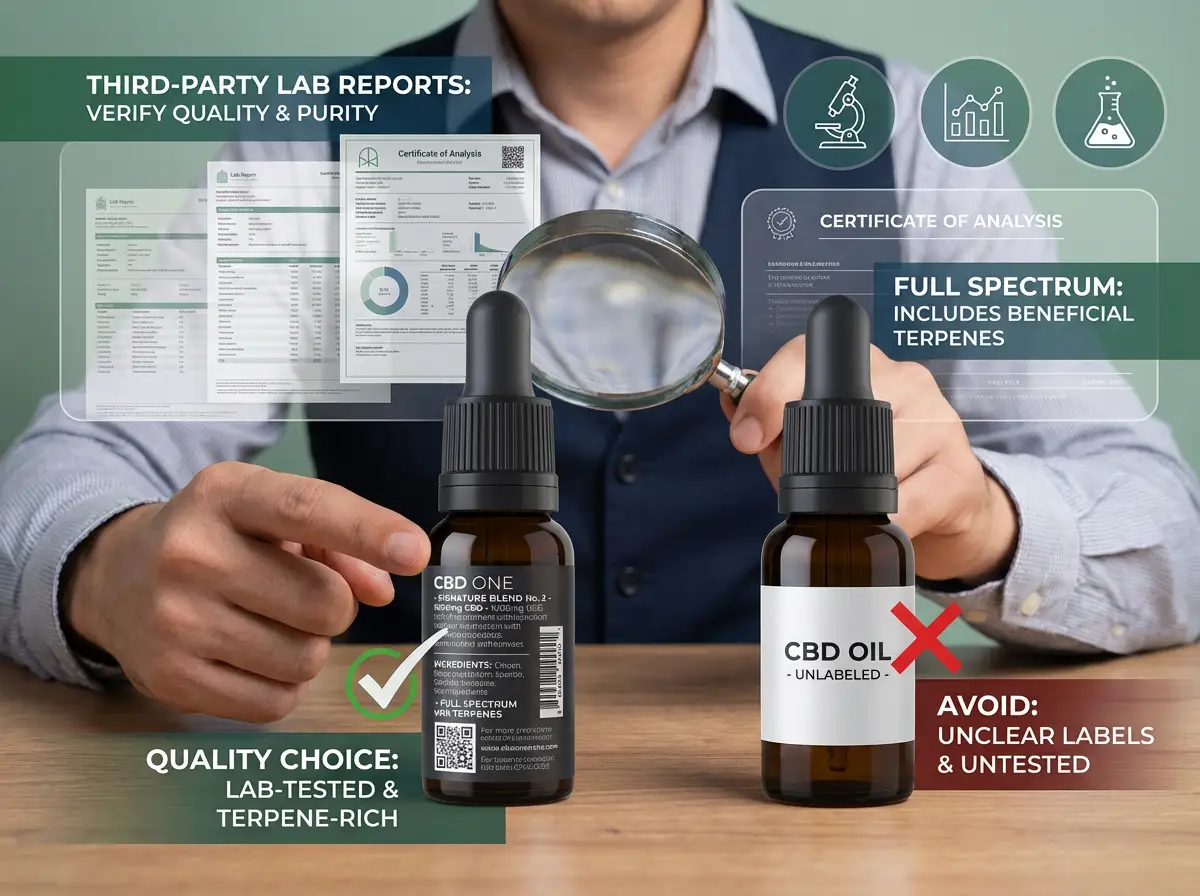
Terpenes are delicate. Heat, light, and oxygen can all affect them. So quality is not just about how much CBD is in the bottle. It is about how the product is made, stored, and tested.
Quality signals to look for
- Third-party lab reports that confirm cannabinoid content and screen for contaminants.
- Clear spectrum labelling (full spectrum vs isolate) and a sensible ingredients list.
- Proper storage advice (cool, dry place, away from sunlight).
- Realistic guidance that avoids medical claims and encourages speaking to a GP if you are on medication.
If you are in “research mode” and want a structured way to compare brands and formats, the CBD buying guide is a good next step. When you are ready to narrow it down further, a side-by-side CBD product comparison can help you make sense of strengths and formats.
A quick note on dosing (because people always ask)
Terpenes are not dosed the way CBD is. But terpene-rich products can feel stronger in flavour, which sometimes leads people to take less simply because it is more noticeable.
For CBD itself, the UK Food Standards Agency suggests healthy adults should not exceed 70 mg CBD per day. If you want help estimating what a “normal” amount looks like for different product strengths, use a CBD dosage calculator and then take that info to your own decision-making (and your GP if needed).
Terpenes across formats: oils, drinks, patches, edibles and gummies

People often search “what are CBD terpenes” right after they notice CBD comes in lots of forms. The form you choose affects how much you taste, and often how much of the natural hemp profile comes through.
CBD oils (most terpene-forward for many people)
With oils, especially full spectrum oils, you often get the clearest hemp taste and aroma. If you place drops under your tongue, you will notice the flavour immediately.
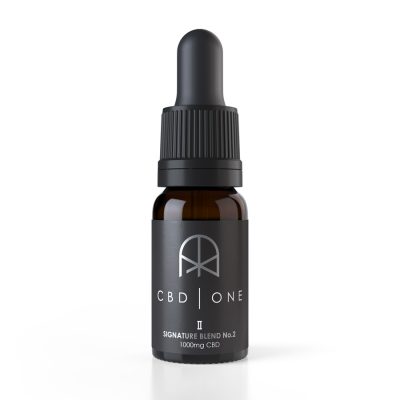
If you are exploring oils, you can browse the CBD Oils category and simply compare descriptions like “rich terpene profile” versus milder options.
Water soluble CBD (often easier if you dislike hemp taste)
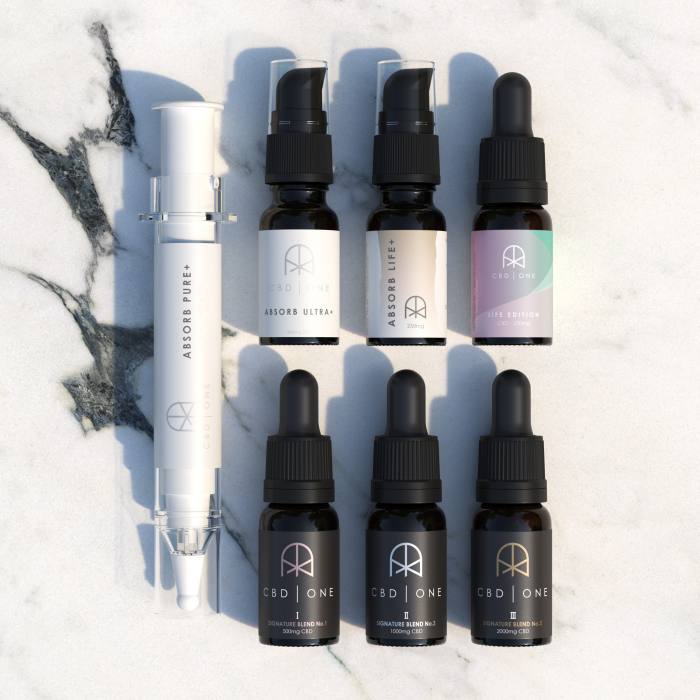
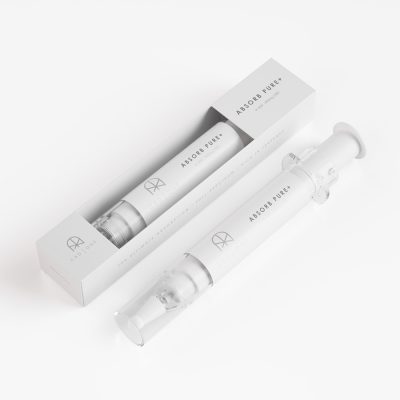
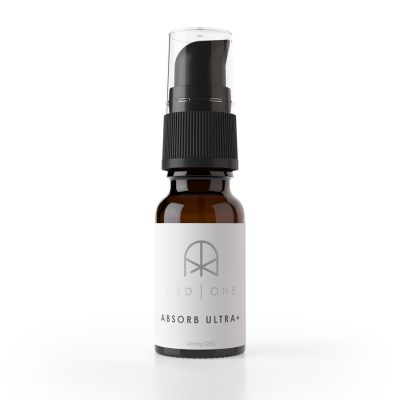
Water soluble CBD products are designed to mix into drinks. CBD One’s Absorb range, for example, is full spectrum and includes terpenes in the ingredients list, but many people find the overall taste easier in coffee, tea, or a smoothie than holding an oil under the tongue.
If this sounds more like your routine, the Water Soluble CBD category is where you can explore that format.
Patches (no taste, different conversation)
Patches remove the flavour question entirely. CBD One’s Release patches are isolate-based and THC-free, which suits people who want measured dosing without thinking about terpene profiles at all.
What are edibles, and where do terpenes fit?
Edibles are CBD products you eat, such as chocolates, sweets, baked goods, or gummies. If you are asking “what are edibles?” in a CBD context, the key point is that you are digesting the CBD rather than absorbing it under the tongue.
Terpenes in edibles are usually less noticeable because flavourings and ingredients dominate. Also, heat used in manufacturing can reduce terpene levels, unless terpenes are added back in afterwards.
What are gummies (and why CBD One does not focus on them)
Gummies are a type of edible, usually designed to be convenient and tasty. Many brands use them because they feel familiar, like a supplement sweet.
CBD One has chosen not to make gummies. The reason is straightforward: it is harder to be as transparent and precise as we want to be with certain edible formats, and we prefer to focus on oils, water soluble CBD, and patches where the ingredient story is clearer.
Using terpene knowledge in your own routine
It is easy to get lost in terpene names and charts. You do not need to memorise a list to make better choices.
Step 1: decide how important taste is to you
If taste matters, choose your format first. Oils tend to be the most “terpene honest”. Water soluble products tend to be more flexible in food and drink. Patches are taste-free.
Step 2: match your preference to spectrum
If you want more of the natural hemp character, start by exploring full spectrum. If you want minimal taste and a simpler ingredient focus, isolate-based options can be a better fit.
Step 3: keep your routine steady
Think of it this way: your body tends to respond better to consistency than constant switching. Pick one product format, start low, and give it time before you decide whether it suits you.
If you take any medication, or you are managing a health condition, do not guess. Read CBD and Medication and speak to your GP or pharmacist first.
If you are unsure which format fits your lifestyle, Nick offers free health advice at CBD One to help you make a sensible, personalised starting plan.
What many people miss: terpenes vs terpenoids (and why “freshness” changes flavour)
If you have ever bought two “full spectrum” oils and thought, “Why does this one smell brighter and that one smells heavier?”, a small bit of chemistry explains a lot.
Terpenes are the aromatic compounds a plant produces. Terpenoids is a term you might see for terpenes that have changed slightly through things like drying, curing, and exposure to oxygen. In other words, the profile can shift over time, even when the product is still perfectly fine to use.
From a practical standpoint, this is why storage matters. If terpenes are part of what you enjoy about an oil, treat the bottle like you would treat good olive oil or a quality spice: keep it sealed, store it in a cool dry place away from sunlight, and try not to leave it open longer than you need to.
It also explains why “freshness” is not just about a date on a label. It is about how the product has been handled from extraction to bottling, and then in your own cupboard. Terpenes are one of the first parts of the plant profile you will notice changing if a product is left in heat or bright light.
A simple way to “read” terpene info without getting lost in charts
There are terpene charts all over the internet. They can be interesting, but they can also send you down a rabbit hole of “this terpene does this” style claims, which is rarely as clear-cut as people make it sound.
Here is a more grounded way to use terpene information when you are choosing a CBD product.
Start with the basics: does the brand show the plant profile at all?
Some brands will list terpenes in the ingredients. Others will only talk about “flavour” and never mention plant compounds. Neither is automatically wrong, but if a brand makes a big deal about full spectrum, it is fair to expect clear information and testing to back it up.
Look for consistency, not perfection
Terpene profiles naturally vary between harvests. Hemp is a plant, not a synthetic ingredient. So the goal is not for every batch to taste identical, the goal is for it to stay within a sensible, transparent range.
If a product tastes completely different from one bottle to the next, it does not always mean something is “bad”, but it is worth pausing and checking what has changed: batch, storage, or formulation.
Use terpene info as a personal preference tool
Think of terpene notes like choosing coffee or tea. Some people like a sharp, citrusy aroma. Some prefer earthy, herbal tones. Your preference matters because it affects whether you will actually use the product consistently.
And if you ever feel pushed into chasing a specific “top 3 terpenes” list, zoom out. A product that is lab tested, honestly labelled, and easy to stick with usually beats a product that is all hype, even if it has a flashy terpene story.
Are terpenes bad for you? Sensible safety notes for everyday CBD use
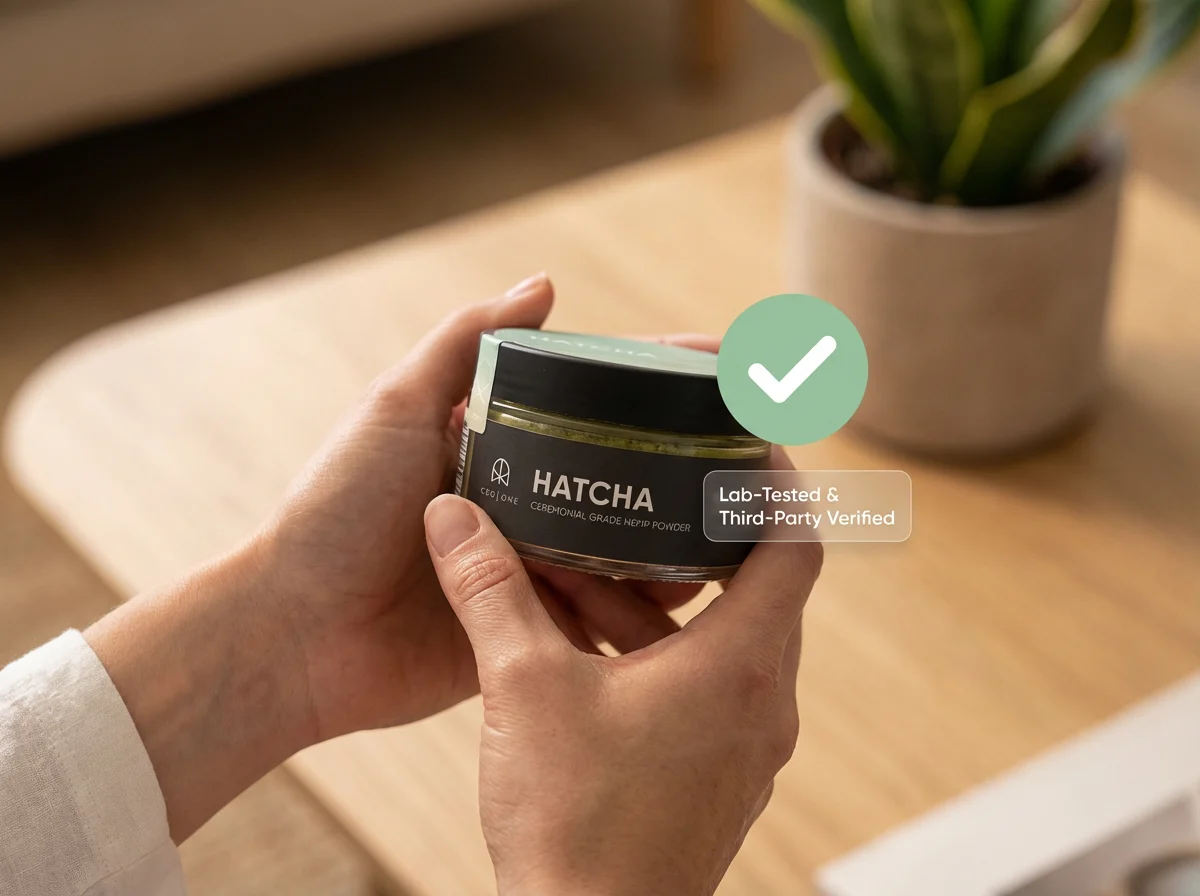
People often ask this because they see strong-smelling oils and wonder whether that intensity is a red flag.
In normal everyday life, you are already exposed to terpenes through food and plants: citrus peel, herbs, spices, pine, and flowers. In that sense, terpenes themselves are not some strange cannabis-only ingredient.
That said, concentration and context matter. A full spectrum hemp extract is a concentrated product, and some people are simply more sensitive to strong flavours and aromas than others.
What to do if a terpene-rich oil feels “too strong”
If you find an oil tastes too intense, you have a few sensible options. You can reduce the amount you take in one go, take it with a small snack afterwards, or consider a format where taste is less of the experience, such as water soluble CBD mixed into a drink, or patches.
If you notice any unwanted effects, stop using the product and reassess. Many people do better with a slower approach: start low, keep your routine steady, and only adjust one variable at a time.
Avoid risky terpene conversations
One area where terpene safety gets messy online is inhalation products. Vaping, high heat, and “added terpene blends” can bring different considerations, and it is not the same conversation as taking a measured oral product. If you are ever unsure, keep it simple and choose formats with clear ingredients, clear lab testing, and realistic guidance.
And as always, if you take prescription medication, are pregnant or breastfeeding, or have an existing health condition, speak to a pharmacist or GP before using CBD. When in doubt, that cautious approach is a strength, not a hassle.
Frequently Asked Questions
What are terpenes?
Terpenes are natural aromatic compounds made by plants. They are responsible for many of the scents and flavours you recognise in nature, like citrus peel, pine needles, lavender, and herbs. In hemp and cannabis, terpenes contribute to the plant’s distinctive smell and taste, and they form part of the wider chemical profile alongside cannabinoids like CBD. You do not need to “chase” terpenes, but understanding them helps you make sense of why different CBD products smell, taste, and feel different to use.
What are terpenes in CBD?
Terpenes in CBD refer to the aromatic plant compounds that may be present in a CBD extract, especially in full spectrum products. They can be naturally retained from the hemp plant during extraction, or sometimes added back in after processing to create a consistent flavour profile. Either approach can be legitimate, but transparency matters. Look for clear ingredients lists and third-party lab reports so you know what is in the bottle, rather than relying on marketing language.
What are CBD terpenes meant to do?
In practical terms, CBD terpenes mainly change your sensory experience: flavour, smell, and the overall “plant character” of a product. You will also hear them discussed in relation to the Entourage Effect, which is the idea that multiple hemp compounds may work together in a complementary way. The science is still developing, so it is best to treat this as a promising area of interest rather than a guarantee. If you want the deeper concept explained clearly, see The Entourage Effect.
Do terpenes get you high?
No. Terpenes are not intoxicating in the way THC can be. They are found across many everyday plants and foods, and you encounter them all the time in normal life. If someone feels “different” after a hemp product, it is more likely due to cannabinoids, the full plant profile, personal sensitivity, or simply the context in which they are using it. If you want to understand intoxication risks more broadly, it helps to learn the difference between CBD and THC, and to choose reputable products with clear lab testing.
Are terpenes only found in cannabis?
Not at all. Terpenes are everywhere in the plant world. That is why you can find the same terpene in cannabis and in something totally unrelated, like rosemary, mango, or hops. Cannabis just happens to be a terpene-rich plant, so the terpene conversation is louder in this space. Knowing this can also help you stay grounded when reading claims online. Terpenes are natural and interesting, but they are not magical cannabis-only ingredients.
Do full spectrum CBD products always have more terpenes?
Often, yes, but not always. Full spectrum generally aims to preserve more of the plant’s original profile, which usually includes terpenes. But terpene content can still vary based on hemp genetics, harvest timing, extraction method, and storage. Some products may also be “full spectrum” but formulated in a way that reduces terpene smell and taste. The most reliable approach is to look for lab testing and honest product descriptions, rather than assuming the label guarantees a strong terpene profile.
What are edibles, and do they contain terpenes?
Edibles are CBD products you eat, like chocolates, sweets, baked goods, and gummies. They can contain terpenes, but you may not notice them much because flavours and sweeteners usually dominate. Also, heat used during manufacturing can reduce terpene levels, unless a producer adds terpenes back in afterwards. If you are choosing edibles, focus on overall quality, transparent dosing, and ingredients. Keep in mind the UK FSA recommends healthy adults do not exceed 70 mg CBD per day from all sources.
What are gummies in CBD, and are they a good option?
CBD gummies are a type of edible designed to be convenient, pre-measured, and easy to take. Some people like them because they feel familiar and mask the taste of hemp. Others prefer oils or water soluble products because they can be easier to fine-tune in small increments. Gummies are not automatically “better” or “worse”, but you should be cautious with any product that makes bold claims. Also check whether the brand provides third-party lab reports and complies with UK rules around CBD as a non-medicine wellness product.
Can terpenes interact with medication?
Most medication interaction concerns in the CBD world relate to cannabinoids (including CBD) rather than terpenes alone. Still, because full spectrum products contain multiple compounds, it is sensible to take a careful approach if you take prescription medication. If you are on medicines with a grapefruit warning, or anything that affects liver enzyme pathways, you should speak to a pharmacist or GP before using CBD. For a sensible overview, read CBD and Medication.
How do I choose the right CBD product if I care about terpenes?
Start with how you want to take CBD. If you are comfortable with a natural hemp taste, full spectrum oils are often terpene-forward. If you dislike the taste, water soluble CBD mixed into a drink can be easier. If you want no taste at all, patches avoid the issue. Then look for third-party lab testing, clear ingredients, and realistic guidance. If you want help deciding between formats and strengths, work through a CBD buying guide and then use a CBD product comparison to narrow your options.
Is there a “best” terpene profile to look for?
Not really, because “best” depends on your preferences and how sensitive you are to taste and aroma. Some people love bright, citrusy notes. Others prefer earthy, herbal profiles. The key is consistency and transparency, not chasing a specific terpene trend. Choose a product you enjoy using, stick with it long enough to judge it properly, and keep your daily CBD intake within sensible limits. If you are unsure about dosing, a CBD dosage calculator can help you estimate amounts more confidently.
What are terpenes used for outside of CBD?
Terpenes are widely used in everyday products because they are responsible for familiar scents and flavours. You will find terpene-driven aromas in herbs and spices, citrus fruits, and flowers, and you will also see them used in things like perfumes and flavourings. In nature, their “job” is often about plant survival, like attracting pollinators or discouraging pests. In CBD, the main practical link is that terpenes are part of what makes one hemp extract smell and taste different from another.
What is a terpene chart, and should I follow one?
A terpene chart is usually a visual guide that lists common terpenes and the aromas they are associated with, sometimes alongside claims about how they might feel. Charts can be a fun way to learn the language of scent, but they are easy to over-interpret. If you use one, keep it grounded: use it to describe flavour notes you enjoy, then choose products that are clearly labelled and lab tested. Avoid treating a chart like a promise of a specific outcome.
What is the difference between terpenes and terpenoids?
Terpenes are the aromatic compounds plants produce. Terpenoids is a term sometimes used for terpenes that have changed slightly through processes like drying, curing, and exposure to oxygen. For most CBD users, the main practical point is this: a product’s aroma can shift over time, and good storage helps preserve the original terpene profile for longer.
Key Takeaways
- Terpenes are aromatic plant compounds that shape the smell and taste of hemp and many everyday plants.
- Full spectrum CBD typically includes more of the natural terpene profile than isolate, which often tastes milder.
- Terpenes are part of the Entourage Effect conversation, but research is still developing and outcomes vary.
- Choose products based on format, transparency, and lab testing, not hype.
- If you take medication, speak to a GP or pharmacist before using CBD.
- Terpene profiles can change with time, light, heat, and oxygen, so storage plays a real role in taste and aroma.
Conclusion
If you came here asking “what are terpenes?”, the simplest answer is this: they are the natural compounds that give plants their scent and flavour. In hemp, they help explain why two CBD oils can taste completely different, even when the CBD strength looks similar on the label.
The reality is that terpenes are most useful as a “confidence tool”. They help you understand what you are buying, what you are tasting, and why full spectrum products feel closer to the whole plant. Keep it grounded though. Terpenes are not a shortcut to guaranteed results, and CBD is still a wellness choice, not a medicine.
When in doubt, simplify. Pick a format you will actually use daily, check for third-party lab testing, and keep your total CBD intake within the FSA’s sensible guidance for healthy adults.
If you want help choosing a format or starting point, explore our guides or speak to Nick for free, no-pressure advice.