
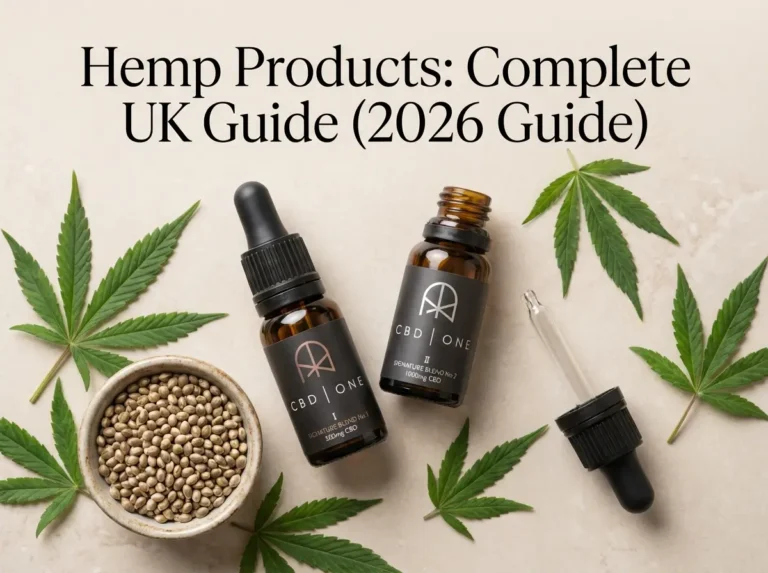
Hemp Products: Complete UK Guide (2026 Guide)
This guide is here to help you make sense of hemp products in the UK in 2026. We will cover the main categories, what hemp oil actually is, where CBD fits in, how to read labels, and what to look for if you want a quality product without falling for hype. No big claims, no fluff. Just practical education so you can choose confidently.
What are hemp products, really?
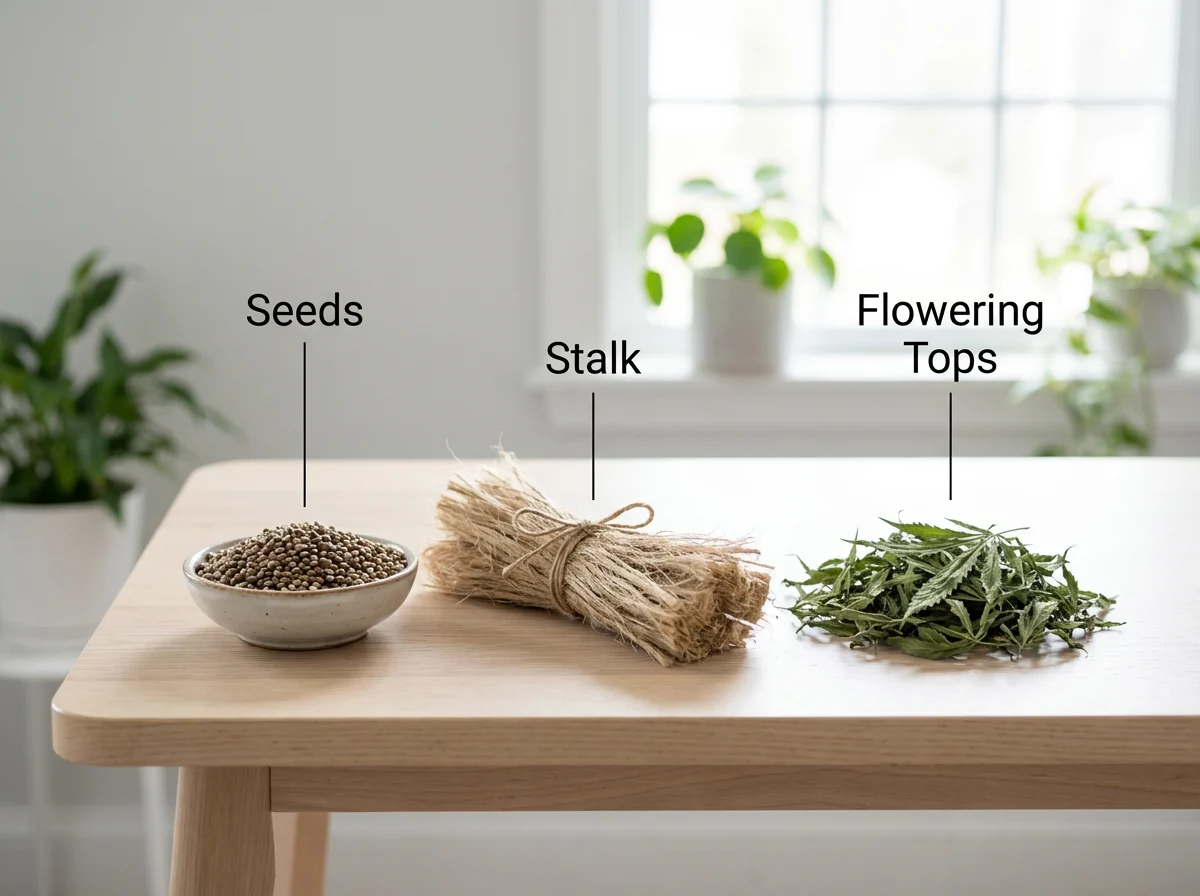
When someone says “hemp products”, they might be talking about food, fabric, skincare, supplements, or CBD. Hemp (Cannabis sativa) can be grown for its seeds, stalk, or flowers, and each part creates different end products.
Think of hemp like the olive tree. Olives become olive oil, but the leaves and fruit can also be used in other ways. With hemp, the seed is mainly about nutrition, while the flowering parts are where cannabinoids like CBD are found.
Why the word “hemp” causes so much confusion
Many labels say “hemp oil” without clarifying whether it is hempseed oil (a food oil) or a CBD-rich hemp extract (a cannabinoid product). From a practical standpoint, you want to know which category you are in before you spend your money.
If you are unsure, this companion read helps: Hemp Oil vs CBD Oil.
Hemp oil vs CBD: the key differences you should know
Let’s clear up the big one. Hempseed oil is pressed from the seeds. It is valued for fatty acids and nutrition. It usually contains little to no CBD.
CBD products, on the other hand, are made using extracts from the aerial parts of the plant (often the flower). That is where cannabinoids and aromatic compounds like terpenes come from.
Hempseed oil (nutritional oil)
Hempseed oil is commonly found in salad dressings, supplements, and skincare. It can be a lovely ingredient, but it is not the same as a CBD supplement. If a product only lists “hemp seed oil” and gives no CBD amount in mg, it is probably not a CBD product.
CBD hemp products (cannabinoid products)
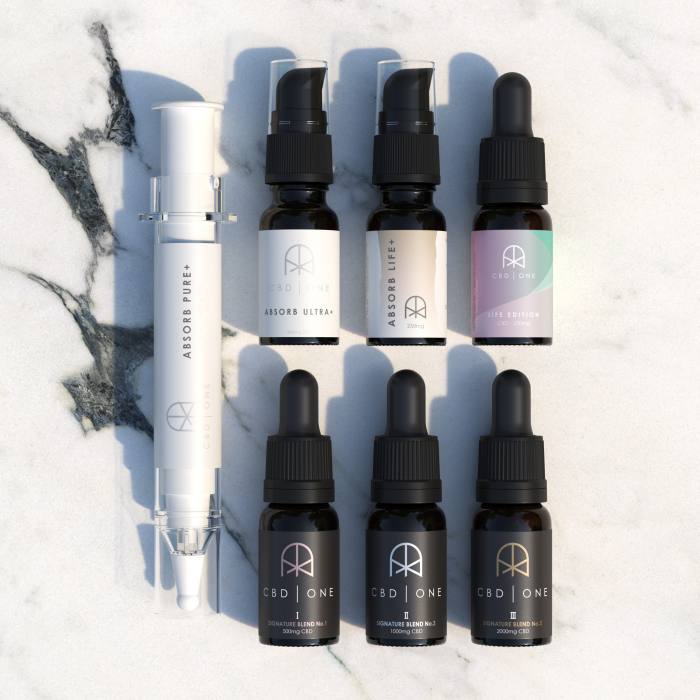
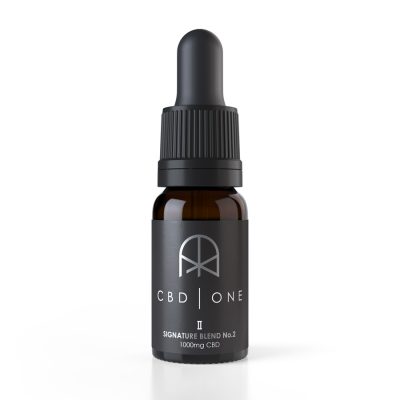
CBD hemp products usually state CBD content clearly, for example “500mg CBD per 10ml”. In the CBD One range, our CBD oils list CBD strength in mg per bottle, and are full spectrum. One example is 5% CBD Oil [500mg CBD], which uses a raw hemp extract blended into hempseed oil as the carrier.
If you want to get grounded in the basics first, it can help to read our parent guide on premium CBD oil before comparing formats and strengths.
Full spectrum, broad spectrum, isolate: what matters in practice
In the UK market, you will see three common “spectrum” labels:
- Full spectrum: CBD plus minor cannabinoids, terpenes and flavonoids, with trace THC within legal limits.
- Broad spectrum: similar to full spectrum, but with THC removed (process varies by brand).
- CBD isolate: CBD only, with other compounds removed.
Many people choose full spectrum because of the Entourage Effect idea, which suggests plant compounds may work better together than alone. It is not a magic switch, but it is a helpful way to understand why two “same strength” products can feel different.
Popular hemp products UK shoppers buy in 2026
Now, when it comes to hemp products uk searches, people are usually looking for one of four things: food-grade hemp, CBD supplements, topical products, or novelty items like “hemp gummies” and “hemphash”. They are not all comparable, so treat them as separate lanes.
1) Food and nutrition: seeds, protein, hempseed oil
This is the classic hemp category. You might add hemp hearts to porridge or use hempseed oil in a dressing. If your goal is nutrition, this can be a great option. Just do not expect it to behave like CBD, because it is not designed to deliver cannabinoids.
2) CBD oils and tinctures (sublingual drops)
CBD oil drops are popular because dosing is flexible. You place drops under the tongue for a short time before swallowing. In CBD One oils, bioavailability is listed at around 0.12 (often described as roughly 10–12% for oils), which is one reason people sometimes prefer formats designed for improved absorption.
If you want to browse that format, the most relevant category is CBD Oils.
3) Water soluble CBD (mix-in formats)
What many people overlook is that oil and water do not mix well. Water soluble CBD products use emulsifiers to help CBD disperse in a drink. In practice, this means the experience can feel different for some users, especially those who dislike the taste of hemp extracts.
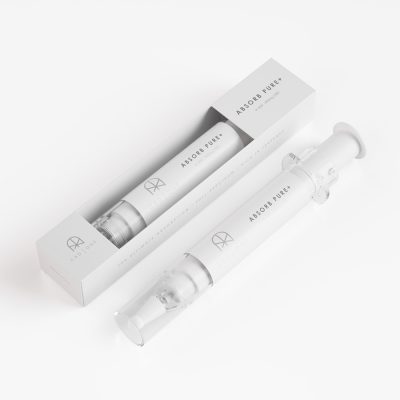
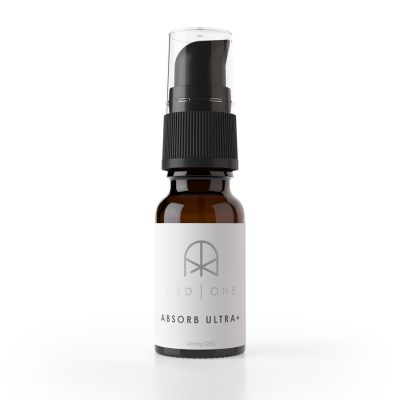
As an example of this format, CBD One has water soluble options like Absorb Life+ and Absorb Ultra+ that are designed to be added to hot or cold drinks. You can see the format here: Water Soluble CBD.
4) Topicals: creams and balms
Topical hemp products often combine hempseed oil with botanical extracts. CBD topicals include hemp extract with cannabinoids. The main difference is still the same: are cannabinoids present, and is CBD content stated in mg?
5) Hemp gummies and “hemp sweets”
“Hemp gummies” is a big search term, but it is also a common source of confusion. Some gummies contain hempseed oil only. Others contain CBD isolate or broad spectrum CBD. If a gummy does not clearly state CBD in mg per gummy and per pack, treat it as a generic “hemp” sweet, not a cannabinoid product.
6) Hemphash and smokable hemp products
You may see terms like “hemphash” used online. Smoking and vaping products sit in a more complex regulatory and safety conversation, and product quality can vary massively. Consider this: inhalation is a very different route from a food supplement. If you are choosing hemp products for wellbeing routines, many people prefer measured formats like oils, water soluble products, or patches where you can track intake more easily.
How to read hemp product labels (without getting overwhelmed)
Most label confusion disappears when you focus on three questions: what part of the plant is used, how much CBD is actually in it, and is there any proof?
Start with the “what is it” question
Look for wording like “hempseed oil” versus “hemp extract”. If it is a CBD product, you should see CBD content in milligrams (mg), not just a vague “hemp” claim.
Check the strength in mg, not the marketing
Percentages can be useful, but mg is clearer for most people. For example, “10%” in a 10ml bottle is typically a 1000mg CBD oil. CBD One lists both, such as 10% CBD Oil [1000mg CBD].
Look for independent lab testing (Certificate of Analysis)
A reputable CBD product should be lab verified, ideally with a batch-specific Certificate of Analysis showing cannabinoid content and confirming it is within legal limits. This is one of the simplest ways to build confidence in what you are taking.
Ingredients matter more than most people think
With CBD oils, the carrier oil (often hempseed oil) affects taste and feel. With water soluble CBD, emulsifiers are part of the recipe. With topicals, fragrances and preservatives may matter if you have sensitive skin. There is no “perfect” list, but transparency is non-negotiable.
A quick word on “products offered by cbd hemp shop” type searches
If you find yourself browsing marketplaces or a “CBD hemp shop”, use the same checklist. Many stores offer everything from hemp foods to CBD to accessories. The reality is that a wide product range does not guarantee clear lab reports or consistent sourcing, so slow down and verify what you are actually buying.
How hemp extracts are made: extraction methods (and why it matters)
What many people overlook is that “hemp extract” is not one thing. Two bottles can both say “full spectrum”, but feel different because the extract was produced differently, then refined differently. You do not need a chemistry degree, but you do want a basic handle on the process so you can ask better questions.
In simple terms, extraction is just the step where the cannabinoids and other plant compounds are separated from the plant material. After that, the extract may be filtered, refined, and blended into a carrier (like hempseed oil) or formulated into another format.
Common extraction approaches you will see on UK labels
Brands do not always disclose their method clearly, but when they do, you will usually see one of these:
- CO2 extraction: uses pressurised carbon dioxide to pull compounds from the plant. It is popular because it avoids leaving behind harsh solvent residues when done properly.
- Ethanol extraction: uses food-grade alcohol to extract a broad range of compounds. It can be a practical method, but you still want solid lab testing and good refinement.
- Hydrocarbon solvents: sometimes used in other parts of the cannabis industry. For CBD supplements, many people prefer to avoid this route unless the company is exceptionally transparent and provides robust third-party testing.
Why refinement can change the “feel” of a product
After extraction, some products are left closer to “raw” and others are heavily refined to remove waxes, chlorophyll, or certain cannabinoids. Neither is automatically right or wrong. The important bit is consistency and transparency: if a product’s spectrum claims, flavour, and effects vary wildly between batches, that is usually a quality signal, not a mystery you need to solve.
Storage, shelf life, and freshness: keeping hemp oils and CBD products stable
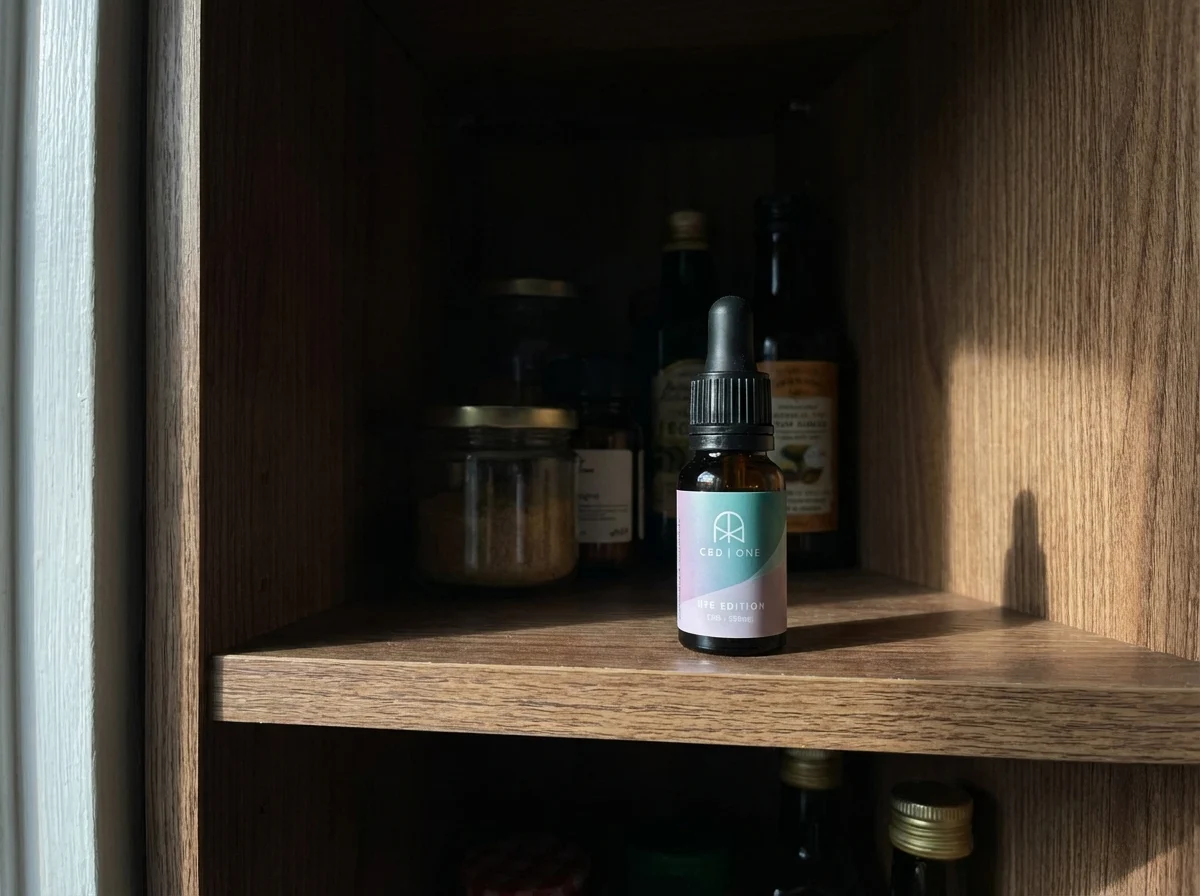
Hemp products are plant-based, and plant-based products can degrade if you treat them like they are indestructible. From a practical standpoint, storage is one of the easiest ways to protect quality after you have bought it.
Hempseed oil: treat it like a fresh food oil
Hempseed oil is rich in fats, which is part of why people like it, but it also means it can go rancid over time. If you are using hempseed oil as a food oil, check whether the label suggests refrigeration after opening. Keep the lid tight and store it away from heat and direct sunlight.
CBD oils and hemp extracts: light and heat are the usual culprits
CBD oils and other hemp extracts are typically best stored in a cool, dark place. If your bottle lives on a sunny windowsill or in a warm kitchen cupboard, you are making it work harder than it needs to. A quick sniff test can also help: if an oil smells unusually stale or “off”, it is worth replacing rather than pushing through.
Water soluble CBD: keep it sealed and follow the label
Water soluble products can contain emulsifiers and other ingredients that behave differently to a simple oil. Follow the storage instructions on the pack, keep it sealed, and avoid introducing moisture or contamination by using clean utensils if the product is not in a dropper bottle.
Hemp tea, hemp leaves, and “hemp infusions”: what they are (and what they are not)
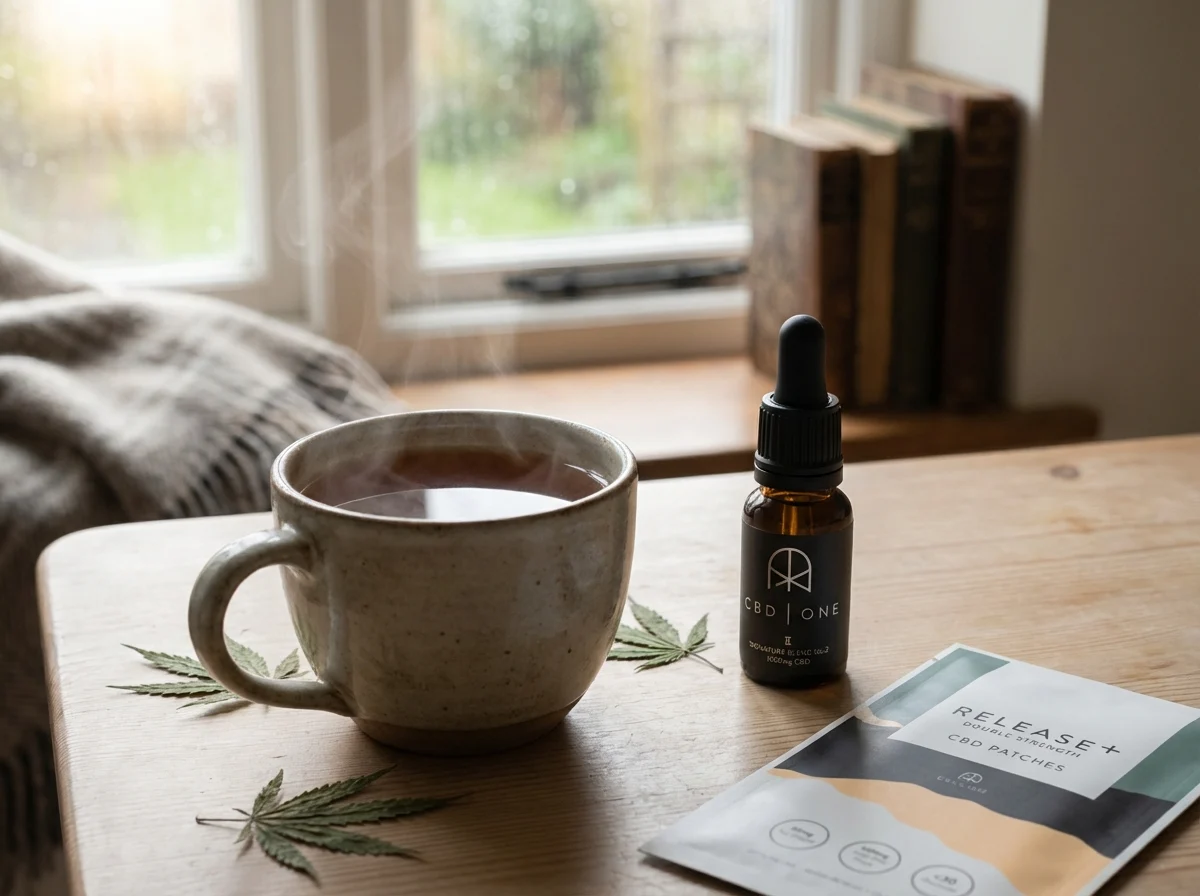
Hemp tea has become another “hemp product” people stumble across when searching for CBD. It can be a nice ritual, but it is worth understanding what you are actually buying so you do not expect a tea bag to behave like a measured CBD supplement.
Does hemp tea contain CBD?
Some hemp teas are made from hemp leaves or aerial parts and may contain small amounts of cannabinoids. Others are essentially herbal blends with hemp as a minor ingredient. Either way, teas rarely state a reliable CBD amount in mg per serving, which means you cannot really measure intake the same way you can with oils, water soluble products, or patches.
Oil and water still do not mix
CBD and many other hemp compounds are fat-soluble. That means they do not naturally dissolve well in a plain hot water infusion. Some people add milk or another source of fat to their tea, or they choose water soluble CBD for drinks instead, because it is designed specifically for mixing.
Is hemp tea legal in the UK?
Legality depends on what part of the plant is used, how it is processed, and how it is positioned for sale. As with any ingestible hemp product, your safest move is to buy from a reputable company that is transparent about ingredients and testing, and avoid anything that makes unrealistic promises or seems vague about what is inside.
Safety and legality: what the rules mean for you in the UK
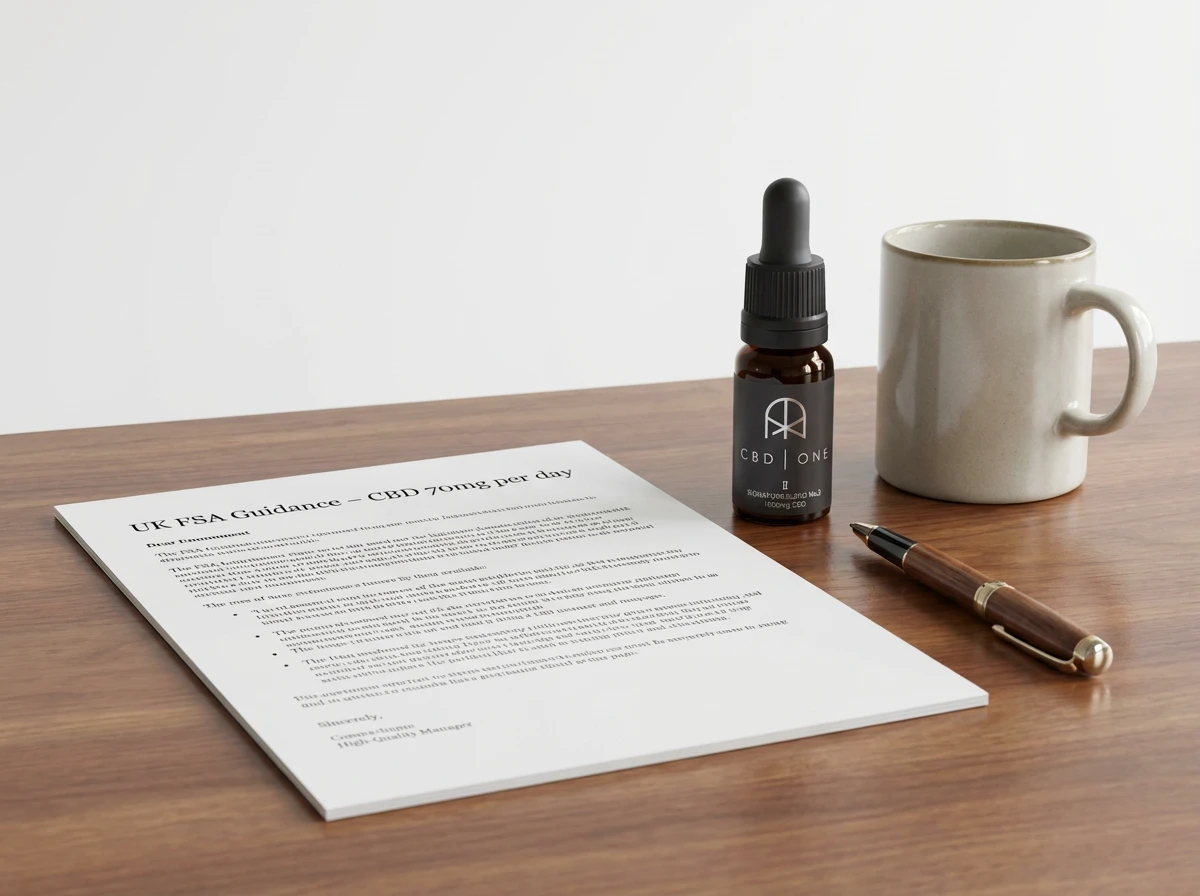
CBD is widely available in the UK, but it is still regulated. CBD products are not medicines, and brands cannot legally market them as treating or curing conditions.
For healthy adults, the UK Food Standards Agency (FSA) advises a maximum of 70mg CBD per day. Some people choose less. A few choose more under clinical guidance, but for self-selected use, that FSA number is a sensible ceiling to be aware of.
Novel Foods and why it matters
The FSA has been working through Novel Food rules for ingestible CBD. In practice, this means responsible brands track compliance and quality. If a product looks too cheap, too strong, or too vague about ingredients, it is worth pausing.
Be extra cautious if you take medication
CBD can interact with some medicines. If you take prescriptions or have been advised to avoid grapefruit with your medication, that is a good prompt to speak to your pharmacist or GP before using CBD. I also recommend reading CBD and Medication for a sensible overview.
THC, trace amounts, and drug testing
Full spectrum products can contain trace THC within legal limits. That does not mean you will feel intoxicated, but it can matter if you are subject to drug testing. If you need a THC-free approach, some people choose isolate-based formats, such as CBD patches made with CBD isolate.
Building a simple hemp routine (that you can actually stick to)

Most people do best when they stop hunting for a “miracle product” and start building a repeatable routine. Think of it this way: consistency beats intensity.
Choose your goal: nutrition, skincare, or CBD support
If your goal is nutrition, hemp foods and hempseed oil fit nicely into meals. If your goal is a cannabinoid routine, choose a CBD product with clear mg dosing and lab testing.
Pick a format you will use consistently
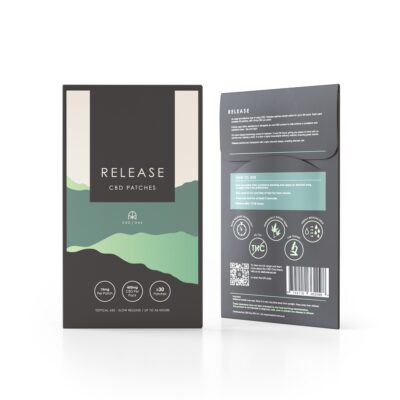
Oils suit people who like flexible dosing. Water soluble CBD suits people who want a “stir it into my morning drink” ritual. Patches suit people who want measured dosing without thinking about taste or timing.
To compare formats side by side, use CBD Product Comparison. It saves you hours of second-guessing.
Start low, go slow, and write it down
Even though this is not a dosage article, a sensible approach helps. Start with a small amount, keep it steady for several days, then adjust gradually. If you want help calculating a sensible starting point, use the CBD dosage guide tool and keep the FSA 70mg per day guidance in mind.
A quick note on CBD One (as a real-world example)
At CBD One, we focus mainly on full spectrum extracts because we like the “whole plant” philosophy behind the Entourage Effect. We also offer isolate-based CBD patches for people who prefer a THC-free format. If you are ever unsure which type fits your lifestyle, you can keep it simple: choose the format you will use consistently, and only buy from brands that publish lab reports.
If you are choosing your first product, use a buying framework
When you are new, shopping can feel noisy. A structured read like our CBD Buying Guide helps you filter the marketing and focus on basics like lab testing, clear dosing, and honest claims.
Frequently Asked Questions
Are hemp products the same as CBD products?
No. “Hemp products” is an umbrella term. Some hemp products are foods (like seeds and hempseed oil) and contain little to no CBD. CBD products are made using hemp extracts from the flowering parts of the plant and should clearly state CBD content in mg. If the label only says “hemp oil” without a CBD amount, it is often hempseed oil. If you want a quick way to check, look for a Certificate of Analysis and a clear CBD mg number per bottle, pack, or serving.
What is hemp oil, and why do people mix it up with CBD oil?
In the UK, “hemp oil” usually means hempseed oil, which is pressed from seeds and used as a food or skincare ingredient. CBD oil is a hemp extract (containing cannabinoids) blended into a carrier oil such as hempseed oil. The wording on labels can be sloppy, which fuels confusion. If you are unsure, focus on the ingredient list and the CBD strength in mg. This extra read helps you spot the difference: Hemp Oil vs CBD Oil.
Do hemp gummies contain CBD?
Some do, many do not. “Hemp gummies” can mean sweets made with hempseed oil (nutritional, usually no meaningful CBD) or gummies that contain CBD isolate or hemp extract. The only reliable way to know is the label: it should list CBD in mg per gummy and per pack, and ideally link to lab results. If a product avoids giving a CBD number and leans on vague phrases like “hemp extract”, I would treat it cautiously and assume it may not deliver consistent cannabinoids.
What does “full spectrum” mean on hemp CBD products?
Full spectrum means the extract contains CBD plus other naturally occurring hemp compounds, such as minor cannabinoids and terpenes, with trace THC within legal limits. Many people choose full spectrum because of the Entourage Effect concept, which suggests a combination of compounds may feel different to CBD alone. That said, full spectrum is not automatically “better” for everyone. If you are sensitive to THC traces or face drug testing, you might prefer an isolate product instead.
How much CBD is safe per day in the UK?
For healthy adults, the UK Food Standards Agency (FSA) advises no more than 70mg CBD per day. That is a general guideline, not a personalised medical recommendation. Your best approach is to start with a low amount, keep it consistent for several days, and adjust gradually if needed. If you want help doing the maths, use the CBD dosage guide tool. If you take medication or have a health condition, speak with a GP or pharmacist first.
Can hemp products interact with medication?
Food-grade hemp products like seeds are unlikely to raise the same interaction questions as concentrated CBD extracts. CBD, however, can interact with some medicines. If you take prescriptions, especially anything with a grapefruit warning, it is sensible to check with a pharmacist or GP before using CBD. If you want a calm, practical overview, read CBD and Medication. Safety first, always.
How do I spot a quality hemp CBD product?
Look for clarity and proof. You want a stated CBD amount in mg, a clear ingredients list, and third-party lab testing (a Certificate of Analysis) that matches the batch. Check the product type too: oil drops, water soluble, capsules, patches, or topicals should all explain how to use them and how much CBD you get per serving. Be wary of unrealistic promises or “too good to be true” claims. A good product reads like it has nothing to hide.
Are “TKKS hemp products” or marketplace brands trustworthy?
Brand names come and go online, and marketplaces often mix food hemp products with CBD products in the same results. Rather than relying on a brand name alone, use a checklist: does it clearly state CBD in mg, provide independent lab reports, and explain the spectrum (full spectrum, broad spectrum, isolate)? Is there a real company address and customer support? If not, I would be cautious. If you want a structured way to assess any brand, use our CBD Buying Guide.
Which hemp product format is best for beginners?
The “best” format is the one you will use consistently and can measure reliably. Many beginners start with CBD oil drops because you can adjust the number of drops slowly. Others prefer water soluble CBD because it fits into a morning drink ritual. If you want a clear side-by-side overview of formats, timing, and pros and cons, read CBD Product Comparison. If you are on medication, check with a healthcare professional before starting.
Where can I browse CBD product types on CBD One?
If you are comparing formats (purely for education and browsing), you can explore categories like CBD Oils and Water Soluble CBD. One thing we try to do clearly is state CBD content and keep lab verification front and centre. If you want personal guidance, I offer free health advice so you can sense-check your choice and keep things sensible.
Is hemp a drug, and can hemp products make you feel “high”?
Hemp is a type of Cannabis sativa, but “hemp products” in UK wellness usually refers to low-THC hemp used for food, skincare, or CBD extracts. Hempseed foods do not contain meaningful THC. CBD products, especially full spectrum, may contain trace THC within legal limits, but they are not sold as intoxicating products. If you ever feel unsure, check the lab report and avoid anything that is vague about THC content or makes promises about how it will make you feel.
How should I store CBD oil and hempseed oil?
Store both away from heat and direct sunlight, with the lid closed properly. Hempseed oil is a food oil and can go rancid, so follow the label on refrigeration after opening if it is suggested. CBD oils tend to do best in a cool, dark place. If a product smells stale, has changed noticeably, or is past its best-before date, it is sensible to replace it.
What is hemp used for, besides CBD?
Hemp is an incredibly versatile plant. In everyday shopping, you will most commonly see hemp used for seeds, protein, and hempseed oil, plus skincare ingredients. Outside wellness, hemp can also be used for fibre and industrial materials, but that is a different lane to CBD supplements. If your goal is wellbeing, it helps to separate nutrition and skincare choices from cannabinoid products, because the label “hemp” covers all of it.
Key Takeaways
- “Hemp products” can mean foods, skincare, fibres, or CBD. Always identify the category first.
- Hempseed oil is nutritional and usually contains little to no CBD. CBD products should state CBD in mg.
- Choose formats you can measure and repeat: oils, water soluble products, patches, or topicals.
- Look for third-party lab reports and clear labels. Avoid vague claims and missing mg amounts.
- Follow the FSA guidance of no more than 70mg CBD per day for healthy adults, and speak to a GP if on medication.
Conclusion
Hemp is a wonderfully useful plant, but the label “hemp products” is so broad it can mislead you if you are not careful. Once you separate hemp foods (like hempseed oil) from CBD hemp products (which should clearly state CBD in mg), shopping gets much simpler. From there, it is about choosing a format that matches your routine, checking lab testing, and keeping expectations realistic. CBD is a wellness tool for some people, not a guaranteed outcome or a replacement for medical care.
If you want to go deeper, use the CBD Buying Guide and compare formats with CBD Product Comparison. That combination helps you avoid guesswork.
If you are unsure where to start, speak to Nick for free advice and keep your routine simple.