

CBD Pil: UK Delivery & Best Prices (2026 Guide)
What You Will Learn
- What “CBD pil” usually means (and common mix-ups)
- CBD pills in the UK: what to expect
- Key features to look for before you buy
- Pros and cons of CBD pills
- Who CBD pills are (and are not) for
- A CBD One alternative to CBD pills (with prices)
- Buying guide: how to choose the right CBD “pil”
- How CBD pills are made (and why it matters)
- Absorption and timing: pills vs oils vs water-soluble vs patches
- A quick UK legality and compliance checklist (before you buy)
- Storage, travel, and shelf life: keeping CBD pills stable
- Frequently asked questions
- Key takeaways
What “CBD pil” usually means (and common mix-ups)
Most of the time, “CBD pil” is simply a misspelling of CBD pills. In the UK, these are usually capsules (softgels or hard capsules) containing CBD extract in a carrier oil, designed for swallow-and-go convenience.
Two other common meanings are worth clearing up:
- “CBD pillow” or “CBD infused pillow”: These are typically wellness pillows made with infused fabrics or fragrances. They are not a reliable way to measure CBD intake, and they are not comparable to ingestible CBD products.
- Condition-specific searches (for example “CBD oil for epilepsy”): UK CBD supplements are not medicines and cannot claim to treat epilepsy or any medical condition. If you are looking for help with seizures, that is a GP or specialist conversation, not a supplement decision.
CBD pills in the UK: what to expect
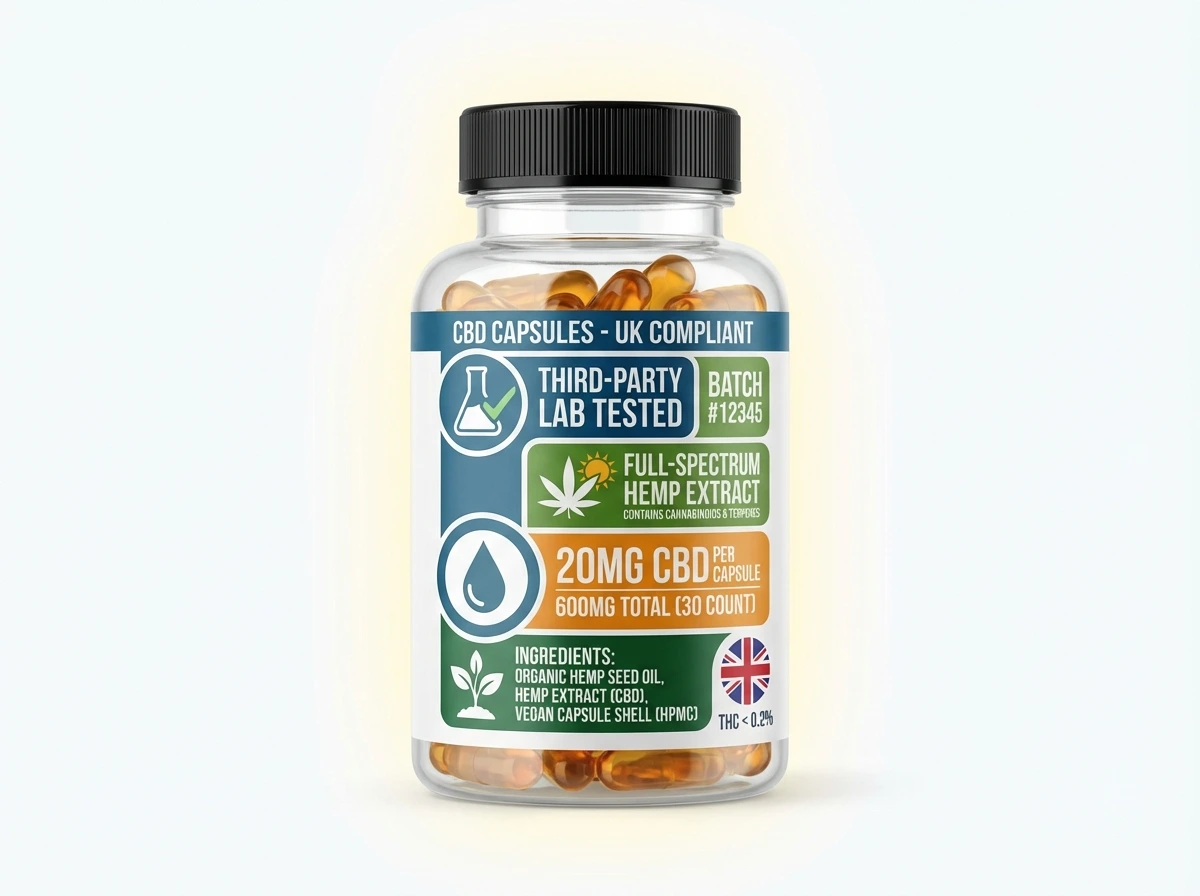
A CBD pill is usually positioned as the most straightforward format: fixed mg per capsule, no taste, and easy to fit into a routine. If you are used to vitamins, it can feel familiar.
However, CBD pills are not automatically “better” than oils. Swallowed CBD has to pass through digestion, which can reduce and delay how much CBD you actually absorb compared with formats held under the tongue or absorbed through the skin.
Also, the UK market varies hugely. Some brands use CBD isolate (CBD only), while others use broad spectrum (no THC, but other hemp compounds) or full spectrum (CBD plus minor cannabinoids and terpenes, with trace THC within legal limits). If you are trying to compare “best prices”, you will want to look past the tub price and calculate cost per mg of CBD, then weigh that against quality signals like lab reports.
Key features to look for in a CBD “pil”
If you want a pill-style CBD product, here are the features that matter most for a UK buyer (and the ones that often get glossed over in adverts).
1) Clear CBD content per capsule (and per pack)
You should see the exact mg of CBD per capsule, plus the total mg in the pack. “High strength” is meaningless without numbers. Also check how many capsules you get.
2) Spectrum type (isolate vs broad vs full spectrum)
- Full spectrum: contains CBD plus minor cannabinoids and terpenes, and may offer an “entourage effect” style synergy (not guaranteed, but plausible). Includes trace THC within legal limits.
- Broad spectrum: similar, but THC removed.
- Isolate: CBD only, often chosen by people wanting zero THC.
If you want the “full plant” approach, full spectrum is usually the direction to look. If you are subject to drug testing, you may prefer isolate or broad spectrum, but nothing is risk-free.
3) Third-party lab testing you can actually check
Look for a Certificate of Analysis (CoA) that matches the batch you are buying. Ideally it confirms CBD content and screens for contaminants. If the lab report is missing, out of date, or impossible to interpret, that is a red flag.
4) Ingredients and allergens
Many capsules use carrier oils and capsule materials (gelatine for softgels, or plant-based cellulose for vegan capsules). If you are vegan, check the capsule type. Also scan for unnecessary fillers.
5) Realistic dosing guidance (and UK FSA limits)
For healthy adults, the UK Food Standards Agency advises a maximum of 70mg CBD per day. A “CBD pil” should make it easy to stay within that. If a brand encourages very high daily intakes or implies guaranteed outcomes, take a step back.
Pros and Cons
Strengths
- Convenient: easy to take, travel-friendly, and no measuring drops.
- Consistent dosing: each capsule is a fixed amount, which some people find simpler than oils.
- No taste: good if you dislike the natural earthy flavour common with full spectrum oils.
- Discreet: looks like a standard supplement, which can be useful in busy routines.
Considerations
- Slower onset: swallowed formats typically take longer to feel compared with sublingual oils or faster-absorbing formats.
- Lower and more variable absorption: digestion and “first pass” metabolism may reduce how much CBD you absorb.
- Value can be misleading: “cheap” tubs may contain low total CBD or poor transparency, making cost per mg poor.
- Harder to fine-tune: if one capsule is too little or too much for you, you have fewer adjustment options.
Who CBD pills are (and are not) for

CBD pills can be a good fit if you want simplicity, a set daily routine, and zero taste. They often suit people who already take supplements and prefer a “one capsule per day” style approach.
They may be less ideal if you want faster effects, prefer to micro-adjust your serving size, or you struggle with swallowing capsules. And if your search relates to a medical condition (for example, “cbd oil for epilepsy”), it is especially important to speak with a clinician. CBD supplements are not intended to treat or manage epilepsy, and CBD can interact with some medications.
CBD One alternative to CBD pills (UK delivery, measured dosing, strong value)
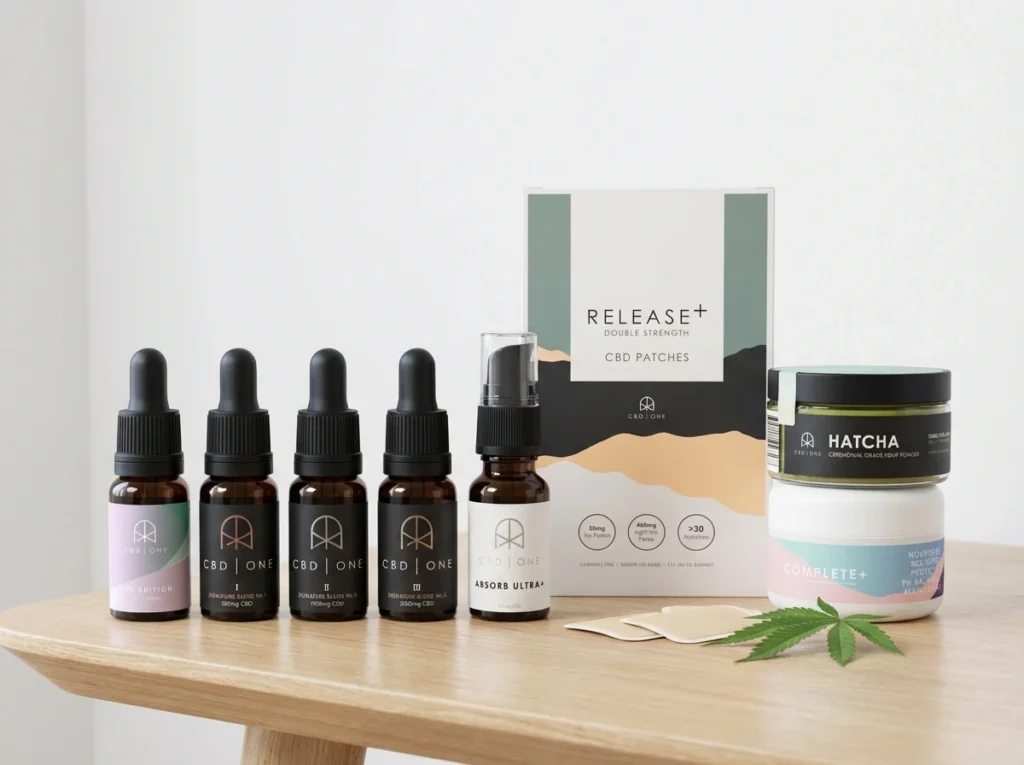
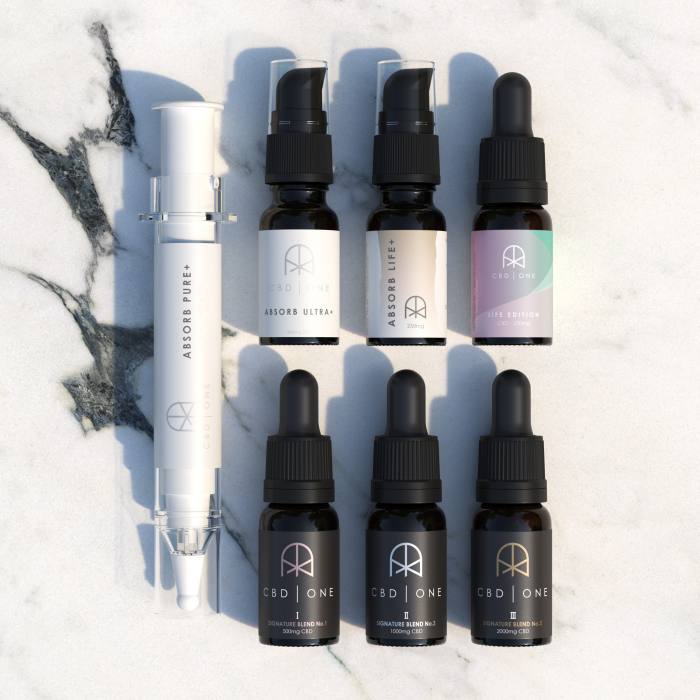
If you like the idea of a “CBD pil” because you want convenience and consistency, you do not necessarily need capsules to get that. CBD One focuses on premium, lab-verified formats that can be easier to dose accurately and may offer better day-to-day usability than standard pills.
Three options worth considering:
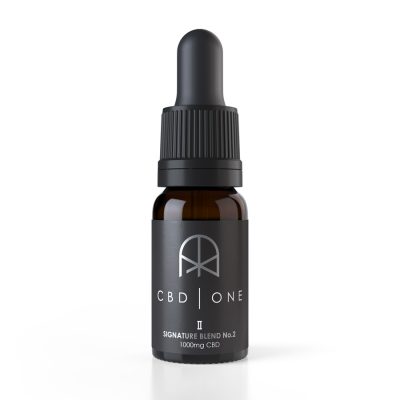
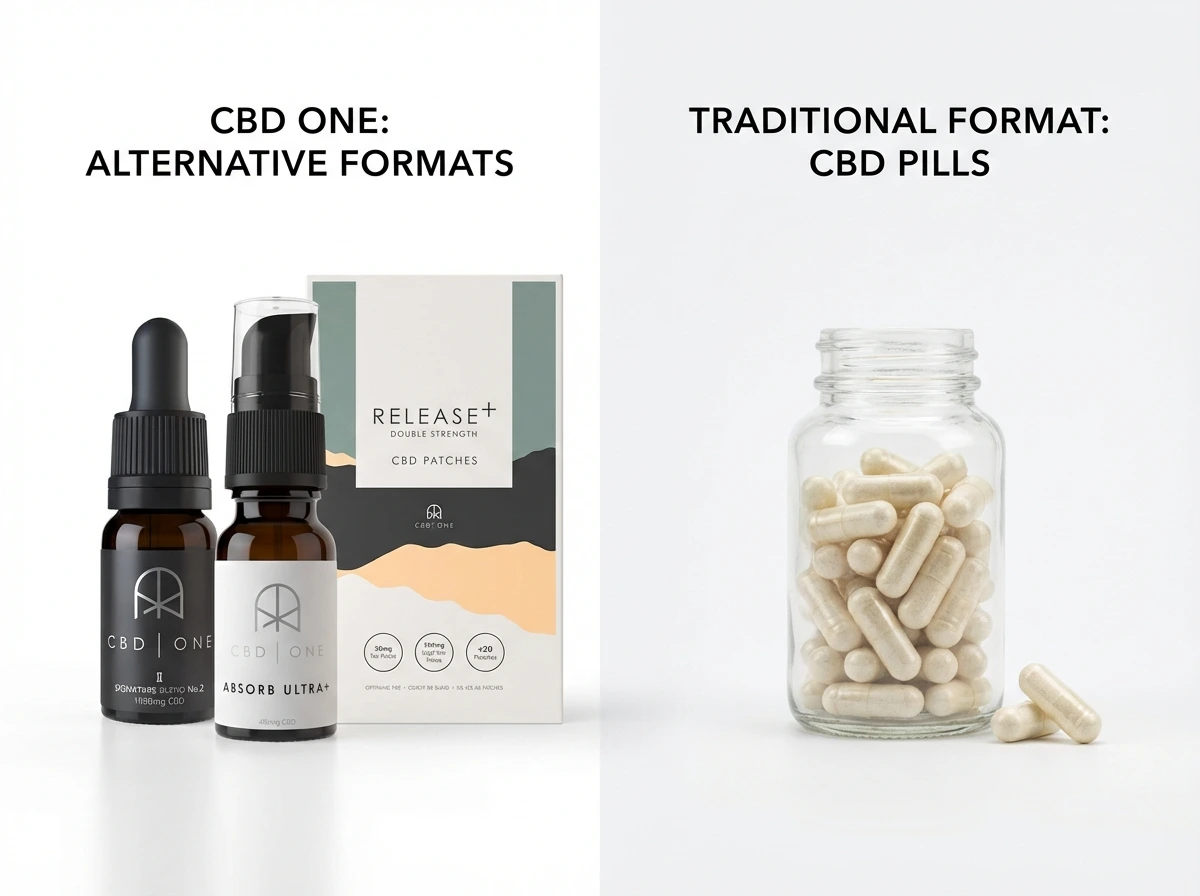
- 10% CBD Oil [1000mg CBD] (£58.99): a balanced, full spectrum oil for people who want a classic under-the-tongue routine and flexible dosing.
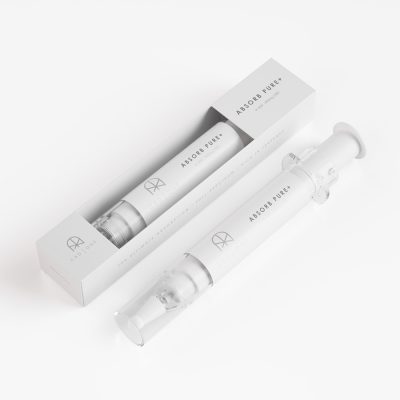
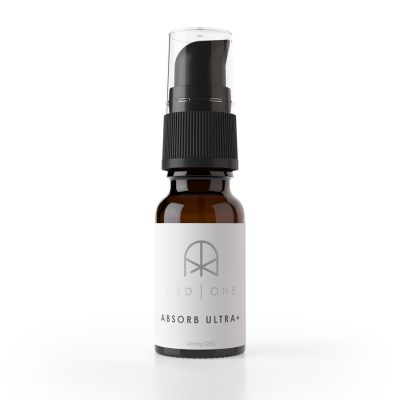
- Absorb Ultra+ (£39.99): a full-spectrum, water-soluble option designed to mix into drinks, with a simple pump format that many people find more convenient than capsules.
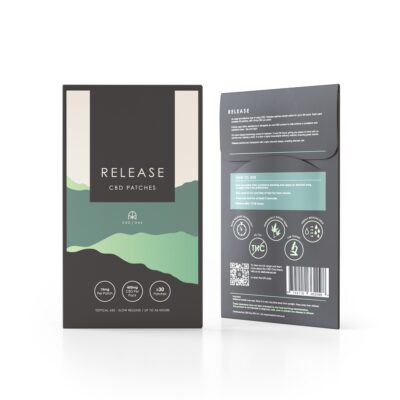
- CBD Patches [30 x 15mg] | Release (£29.99): a THC-free, transdermal option with a measured mg per patch and a slow-release approach for those who want “set and forget” dosing.
Two honest limitations: CBD One has a tighter, more premium-led range than some mass-market brands, and it is not the cheapest at first glance. Also, if you specifically want CBD gummies or capsules, those are not currently part of the range.
Browse the relevant collections here: CBD Oils and Water Soluble CBD.
Buying guide: how to choose the right CBD “pil”
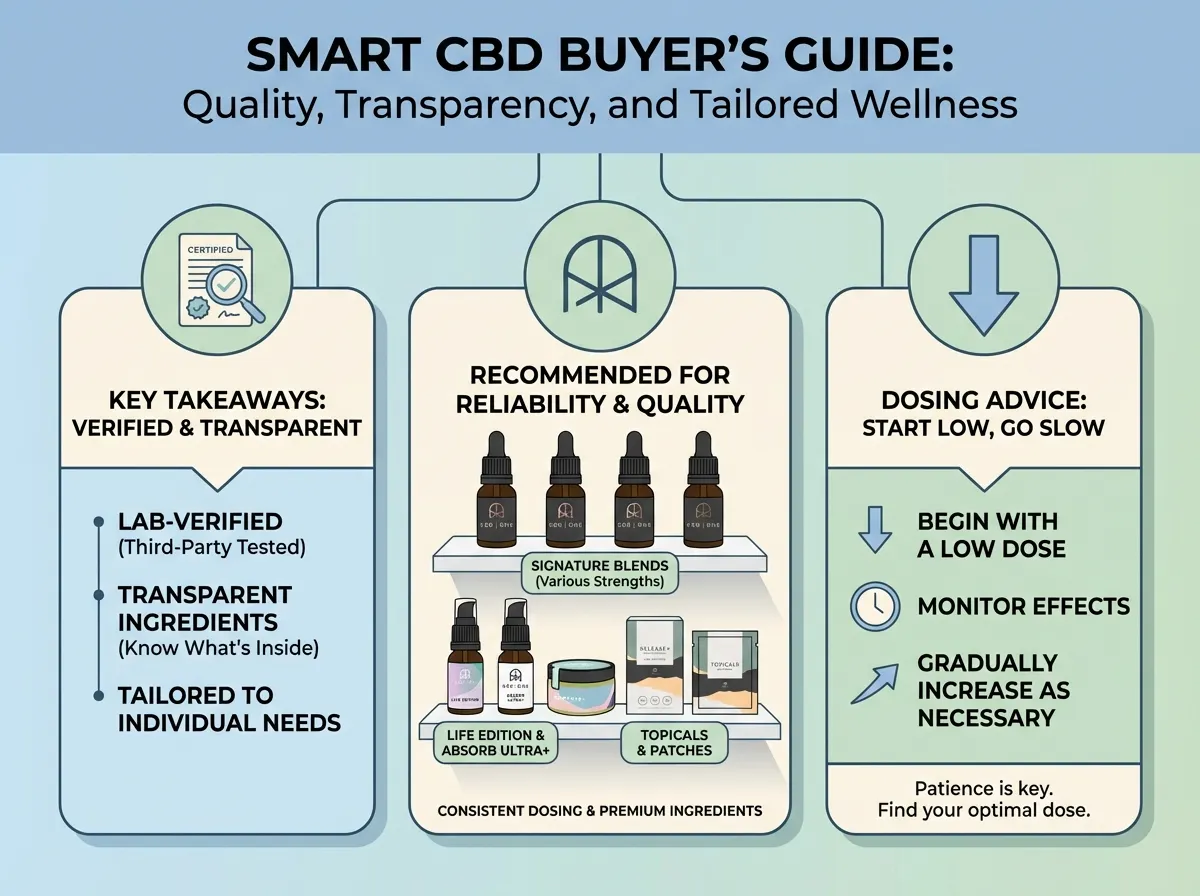
If you are at the buying stage, use these five criteria to make a genuinely fair comparison between CBD pills and alternatives (oils, water-soluble, patches).
1) Decide what “convenience” means for you
If you want something you can take anywhere with zero prep, capsules do win. But if you are at home or in an office with a drink nearby, a pump-based water-soluble product can be just as easy. If your goal is minimal daily effort, a patch may be the simplest routine of all.
2) Choose your spectrum based on your priorities
Full spectrum may be appealing if you want a broader hemp profile. Broad spectrum can be a middle ground if you want other cannabinoids but would rather avoid THC. Isolate is the simplest ingredient-wise, but you miss the wider plant compounds. If you want to read more about synergy, see CBD One’s explainer on the entourage effect.
3) Check transparency: lab reports and product details
At minimum, you want batch-linked lab testing, clear CBD per serving, and a full ingredients list. Avoid vague labels like “hemp extract” without CBD mg listed. Also be cautious with brands that rely on reviews but do not provide evidence of testing.
4) Compare value properly (cost per mg, not pack price)
To compare “best prices”, calculate cost per mg of CBD:
- Total CBD in pack (mg) ÷ price = mg per £
- Or price ÷ total CBD = cost per mg
Then sanity-check the serving size. A cheap bottle or tub can still be poor value if it contains very low CBD or if you need multiple servings to reach your personal routine (while staying under 70mg/day for healthy adults).
5) Get dosing right and start low
Most people do best starting small and adjusting gradually. If you need help building a routine, use the CBD dosage guide. Also, if you take prescription medicines, it is smart to read CBD and medication and speak with a pharmacist or GP before you start.
How CBD pills are made (and why it matters)
What many people overlook with a “CBD pil” is that two capsules with the same mg on the label can still be very different products. Not in a dramatic, mysterious way, just in the practical details that affect consistency, tolerability, and how confident you can be in what you are taking.
Softgels vs hard capsules
Softgels usually contain CBD extract blended into an oil base, sealed inside a gelatine shell. Hard capsules more often contain a powder or granules, typically made by binding CBD extract to a carrier. Either can be a perfectly reasonable choice, but the ingredients list will tell you a lot about what you are actually getting.
Carrier oils and added ingredients
Ingestible CBD needs a carrier of some sort. With capsules, you will often see common oils (or other carriers) and, sometimes, added botanicals. If you have sensitivities, this is where you slow down and read properly. The simplest products tend to be easier to assess: CBD content, a clear spectrum type, and minimal extras.
Quality control and batch consistency
CBD is a plant extract, and plant extracts can vary. This is why batch testing matters, and why a CoA that matches what you are buying is more than a box-ticking exercise. It is one of the few ways you can verify the CBD content and sense-check that the product is being made to a consistent standard.
Absorption and timing: pills vs oils vs water-soluble vs patches
Here’s the thing: most “best CBD pill” comparisons ignore the part that actually affects day-to-day experience, which is how the format influences timing and absorption. You do not need to get overly scientific, but a simple mental model helps you choose the format you are most likely to stick with.
CBD pills (swallowed)
Capsules are swallowed, so they have to move through digestion first. Many people find this feels slower and less predictable than other formats. It is not necessarily a downside if you are building a steady routine, but it can be frustrating if you are expecting a fast, noticeable shift.
CBD oil (under the tongue)
Oils are often used sublingually, held under the tongue for a short period before swallowing. Many people choose this because it allows more control over serving size, and it can feel more responsive than capsules. The trade-off is taste and the small “ritual” element of measuring drops.
Water-soluble CBD (mixed into drinks)
Water-soluble CBD is designed to disperse in liquids, so it can be easier to take consistently if you already have a morning coffee or a daytime water bottle routine. From a practical standpoint, some people find it slots into daily life better than capsules, especially if swallowing pills is not your thing.
CBD patches (set and forget)
Patches are a different approach altogether. Instead of swallowing CBD, you apply a patch and keep it on for a measured period. This can suit people who want the simplest possible routine and prefer a steady, slow-release style of use. As with any topical format, placement and skin type can influence the experience, and you will want to follow the label instructions carefully.
A quick UK legality and compliance checklist (before you buy)
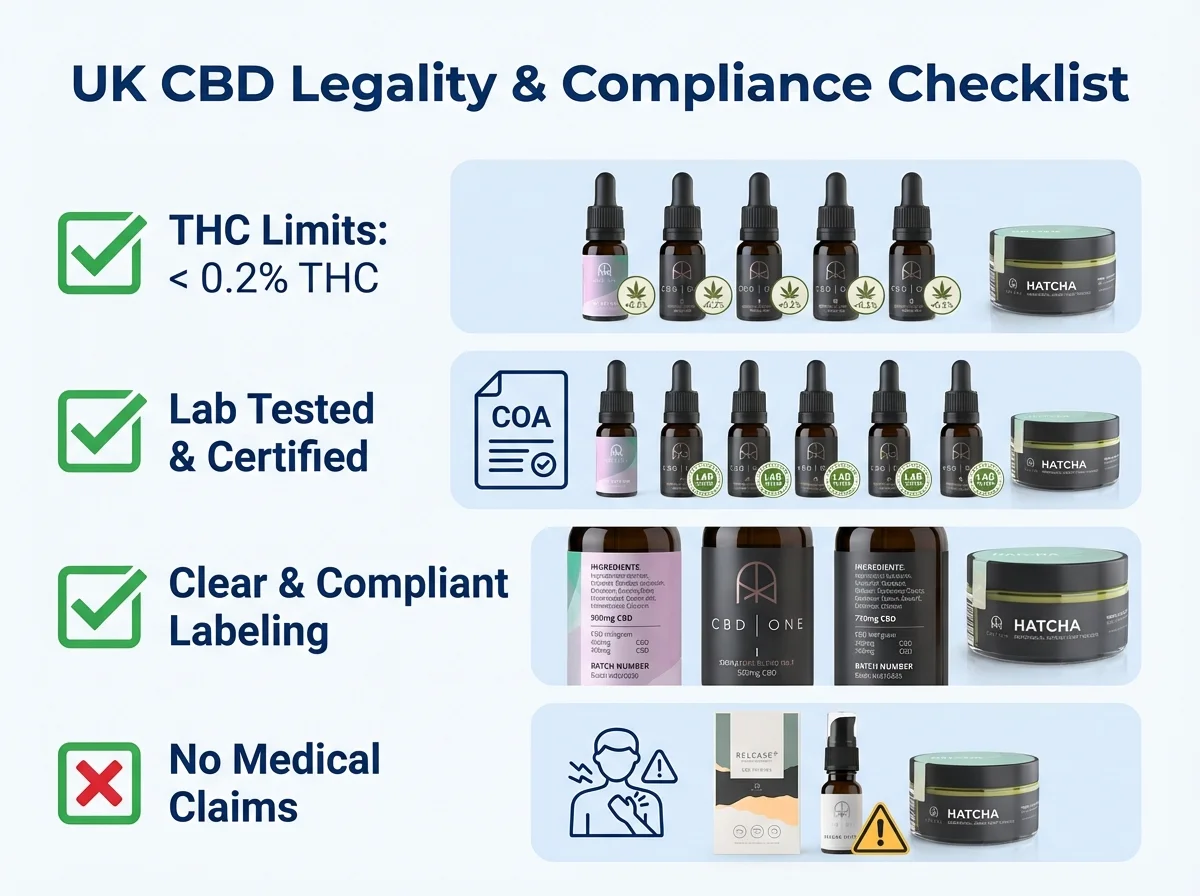
If you are comparing “CBD pills UK” options, this checklist will keep you out of the weeds. It is not about paranoia, it is about making sure you are not relying on marketing and guesswork.
Look for clear, measurable labelling
The label should make it obvious how much CBD you are getting per capsule and per pack. If you have to dig through vague phrases like “hemp extract” to find the CBD amount, that is not good enough for a supplement you are putting in your body.
Check that the brand does not lean on medical claims
In the UK, over-the-counter CBD products should not be marketed as treating specific conditions. If a product page is packed with condition claims, it is a sign the brand is either not being careful, or is willing to push boundaries. Either way, it is not the kind of signal you want.
Be cautious with “too good to be true” strength claims
If a capsule claims extremely high mg, or the brand strongly encourages very high daily intake, slow down. Remember the UK FSA advice for healthy adults is to avoid exceeding 70mg CBD per day. A sensible product makes it easier to stay within that, not harder.
Make sure the basics are covered
You want a full ingredients list, allergen clarity, and a batch-specific CoA you can check. If any of those are missing, you cannot really compare value, because you do not know what you are comparing.
Storage, travel, and shelf life: keeping CBD pills stable
Capsules feel “set and forget”, but storage still matters. CBD and carrier oils can degrade with heat, light, and time, and that can affect taste, freshness, and overall product quality.
How to store CBD pills at home
A cool, dry cupboard is usually ideal. Avoid leaving capsules on a sunny windowsill, in a hot car, or next to a kettle or radiator. If the product comes in a dark container, that is there for a reason, so keep the lid tightly closed between uses.
Taking CBD pills while travelling
From a convenience standpoint, capsules are one of the easiest formats to travel with. Keep them in the original packaging so the ingredients, batch details, and guidance are available if you need them. If you are travelling internationally, take a moment to check local rules in advance, as CBD laws are not consistent across borders.
Checking expiry and freshness
Always check the best-before date, and if the capsules smell rancid or seem unusually sticky or soft, do not force it. When in doubt, it is better to replace a questionable product than to keep using it.
Frequently Asked Questions
What is a “CBD pil”?
In most cases, “CBD pil” is a misspelling of CBD pill, meaning a capsule or tablet containing CBD extract. Occasionally it is used to refer to CBD pillow products, but those are not comparable to ingestible CBD because there is no reliable, measurable CBD dose. If you want predictable intake, choose a product format with clear mg per serving and lab testing.
Are CBD pills legal in the UK?
CBD supplements can be legal in the UK if they meet relevant regulations, including THC limits and Novel Food requirements where applicable. Brands should provide transparent lab testing and accurate CBD content labelling. If legality or compliance is unclear, avoid the product. If you want a safer baseline, look for lab-verified products with clear ingredient lists and dosing guidance.
Do CBD pills get you high?
CBD is non-intoxicating. A CBD pill should not make you feel “high”. That said, full spectrum products may contain trace THC within legal limits, which is still not intended to intoxicate. If you want to minimise THC exposure, you may prefer broad spectrum or isolate products, although no supplement can guarantee zero risk for drug testing.
Are CBD pills better than CBD oil?
Not universally. Pills are convenient and offer fixed servings, but they can be slower and sometimes less efficient to absorb because they go through digestion. Oils held under the tongue offer more flexible serving sizes, while water-soluble formats may be easier to take in drinks. The “best” choice depends on whether you prioritise convenience, speed, taste, or dosing control.
How many CBD pills should I take per day?
Follow the product label and start low, especially if you are new to CBD. For healthy adults, the UK Food Standards Agency advises a maximum of 70mg CBD per day. If one capsule is 25mg, for example, two capsules could already put you near that limit. If you are taking medications or have health conditions, check with a clinician first.
Can CBD pills help with pain?
Some users report that CBD supports everyday comfort, but CBD supplements are not medicines and should not be marketed as treating pain. If you are buying for persistent or severe pain, speak with a healthcare professional to rule out underlying causes and to discuss safe options. If you still want to try CBD, focus on quality, dosing, and consistency.
Is CBD oil for epilepsy the same as CBD supplements?
No. Over-the-counter CBD supplements in the UK are not intended to treat epilepsy, and it is not appropriate to self-manage seizures with retail CBD products. If you are searching for CBD in relation to epilepsy, please speak with a GP or specialist urgently. Also note CBD can interact with certain medicines, which makes medical guidance even more important.
What is a CBD infused pillow (and does it work)?
“CBD infused pillows” are typically marketed wellness pillows using infused materials or added scents. They do not provide a measurable CBD dose like oils, capsules, or patches, and evidence for meaningful CBD delivery from a pillow is limited. If your goal is a predictable CBD routine, choose an ingestible or transdermal product with clear mg and lab reports.
Is “Silent Night CBD infused pillow” a CBD supplement?
Products with names like this are usually sleep-themed accessories rather than regulated ingestible supplements. Be cautious with any product implying it can “knock you out” or guarantee sleep outcomes. If you want to support your wind-down routine, consider a consistent CBD format with transparent dosing, plus basic sleep hygiene like consistent bedtimes and reduced late caffeine.
What is the safest CBD format for beginners: pills, oils, patches, or water-soluble?
“Safest” depends on your situation, but for most healthy adults, a low-to-moderate strength product with clear dosing and lab verification is a sensible start. Pills are simple, oils offer flexible servings, patches provide measured slow release, and water-soluble options can be very convenient in drinks. If you take medication or have health conditions, speak with a healthcare professional first.
Do CBD pills show up on a drug test?
CBD itself is not usually the target of standard drug tests, but some tests look for THC metabolites. Full spectrum products can contain trace THC within legal limits, which may still carry a small risk depending on the product, your usage pattern, and the sensitivity of the test. If drug testing is a concern for you, consider a THC-free option and keep your daily intake conservative, but be aware that no supplement can offer a zero-risk guarantee.
Should I take CBD pills with food?
Many people take CBD capsules with a meal simply because it is easier on the stomach and easier to remember. Some people also feel they get a more consistent experience when they take capsules the same way each day, for example always with breakfast or always after lunch. If you are unsure, follow the label guidance and keep the routine consistent for a week or two before changing variables.
What is the difference between CBD capsules and CBD tablets?
In everyday shopping language, “capsules” and “tablets” get used interchangeably, but they are not always the same. Capsules are usually either softgels (oil inside) or hard capsules (powder or granules inside). Tablets are compressed solids. The main practical difference is ingredients and how they break down, so if you have sensitivities, the ingredients list matters more than the label term.
Can I take CBD pills and CBD oil on the same day?
Some people do, but you need to be mindful of your total daily CBD intake from all products combined, and keep it within the UK FSA advised maximum of 70mg CBD per day for healthy adults. If you take medications, it is also worth being extra cautious and speaking with a pharmacist or GP before combining formats.
Key Takeaways
- “CBD pil” usually means CBD pills, but sometimes refers to CBD pillow products or condition-specific searches.
- CBD pills are convenient and consistent, but can be slower and less flexible than oils or other formats.
- Prioritise spectrum type, third-party lab testing, and cost per mg over headline “best price” claims.
- For healthy adults, the UK FSA advises a maximum of 70mg CBD per day.
- If you want a pill-like routine without capsules, consider measured alternatives like oils, water-soluble pumps, or patches.
Conclusion
If your goal with a “CBD pil” is simple daily CBD, the best buy is the one that is transparent, lab-verified, and easy for you to use consistently. Pills can be a great fit for convenience, but they are not automatically the best value or the best-absorbed format.
If you want a reliable alternative with UK delivery, I would start by comparing a balanced oil like 10% CBD Oil [1000mg CBD] (£58.99), a drink-friendly option like Absorb Ultra+ (£39.99), or a measured slow-release approach via CBD Patches [30 x 15mg] | Release (£29.99). Pick the format you will actually stick with, then start low and build gradually.