
CBD Oil UK: Delivery, Prices & Top Picks (2026)
CBD oil in the UK: what it is and what “good” looks like
CBD (cannabidiol) is a non-intoxicating cannabinoid extracted from hemp. In the UK, most “CBD oil” products are either hemp extract blended into a carrier oil (often hempseed) or a more processed CBD ingredient added to an oil base.
What matters for buyers is not marketing, it is clarity. You should be able to see the strength (mg of CBD in the bottle), the spectrum (full spectrum, broad spectrum, or isolate), and evidence of third-party lab testing. You also want dosing instructions that are realistic and compliant.
On spectrum: full spectrum oils contain CBD plus minor cannabinoids and terpenes, along with trace THC within legal limits. Broad spectrum removes THC while retaining other compounds. Isolate is CBD only. Some people prefer full spectrum for the “entourage effect”, while others want THC-free options (for example, tested athletes).
Key features to compare before you buy
1) Strength and bottle size (mg and %)
CBD oil is typically sold as a percentage (for example 2.5%, 5%, 10%, 20%) and as total CBD content in mg. The mg figure is what you are paying for, while the percentage tells you how concentrated the liquid is.
- Entry level: often 250mg to 500mg per 10ml (2.5% to 5%)
- Middle strength: around 1000mg per 10ml (10%)
- High strength: 2000mg per 10ml (20%) and above
2) Spectrum (full spectrum vs broad spectrum vs isolate)
If you are comparing “best CBD oil” claims, this is where many brands quietly differ. Full spectrum oils may suit people who want a more “whole plant” profile. Broad spectrum and isolate may suit those who prefer to avoid THC entirely (even trace amounts).
With full spectrum, it is sensible to consider workplace testing and driving comfort. CBD itself is not intoxicating, but if you are ever unsure, choose a THC-free format or discuss your situation with a professional.
3) Lab testing and transparency
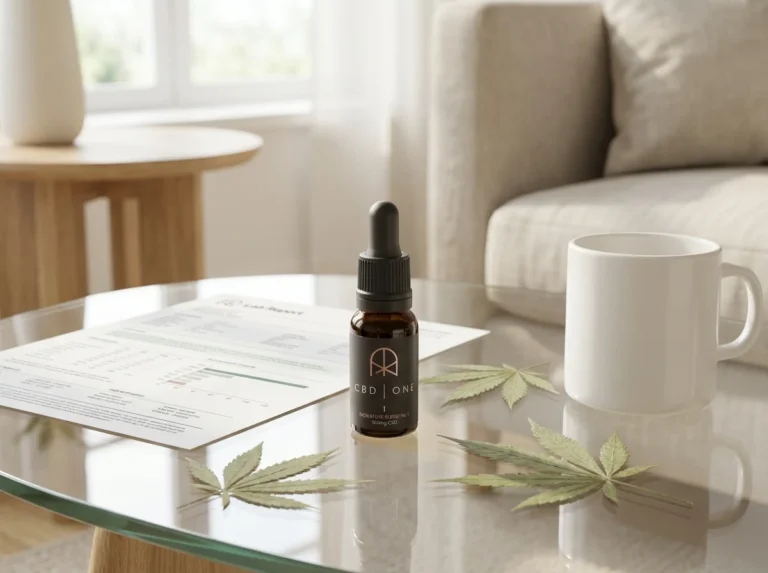
A credible CBD brand should be able to show independent lab verification (often via a Certificate of Analysis). At minimum, look for a cannabinoid profile and confirmation the product matches the advertised CBD content.
- Does the product state it is lab verified or third-party tested?
- Is the batch information easy to locate?
- Are ingredients listed clearly (carrier oil and hemp extract type)?
4) Ingredients, taste, and dropper experience
Many people stop using CBD oil because they dislike the earthy taste or find droppers fiddly. Natural full spectrum oils can taste “hempy” due to terpenes. If you know you are taste-sensitive, consider whether you would prefer a mix-in format.
5) Value (cost per mg and your realistic daily use)
Two bottles can have the same price but very different CBD content. A quick value check is price divided by total mg of CBD. Also consider how often you will actually use it and whether a stronger oil (fewer drops) might be more practical.
How CBD oil is made (extraction and why it matters)
Here’s the thing: two products can both be labelled “CBD oil” and still be very different in terms of how they are produced. That matters because extraction and processing can influence taste, consistency, and how easy it is to verify what is actually in the bottle.
Most CBD oils start with hemp, then go through an extraction process to pull out cannabinoids and other plant compounds. The resulting extract is then blended into a carrier oil to create the final “drops” format.
Common extraction approaches you will see mentioned
You do not need to be a chemist to buy a solid product, but you do want to understand what the brand is implying.
- CO2 extraction is often used by quality-focused brands because it can be controlled carefully and tends to produce a clean extract.
- Ethanol extraction is also common and can be done well, but as with anything, the details matter. Good processing and purification help ensure a consistent end product.
After extraction, some brands keep a fuller plant profile (full spectrum), while others refine further to remove THC (broad spectrum) or isolate CBD alone. Neither is automatically “right” for everyone, but the brand should be clear about what you are buying and be able to back it up with third-party lab testing.
How to read a CBD oil label (and spot red flags)
From a practical standpoint, the label is your first reality check. If a CBD oil is hard to understand, it is usually hard to trust.
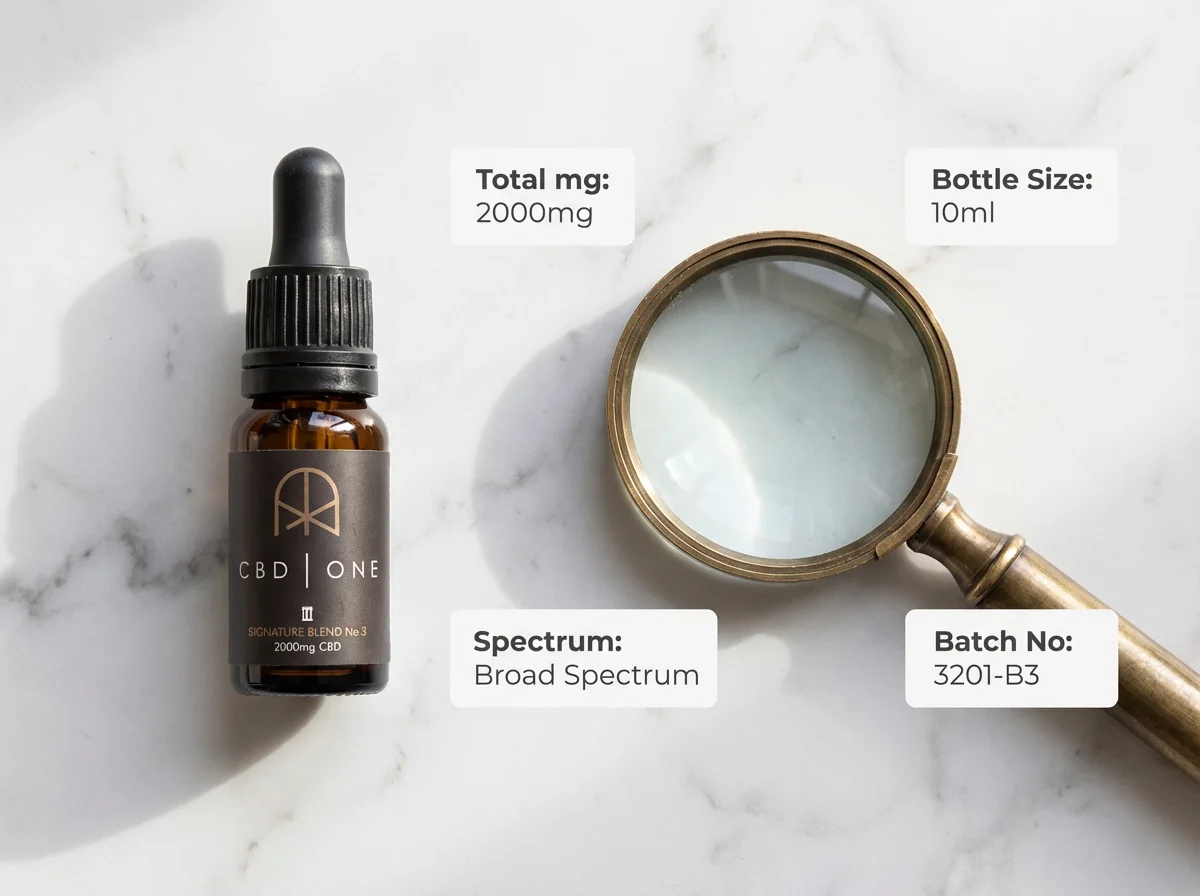
What you want to see clearly
- Total CBD in mg per bottle (for example 500mg or 1000mg).
- Bottle size (usually 10ml in the UK, sometimes larger).
- Spectrum stated plainly: full spectrum, broad spectrum, or isolate.
- Ingredients list that makes sense: carrier oil plus hemp extract or CBD ingredient.
- Batch or lot number that ties back to a third-party lab report.
Common “red flag” patterns
Consider this a gentle buyer-beware list. One red flag does not always mean a product is poor, but several together usually do.
- Only a percentage is shown, with no total mg of CBD anywhere.
- Vague wording like “hemp oil” without stating CBD content. Hempseed oil is nutritious, but it is not the same as a CBD extract.
- Unrealistic promises or medical-style claims. In the UK, responsible brands should avoid those.
- No batch identification, no lab verification, or lab reports that do not match the product name and strength.
If you are comparing options in-store, you can still apply the same logic: the packaging should tell you enough to make a confident decision, without relying on hype.
CBD oil prices in the UK: what changes the cost?
In the UK, CBD oil pricing is driven mainly by total CBD content, extraction quality, testing, and whether the product is full spectrum or a more refined ingredient. Stronger oils cost more upfront, but may work out better value per mg.
You will also see big differences between specialist CBD brands and high street retailers (including comparisons people make with “Holland and Barrett CBD oil”). Retail mark-ups, smaller bottle strengths, and less detailed lab transparency can shift the value equation.
Practical tip: compare like-for-like using mg, not just “10ml bottle” or percentage. Then check whether the brand is clear about spectrum and testing.
Delivery, storage, and shelf life: practical buying details
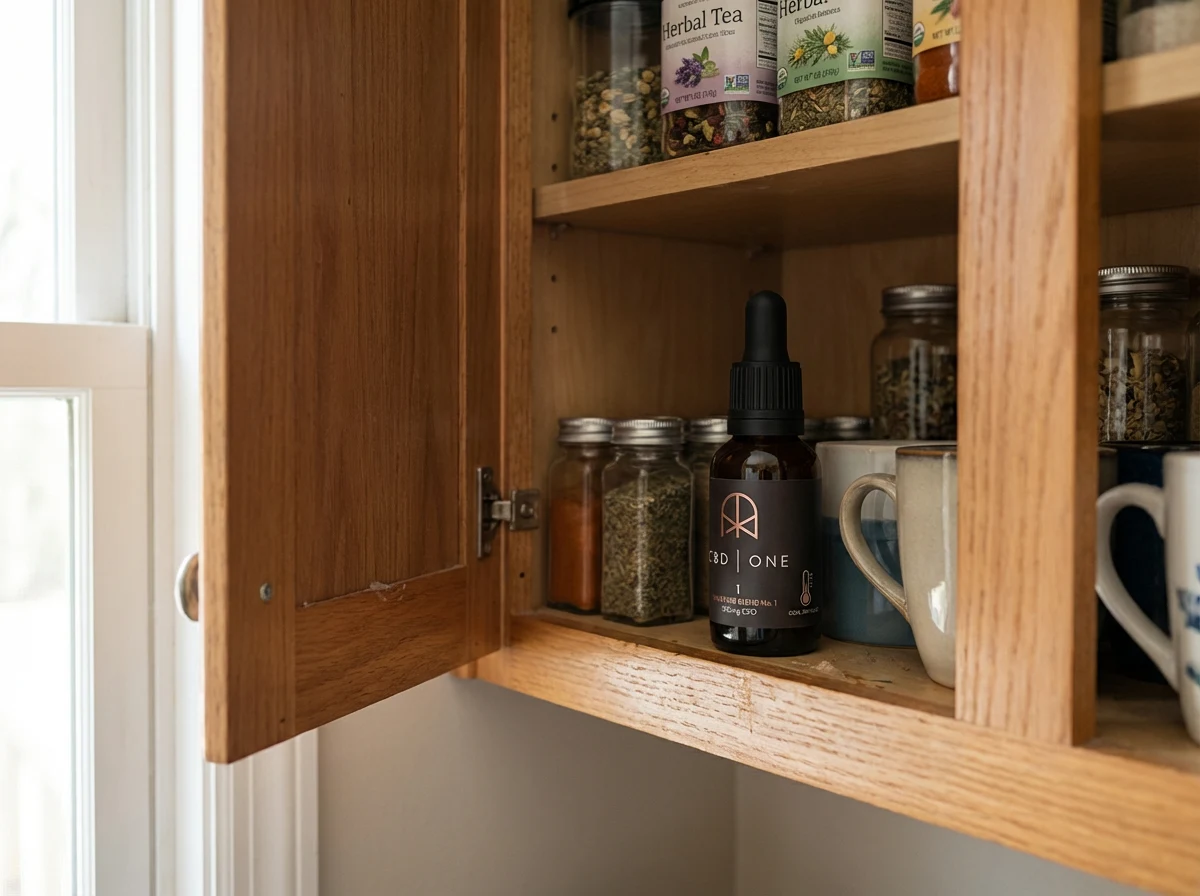
What many people overlook is the boring stuff. Delivery, storage, and how you use the bottle day-to-day can make the difference between a product you stick with and one that ends up forgotten in a cupboard.
Delivery expectations in the UK
Most CBD oils ship like any other supplement, but it is still worth checking dispatch times and whether you will be in to receive the parcel. If you are ordering for travel, build in a bit of wiggle room so you are not rushing the decision or over-ordering.
Storage basics (and why it matters)
CBD oil is best treated like a sensitive natural product. Keep it sealed, store it somewhere cool and out of direct sunlight, and avoid leaving it in a hot car or on a sunny windowsill. Heat and light can degrade plant compounds over time, and oils can go rancid if they are stored poorly.
Shelf life and “it smells odd” moments
Most reputable brands include a best-before date. If your oil starts to smell noticeably off, tastes unusually bitter compared to when you opened it, or the consistency changes dramatically, it may be time to replace it. If in doubt, follow the label guidance and speak to the brand’s customer support for batch-specific advice.
Pros and Cons
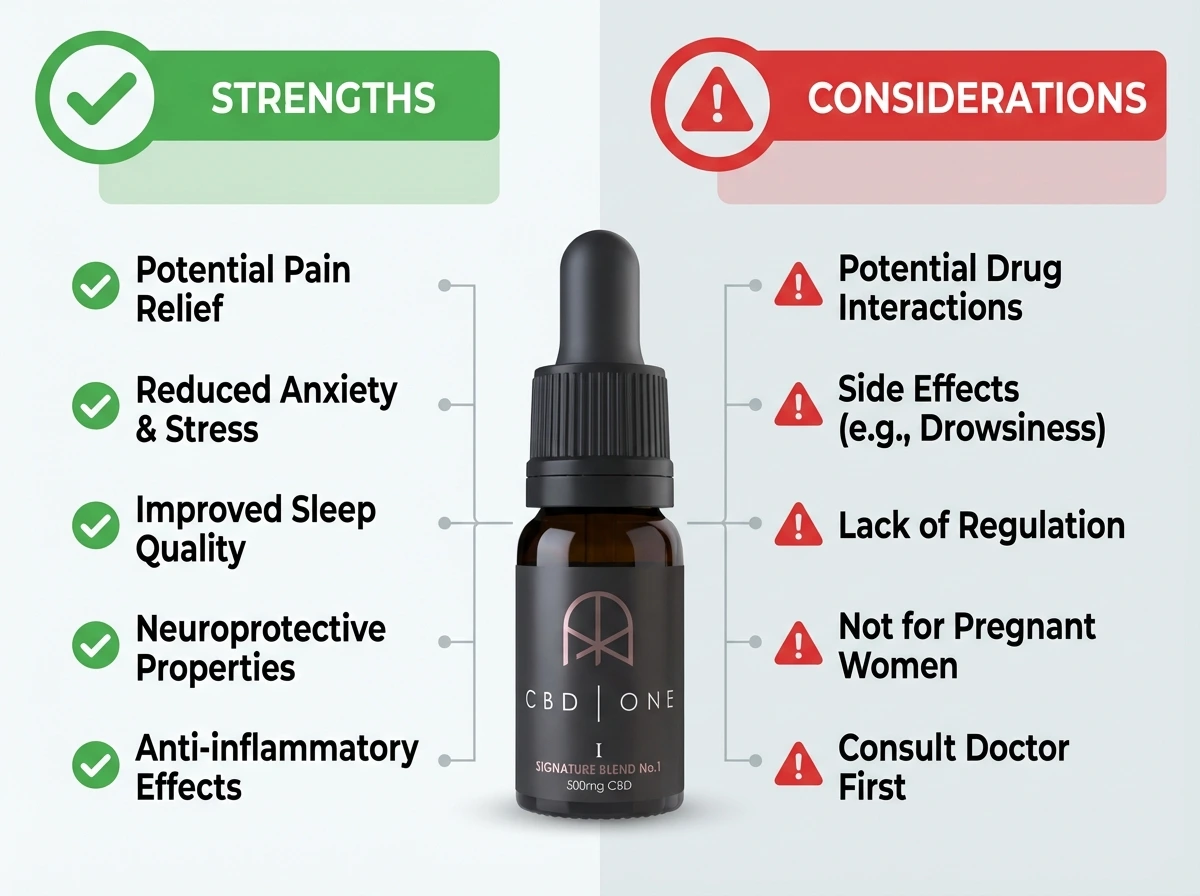
Strengths
- CBD oil is a flexible format: you can start low and adjust gradually based on your personal response.
- Full spectrum oils offer a broader hemp profile (CBD plus minor cannabinoids and terpenes), which some users prefer.
- Easy to fit into an existing routine (morning, evening, or split dosing), with no special equipment.
- Wide choice of strengths in the UK market, making it easier to match budget and experience level.
Considerations
- Taste can be a deal-breaker, especially with natural full spectrum oils.
- Dosing can feel imprecise if the brand does not clearly state mg per drop, or if you are not consistent with drop size.
- Full spectrum oils contain trace THC within legal limits, which may matter for workplace testing or personal preference.
- CBD can interact with some medicines, so it is worth being cautious and checking with a pharmacist or GP.
Who CBD oil is (and is not) for

CBD oil tends to suit adults who want a simple, adjustable way to add CBD to a daily routine, and who are comfortable with an earthy, natural taste. It can also suit people who want to choose between entry-level and high strength options without changing product format.
It may be less suitable if you are strongly taste-sensitive, if you need a THC-free product, or if you want a “set and forget” dose with minimal day-to-day measuring. If any of those apply, you might prefer a different delivery method (for example, water-soluble CBD) or you may want to speak to a healthcare professional first.
CBD oil and drug tests: what you need to know
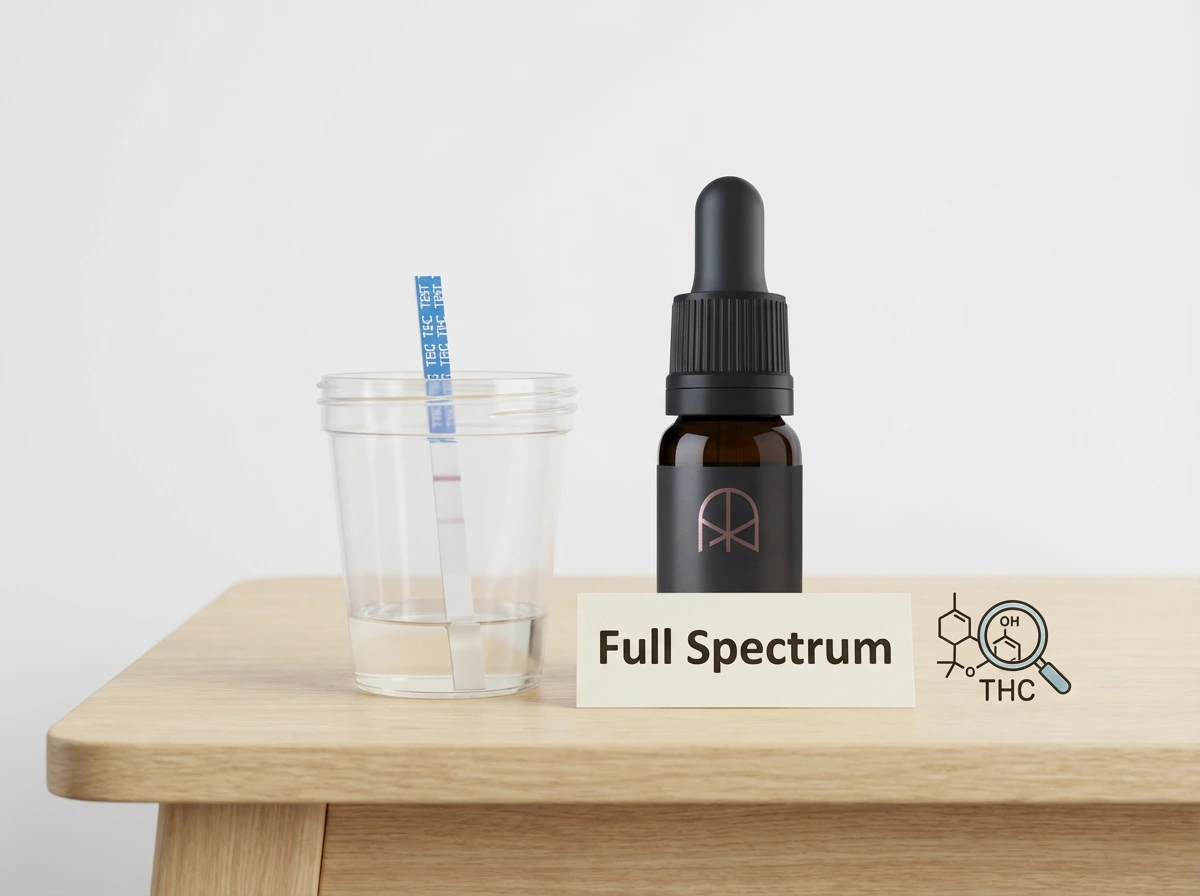
Now, when it comes to workplace testing, the key detail is this: most drug tests are looking for THC (or THC metabolites), not CBD. That said, full spectrum CBD oils can contain trace THC within legal limits, and those traces can be a concern for some people in safety-critical jobs or strict workplace environments.
If you are in a role where a positive test would have serious consequences, it is worth being conservative. Consider choosing a THC-free option, confirm what the label and lab testing say, and speak to your employer’s occupational health team if you have one. If you are ever unsure, getting advice from a healthcare professional can also help you make a sensible choice for your situation.
This is not about fear, it is about being realistic. Your peace of mind is part of the “right product” decision.
CBD One CBD oils (and a practical alternative if you dislike drops)
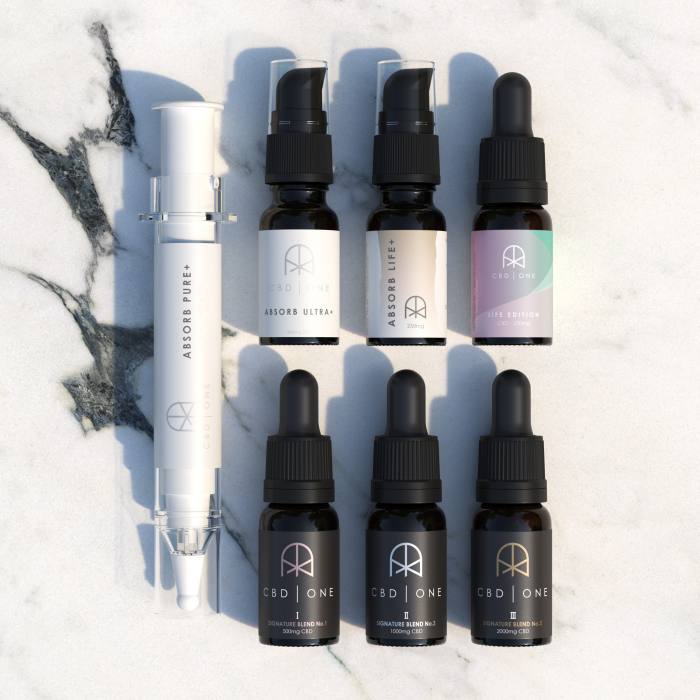
CBD One focuses on premium, plant-based formulas with lab-verified products across oils and other formats. If you want to browse strengths, the easiest starting point is the CBD Oils category.
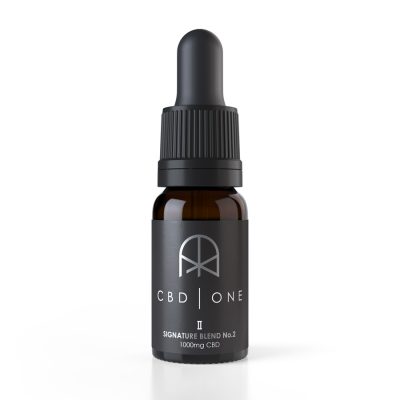
If you are choosing your first bottle, I usually point people to an entry strength like 2.5% CBD Oil [250mg CBD] | Life Edition (£19.99) or 5% CBD Oil [500mg CBD] (£33.99). For a more “all-rounder” step-up, 10% CBD Oil [1000mg CBD] (£58.99) is a balanced option.
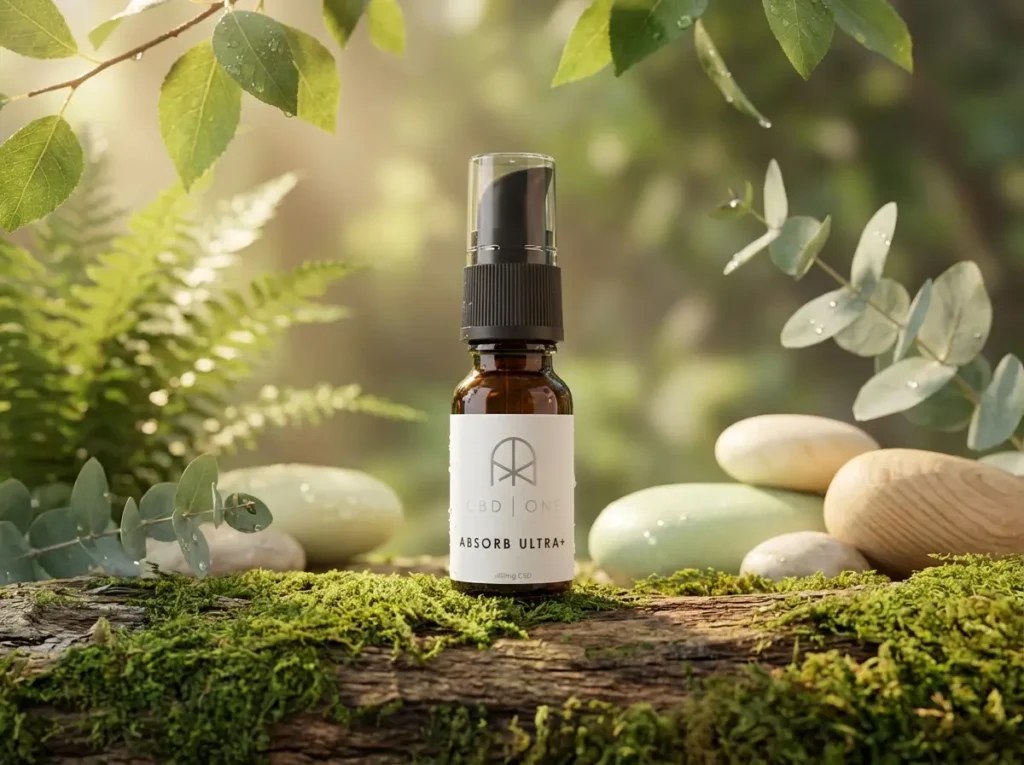
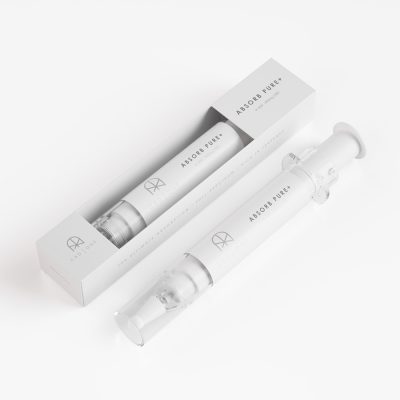
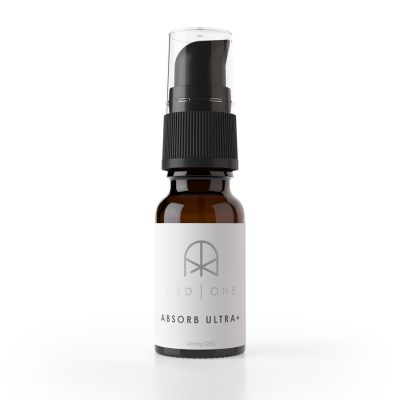
Do not get me wrong: oils are not for everyone. If taste or convenience is your main barrier, a water-soluble option like Absorb Ultra+ (£39.99) can be easier to take because you add it to a hot or cold drink. Limitations to be aware of: CBD One’s range is curated (smaller than some marketplaces), pricing sits in the premium bracket, and there are no gummies in the range.
Explore Water Soluble CBD if you want a mix-in alternative to oil drops.
Buying guide: how to choose the right CBD oil (UK checklist)
1) Decide your spectrum first (this avoids most buyer regret)
If you are comfortable with trace THC within legal limits and want a richer hemp profile, full spectrum is a sensible default. If you need to avoid THC entirely, look for broad spectrum or isolate products (and confirm this in lab reports, not just on the label).
2) Pick a strength you will actually use consistently
New users often do better starting lower and building a consistent habit. A 2.5% to 5% oil can be less intimidating and easier to dial in. If you already know you want fewer drops and a more concentrated bottle, 10% is a common “middle ground”.
Whatever you choose, keep the UK Food Standards Agency precautionary advice in mind: 70mg CBD per day maximum for healthy adults. If your preferred routine goes beyond that, it is worth reassessing and speaking to a professional.
3) Check lab verification and product detail quality
Do not rely on “premium” claims. Look for lab verified or third-party tested statements and enough information to make an informed call: ingredients, CBD content (mg), and spectrum. If a brand is vague, it is usually a sign to keep shopping.
4) Compare value using price per mg (not the headline price)
To compare fairly, divide price by total CBD mg in the bottle. This gives a quick “£ per mg” estimate. Then sanity-check against your expected daily intake and how long the bottle will last.
5) Think about your lifestyle: taste, travel, and routine fit
If you travel a lot or need something discreet, drops can be awkward. If you dislike the flavour, you are less likely to stick with it. That is why I often suggest having a back-up format (like a drink mix-in) even if you primarily use oil.
If you want help working out a sensible starting point, use this guide: CBD dosage guide.
Frequently Asked Questions
What is CBD oil?
CBD oil is a hemp-derived product that contains cannabidiol (CBD) blended into an oil base (often hempseed oil). Some products use full spectrum hemp extract (CBD plus minor cannabinoids and terpenes), while others use broad spectrum or CBD isolate. CBD is non-intoxicating, but product quality varies, so strength, spectrum, and lab testing are key when comparing options.
Is CBD oil legal in the UK?
CBD products are legal to sell in the UK when they meet relevant rules, including THC limits and food supplement requirements. Many CBD oils are sold as food supplements and should comply with UK Novel Food expectations. If you are unsure, choose brands that clearly state spectrum, ingredients, and lab verification, and avoid products that make medical-style claims.
Will CBD oil get you high?
No, CBD itself is non-intoxicating and does not produce a “high”. Full spectrum CBD oils can contain trace THC within legal limits, but this is not intended to be intoxicating. If you are sensitive, have workplace testing concerns, or simply prefer to avoid THC completely, consider a THC-free (isolate) option and confirm via lab reports.
How do I choose the best CBD oil in the UK?
Start with three checks: (1) spectrum (full, broad, or isolate), (2) verified strength (total mg CBD per bottle), and (3) third-party lab testing. Then compare value using price per mg and ensure the ingredient list is straightforward. Finally, choose a strength you can use consistently. “Best” is personal: the right pick fits your routine, budget, and preferences.
How much CBD oil should I take?
There is no single dose that suits everyone. Most people start low and increase gradually while tracking how they feel. As a precaution, the UK FSA advises healthy adults not to exceed 70mg CBD per day. If you take medications or have a health condition, speak with a pharmacist or GP first. For practical steps, see: CBD Dosage.
What are common CBD oil side effects?
Some users report mild effects such as drowsiness, digestive upset, appetite changes, or feeling “a bit off” when they take too much. Effects can vary by person, strength, and whether you take CBD with food. If you notice unwanted effects, reduce the amount or stop use and speak to a healthcare professional. Be especially cautious if you take other supplements or medicines.
Can CBD oil interact with medications?
Yes, CBD may interact with certain medicines, including those with grapefruit warnings. If you are taking prescription medicines, have liver concerns, or are under medical supervision, it is sensible to speak with a pharmacist or GP before trying CBD. You can also read CBD One’s safety-focused explainer here: CBD and Medication.
Is CBD oil safe for dogs (and can I use human CBD oil for dogs)?
Dog-specific CBD products and guidance can differ from adult human supplements. Even if a product is “natural”, that does not automatically make it suitable for pets. If you are considering CBD oil for dogs in the UK, speak to a vet first, particularly if your dog is on medication or has an ongoing condition. Do not assume human CBD oils are appropriate for dogs.
Is CBD oil from high street retailers (for example Holland and Barrett) good value?
Some high street options can be convenient, but value depends on the mg of CBD you get for the price, the spectrum, and how transparent the brand is with lab testing. It is common to see lower-strength bottles at higher prices due to retail mark-ups. Compare using price per mg, and prioritise clear, verifiable product information over branding.
Should I choose CBD oil drops or a water-soluble CBD option?
Oil drops are a classic choice if you want flexible dosing and do not mind the natural taste. Water-soluble CBD can be easier for people who dislike drops because it mixes into hot or cold drinks and can simplify daily use. If consistency is your main challenge, a water-soluble format may be the more “stick-with-it” option, even if you still keep an oil for evenings.
How long does CBD oil take to work?
Timing varies. Some people notice effects sooner, others find CBD is more about the steady rhythm of using it consistently for a period of time. With oil drops, factors like whether you take it with food, your routine, and the product strength can all influence how it feels. If you are experimenting, keep things simple: change one variable at a time and track your response.
Can I take CBD oil on an empty stomach?
Some people do, but many find CBD feels more predictable with food. Taking CBD alongside a meal or snack that contains some fat can suit oil-based products, because cannabinoids are fat-soluble. If you notice you feel “a bit off” when taking CBD on an empty stomach, try pairing it with food and see if it helps.
What is the difference between hempseed oil and CBD oil?
Hempseed oil is pressed from hemp seeds and is often used as a carrier oil. It contains nutrients, but it is not naturally high in CBD. CBD oil refers to a product where cannabidiol has been added, usually via a hemp extract, and the label should state the CBD content in mg. If a bottle only says “hemp oil” with no CBD mg, it may not be a CBD product in the way most people mean.
Can I travel with CBD oil in the UK?
Within the UK, many people travel with CBD oil like they would any other supplement. Keep it in its original bottle, sealed, and avoid decanting into unlabelled containers. If you are travelling internationally, rules can vary a lot between countries, especially around THC limits and permitted ingredients, so it is worth checking the destination’s regulations before you fly.
Key Takeaways
- Compare CBD oil using spectrum, total mg CBD, and lab verification, not just brand hype.
- Full spectrum oils include minor cannabinoids and terpenes plus trace THC within legal limits.
- Choose a strength you can use consistently, and keep the UK FSA 70mg/day guidance in mind.
- If taste puts you off, consider a drink-friendly option like water-soluble CBD.
- For CBD One oils, start with 2.5% or 5%, then step up to 10% if you want a stronger daily option.
Conclusion
Buying CBD oil in the UK is much easier when you ignore buzzwords and focus on the basics: spectrum, verified strength, sensible dosing guidance, and clear lab testing. If you are new, an entry-level full spectrum oil can be a practical way to start, while a 10% strength often suits people who want a more concentrated, everyday option. If drops are not your thing, water-soluble CBD can be a simple alternative that fits neatly into a morning drink. Ready to choose? Start by browsing CBD Oils, or try a beginner-friendly bottle like 2.5% CBD Oil [250mg CBD] | Life Edition.