
CBD Hemp: UK Delivery & Best Prices (2026)
What “CBD hemp” means in the UK (and the common mix-ups)
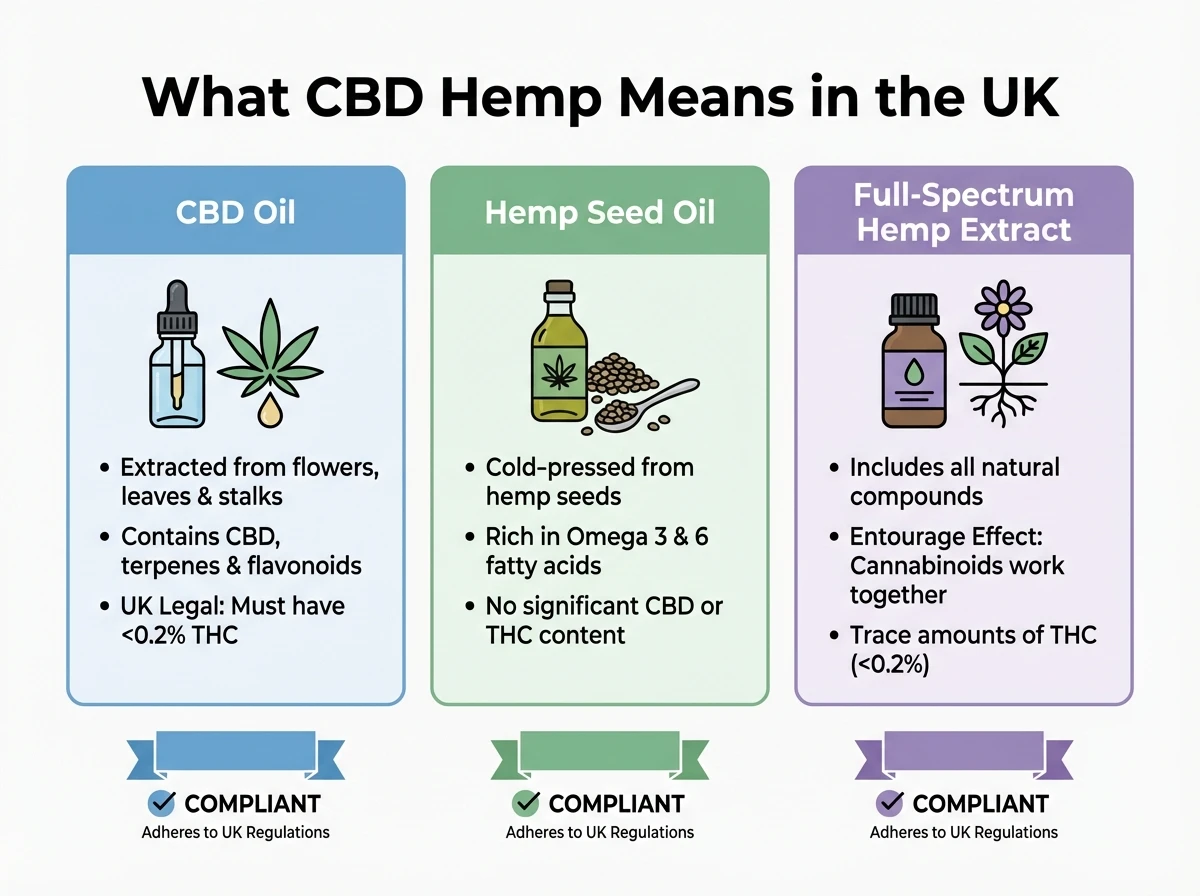
“CBD hemp” is not a strict product category, it is a search term. In practice, people usually mean one of these:
- CBD oil (hemp extract): CBD is extracted from hemp flowers and leaves, then blended into a carrier oil. This is what most people mean by “CBD hemp oil UK”.
- Hemp seed oil: pressed from hemp seeds. It is a nutritious culinary oil, but it naturally contains little to no CBD.
- Full spectrum hemp extract: a CBD-rich extract that may include minor cannabinoids and terpenes, plus trace THC within legal limits.
This is why you will see questions like “is hemp oil the same as CBD” or “is hemp oil the same as CBD oil”. They are often sold in similar bottles, and “hemp oil” is used loosely in marketing. If you want a deeper explanation, our hemp oil vs cbd oil guide breaks it down in plain English.
From a buying perspective, the fastest way to avoid confusion is to check the label for an actual CBD amount in milligrams (mg), for example “500mg CBD per 10ml”. If it only says “hemp oil” with no CBD mg listed, it is almost certainly hemp seed oil.
UK delivery and “best prices”: how to judge real value
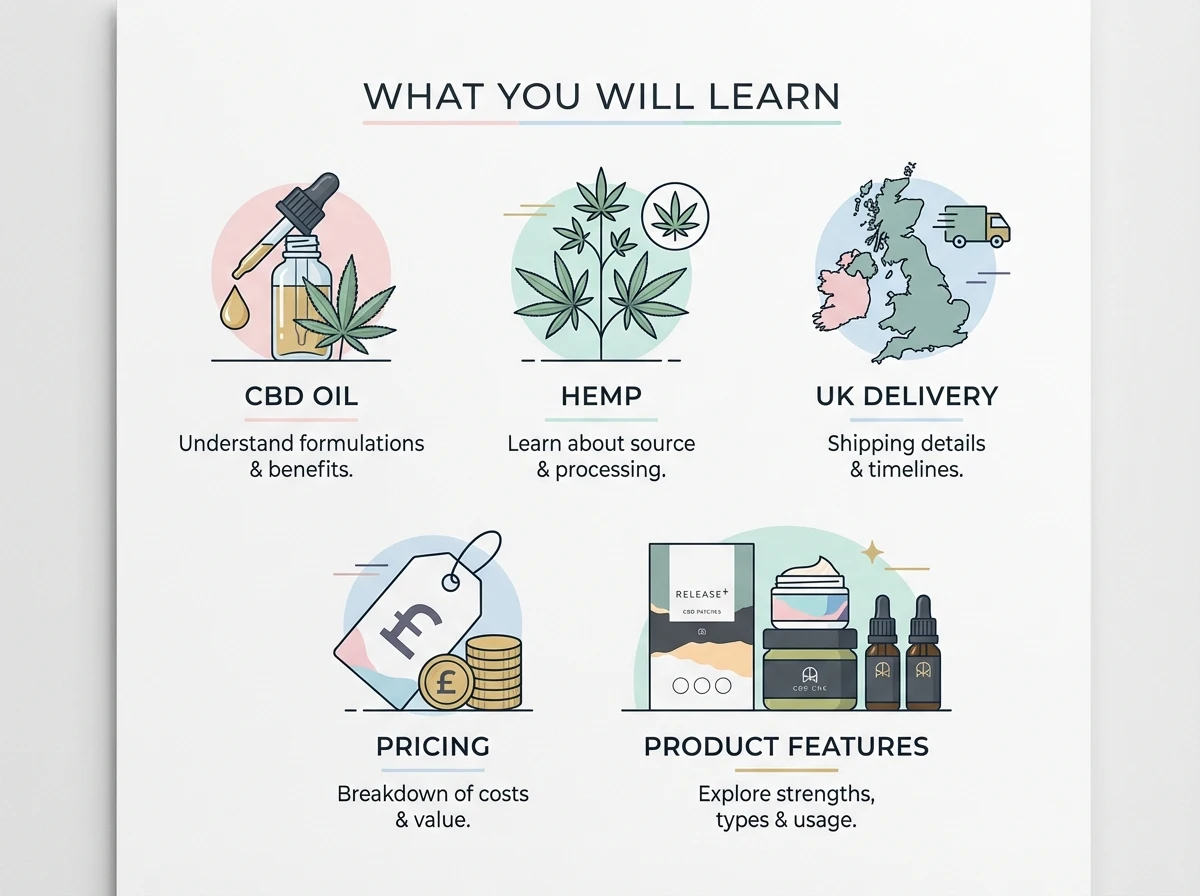
“Best price” should not mean “cheapest bottle”. With CBD hemp products, value comes from how much CBD you get, whether it is the spectrum you want (full spectrum vs isolate), and whether the brand shows transparent lab testing.
A practical way to compare is cost per 100mg of CBD. You do not need to do the maths perfectly, but a few quick checks help:
- CBD content (mg): 10ml bottles commonly range from 250mg to 2000mg+.
- Strength (% or mg/ml): higher strength can be better value if you use CBD regularly, but it also makes it easier to overshoot your preferred amount.
- Delivery format: oils are common; water-soluble formats can be convenient in drinks; patches offer measured dosing. Each format has trade-offs.
- Shipping and returns: a “cheap” product can become expensive if delivery is slow, costly, or customer support is poor.
If you are comparison shopping across brands (for example, searching “love hemp cbd oil”, “hempified cbd capsules”, or “hempine cbd”), use the same checklist for all of them. It keeps things fair and stops you getting swayed by buzzwords.
Key features to look for in CBD hemp products
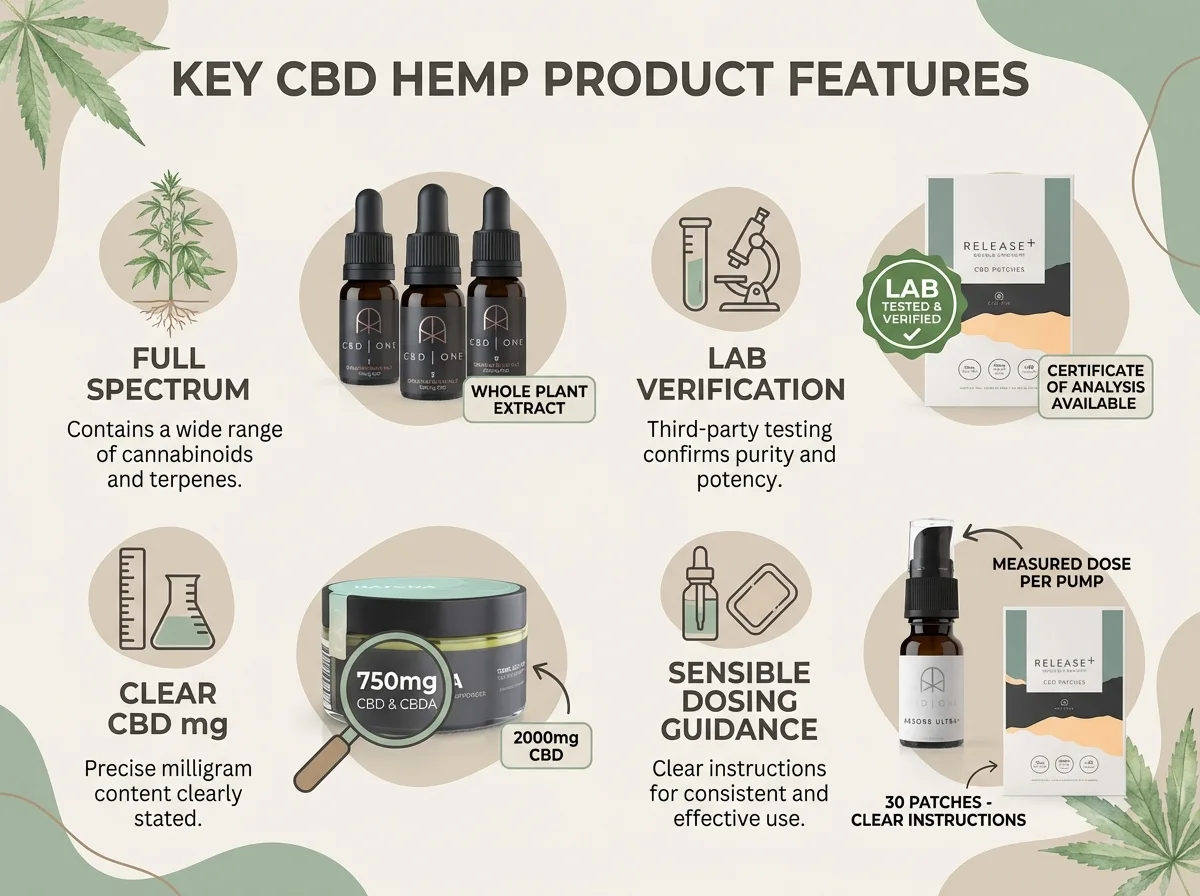
When you are close to buying, these are the features that matter most. They are also the ones most likely to separate a solid CBD hemp product from a disappointing one.
1) Spectrum: full spectrum, broad spectrum, or isolate
In the UK, you will typically see:
- Full spectrum: CBD plus minor cannabinoids and terpenes, with trace THC (within legal limits). Some people choose this for the “entourage effect”, which is the idea that hemp compounds may work better together than alone.
- Broad spectrum: similar to full spectrum but with THC removed. (Not all brands offer it.)
- CBD isolate: pure CBD only, no other cannabinoids.
There is no universally “best”. Full spectrum is popular for everyday wellness routines, while isolate is often chosen by people who want a THC-free product (for example, some athletes or those with strict workplace testing).
2) Clear CBD amount and sensible dosing guidance
A trustworthy CBD hemp product states CBD in mg and tells you how to take it. In the UK, the Food Standards Agency advises healthy adults not to exceed 70mg CBD per day. That does not mean everyone should take 70mg, it is an upper guidance level for healthy adults.
If you are unsure where to start, use a low-and-slow approach and read our CBD dosage guide.
3) Lab verification and transparency
Look for third-party lab verification (often called a Certificate of Analysis). At minimum, you want confirmation of cannabinoid content and reassurance that the product matches what is on the label. If a brand is vague about testing, it is a red flag.
4) Ingredients you understand
For oils, the ingredient list is often short: hemp extract plus a carrier oil (commonly hempseed oil). For water-soluble products, you will usually see emulsifiers, which help CBD mix into liquids.
5) The experience: flavour, routine fit, and consistency
Many full spectrum oils have an earthy taste. Some people like it, others do not. If taste is a dealbreaker, a water-soluble product you add to a drink can be easier to stick with. Consistency is often what decides whether CBD becomes part of your routine.
Pros and Cons
Strengths
- CBD hemp products offer flexible formats (oils, water-soluble drops, patches), so you can choose what suits your routine rather than forcing yourself into one method.
- Full spectrum options provide a wider hemp profile, which some users prefer for a more “whole plant” feel.
- Easy to compare when brands are transparent: CBD mg per bottle and lab reports make it possible to judge value rather than marketing.
- Simple to titrate: oils and pump formats let you start low and adjust gradually.
- Non-intoxicating: CBD itself is not intoxicating, so most people use it without feeling “high”.
Considerations
- “Hemp oil” labelling can be misleading: hemp seed oil and CBD oil are different products, and many shoppers buy the wrong one first time.
- Prices vary massively, and higher cost does not always mean higher quality. You still need to check CBD mg and labs.
- Full spectrum contains trace THC (within legal limits). If you need to avoid THC completely, isolate products may be a better fit.
- Individual responses vary: the same CBD amount can feel different from person to person, and it may take some experimentation to find your “sweet spot”.
Who CBD hemp products are best for
CBD hemp products tend to suit people who want a simple, plant-based supplement they can use consistently as part of a wider wellbeing routine. If you like measurable products, CBD oils (with mg listed) are straightforward to track. If you dislike the taste of oils or want something you can add to coffee, tea, or a smoothie, water-soluble CBD can be easier day-to-day.
If you are pregnant, breastfeeding, taking prescription medication, or managing a health condition, speak with a healthcare professional before trying CBD. It is also worth double-checking your personal situation if you are subject to drug testing, as full spectrum products contain trace THC within legal limits.
A CBD One alternative (full spectrum, UK delivery)
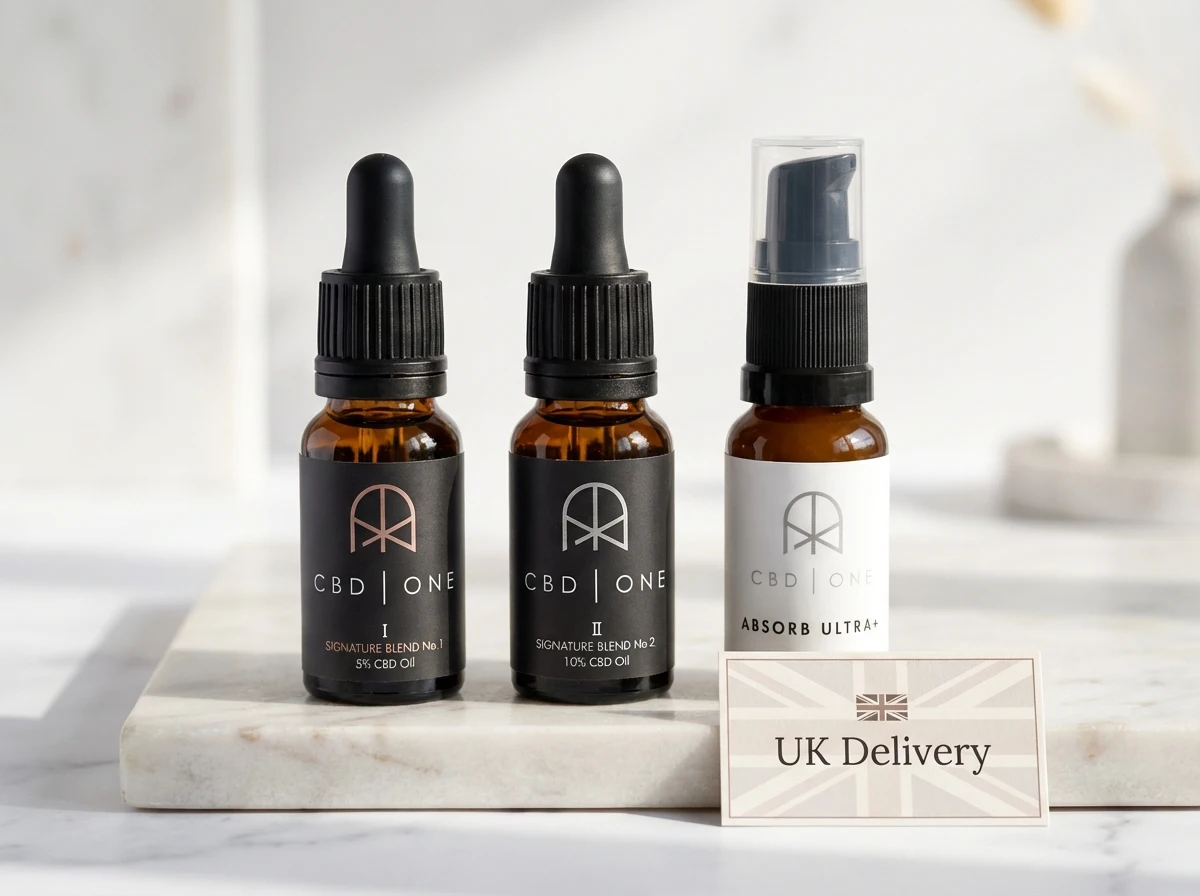
If your “CBD hemp” search is really about finding a dependable, full spectrum CBD product with UK delivery, CBD One focuses on premium, plant-based formulas with lab verification across the range we stock. The range is deliberately curated, so you will not see hundreds of flavours or gummies, and pricing sits more in the premium bracket. If you value simple formulas and consistent quality, here are three strong starting points:
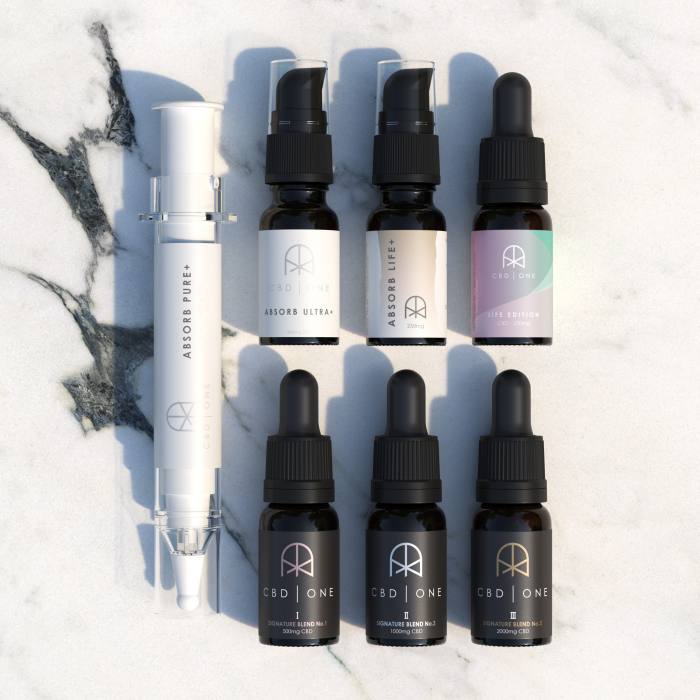
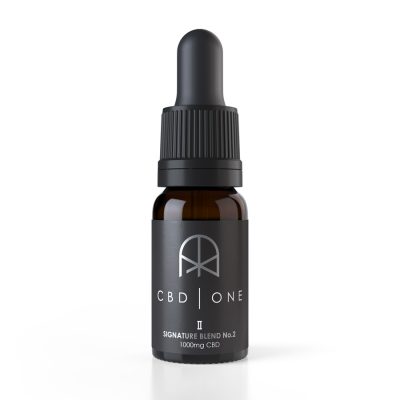
- 5% CBD Oil [500mg CBD] (£33.99): a good entry-level full spectrum oil if you want to start low and build a routine.
- 10% CBD Oil [1000mg CBD] (£58.99): a balanced “daily driver” strength for many regular users who want fewer drops for the same amount.
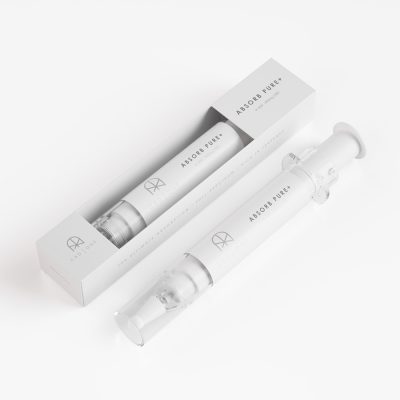
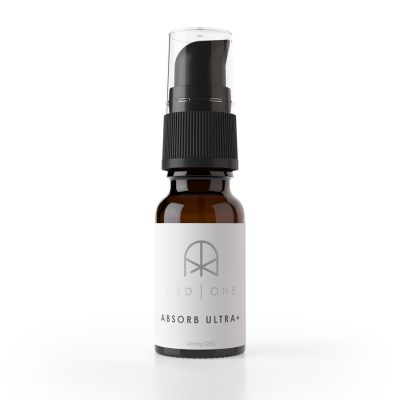
- Absorb Ultra+ (£39.99): a water-soluble, full spectrum option designed to be added to drinks, ideal if you do not enjoy the taste of oils.
If you want to browse formats, you can view the CBD Oils range or explore Water Soluble CBD.
Buying guide: how to choose the right CBD hemp product
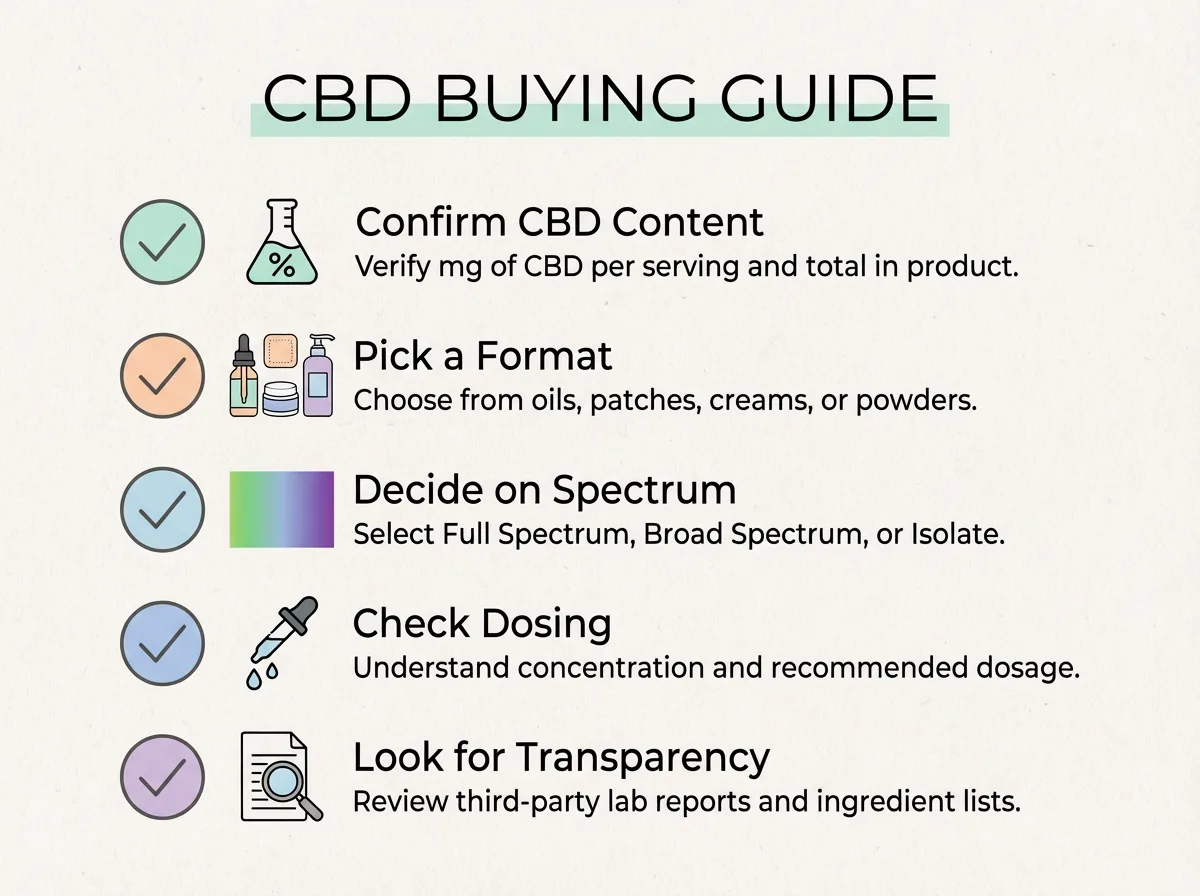
Here is the exact checklist I would use if I were buying CBD hemp online today.
1) Confirm you are buying CBD (not just hemp seed oil)
Look for “CBD” clearly stated, plus an amount in mg (for example 500mg per bottle). If the product only lists “hemp seed oil” and talks about omegas, it is probably a food oil. That is not “bad”, it is just not the same thing as CBD.
2) Pick a format that fits your routine
- Sublingual oil: classic option. You place drops under the tongue, hold briefly, then swallow.
- Water-soluble CBD: designed to mix into drinks, which can be a big plus if you hate the natural hemp taste.
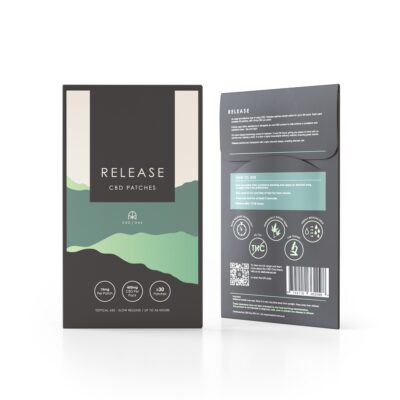
- Transdermal patches: measured dosing and convenience, but not everyone likes wearing a patch and the per-day cost can be higher.
There is no point buying a “great” product you do not actually use. Routine fit matters more than most people think.
3) Decide what spectrum you want (and be honest about THC sensitivity)
If you are choosing full spectrum, understand what that implies: trace THC within legal limits alongside other hemp compounds. Many people are comfortable with that, but if you have a strict reason to avoid THC completely, isolate products may be a better match.
4) Check dosing and stay within sensible limits
Start low, give it time, then adjust. For healthy adults, the UK FSA advises not exceeding 70mg CBD per day. If a product’s marketing encourages huge daily amounts without context, I would treat that as a warning sign. For a practical step-by-step approach, refer back to the CBD dosage guide.
5) Use transparency as your tie-breaker
If two options look similar in price, choose the one that makes things easy to verify: clear CBD mg, clear ingredient list, and lab verification. This matters even more if you are comparing popular searches like “love hemp cbd oil” or capsule brands such as “hempified cbd capsules”. Good brands do not hide the basics.
Frequently Asked Questions
Is hemp oil the same as CBD oil?
No. “Hemp oil” often means hemp seed oil, a nutritious cooking oil made from hemp seeds with little to no CBD. CBD oil is made using CBD-rich hemp extract (from flowers and leaves) and is labelled with a CBD amount in mg. If the bottle does not state CBD mg, it is unlikely to be CBD oil.
Is hemp oil the same as CBD?
Not usually. CBD is a specific non-intoxicating cannabinoid found in hemp. Hemp seed oil is a food oil and is not a meaningful source of CBD. Some brands use “hemp oil” to describe CBD oil (meaning hemp extract in oil), so always check for a clear CBD amount in milligrams and, ideally, lab verification.
What does “CBD hemp oil UK” typically refer to?
Most of the time it refers to CBD oil made from industrial hemp, sold as a food supplement. In the UK, reputable products clearly state CBD content (mg), the spectrum (full spectrum, broad spectrum, or isolate), and usage guidance. If you are unsure, compare labels side-by-side and prioritise transparent testing information.
Will CBD hemp oil get you high?
CBD itself is non-intoxicating, so it does not produce a “high” like THC. Full spectrum products may contain trace THC within legal limits, but they are still intended to be non-intoxicating when used as directed. If you are very sensitive to THC or need to avoid it entirely, consider an isolate product instead.
How much CBD should I take?
There is no single best amount for everyone. A sensible approach is to start low, keep your routine consistent, and adjust gradually based on how you feel. For healthy adults, the UK Food Standards Agency advises not exceeding 70mg CBD per day. If you want a structured approach, see our CBD dosage guide.
What is full spectrum CBD, and why do people choose it?
Full spectrum means the extract contains CBD plus other naturally occurring hemp compounds such as minor cannabinoids and terpenes, with trace THC within legal limits. Some users prefer full spectrum because they like a “whole plant” product and may be interested in the entourage effect concept. Others prefer isolate for THC-free simplicity.
How do I know if a CBD hemp product is good quality?
Start with the basics: the CBD amount in mg should be clearly stated, the ingredient list should be understandable, and the brand should reference lab verification (such as a Certificate of Analysis). Also look for consistent dosing guidance and realistic claims. If the marketing promises guaranteed results or reads like a miracle cure, skip it.
Are water-soluble CBD products better than oils?
“Better” depends on what you need. Oils are simple and popular, but they have a distinctive hemp taste. Water-soluble CBD can be easier to take in drinks, which helps consistency, and some people prefer how it fits into their routine. The trade-off is a more complex ingredient list due to emulsifiers.
What if I am comparing Love Hemp, Hempified, or other brands?
Use the same checklist across all brands: CBD mg per bottle (or per capsule), spectrum type, transparent lab verification, ingredients, and realistic dosing guidance. Also factor in delivery speed and customer support. This approach keeps your comparison fair and makes it easier to spot products that rely more on branding than substance.
Can I take CBD if I am on medication?
It is best to speak to a pharmacist or GP first. CBD can interact with some medications, and your clinician can advise based on your specific prescription. If you decide to try CBD, start with a low amount and monitor how you feel. For a safety overview, see our article on CBD and medication interactions.
Key Takeaways
- “CBD hemp” often means CBD oil made from hemp extract, not standard hemp seed oil. Always check for CBD mg on the label.
- To judge “best prices”, compare CBD content, spectrum, and transparency, not just the bottle price.
- Full spectrum products contain multiple hemp compounds plus trace THC within legal limits. Isolate is THC-free.
- For healthy adults, the UK FSA advises not exceeding 70mg CBD per day. Start low and adjust slowly.
- If taste is a barrier, water-soluble CBD in drinks can be easier to stick with than traditional oils.
Conclusion
Buying “CBD hemp” in the UK is really about clarity: making sure you are buying CBD (not just hemp seed oil), choosing the right spectrum for your preferences, and picking a format you will actually use consistently. Do those three things, and the price conversation becomes much simpler because you are comparing like-for-like. If you want a dependable, full spectrum option with UK delivery, explore CBD One’s CBD Oils range or try a drink-friendly option like Absorb Ultra+ (£39.99). If you are new, start low, stay within sensible daily limits, and speak to a healthcare professional if you are taking medication.