
Is CBD a Drug? (2026 UK Guide)
In this guide, I’ll help you understand what “drug” really means in UK terms, how CBD is regulated, when drug tests can become an issue, and how to use CBD responsibly and confidently.
What “drug” means in the UK (and why it matters)
“Drug” is one of those words that means different things depending on who is saying it.
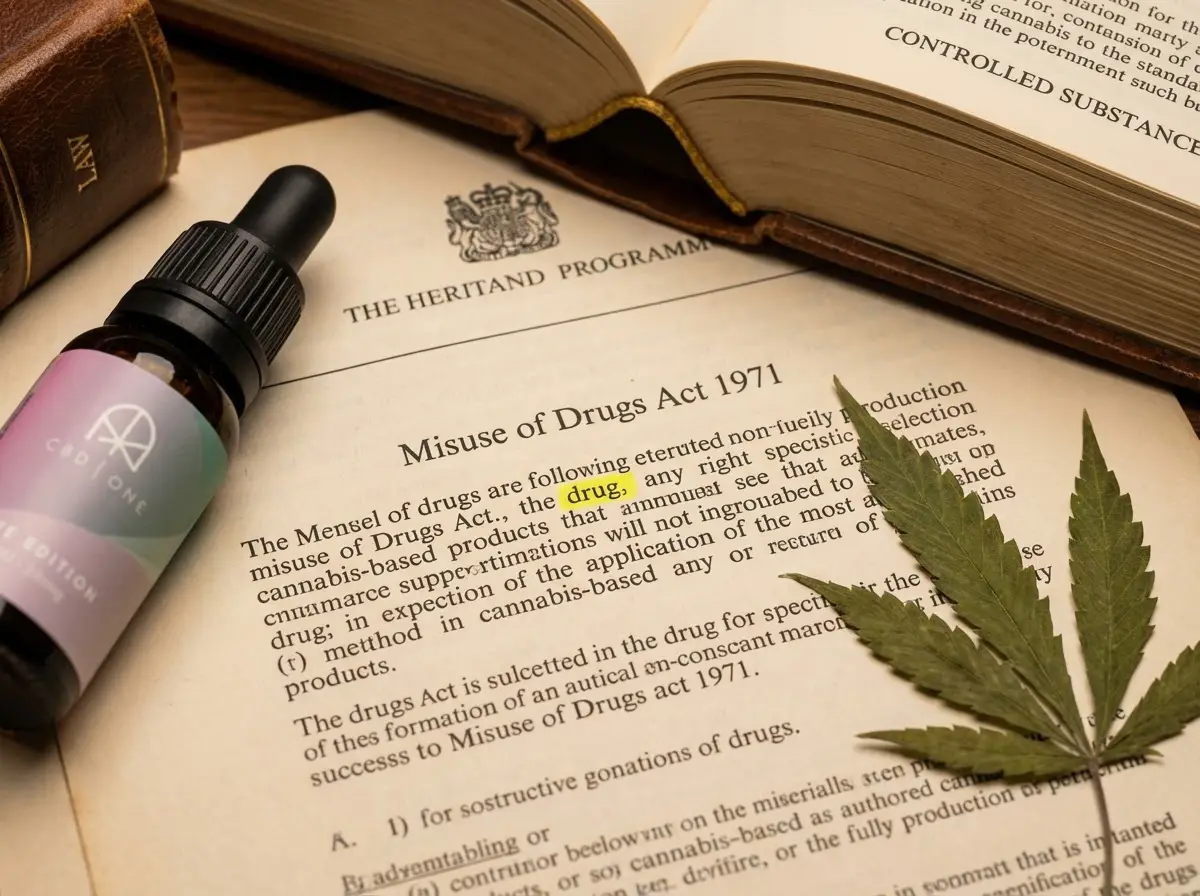
In everyday chat, people often mean “something illegal” or “something that makes you high”. In healthcare, a drug can be any substance that changes how the body works. In law and regulation, the definition depends on context, such as controlled drugs law, medicines law, and workplace policies.
From a practical standpoint, the reason you are asking “is CBD a drug” usually comes down to one of these worries:
- Legality: “Am I allowed to buy and use this in the UK?”
- Drug testing: “Will it show up at work or in sport?”
- Safety: “Could it clash with my medication or make me unwell?”
- Driving: “Could I get into trouble if there is THC in it?”
This article tackles all four, without hype and without scare stories.
So, is CBD a drug in the UK?
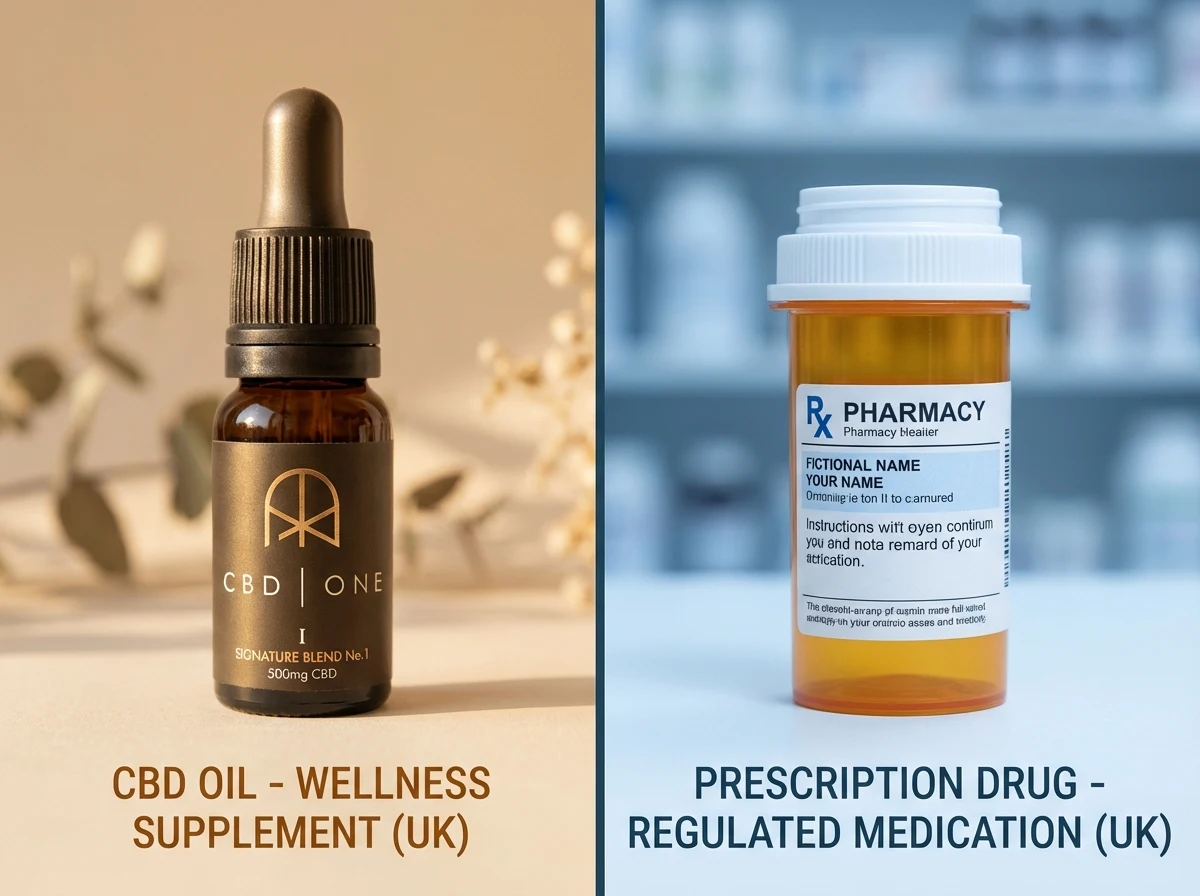
In most cases, CBD sold as a wellness supplement in the UK is not considered a prescription medicine. It is also not an intoxicating substance in the way THC is.
Now, when it comes to regulation, UK CBD products are generally treated as consumer products and foods or food supplements, which is why you will often see the “Novel Food” conversation around CBD. Importantly, CBD brands cannot legally market CBD as something that treats or cures medical conditions. If a product is presented as a medicine, it can fall under different rules.
If you want a clearer foundation first, it helps to step back and read what is CBD. Getting the basics right makes the rest of this guide much easier.
Can CBD be a medicine?
CBD as a compound can be used in medical contexts, but that is not the same as the CBD oil you buy as a supplement. Prescription cannabinoid medicines are tightly regulated, prescribed for specific situations, and handled through healthcare professionals.
In practice, this means: your typical CBD oil, CBD drink additive, or topical balm is a wellness product, not a prescribed drug. You should still treat it with respect, especially if you take medication or you have a job with drug testing.
How UK law and regulation actually frames CBD (controlled drugs vs medicines vs food)
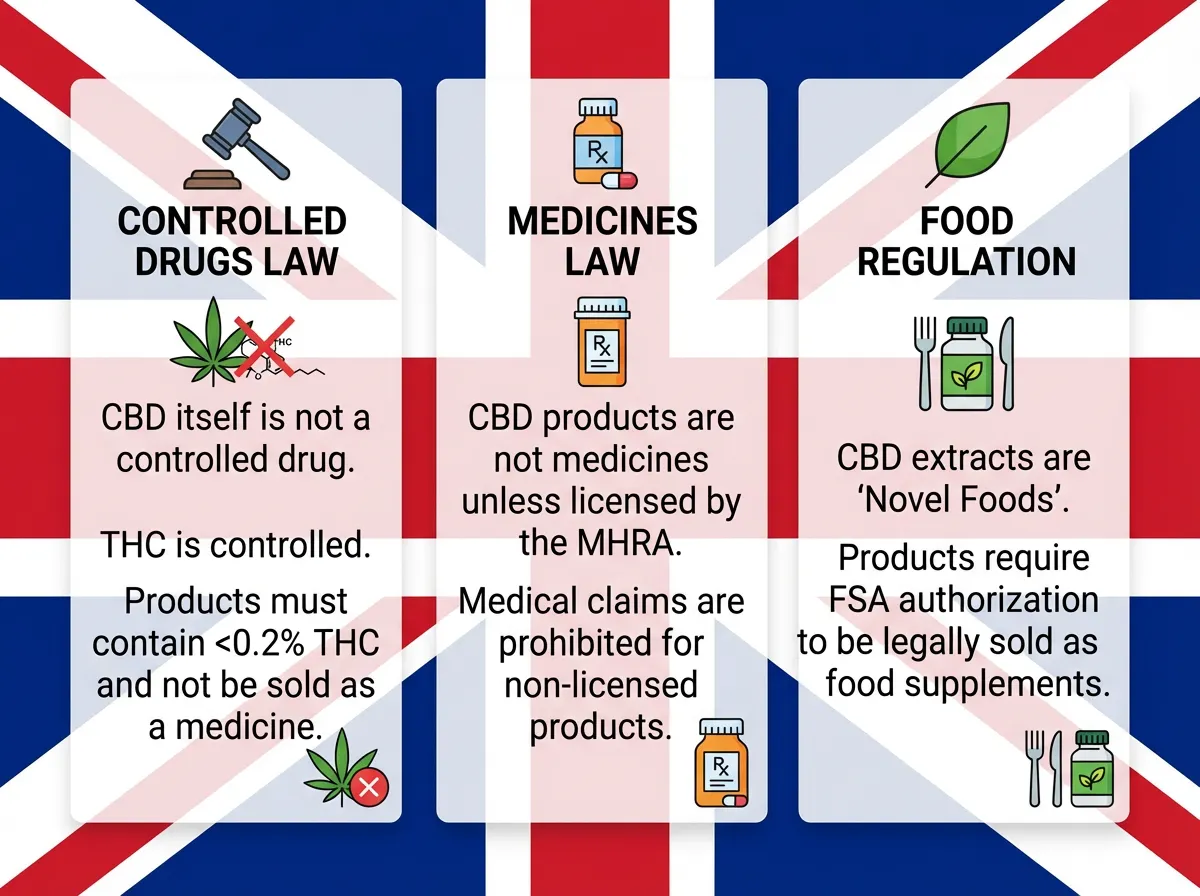
If you have ever felt like CBD rules are confusing, it is because three different “lenses” get mixed together in the same conversation.
1) Controlled drugs law: the THC threshold is the practical sticking point
When people worry that CBD is “a drug”, they often mean “is it a controlled substance?” In the UK, CBD itself is not treated the same way as THC. The issue is whether a product contains controlled cannabinoids, and whether it stays within the limits expected for legal consumer CBD.
This is why you will see reputable brands putting so much emphasis on batch testing. It is less about marketing and more about staying inside the lines.
2) Medicines law: what you claim is as important as what is inside
Two products can look similar on a shelf, but be treated very differently if one is marketed like a medicine. In the UK, you cannot sell a CBD wellness product while presenting it as something that treats, cures, or prevents disease. That is not a “grey area”. It is a hard line.
From your perspective as a customer, that means you should be cautious of dramatic promises. A brand that is casual with claims can be casual with other things too.
3) Food regulation and Novel Foods: the “compliance” side of the market
A lot of CBD oils, drinks, and capsules sit under food or supplement style rules, which is where the Novel Food topic comes in. The details can change as the category matures, but the direction of travel is clear: better traceability, better labelling, and better product consistency.
The useful takeaway is simple: if a brand is transparent about ingredients, CBD content, spectrum type, and third-party testing, you are generally in a safer place than if you are buying something that is vague and unverified.
CBD vs cannabis: the THC piece most people miss
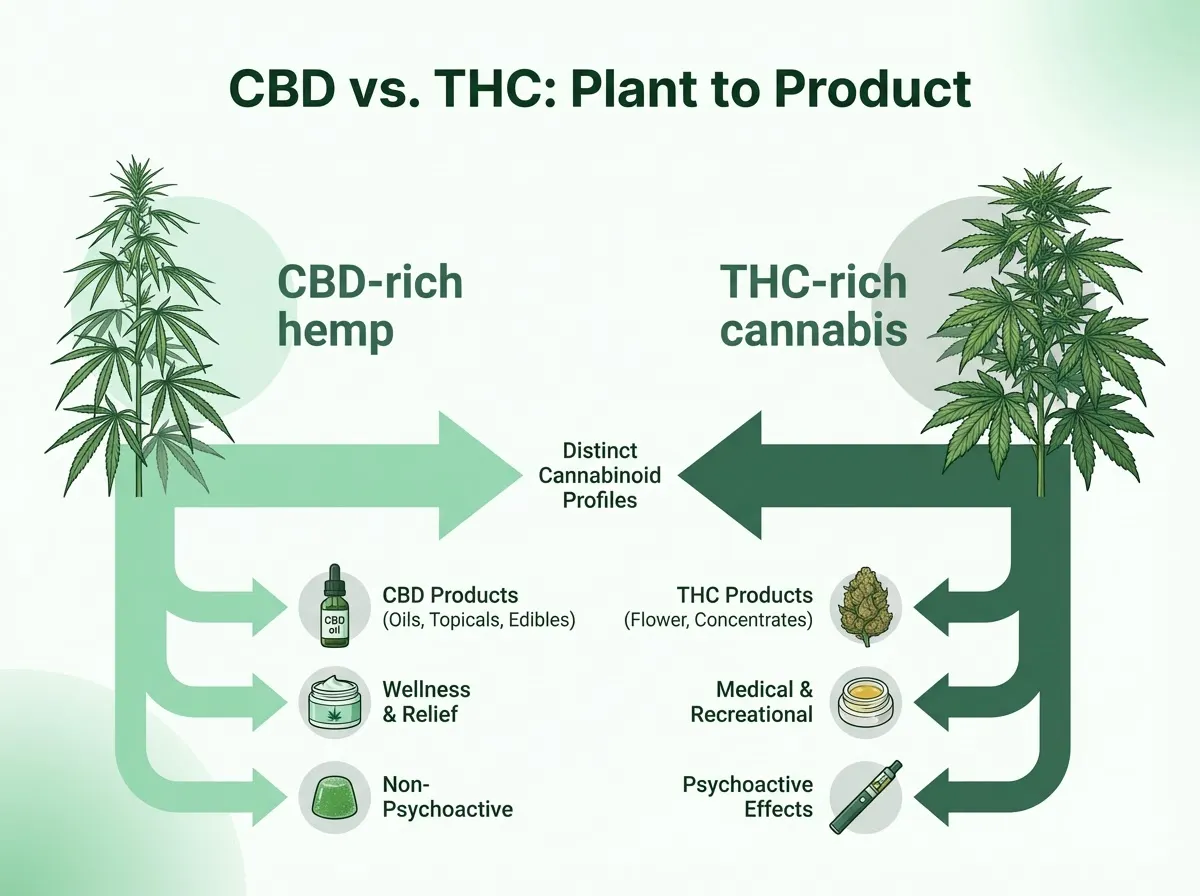
CBD comes from hemp, which is a type of cannabis plant bred to be naturally high in CBD and very low in THC.
Think of it this way: “cannabis” is the plant family. “CBD” and “THC” are two different cannabinoids that the plant can produce. THC is the one associated with intoxication. CBD is not intoxicating.
Full spectrum, broad spectrum, and isolate: why it matters here
This is where the “drug test” question starts to get real. Some CBD products are made with CBD isolate, which is CBD on its own, with no other cannabinoids. Others are full spectrum, which means CBD plus minor cannabinoids, terpenes, and trace amounts of THC within legal limits.
Many people prefer full spectrum because of the “Entourage Effect” idea, where plant compounds may work better together than in isolation. But trace THC, even when legal, can be relevant for testing and for people who want to avoid THC entirely.
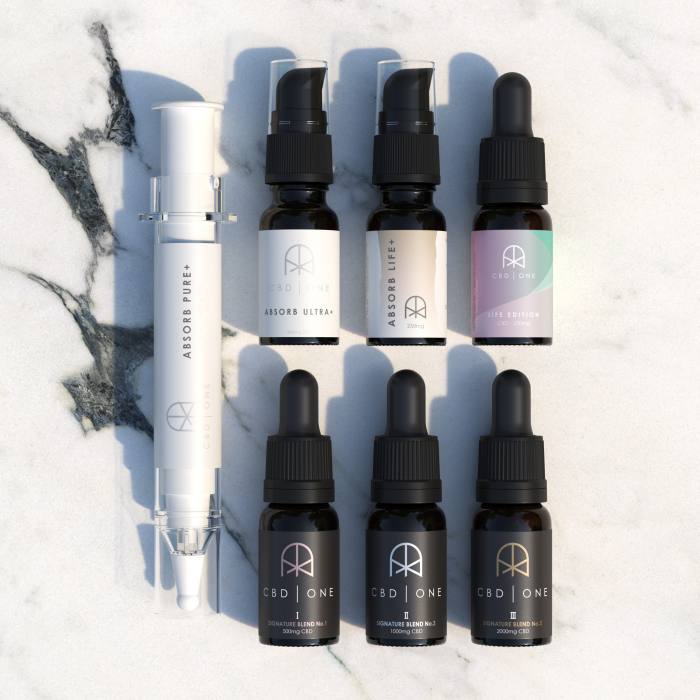
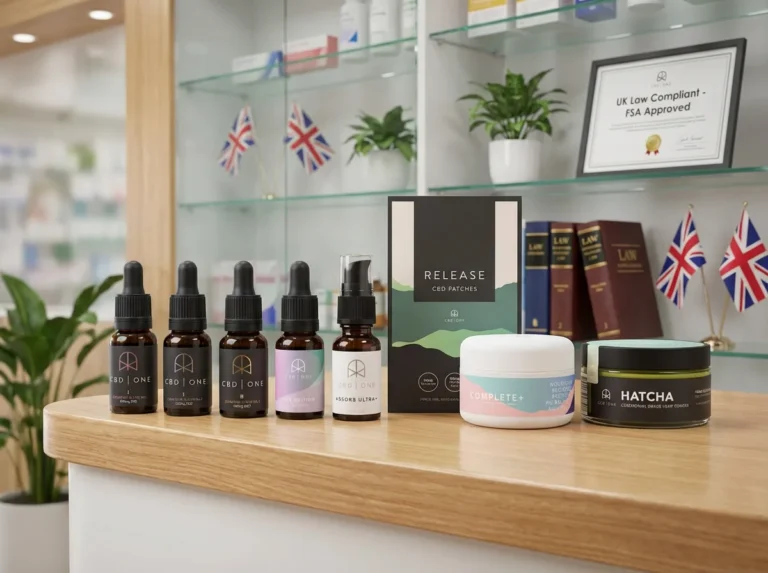
One example from our own range at CBD One is that our core oils and water soluble options are full spectrum because we value a whole-plant approach. If you are drug tested, though, you may prefer a THC-free format such as CBD isolate patches.
If you are worried about intoxication, it is worth reading Does CBD Oil Get You High? as well. It clears up the common myths quickly.
Does CBD show up on a drug test?
Most standard drug tests are not looking for CBD. They are usually looking for THC (or THC metabolites), plus other substances like opioids, amphetamines, cocaine, and benzodiazepines depending on the panel.
The reality is: the risk is not “CBD pops positive”. The risk is that your CBD product contains enough THC, or you take enough of it over time, that you test positive for THC.
Does CBD show up on a 10-panel drug screen?
Typically, no. A 10-panel screen generally does not include CBD as a target. But it often includes cannabis markers, which are related to THC exposure. So if your CBD contains THC, or is contaminated, that is the route to a positive.
Why “trace THC” can still matter
“Trace” does not mean “zero”. With frequent use, high doses, or particularly sensitive testing, tiny amounts can add up. People also differ in metabolism, body fat, and how quickly they clear compounds.
Consider this: even if two people take the same product, one might be fine and the other might not, depending on their body and the test threshold.
What reduces drug test risk in the real world?
- Choosing products with clear third-party lab reports (look for cannabinoid breakdown).
- Being cautious with full spectrum if your job or sport has strict testing.
- Using measured, consistent doses rather than constantly increasing “because it’s natural”.
- Considering THC-free formats, such as CBD isolate products, when testing is a concern.
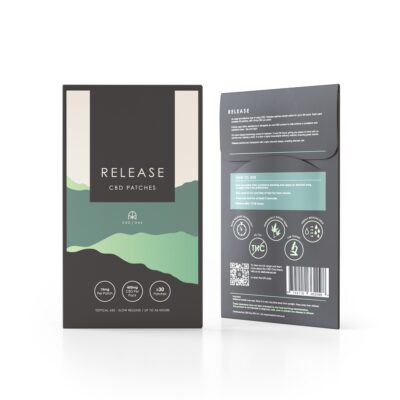
At CBD One, for example, our CBD Patches [30 x 15mg] | Release use CBD isolate and are labelled THC-free, which is why some athletes prefer patches as a format. That said, no responsible brand can promise you will pass a drug test, because testing rules, sensitivity, and individual metabolism vary.
Medication interactions: what to be careful with
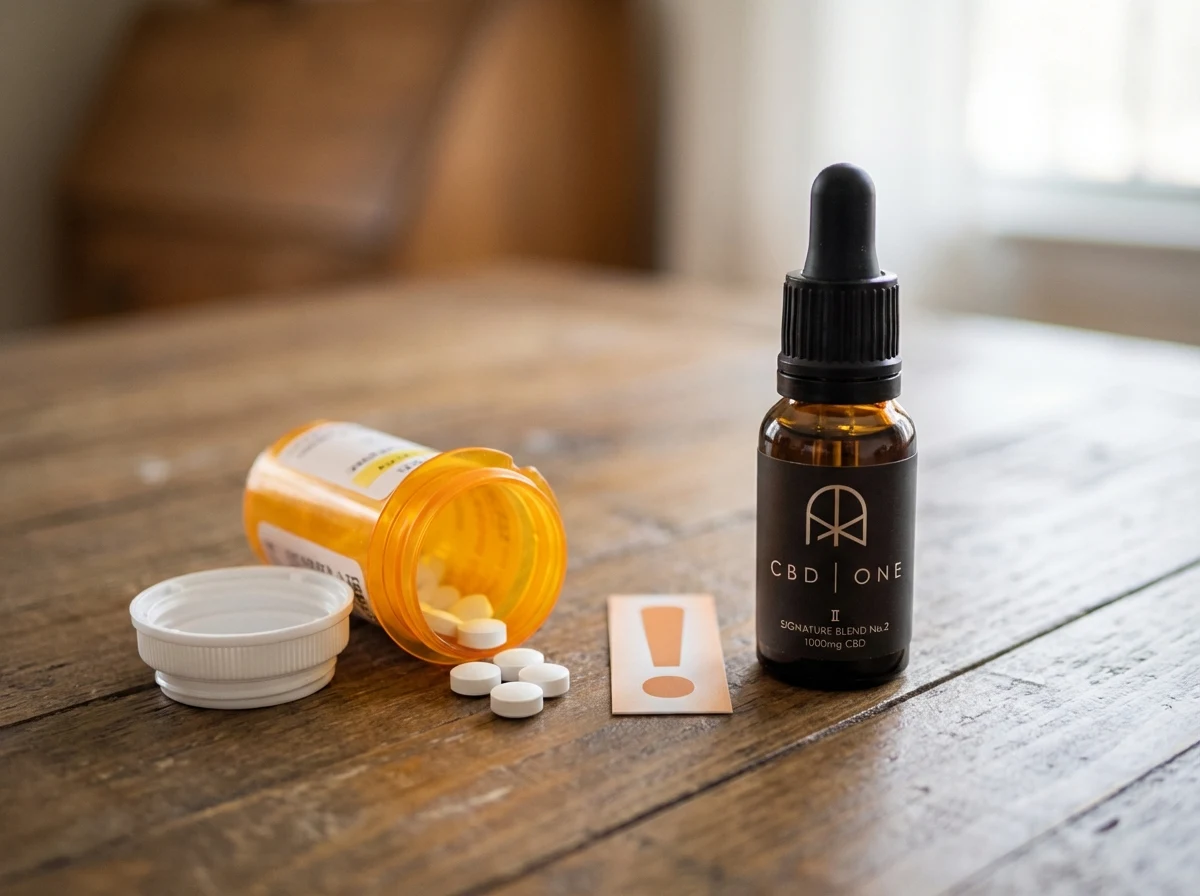
If you take medication, this is the section to read slowly.
CBD can affect how your body processes certain medicines, mainly through liver enzyme pathways (often described as CYP450). That does not automatically mean “danger”, but it does mean you should not guess, especially if you take regular prescriptions.
What many people overlook is that interactions are not about CBD being “a drug” in the illegal sense. They are about CBD being an active compound that the body has to process, just like many supplements and foods can influence metabolism.
What drugs should not be taken with CBD?
I cannot give you a personal safety clearance in a blog post, because it depends on your medication, dose, and health history. But there are well-known categories where extra caution is sensible, such as medicines with a “grapefruit warning”, some blood thinners, some anti-epileptic medications, and certain antidepressants.
My honest advice: if you take any prescription medicine, speak to your GP or pharmacist before using CBD. If you want a deeper, practical explanation, read CBD and Medication.
A simple safety routine if you are cleared to use CBD
- Start low and go slow.
- Keep your dose steady for a week before you judge anything.
- Do not stack multiple CBD products at once until you understand your baseline.
- Stay within the UK FSA’s recommendation of no more than 70mg CBD per day for healthy adults.
Choosing CBD you can trust: labels, labs, and realism
If you are asking “is CBD a drug”, you are probably also asking, “how do I know what I am taking?”
Now, when it comes to CBD quality, confidence comes from transparency. A trustworthy product should tell you the amount of CBD (in mg), the type of extract (full spectrum or isolate), and it should have an independent lab report available.
What to look for on the label
- CBD content in mg per bottle and ideally per serving.
- Spectrum type: full spectrum vs isolate.
- Clear ingredients list (carrier oil, emulsifiers, flavourings if used).
- Batch details that match a lab report.
Product format can change your experience
Oils, water soluble CBD, and patches all fit into different routines. Oils are popular because you can adjust drops easily. Water soluble options can feel simpler if you dislike the taste of oil and want to add it to a drink. Patches suit people who want a measured amount over a longer period.
If you are exploring formats, you can browse CBD Oils and Water Soluble CBD to see how different products present dosing and ingredients. Use it as education, not a race to buy the strongest bottle.
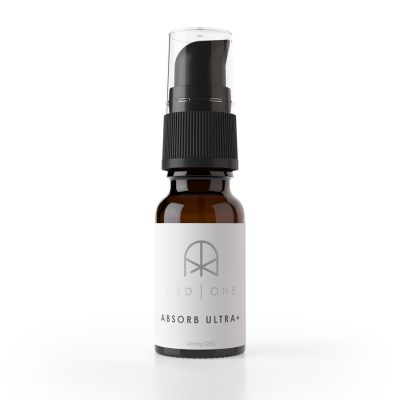
For those who like drink-based routines, our water soluble formulas such as Absorb Life+ are designed to mix into hot or cold drinks with measured pumps. It is just one way to build consistency, which matters more than chasing a “magic” dose.
Want help working out dosing?
If dosing is the part that makes you hesitate, use a sensible tool and keep it conservative. Our CBD dosage guide can help you estimate a starting point, then you can adjust based on how you feel.
Roadside testing and “drug driving”: where CBD users can get caught out
This is a slightly uncomfortable topic, but it matters if you drive regularly, drive for work, or you simply do not want any surprises.
In the UK, “drug driving” enforcement is generally about certain controlled drugs in your system, including THC. CBD is not the target. The catch is that if you use a full spectrum CBD product that contains trace THC, you are introducing a controlled compound, even if your product is legal and you feel completely normal.
Why roadside tests feel confusing
Roadside screening is not the same as a full lab analysis. It is designed to be quick, and if it flags a concern, the process can escalate. So while many CBD users never have an issue, the sensible way to think about it is risk management, not reassurance.
A practical approach if driving is a big part of your life
- If you need to minimise risk, choose THC-free formats and keep your routine consistent.
- Avoid experimenting with new full spectrum products, or increasing your dose, right before long drives.
- If you ever feel sleepy or foggy, do not drive. That applies to CBD, supplements, antihistamines, and lack of sleep.
The reality is that “I used a legal product” is not the same as “there is zero THC exposure”. If you want absolute certainty, the safest option is to avoid THC altogether.
Keeping simple records for testing and travel (batch numbers, lab reports, routine notes)
If you are in a job with testing, compete in sport, or travel often, a small bit of organisation can take a lot of stress out of CBD use.
You do not need to turn it into a spreadsheet obsession. Just keep the basics:
- Take a photo of the product label showing the batch number.
- Save the matching lab report for that batch, ideally as a PDF or screenshot.
- Make a short note of your typical daily amount and when you take it.
Think of it this way: if questions ever come up, you can show that you were using a product with transparency, not something random with no paper trail.
Real-world scenarios: work, travel, driving, sport
This is where education turns into everyday decisions.
Workplace drug testing
If your employer tests for cannabis, assume they are looking for THC markers, not CBD. If you cannot risk a positive, the safest approach is avoiding THC entirely and choosing a product that is THC-free with lab verification. Even then, be aware that policies vary and no external article can guarantee outcomes.
Driving
CBD itself is not intoxicating, but trace THC is the point to think about. If you drive for work, drive long distances, or have a job where your licence is crucial, be extra cautious about full spectrum products. Choose transparency, measure your dose, and avoid experimenting right before you need to be sharp.
Sport and competition
Some sporting bodies have strict rules. Even if CBD is permitted, THC may not be. If you compete, check your governing body’s rules, then choose products and formats that match your risk tolerance.
The “CBD gummies in Superdrug” question
People often assume that if CBD is sold by a mainstream retailer, it must be simple and risk-free. Mainstream availability can be reassuring, but it does not replace reading the label, checking for lab reports, and understanding whether it is full spectrum or isolate. The right question is not “where is it sold?”, it is “what exactly is in it and how is it tested?”
If you want a calmer way to assess any brand, use a structured checklist. Our CBD buying guide and CBD product comparison are designed to help you compare products without getting pulled into marketing noise.
Side effects and who should be cautious (even with legal CBD)
People often focus on the legality side of the question, but your body does not really care what shelf you bought something from. It cares what the compound does when you take it.
Many people tolerate CBD well, but side effects are still possible. Some users report things like tiredness, digestive upset, appetite changes, or feeling a bit “off” when they take more than their body likes.
Who should slow down and get advice first?
- Anyone taking prescription medication, especially if you take it daily.
- People with liver concerns, or anyone being monitored with regular blood tests.
- Anyone who is pregnant or breastfeeding.
- People who are very sensitive to supplements, caffeine, or new routines in general.
From a practical standpoint, if you are trying CBD for the first time, do it on a calm day, not before a big meeting, a night shift, or a long drive. Give yourself space to learn how you respond.
Frequently Asked Questions
Is CBD a drug or a supplement in the UK?
Most CBD products sold for wellness in the UK are positioned as food supplements rather than medicines. That means they are not supposed to be marketed as treating or curing medical conditions. CBD is still an active compound, though, so it is sensible to treat it with the same respect you would give other supplements. If a product is presented as a medicine, or you are using a prescribed cannabinoid medicine, different rules apply. If you are unsure, focus on lab reports, clear labelling, and speak to a healthcare professional.
Does CBD show up on a drug test?
CBD itself is not usually what drug tests target. Most workplace and roadside tests look for THC (or THC metabolites) when they include “cannabis”. The main risk is using a CBD product that contains trace THC, especially full spectrum products, or using high doses over time. Another risk is poor quality control where products contain more THC than expected. If you are tested at work or in sport, consider THC-free products with third-party lab reports and keep your dosing consistent and measured.
Does CBD show up on drug tests UK employers use?
It depends on the test panel and the threshold, but UK workplace tests that include “cannabis” generally look for THC-related markers. A CBD-only (isolate) product is less likely to cause issues than a full spectrum product that contains trace THC, but nothing is guaranteed. Your personal metabolism, how much you take, how long you take it for, and the sensitivity of the test all matter. If your job has a strict policy, it is worth speaking with HR or occupational health and choosing a cautious approach.
Does CBD show up on a 10-panel drug screen?
A standard 10-panel screen typically does not test for CBD. It often includes cannabis, which in practice means THC markers. So, CBD is not the target, but THC exposure from certain CBD products can still be relevant. If you use full spectrum CBD, understand that “trace THC” is not the same as “zero THC”. If you cannot risk a positive result, you may want to avoid full spectrum products and choose a THC-free option with lab verification.
Will CBD show up on a drug test if it is full spectrum?
Full spectrum CBD may contain trace THC within legal limits, and that is what can potentially trigger a positive on a THC test. Many people use full spectrum CBD without any issues, but drug testing is about thresholds and sensitivity. Regular daily use, high doses, or a very sensitive test can increase risk. The most realistic way to think about it is risk management: if testing is a concern, choose THC-free products and keep records of lab reports and batch numbers.
What drugs should not be taken with CBD?
Rather than a single “do not mix” list, it is safer to think in terms of caution groups. CBD can affect how the body processes some medications through liver enzyme pathways. Medicines that already come with a grapefruit warning are a common example where extra care is sensible. Blood thinners, some anti-epileptic medicines, and certain antidepressants are also often discussed. If you take any prescription medication, speak with your GP or pharmacist before using CBD, and keep your CBD dose low and stable if you are cleared to proceed.
Is CBD addictive or habit-forming?
CBD is not considered intoxicating and most people do not describe it as habit-forming in the way substances like nicotine or alcohol can be. That said, people can form habits around almost anything that feels helpful to their routine, including supplements. The healthier mindset is to treat CBD as part of a broader wellbeing toolkit: sleep routine, stress management, movement, and nutrition. If you notice you feel anxious about not having CBD, that is a good moment to pause and review your overall approach with a healthcare professional.
Is CBD legal in the UK if it comes from cannabis?
CBD can be legal in the UK when it meets specific requirements, including being derived from approved hemp strains and containing only trace THC within legal limits. Legality also depends on how the product is marketed and whether it is compliant with relevant food regulations. Because rules and enforcement can evolve, the safest approach is to buy from brands that publish third-party lab reports and are transparent about their sourcing and testing. If you are unsure, do not assume all products are equivalent just because they say “CBD” on the label.
Can I take CBD if I am in the police, the military, or a safety-critical job?
If your role is safety-critical or subject to strict substance policies, be extra cautious. The key issue is not CBD itself, but the possibility of THC exposure from full spectrum products. Even trace THC may be unacceptable under certain policies. If you want to use CBD, consider THC-free options with lab reports and discuss it with your occupational health team if possible. Also avoid experimenting with new products or higher doses during working weeks. Protecting your job and your licence should come first.
How much CBD can I take per day in the UK?
The UK Food Standards Agency (FSA) advises healthy adults not to exceed 70mg of CBD per day. That is a sensible ceiling for most people using CBD as a wellness supplement. Many people start far lower and adjust gradually based on how they feel. If you are taking medications, have liver issues, or have ongoing health concerns, get personalised advice from a healthcare professional before using CBD. Consistency matters more than taking large amounts, so start small, keep notes, and change one thing at a time.
Can CBD make you fail a roadside drug test?
CBD is not typically what roadside drug tests are targeting. The risk comes from THC exposure, which can happen if you use full spectrum CBD that contains trace THC, or if a product is poorly made and contains more THC than expected. If driving is a major part of your job or life, the lowest-risk approach is to choose THC-free products with third-party lab reports and avoid experimenting with new products or higher amounts right before you drive.
What does “CBD” stand for, and does that matter legally?
CBD stands for cannabidiol. The name itself does not decide whether something is legal or classed as a medicine. What matters is what is in the product, how it is tested, and how it is marketed. A product can say “CBD” on the front and still be questionable if it has no batch testing, unclear ingredients, or unrealistic claims.
Is CBD the same as weed?
Not really. CBD is a cannabinoid that can be extracted from hemp, which is a type of cannabis plant. “Weed” usually refers to cannabis varieties bred to be high in THC, the intoxicating cannabinoid. CBD itself is not intoxicating, but some CBD products are full spectrum and can contain trace THC, which is why labels and lab reports matter.
Key Takeaways
- CBD sold as a UK wellness product is usually not a prescription medicine, but it is still an active compound.
- Drug tests typically look for THC markers, not CBD. Full spectrum CBD can carry a real, if variable, testing risk.
- If you take medication, treat CBD like any supplement with interaction potential and speak to your GP or pharmacist.
- Choose transparent products: clear mg dosing, spectrum type, and third-party lab reports.
- Start low, go slow, and stay within the FSA’s 70mg per day guidance for healthy adults.
Conclusion
So, is CBD a drug? In the UK wellness world, CBD is generally treated more like a supplement than a medicine, and it is not intoxicating like THC. But the word “drug” is not really the point. The point is understanding what is in your product, how it is regulated, and what your personal risks are, especially if you are drug tested, drive for a living, or take prescription medication.
If you take one thing from this guide, make it this: choose transparency over hype. Check whether a product is full spectrum or isolate, look for third-party lab verification, and keep your dose measured and consistent. If medication is involved, slow down and bring your GP or pharmacist into the conversation.
If you want a second pair of eyes, explore our guides or speak to Nick for free, common-sense support.