
Difference Between CBD and THC (2026 UK Guide)
In this guide I will walk you through the difference between CBD and THC in plain English: what each compound is, how they tend to feel in the body, what is legal in the UK, and how to choose products with confidence. If you are new to CBD, it also helps to understand the basics of CBD oil first, so everything else makes sense.
CBD vs THC: quick summary
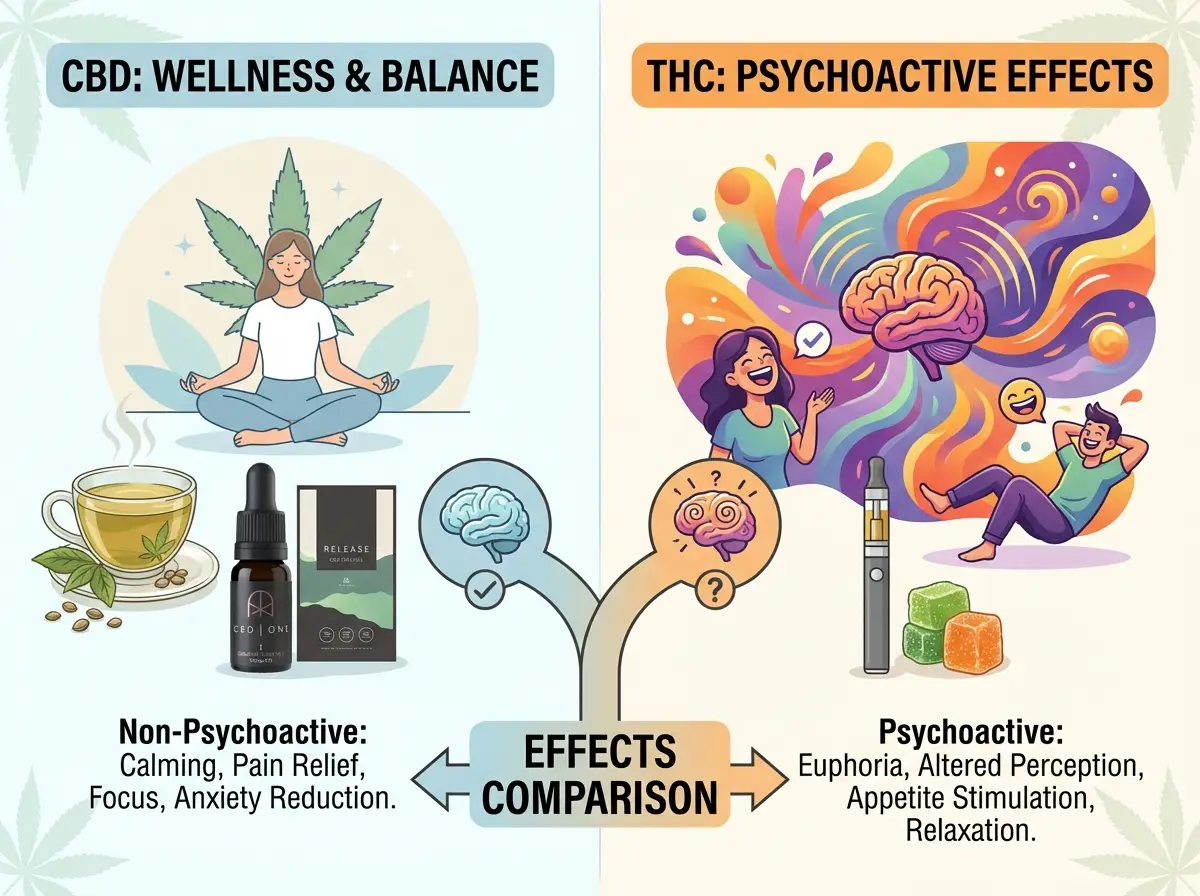
If you only remember one thing, make it this: THC is intoxicating, CBD is not. They can both interact with your endocannabinoid system, but they do it in different ways and with very different practical outcomes.
- THC (tetrahydrocannabinol): the main intoxicating cannabinoid in cannabis. It can impair judgement, reaction time, and coordination.
- CBD (cannabidiol): a non-intoxicating cannabinoid found in hemp. Many people use it as part of a wellness routine because it does not create a “high”.
- UK context: most consumer CBD products are hemp-derived and must stay within strict limits for controlled cannabinoids. High-THC cannabis remains illegal outside specific medical routes.
Now, when it comes to shopping or using CBD day to day, the real difference is not just the molecule. It is also about product quality, lab reports, and how a brand handles trace cannabinoids.
What CBD and THC actually are
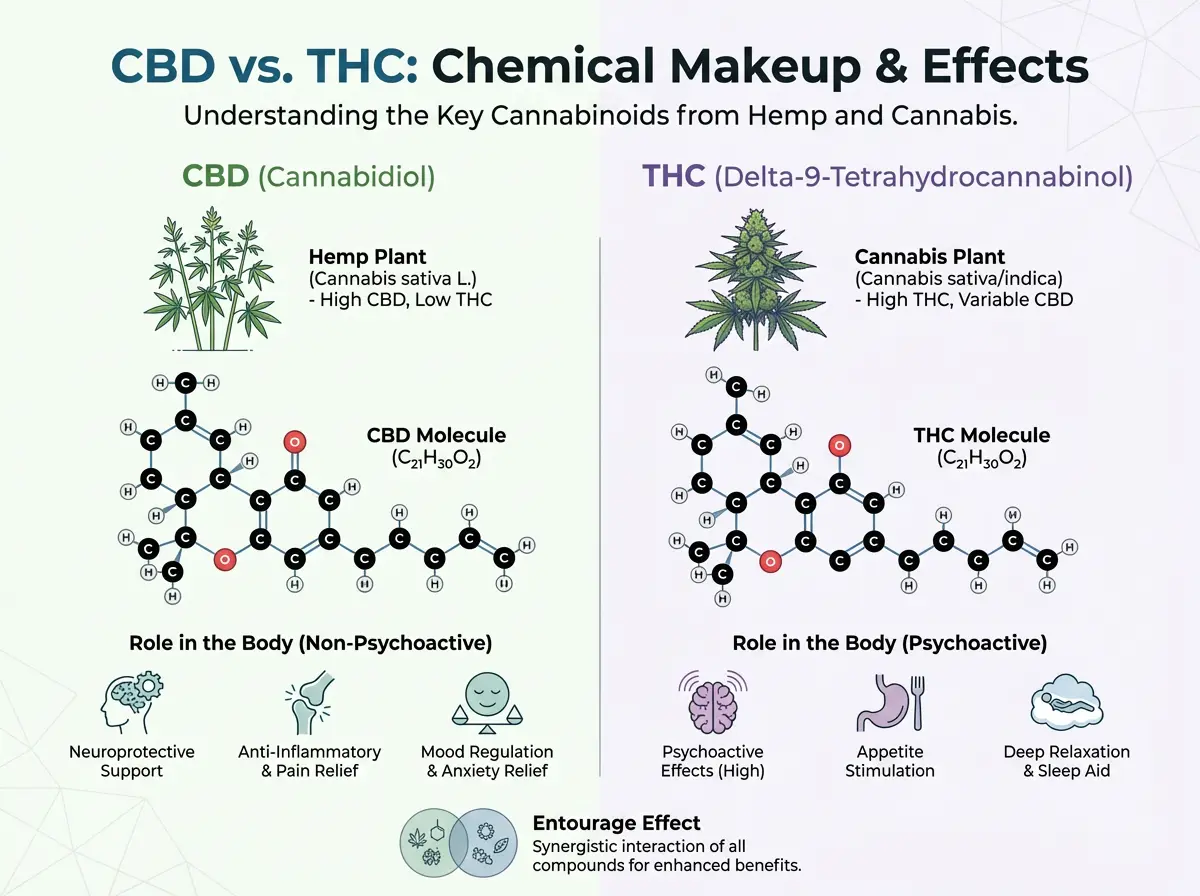
They are both cannabinoids (but not “the same thing”)
Think of cannabinoids as naturally occurring plant compounds that can “talk” to systems in your body involved in balance, like sleep-wake rhythm, stress response, appetite signals, and recovery. The body has its own endocannabinoid system (ECS) that helps regulate these processes.
CBD and THC are two of the best known cannabinoids. They share a similar origin, but they behave differently at receptor level, which is why the lived experience is so different.
Where they come from: hemp vs cannabis
Hemp and cannabis are both varieties of the Cannabis sativa plant. In everyday language, people call low-THC plants “hemp” and higher-THC plants “cannabis” or “marijuana”. Most UK CBD products are made from hemp, specifically because hemp is naturally low in THC.
What many people overlook is that “hemp-derived” does not automatically mean “THC-free”. Some extracts include a natural spread of plant compounds, including trace cannabinoids, depending on how they are made.
How they feel: effects and impairment
THC: intoxication and impairment
THC is the compound people associate with feeling “stoned” or “high”. It can change perception and impair coordination and reaction times. That matters for real life: driving, operating machinery, and even some work environments.
The reality is that THC affects different people differently. Dose, tolerance, route of use, and even what you have eaten that day can influence the experience. That unpredictability is part of why THC carries a higher risk profile for day-to-day function.
CBD: non-intoxicating, more subtle
CBD does not cause intoxication. Most people who use CBD describe it as subtle, more like a “background support” rather than a noticeable buzz. Some people feel nothing at all at first, especially if the dose is low or inconsistent.
If you want a deeper answer to the common question, “will this get me high?”, this article on Does CBD Oil Get You High? is worth reading alongside this guide.
How long they take to kick in (and why it varies)
With both CBD and THC, timing depends heavily on format. Inhaled forms act faster. Oral forms (swallowed) are slower and can feel stronger for longer because they are processed through digestion and the liver. Sublingual oils sit somewhere in the middle.
From a practical standpoint, this is one reason two people can take “the same amount” and have completely different experiences. It is also why labelling and measured dosing matter so much.
CBD vs THC legality in the UK (2026)
Is CBD legal in the UK?
CBD itself is not a controlled substance in the UK. CBD products can be sold, but they must meet UK requirements, including rules around controlled cannabinoids and food safety. CBD is not a medicine in the UK, and brands cannot market it as one.
Now, when it comes to ingestible CBD (oils, capsules, drinks), the UK has Novel Food rules. Responsible brands work within these frameworks, and they back it up with batch testing and clear lab reports.
Is THC legal in the UK?
THC is controlled under UK law. Outside of prescribed medical cannabis pathways, THC-containing cannabis products are illegal to possess, supply, or produce.
People sometimes assume “a bit of THC” is fine because it is in a hemp extract. In practice, legality is about controlled cannabinoid limits and compliance, not just marketing terms like “natural” or “full plant”. This is exactly why third-party lab testing is non-negotiable.
Where full spectrum fits into the UK conversation
Full spectrum CBD typically means an extract that keeps a wider range of hemp compounds, like minor cannabinoids and terpenes, alongside CBD. Many people choose full spectrum products because of the “Entourage Effect” idea, where compounds may work better together than in isolation.
At CBD One, we focus on full spectrum across our core range because we believe the Entourage Effect is how nature intended hemp extracts to be experienced. That said, if you need a THC-free approach for personal reasons, isolate-based products exist for that scenario.
Drug tests, driving, and work policies
Can CBD make you fail a drug test?
Most standard workplace drug tests look for THC (or THC metabolites), not CBD. Pure CBD should not trigger a positive THC result. The risk comes from products that contain trace THC, inaccurate labelling, or contamination.
Consider this: if your job has strict testing, “CBD” on the label is not enough reassurance. You need a recent, independent certificate of analysis (COA) that shows cannabinoid breakdown, plus confidence that the brand has tight manufacturing controls.
Driving: impairment matters, but so do rules
Driving under the influence of THC is dangerous and illegal. CBD is non-intoxicating, but that does not automatically remove all risk, because some products may contain trace THC and everyone metabolises cannabinoids differently.
If you drive for work, or you are simply cautious, choose products with transparent testing, avoid taking new products right before driving, and speak to your GP if you are unsure.
Medication interactions: a separate (and important) point
This often gets missed in the CBD vs THC debate. CBD can interact with certain medications, particularly those that carry grapefruit-style warnings. It does not mean CBD is “dangerous”, but it does mean you should be sensible.
If you take prescription medication, read CBD and Medication and have a quick chat with your GP or pharmacist before you start.
Product types: oils, drinks, patches, and “edibles”
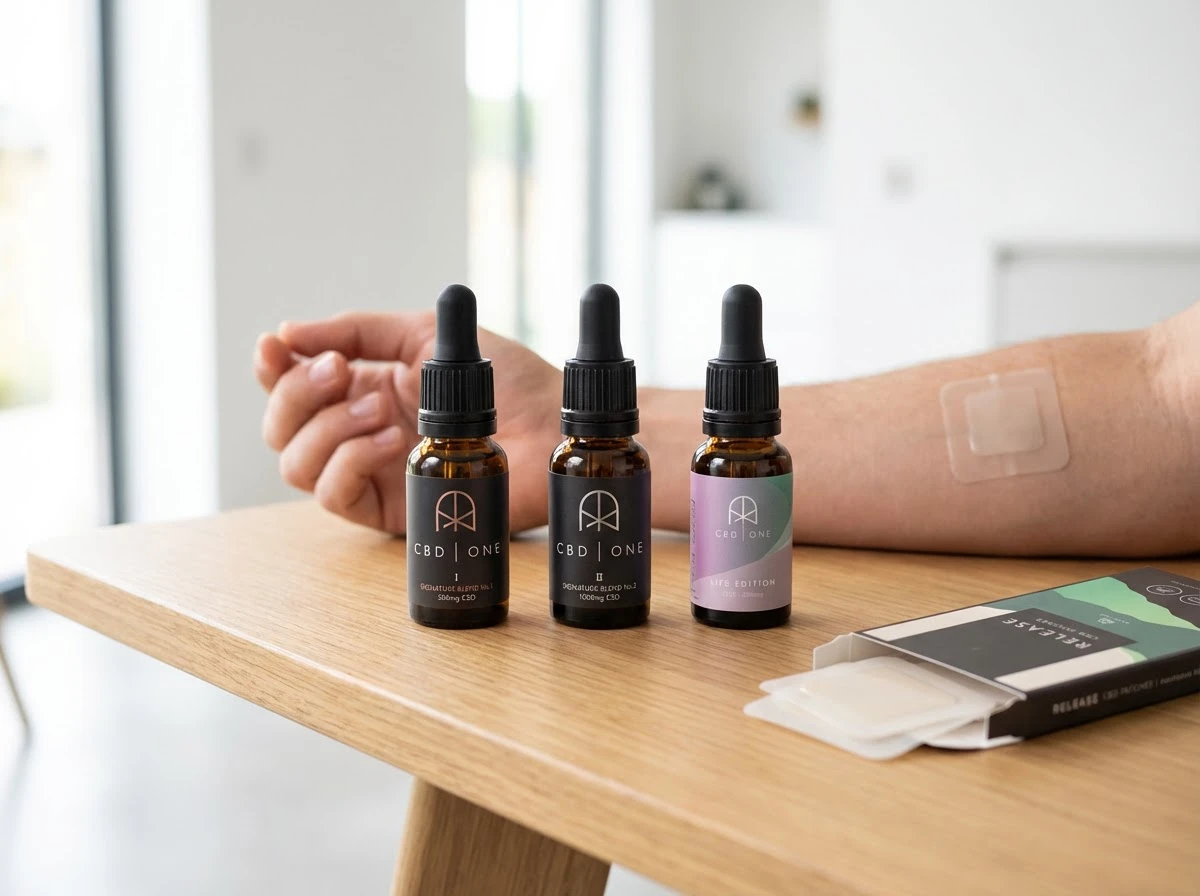
CBD oil vs THC oil
In UK wellness retail, “CBD oil” usually means a hemp extract in a carrier oil (often hempseed oil) taken under the tongue. THC oils sold outside medical channels are illegal in the UK.
CBD oils can be full spectrum or isolate. Full spectrum may include a broader cannabinoid and terpene profile. Isolate is typically CBD only (or close to it), which some people prefer for simplicity and THC avoidance.
CBD drinks and water soluble formats
Water soluble CBD is designed to mix into drinks more easily than oil. Some people prefer it because it fits into a morning routine, like adding it to coffee or a smoothie.
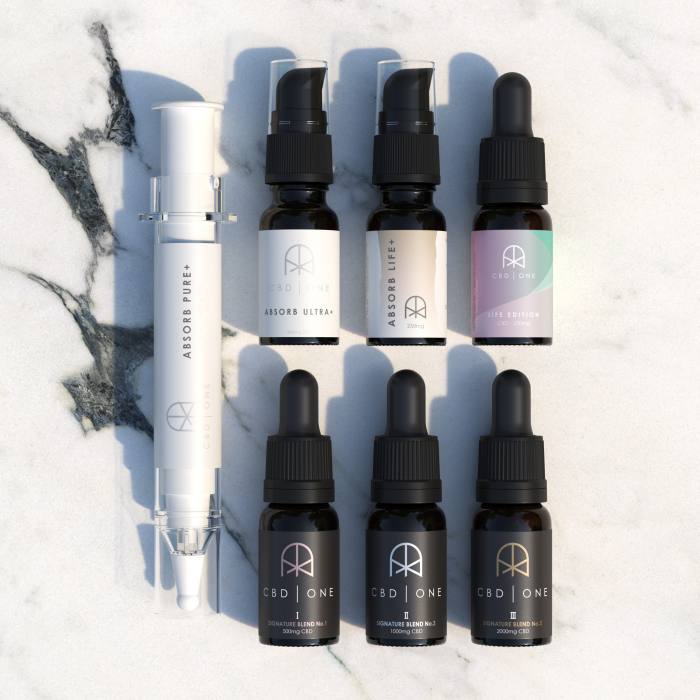
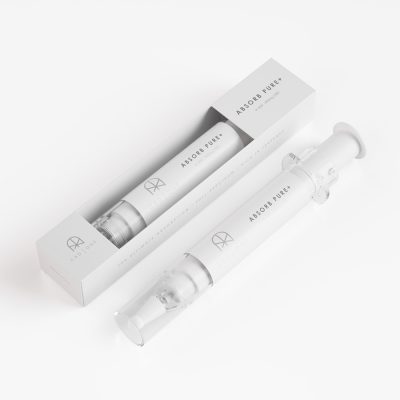
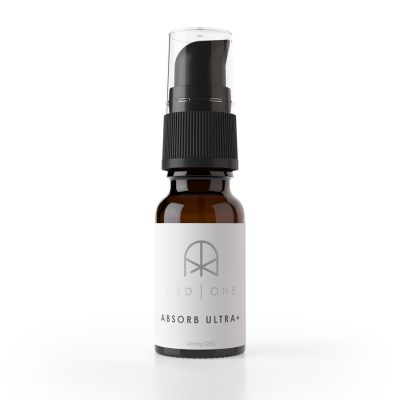
One example is CBD One’s Absorb range, which is a water soluble, full-spectrum format intended for easy daily use in hot or cold drinks. If you want to browse formats, the Water Soluble CBD category gives you a feel for what is available.
CBD patches and “steady” dosing
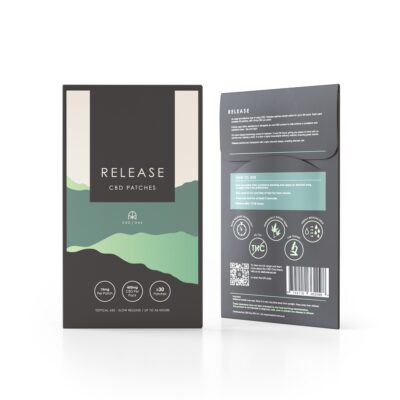
Patches are a different approach again. Instead of swallowing CBD, you apply a patch to the skin and let it release over time. Many patches on the market use CBD isolate and are THC-free, which can be useful for people who want to minimise THC exposure.
CBD One’s Release patches, for example, use CBD isolate and are positioned as THC-free. That is not “better” in all cases, but it is a clear fit for certain lifestyles.
Difference between CBD and THC edibles (UK reality check)
People often search “difference between CBD and THC edibles” because in some countries both are widely sold. In the UK, THC edibles sold outside medical channels are illegal. CBD “edibles” exist, but they still need to comply with UK rules, and they can vary a lot in quality and dose accuracy.
If you want predictable dosing, measured formats (like oils with a known mg per drop, or metered pumps, or patches) are often easier to manage than a vague “CBD brownie” someone bought from a random website.
How to choose CBD products safely (and avoid THC surprises)
Start with the label, but do not stop there
A good label helps, but it is not proof. You want to see: spectrum type (full spectrum or isolate), total CBD in mg, suggested use, and clear warnings. You also want batch testing with a certificate of analysis you can actually read.
Quality checks that matter in the real world
- Independent lab reports (COAs) for each batch, showing CBD and THC-related cannabinoids
- Clear spectrum information: full spectrum vs isolate
- Measured dosing that you can repeat consistently
- Responsible warnings, especially around pregnancy, breastfeeding, and medications
Think in “routine”, not “random doses”
As an osteopath, I am a big believer in consistency. With CBD, many people do best when they pick a simple routine they can stick to, rather than taking a big dose once and forgetting it for a week.
If you want help working out a sensible starting point, you can use a CBD dosage guide style approach and then adjust gradually. In the UK, the FSA recommends healthy adults do not exceed 70mg CBD per day. That is not a “target”, it is a safety-based upper guideline.
Where to explore formats (without guessing)
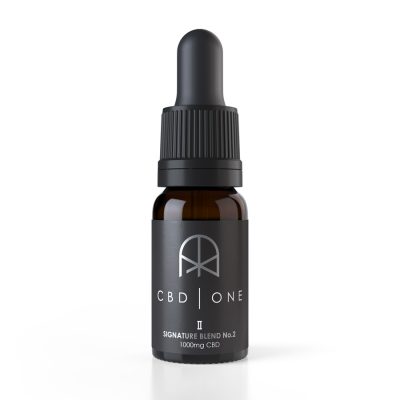
If you prefer classic sublingual drops, take a look at the CBD Oils category to understand strengths and formats. If you are more of a “mix it into a drink” person, water soluble CBD can suit busy mornings.
And if you are comparing options across the market, this CBD product comparison guide is a useful next read.
How to buy with confidence
When you feel stuck between “full spectrum sounds best” and “I want zero THC risk”, it helps to step back and define your non-negotiables: driving, workplace testing, sensitivity to THC, and taste preferences. Then choose the simplest product that meets those needs and is properly tested.
For a broader checklist of what to look for, keep this CBD buying guide handy. It will save you money and a lot of guesswork.
CBD vs THC chart (simple comparison)
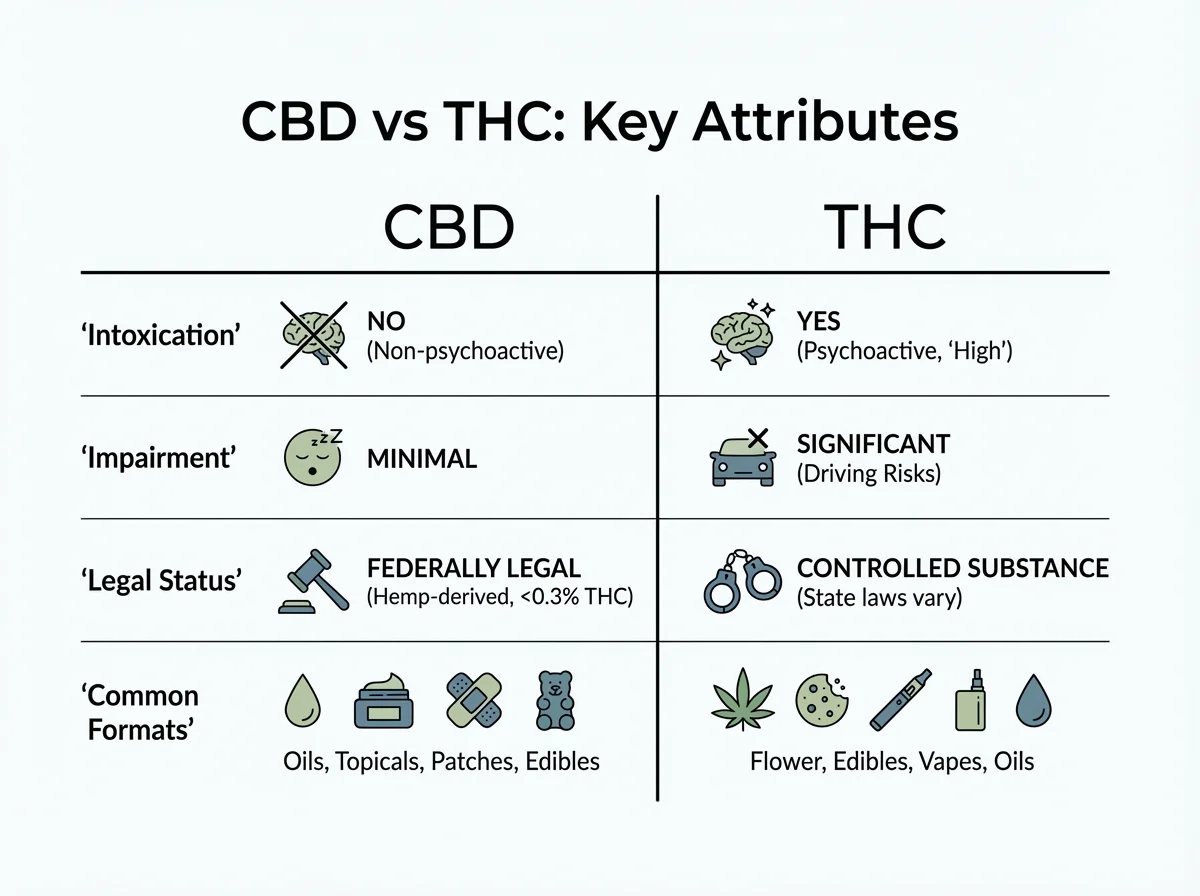
People often ask for a simple “CBD vs THC chart” because it cuts through the noise. Here is a straightforward way to compare them in day-to-day terms.
- Intoxication: THC can be intoxicating, CBD is non-intoxicating.
- Impairment risk: THC can impair reaction time and judgement, CBD typically does not in compliant products.
- Workplace testing: tests usually target THC metabolites, not CBD. The risk with CBD is trace THC, mislabelling, or contamination.
- UK legal position: THC is controlled outside prescribed medical routes. CBD can be sold if products meet UK safety and controlled cannabinoid requirements.
- Common formats: CBD is widely available as oils, water soluble formats, and patches. High-THC formats are not legally sold as consumer wellness products in the UK.
- How it tends to feel: THC is often noticeable and can be unpredictable. CBD is usually more subtle and may take consistency to notice.
Think of this as a practical filter. If someone is trying to tell you CBD and THC are “basically the same”, this is the reason most people experience them very differently.
CBD and THC together: what “balanced” products actually mean
You will sometimes hear people talk about CBD and THC “working together”, or they will describe a “balanced” extract. In countries with legal adult-use cannabis, that often means a product that contains meaningful amounts of both.
In the UK, most people are not shopping in that world. For consumer CBD products here, the relevant question is usually: does a full spectrum extract contain trace THC-related cannabinoids, and is it within legal and quality limits?
Here’s the thing. Full spectrum is not the same as “high THC”. Full spectrum is about keeping a broader range of hemp compounds, which some people like for the Entourage Effect concept. Even so, if you are sensitive to THC, you drive for a living, or you are tested at work, you might consider an isolate-based approach, simply to reduce variables.
THC variants you might see online (Delta-8, THCA) and why UK shoppers should be cautious
One reason people get confused in 2026 is that “THC” is no longer the only phrase you will see online. You might come across Delta-8 THC, Delta-10, THCA, “THC gummies”, or other spin-off terms that are marketed as if they are a loophole.
The reality is that UK law and enforcement do not revolve around internet marketing language. If a product is intoxicating, poorly labelled, or sits in a grey area around controlled cannabinoids, you are taking a risk that is not worth it, especially if you drive, work in a regulated role, or travel.
THCA is a good example. It is often discussed online as “not THC”, but it can convert into THC with heat. That is not a detail you want to discover after you have bought something that is not properly tested, not properly labelled, and not designed for UK compliance.
If you want to stay on the safe side, stick with reputable CBD products that publish clear batch testing, avoid unrealistic promises, and do not try to sell you a “legal high”.
Why some people feel different on “the same CBD”
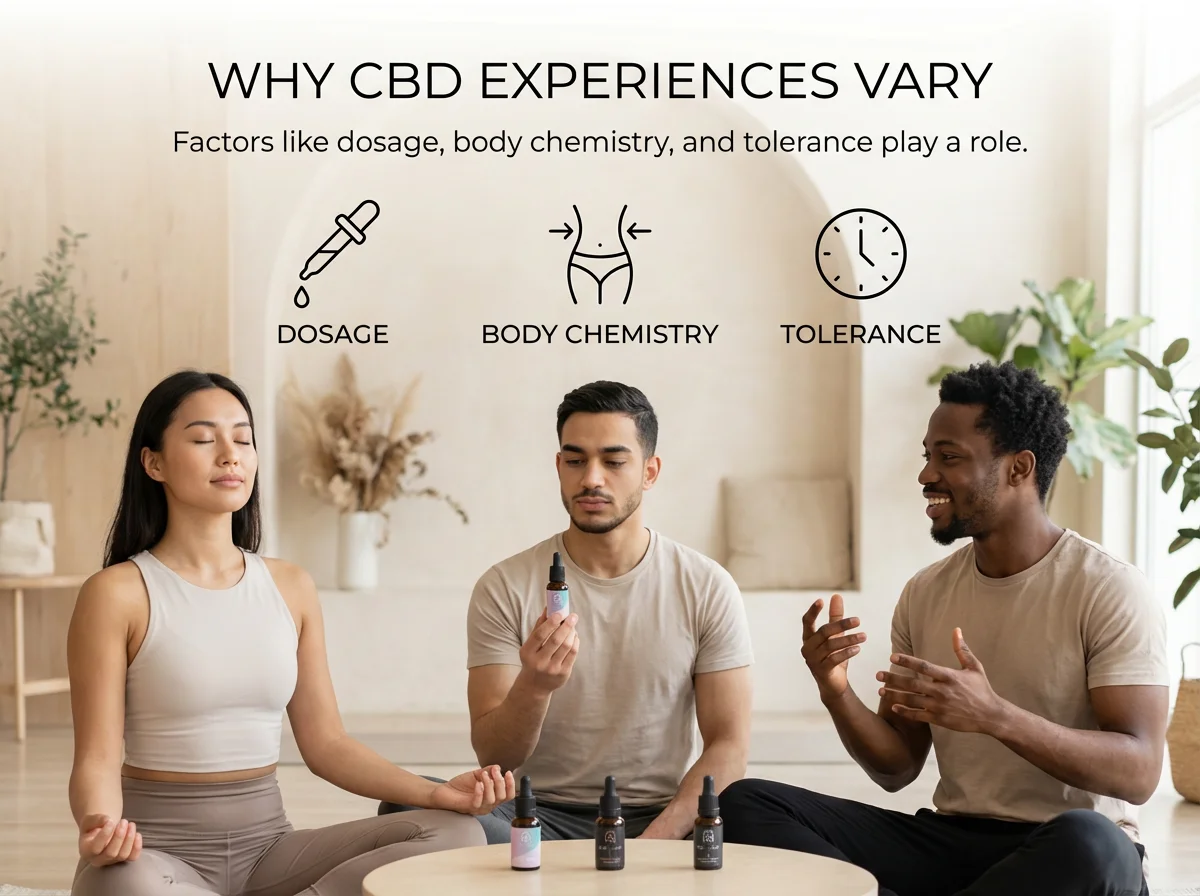
People sometimes read two reviews of the same product and wonder if they are talking about the same thing. One person says it felt calming, another says they felt nothing, another says they felt a bit “off”. That does not automatically mean CBD is inconsistent, it usually means the variables are.
Spectrum and trace cannabinoids
Full spectrum products can contain more than just CBD. That is the point, and for many people it is a positive. But it also means there are more moving parts, including trace cannabinoids. If you are sensitive, or you take a higher amount than you realise, you might notice it more.
Bioavailability and format
Oils, swallowed capsules, patches, and water soluble formats can all feel different because they enter your system differently. Water soluble CBD, for example, is designed to mix with drinks and can suit people who prefer a simple morning routine. Patches are more about steady release and convenience over time.
Food, sleep, stress, and expectations
If you are overtired, stressed, under-fuelled, or you take something on an empty stomach one day and after a meal the next, your experience can change. Expectations matter too. If you are waiting for a dramatic “kick”, CBD can feel underwhelming. Many people find it fits better as a consistent routine than as a one-off experiment.
If you ever feel unexpectedly impaired from a product labelled as CBD, stop using it and check the lab report. If you cannot access a clear, recent COA, that is your answer.
Frequently Asked Questions
What’s the difference between CBD and THC?
CBD and THC are both cannabinoids from the cannabis plant, but they create very different experiences. THC is intoxicating and can impair coordination, reaction time, and judgement. CBD is non-intoxicating and is often used as part of a wellness routine because it does not create a “high”. In the UK, THC is controlled and illegal outside prescribed medical cannabis pathways, while CBD products can be sold if they meet safety and compliance requirements.
What is the difference between THC and CBD in terms of how they work?
Both compounds interact with the body’s endocannabinoid system, but not in the same way. THC strongly activates certain cannabinoid receptors associated with intoxication, which is why it can change perception and impair function. CBD does not produce intoxication and is considered more subtle in how it influences the system. The key takeaway is practical: THC can affect your ability to drive or work safely, while CBD typically does not, assuming the product is compliant and properly tested.
Can CBD make you feel high?
Pure CBD should not make you feel high. If someone feels “stoned” after a CBD product, it is often down to one of three things: the product contains more THC-related compounds than expected, the person is very sensitive, or they took a much larger amount than intended. This is why third-party lab reports matter. If you want a fuller explanation, read Does CBD Oil Get You High?, then check your product’s certificate of analysis.
Is THC legal in the UK if it is only a trace amount?
UK rules around controlled cannabinoids are strict, and “trace” is not a free pass. Legality is not only about what a brand claims on the label. It is about whether the product meets UK requirements in practice. That is why compliant brands use careful sourcing and lab testing, and why you should avoid products with vague claims, missing lab reports, or unrealistic promises. If you are unsure, choose a product with clear, recent batch testing and speak to a professional.
Is full spectrum CBD the same as THC?
No. Full spectrum CBD refers to a hemp extract that keeps a wider range of plant compounds, such as minor cannabinoids and terpenes, alongside CBD. Depending on the extract and compliance approach, it may include very small amounts of THC-related cannabinoids, but it is not “THC oil”. Full spectrum is often chosen because people like the idea of compounds working together (the Entourage Effect). If you need to minimise THC exposure, an isolate-based option can be more suitable.
Will full spectrum CBD show up on a drug test?
Workplace drug tests usually look for THC metabolites, not CBD. Full spectrum products can carry a small risk because they may contain trace THC-related cannabinoids. The risk depends on the product, the dose, how often you use it, and your individual metabolism. If your job involves testing, pick products with clear lab reports and consider THC-free (isolate) options. If the stakes are high, it is sensible to speak to your employer or occupational health team before using any cannabinoid product.
What’s the difference between CBD and THC edibles?
From an effects standpoint, THC edibles can be intoxicating and longer lasting, while CBD edibles are non-intoxicating. From a UK standpoint, there is a bigger issue: THC edibles sold outside medical channels are illegal. CBD “edibles” can be legal if they comply with UK rules, but quality varies. If you want predictable dosing, measured formats like oils (mg per drop), metered water soluble pumps, or patches can be easier to control than informal “edible” products with unclear strength.
Can you take CBD if you are on medication?
CBD can interact with some medicines, particularly those with grapefruit warnings. That does not mean you must avoid CBD, but you should be cautious and get proper advice. From a practical standpoint, speak with your GP or pharmacist before starting CBD, especially if you take anticoagulants, anti-epileptics, or complex long-term prescriptions. This guide on CBD and Medication explains the topic in a sensible, non-alarmist way.
How much CBD is safe to take in the UK?
For healthy adults, the UK Food Standards Agency (FSA) recommends not exceeding 70mg of CBD per day. Think of this as a safety-based upper guideline, not a goal. Many people choose to start much lower and increase slowly based on how they personally respond. The key is consistency and measured dosing. If you want help with a starting point, a CBD dosage guide can be a useful framework, and your GP can advise if you have medical conditions or take medication.
How do I choose a CBD product that avoids THC as much as possible?
Start by deciding whether “THC-free” is a requirement for you (for example, workplace testing or personal sensitivity). Then look for: isolate-based products, clear batch-specific lab reports, and a brand that explains its testing and sourcing. Avoid anything that hides behind vague language like “premium extract” without evidence. If you want to compare types side by side, the CBD product comparison guide can help you narrow it down without relying on hype.
Is CBD stronger than THC?
It depends what you mean by “stronger”. THC is typically stronger in the sense that it is more impairing and more noticeable at low amounts, because it is intoxicating. CBD is usually subtler, and many people only notice it with consistent use as part of a routine.
If you mean “stronger” as in “more useful”, it is not a clean comparison. They are different compounds used for different reasons, with very different legal and practical implications in the UK.
Can CBD and THC show up together on a drug test?
Standard drug tests are usually looking for THC metabolites, not CBD. If someone tests positive after using a CBD product, the more likely explanation is THC exposure from trace cannabinoids, mislabelling, or contamination, rather than CBD itself.
If you are tested at work, treat CBD use as a decision that needs extra care. Choose products with clear, batch-specific lab reports, consider isolate formats, and speak to occupational health if you need a formal view for your role.
What is THCA, and is it basically THC?
THCA is a precursor compound found in raw cannabis plant material. It is often marketed online as if it is a legal workaround. The key issue is that heat can convert THCA into THC, which is the intoxicating compound that is controlled under UK law.
From a practical standpoint, if you are looking for non-intoxicating, UK-compliant wellness products, THCA is not the lane you want to be in. Stick with clearly tested CBD products and avoid anything sold as a “loophole”.
Why do some people on Reddit say CBD feels like THC?
Forums can be useful for real-world experiences, but they are not quality control. When someone says CBD “felt like THC”, it is usually one of these: they used a product with more THC-related compounds than expected, they used a very high amount, they are unusually sensitive, or they had an anxious response and misread it as intoxication.
If you want to avoid that situation, keep dosing measured, introduce new products on a low-stakes day, and only buy from brands that publish clear batch lab reports.
Key Takeaways
- THC is intoxicating and can impair function. CBD is non-intoxicating and typically feels more subtle.
- In the UK, THC is controlled and illegal outside medical prescription pathways. CBD products are legal when compliant and properly tested.
- Full spectrum CBD is not “THC”, but it may include trace cannabinoids, which matters for drug tests and sensitive users.
- Choose CBD with clear batch lab reports, measured dosing, and realistic guidance. Avoid vague labels and missing COAs.
- If you take medication, speak to your GP or pharmacist before starting CBD.
Conclusion
The difference between CBD and THC is not just a science lesson, it affects everyday choices: what you can buy legally, how safe you feel taking something before work, and whether you need to think about testing or driving. THC is the intoxicating cannabinoid and carries impairment risk, plus strict legal limits in the UK. CBD is non-intoxicating and widely used in wellness routines, but quality and compliance still matter, especially with full spectrum products that may contain trace cannabinoids.
If you are choosing CBD for the first time, keep it simple: pick a reputable format you can use consistently, start low, and build slowly. If you want to explore options, browsing the CBD Oils and Water Soluble CBD categories can help you understand what different formats look like in practice.
If you are unsure what fits your routine, speak to Nick for free, sensible guidance before you buy anything.