
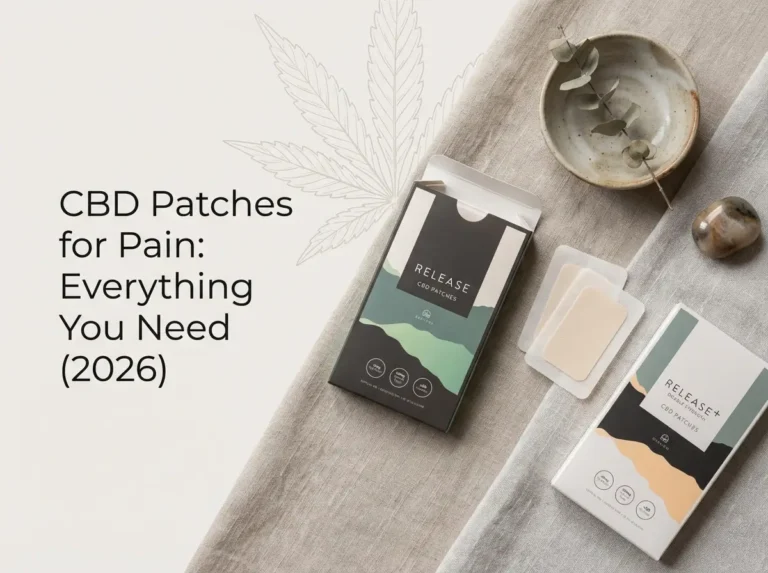
CBD Patches for Pain: Everything You Need (2026)
In this guide, I will walk you through what CBD patches are, how they work, what “CBD patches for pain” really means in the UK (without making medical promises), and how to choose and use them sensibly.
What are CBD patches (and what are they not)?
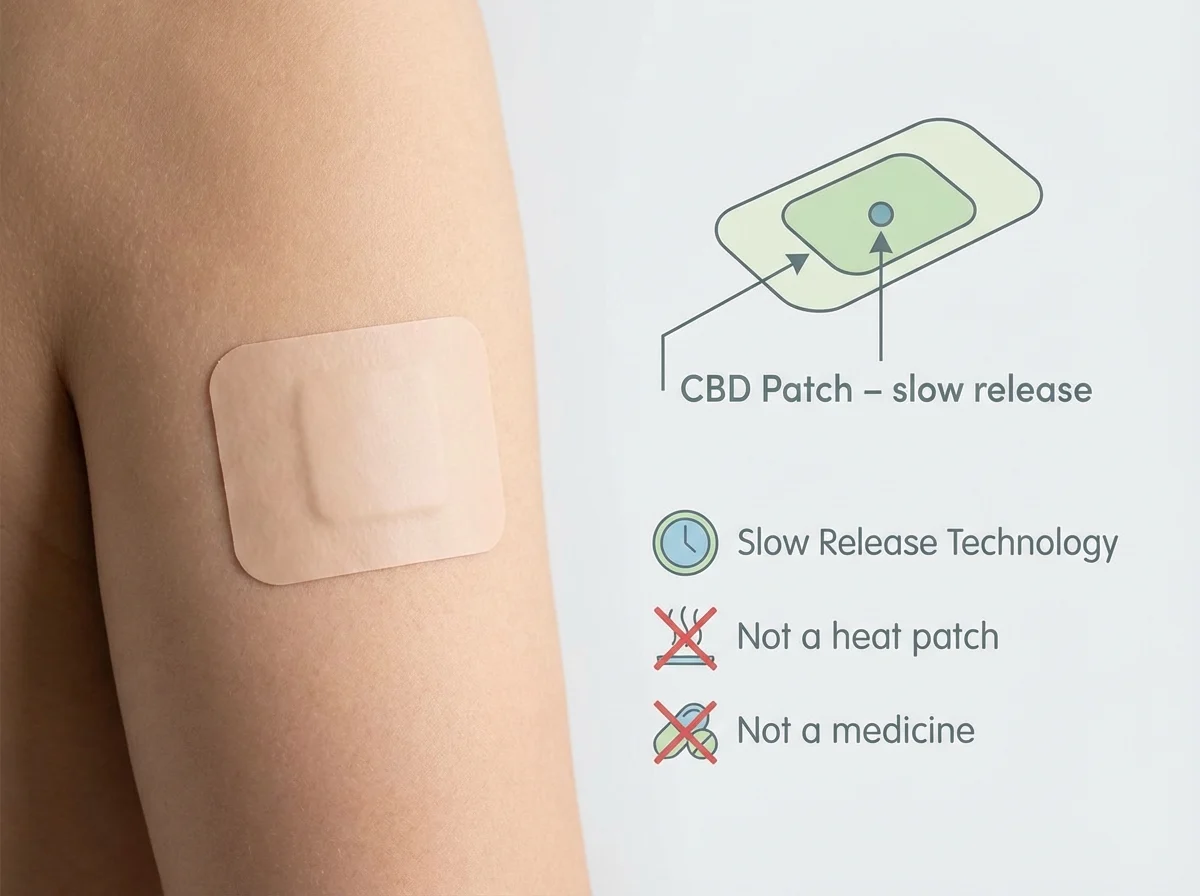
A CBD patch is a sticky, skin-applied patch designed to deliver a measured amount of cannabidiol (CBD) over time. Instead of swallowing CBD (capsules, oils) or rubbing it onto the skin (creams, balms), you apply the patch and leave it in place for a set window.
CBD itself is a non-intoxicating cannabinoid from hemp. It does not produce a “high”. What many people overlook is that the patch format is more about consistency than intensity. A well-made patch aims for steady delivery, rather than a quick hit.
What CBD patches are not
CBD patches are not a prescription medicine, and in the UK they cannot be marketed as treating or curing pain or any medical condition. If you see bold claims like “cures arthritis” or “replaces your meds”, treat that as a red flag.
They also are not the same as heat patches, menthol patches, or medicated plasters. The sensation is usually subtle, and some patches have no noticeable “feeling” at all. That does not automatically mean they are doing nothing, but it does mean you need to judge them with patience and good expectations.
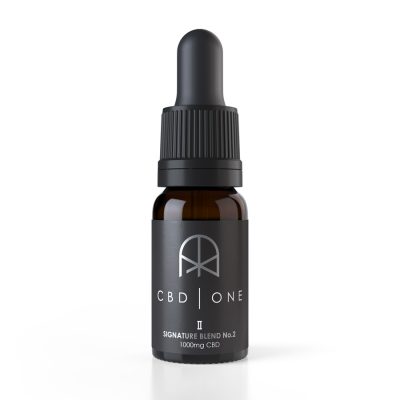
If you are new to CBD generally, it can help to understand the broader landscape first, including oils. This is why we keep educational pieces like premium CBD oil available as a starting point.
How CBD patches work: transdermal vs topical
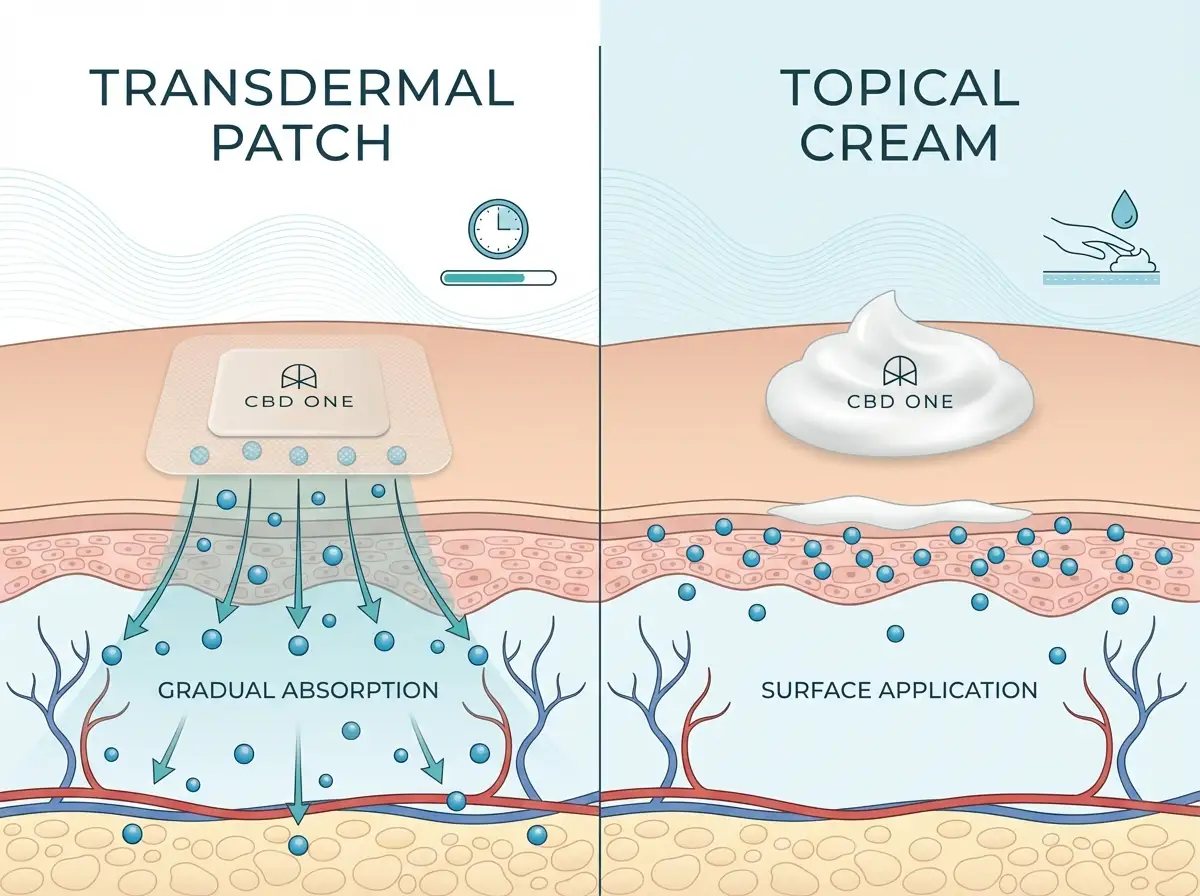
People often lump “patches” into “topicals”, but patches sit in their own category. A cream is applied and absorbed mostly into the upper layers of skin. A patch is typically designed for transdermal delivery, meaning it aims to pass CBD through the skin barrier over time.
Think of it this way
A topical CBD cream is like moisturising a specific area as part of your body-care routine. A CBD patch is more like setting a slow drip, where the goal is measured, consistent delivery while you get on with life.
Why format matters for “CBD patches for pain” searches
When someone searches “cbd patches for pain relief”, they are usually looking for something easy, discreet, and long-lasting. That is exactly where patches can fit. The reality is that pain is complex, and CBD is not a guaranteed solution. But a patch can be a practical option for people who do not enjoy the taste of oils, or who struggle to remember multiple doses.
If you want a deeper overview of patch basics and comparisons, see our related guide on CBD patches.
CBD patches for pain: what to expect realistically
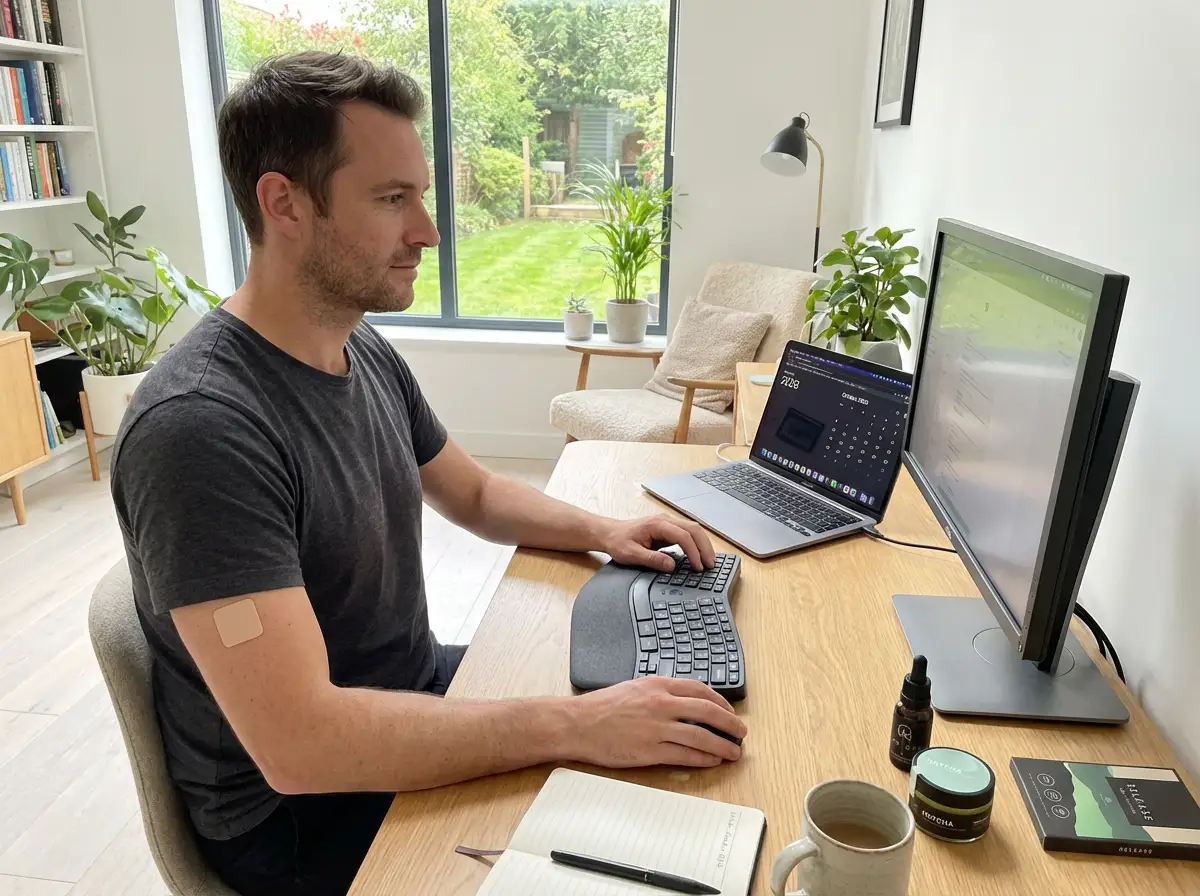
Let’s be very clear: CBD patches are not licensed medicines in the UK, and I cannot tell you they will “treat pain” in a medical sense. What I can do is explain why some people choose them as part of a broader wellbeing approach when they feel uncomfortable, stiff, or run down.
Some users report that CBD helps them feel more comfortable in their body, especially when paired with the basics that actually move the needle: sleep, hydration, movement, strength work, stress management, and sensible pacing.
Common situations people ask me about
From a practical standpoint, most questions fall into a few buckets:
- Back pain: people often want a “set and forget” option for long days sitting or driving.
- Arthritis pain: people tend to look for steady support and a simple routine.
- Nerve pain: people often ask because they want something gentle and non-sedating, although this is an area where it is especially important to speak to a clinician.
Consider this: “best CBD patches for pain” is not just about the product. It is also about whether the patch format matches your lifestyle. If you are already good at taking an oil morning and evening, a patch may feel unnecessary. If you forget doses, a patch can be a helpful behavioural nudge.
How to use CBD patches in practice
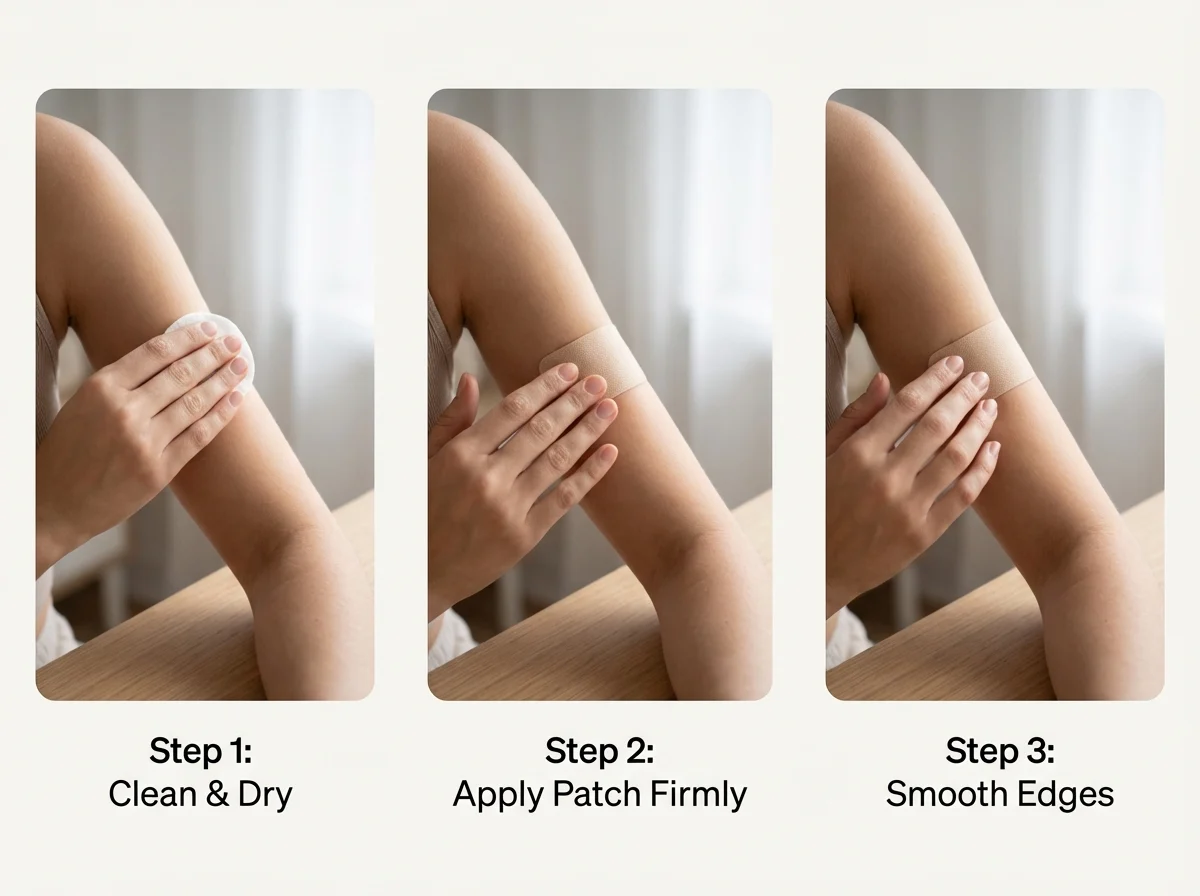
Most CBD patches follow the same basics: clean skin, apply firmly, leave on for the recommended time, then remove. But the small details are what decide whether you have a smooth experience.
Placement tips that make a difference
Apply a patch to clean, dry, hair-free skin. Areas like the upper arm, shoulder, or hip are popular because they move less and are less likely to peel off. If you are placing it near a sensitive area, do a cautious “first try” day when you can keep an eye on your skin.
How long should you leave a patch on?
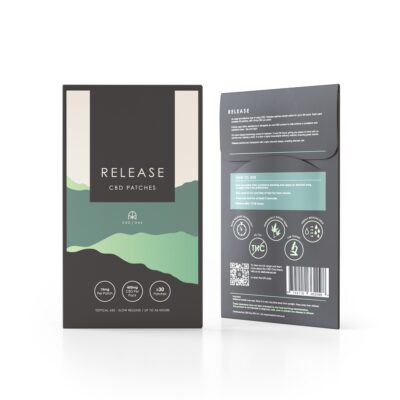
Many patches are designed for extended wear. For example, our CBD One Release patch format is designed to be worn for 12 to 36 hours, depending on what feels right for you. That does not mean “longer is always better”. If your skin gets irritated, remove it.
Building a routine (instead of chasing a quick fix)
In practice, this means you choose a consistent window. Some people apply a patch after a shower in the morning. Others prefer evening use, especially if they are pairing CBD with a wind-down routine like light stretching or breathwork.
At CBD One, our patch options are THC-free (CBD isolate) because many customers want the reassurance of an isolate format for sport and work. One example is CBD Patches [30 x 15mg] | Release, which are designed for simple once-a-day style use with a slow-release approach.
How to choose the best CBD patches in the UK
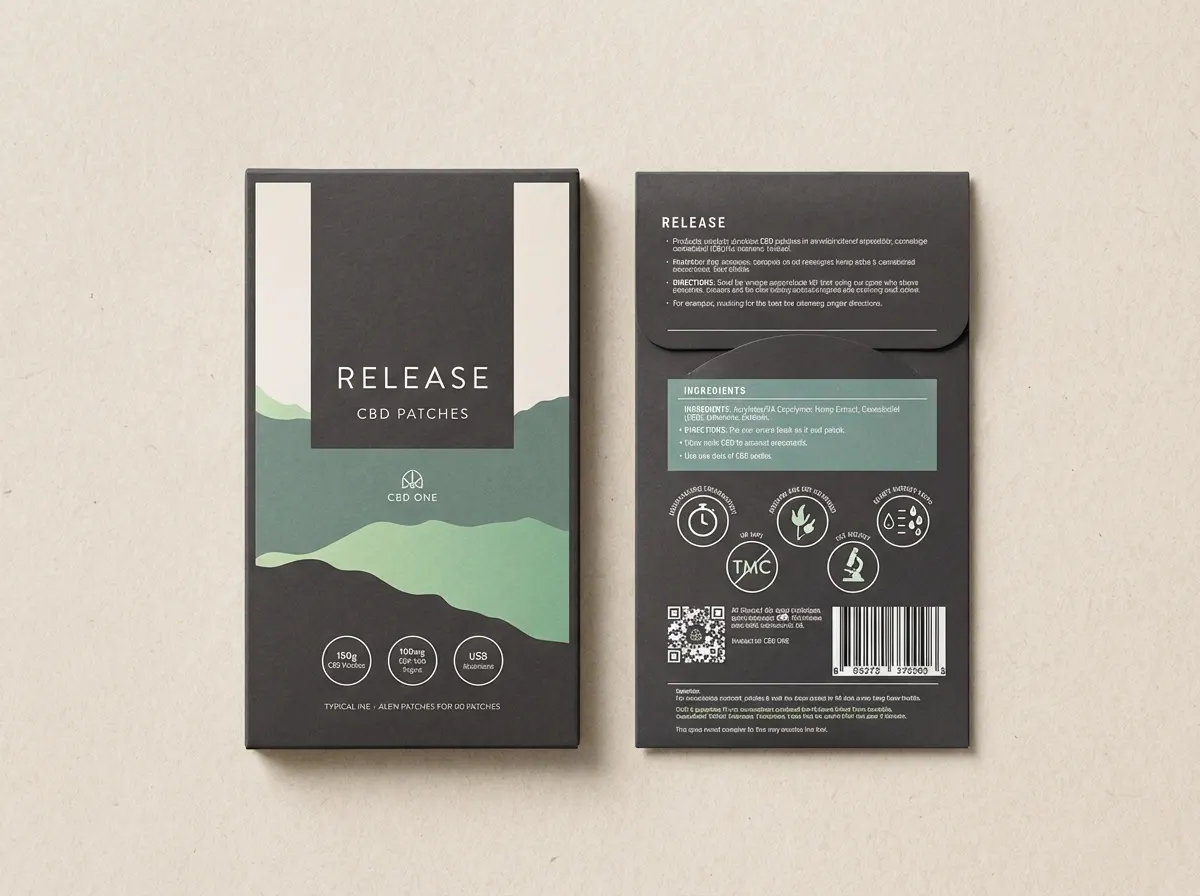
If you are searching “best cbd patches for pain uk”, you will quickly notice how different products look. Some are cheap and vague. Others are clear about ingredients, dose per patch, and testing.
Quality checklist (worth using every time)
- Clear dose per patch: look for “15mg per patch” or “30mg per patch”, not just “high strength”.
- Real lab verification: a Certificate of Analysis should be available, ideally from a third party.
- Ingredient transparency: patches should list what is in the adhesive and patch matrix, not just “CBD”.
- Spectrum clarity: isolate (THC-free) vs full spectrum (contains multiple cannabinoids and trace THC within legal limits).
- Reasonable claims: avoid brands promising medical outcomes.
Isolate vs full spectrum for patches
Now, when it comes to spectrum, patches are commonly made with isolate. That means CBD only, with no other cannabinoids. Full spectrum products contain additional minor cannabinoids and plant compounds, which some people prefer because of the Entourage Effect. Full spectrum is more common in oils than patches, partly due to formulation and compliance considerations.
If you like exploring formats, our Topical CBD category shows the broader “external use” options, and it can help you decide whether a patch or a cream suits your routine better.
How CBD patches release CBD (and why “mg” can be misleading)
This is one of the biggest misunderstandings I see online: people assume the number on the front of the packet tells you exactly what your body will “get”. In reality, “15mg per patch” or “30mg per patch” tells you how much CBD is inside the patch, not how much ends up being absorbed.
What the mg number actually means
A patch is a delivery system: CBD is held in the patch material and released over time. How much you absorb can vary depending on the patch design and the basics of skin biology, such as thickness of skin, heat, sweating, and where you place it.
So when you see “strongest CBD patches UK” searches, take a breath. More mg can be useful for some people, but it does not automatically mean a better experience. A well-designed, well-tested patch with a sensible dose can be a smarter choice than a very high number paired with vague lab info.
Why patches tend to feel subtle
Because patches are designed for steady release, they are not usually a dramatic “kick”. Many people describe them as background support. That can be a positive if you want something discreet, but it can be disappointing if you are expecting an obvious sensation.
Patch ingredients: adhesives, penetration enhancers, and who should be cautious
CBD matters, but so does everything else in the patch. The adhesive and the “matrix” that holds the CBD are what decide comfort, wear time, and whether your skin stays happy.
Common non-CBD ingredients you may see
Patches often include adhesives, stabilisers, and sometimes ingredients intended to support skin absorption. You may also see added botanicals or essential oils for scent. These extras are not automatically good or bad, but they do increase the chance of irritation if your skin is reactive.
Who should do a more cautious first try
If you have a history of adhesive reactions, very sensitive skin, or you are prone to rashes, start with a shorter wear window and choose a placement area that is easy to monitor. If you notice persistent redness, itching, blistering, or a “burning” feeling, remove the patch and do not reapply to the same area.
Consider this too: heat can increase skin absorption and also increase irritation risk. Avoid applying a patch under a hot water bottle, over a heated seat, or directly before a sauna. Keep it simple, especially on your first few uses.
Can you cut a CBD patch in half?
People ask this when they want to “start low” or make a pack last longer. It is understandable, but it is not always a good idea.
When cutting can cause problems
Many patches are designed as a complete unit. If you cut them, you may change how the patch releases CBD, and you may also expose the inner layer so it dries out or sticks poorly. You can also end up with uneven dosing, especially if the CBD is not distributed perfectly throughout the patch material.
A safer approach
If you want a gentler start, it is usually better to use a lower mg patch, or wear the patch for a shorter period, rather than physically cutting it. And if you are ever unsure, follow the manufacturer guidance for that exact patch format.
Storage, travel, sweating, and keeping patches stuck on
If you have ever had a patch curl up at the corner and collect fluff from your jumper, you will know that real life matters. A bit of practical planning makes patches far less annoying.
Storage basics
Keep patches in their sealed packaging until you use them, and store them somewhere cool and dry. Heat can soften adhesive and affect how the patch behaves. If you leave patches in a hot car or on a sunny windowsill, expect stickiness and wear time to suffer.
Showering, gym sessions, and sweaty days
Most patches prefer dry conditions. If you know you will sweat heavily or shower soon, apply the patch after you are done, not before. If your routine includes training, many people find the upper arm or shoulder area stays put better than places that bend a lot.
If a patch starts peeling
Try pressing firmly for 20 to 30 seconds to re-warm the adhesive with your hand. If it continues to peel, it is usually better to remove it than keep fiddling with it all day. And avoid layering tape over the top unless the manufacturer explicitly recommends it, because that can irritate skin and trap moisture.
Safety, side effects, and medication interactions
Most healthy adults tolerate CBD well, but “natural” does not automatically mean “risk-free”. With patches, the two main considerations are skin sensitivity and total daily CBD intake from all sources.
Skin considerations
You may get mild redness, itching, or irritation from the adhesive or from leaving a patch on too long. If you have eczema, very reactive skin, or known adhesive allergies, be extra cautious. Try a short wear first, and do not place on broken or inflamed skin.
CBD dosage and the UK FSA guidance
The UK Food Standards Agency (FSA) advises healthy adults not to exceed 70mg of CBD per day. This is total CBD across everything you take: patches plus oils, capsules, drinks, and so on.
If you want help thinking through dosing sensibly, our educational page on CBD Dosage is a good read.
Medication interactions
If you take prescription medication, especially medicines with a grapefruit warning, speak to a pharmacist or your GP before using CBD. CBD can interact with how some medicines are metabolised.
We have a detailed explainer on CBD and Medication that talks you through this carefully.
Frequently Asked Questions
Do CBD patches actually work for pain?
Some people report that CBD patches help them feel more comfortable, but you should be careful with the word “work” because CBD products are not licensed to treat pain in the UK. A patch is mainly a delivery format: it provides a measured amount of CBD over a longer period, which may suit you if you want consistency and convenience. Your results depend on factors like your sensitivity to CBD, the patch quality, and your overall routine (sleep, movement, stress). If pain is persistent or worsening, speak to a clinician.
Are CBD patches better than CBD creams for sore areas?
They are different tools. A cream is applied directly and can be part of a body-care ritual like moisturising or post-exercise recovery. A patch is usually chosen for steady, discreet dosing over many hours. Some people prefer patches because they do not feel greasy and are easier during workdays. Others prefer creams because they can massage the area and reapply when needed. If you are unsure, try one format for a week, then compare, rather than changing everything at once.
How long do CBD patches take to work?
Patches are typically not “instant”. Because they aim for slow release, you might not notice anything for a while, and some people describe the effect as subtle rather than obvious. Think of it as background support rather than a strong sensation. Give it a fair trial over a few uses, and keep the rest of your routine stable so you can judge it properly. If you want faster onset, other formats like sublingual oils may feel more immediate for some users.
Where should you place a CBD patch for back pain?
Choose a clean, dry, hair-free area where the patch will stay put. With backs, the challenge is movement, sweating, and clothing friction. Many people place a patch on the upper arm, shoulder blade area, or hip rather than directly on the spine, simply because it adheres better. Avoid broken skin and areas that fold a lot. If you want placement advice tailored to your situation, it is worth asking a pharmacist, or speaking to a qualified clinician if pain is significant.
Are CBD patches legal in the UK?
CBD products can be legal in the UK, but they must meet specific rules, including THC limits and safe, compliant marketing. A key point is that CBD cannot be marketed as a medicine unless it has authorisation, so any brand promising to “treat arthritis” or “cure pain” is stepping into risky territory. Look for transparent lab testing and sensible claims. If you are ever unsure, ask the company for their lab report and ingredient details, and avoid anything that feels vague.
Will CBD patches show on a drug test?
Many CBD patches are made with CBD isolate and labelled THC-free, which reduces risk for drug testing. Even so, no product can honestly promise “zero risk” in every testing scenario, because policies, thresholds, and contamination risks vary. If your job depends on strict testing, choose products with clear lab verification and isolate-based formulations, and speak to your testing authority for guidance. If you want full spectrum benefits, remember those products can contain trace THC within legal limits.
How many mg should a CBD patch have?
There is no one perfect number. Some patches provide 15mg CBD per patch, others 30mg, and some go higher. What matters is your total daily CBD intake and how you respond. If you are new, it is often sensible to start lower and assess how you feel over a few uses. Also remember the FSA guidance for healthy adults is not to exceed 70mg CBD per day from all sources combined. If you are taking other CBD products too, factor that in.
Can you wear a CBD patch overnight?
Many people do, especially if the patch is designed for extended wear. Check the manufacturer’s guidance for how long to leave it on and where to place it. If you have sensitive skin, your first overnight use is best done when you can check the area in the morning for irritation. If you feel itchy or uncomfortable, remove it. Do not apply a patch to broken skin, and avoid combining multiple patches unless the dosing guidance clearly supports it.
Are CBD THC patches for pain a thing in the UK?
You may see “CBD THC patches” online, but be cautious. In the UK, consumer CBD products must stay within strict legal limits for THC, and anything that is clearly a high-THC product may be illegal and unsafe. Also, products containing meaningful THC levels would raise drug test concerns. If you want CBD for wellbeing, stick with reputable brands that provide lab reports and comply with UK rules. If you are considering anything cannabis-related for medical reasons, speak to a specialist.
Can I combine CBD patches with CBD oil?
Some people do combine formats, but you need to be mindful of total daily intake. A patch plus an oil can push your daily CBD higher than you realise, especially if you also use drinks or capsules. Keep it simple: introduce one change at a time, track how much CBD you are using, and stay within the FSA guidance of 70mg per day for healthy adults. If you take medication, check for interaction risk with your GP or pharmacist before combining products.
Are “CBD pain patches” the same as nicotine or medicated patches?
They look similar, but the comparison only goes so far. Nicotine and medicated patches are regulated in a completely different way, with specific active ingredients and dosing evidence. CBD patches are sold as consumer wellness products, and in the UK they are not licensed as medicines. It is best to view a CBD patch as a convenience format for measured CBD use, not as a like-for-like replacement for a medicated plaster.
Can I use a CBD patch on a joint like my knee or elbow?
You can, but joints are tricky places for adhesion because the skin moves and folds. Many people have better luck placing the patch on an area nearby that stays flatter, rather than directly over the bend. If you do try a joint area, apply to clean, dry, hair-free skin and avoid tight clothing that will rub the edge.
Do CBD patches expire, and can old patches lose effectiveness?
Yes, patches can have a best-before date, and they can degrade if stored poorly. If a patch is very old, has been exposed to heat, or the packaging has been open for a while, the adhesive and the CBD-containing matrix can dry out. From a practical standpoint, if it does not stick properly or looks damaged, it is better not to use it.
What if I get a rash from a CBD patch?
Remove the patch and wash the area with mild soap and water. Do not reapply to the same spot. If the reaction is significant, spreads, blisters, or does not settle, speak to a pharmacist or GP. You might tolerate CBD well but react to an adhesive, fragrance, or botanical ingredient, which is why ingredient transparency matters.
Key Takeaways
- CBD patches are mainly about consistent, measured delivery, not instant effects.
- Be realistic: CBD patches cannot be marketed as treating pain in the UK, and results vary.
- Choose patches with a clear mg-per-patch dose and accessible lab verification.
- Apply to clean, dry, hair-free skin and remove if irritation occurs.
- Watch your total daily CBD intake and stay within the FSA 70mg guidance for healthy adults.
Conclusion
If you are exploring CBD patches for pain, the best starting point is not hype or bold promises. It is understanding the format. A patch is a practical, discreet way to use CBD that many people like because it is simple and steady. For some, that consistency fits perfectly into real life, especially busy workdays, travel, or training routines. For others, a cream or an oil feels more intuitive.
My advice is to keep it grounded: choose a patch with transparent lab verification, start with a sensible dose, and give it a fair try as part of a bigger wellbeing routine. If your pain is persistent, severe, or linked with numbness, weakness, swelling, or unexplained symptoms, please do not self-manage. Speak to a healthcare professional.
If you want help choosing a format, explore options calmly and speak to Nick for free guidance.